
Understanding the eCommerce Website Development Cost
One of the most common questions businesses search for before launching an online store is simple. How much does eCommerce website cost? Getting a clear estimate early helps you plan the budget and decide the right approach for development.
On an average, the cost of building eCommerce website can range from $1,000 and $10,000 for small to medium businesses. Stores that require advanced features, custom design, or complex integration can cost $10,000 to $50,000 and more. An enterprise-level eCommerce platform with large product catalogs and custom functionality may require an investment that exceeds beyond $100,000.
The final eCommerce website development cost depends on several factors. These include the platform you choose, the number of products, the level of needed customization, and the features needed for payment, shipping, and order management, along with the eCommerce website development company.
This guide will help you understand the average eCommerce website cost, the elements that influence eCommerce website development pricing, and the typical expenses businesses should consider when planning an eCommerce website. The guide will further help you estimate a realistic budget before starting your eCommerce project.
How Much Does eCommerce Website Cost in 2026?
When businesses are looking for the cost of building eCommerce website, they usually expect to have a fixed rate of development. But the pricing varies depending on the type of store, the platform used, and the level of customization requirements.
To give a clear starting point, most eCommerce websites fall within a broad range.
The average eCommerce website cost is around:
- Basic eCommerce website: $1,000 to $5,000
- Mid-level eCommerce website: $5,000 to $30,000
- Enterprise eCommerce website: $30,000 to $100,000+
These ranges represent the common industry estimate for eCommerce website development in 2026. The final cost changes based on the business requirements and the features included in the website.
Average eCommerce Website Cost by Business Size
Different levels of functionality are needed for the different business needs. This directly impacts the eCommerce website development pricing.
1. Small eCommerce Startups
These websites are usually built using a SaaS platform or ready-made themes. They include essential eCommerce features such as product pages, shopping carts, and payment gateways.
Typical cost range: $1,000 to $5,000
Common features include:
- Basic product catalog
- Standard checkout process
- Simple payment integration
- Basic design templates
2. Growing eCommerce Businesses
Businesses that are expanding their online presence often require more customization. These websites support larger product catalogs and improved user experience.
Typical cost range: $5,000 to $30,000
Common features include:
- Custom website design
- Advanced product filters
- Shipping and tax integrations
- Marketing and analytic tools
3. Large or Enterprise eCommerce Websites
Large eCommerce platforms require extensive development work and the complex integration of features. These websites often handle high traffic, large inventories, and multiple payment systems.
Typical cost range: $30,000 to $100,000 or more
Common features include:
- Custom eCommerce architecture
- Advanced search and filtering
- ERP and inventory integrations
- Multi-currency and international support
Understanding these pricing ranges helps businesses estimate the average eCommerce website cost before starting development.
Get an accurate quote for your eCommerce project. We scope it free with no obligation.
Start here ->In the next section, we will look at the key factor that gives influence on eCommerce website development cost and why prices vary between projects.

Key Factors That Influence eCommerce Website Development Cost
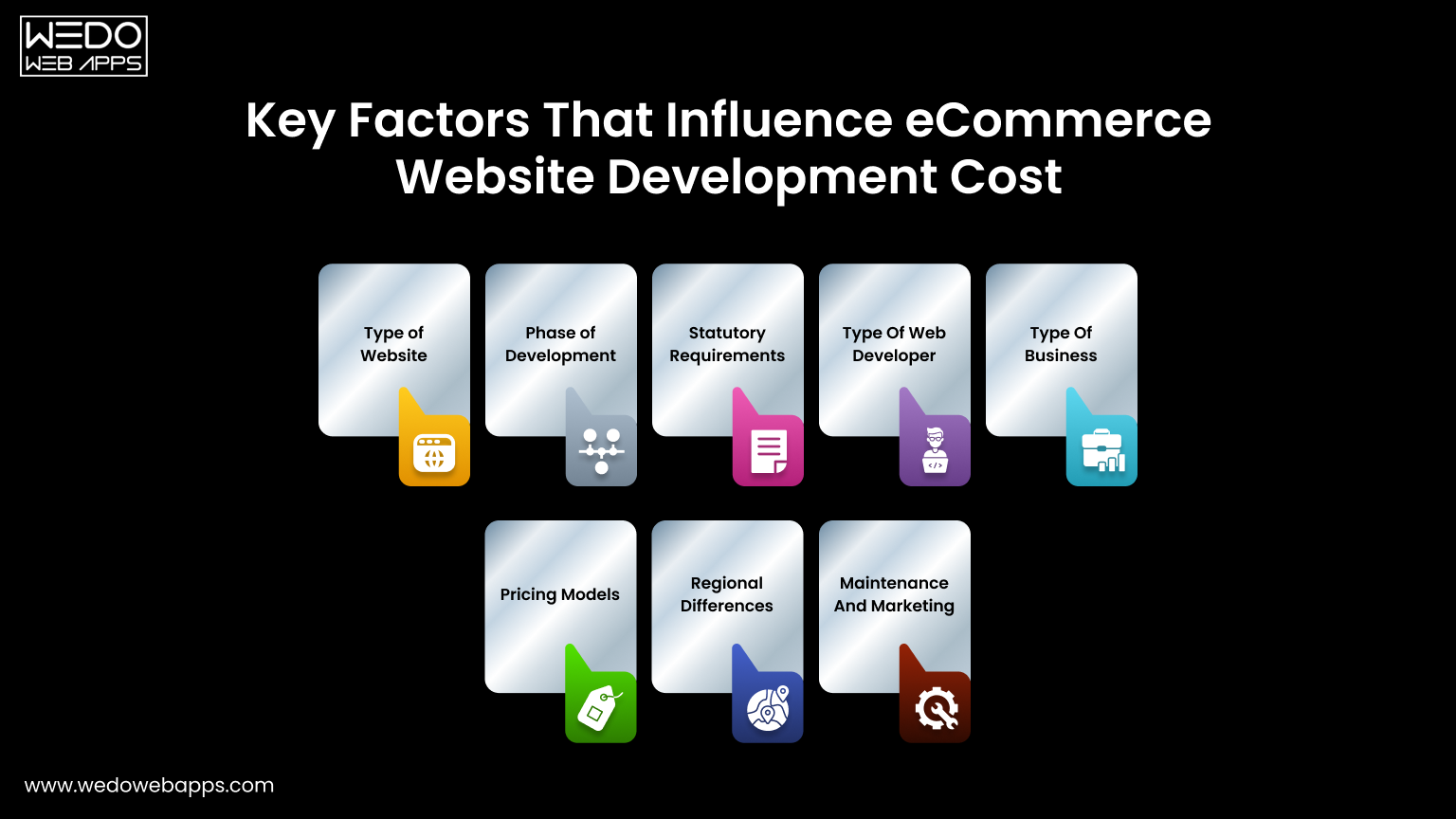
The eCommerce website development cost can vary widely because every online store is built with different requirements. Imagine that two businesses selling similar products still may have different development budgets. The difference usually comes from the features, platform, and the need for customization within the website.
Before you start estimating the cost of building eCommerce website, it is important to understand the attached factors that directly give influence on pricing.
Type of eCommerce Website
The type of eCommerce website you plan to build affects the overall development cost.
Single Vendor eCommerce Website
This type of store sells products from one business. The structure is simpler because the product listings, orders, and inventory are managed by a single seller.
Example features:
- Product catalog
- Shopping cart
- Checkout system
- Payment gateway integration
Because the functionality is limited, the development cost usually stays lower.
Multi-Vendor eCommerce Marketplace
A multi-vendor website allows multiple sellers to register and sell products on the same platform. These websites require additional systems to manage vendors and transactions.
Example features:
- Vendor registration and dashboard
- Commission management
- Individual product management for sellers
- Separate order tracking for vendors
Because of these additional systems, the marketplace website requires more effort and increased budget.
eCommerce Platform Selection
The platform you select for your eCommerce website also has an influence on eCommerce website development pricing.
Common eCommerce platforms include:
- Shopify
- WooCommerce
- Magento
- Custom eCommerce development
SaaS platforms like Shopify usually have lower initial development costs because most features are already available. An open-source or custom platform may require more development work but provide greater flexibility.
Design Complexity
Website design is another important factor that affects the cost of developing an eCommerce website.
A simple design using pre-built templates is usually affordable. A fully custom design requires more time for UI and UX best practices, layout creation, and front-end development.
Design costs may increase if the website requires:
- Unique brand-focused design.
- Interactive elements for product pages.
- Custom checkout experience.
- Mobile optimized layouts.
- AI-integration for customer experience.
Custom Feature and Integrations
Many eCommerce businesses require features beyond standard store functionality. These requirements increase the overall development effort, which further gives an impact on cost.
Common custom features include:
- Advanced product filtering.
- Subscription products.
- Loyalty or reward systems.
- Multi-currency support.
Third-party integration can also increase the development cost of your eCommerce website.
Examples include:
- Payment gateways
- Shipping providers
- CRM systems
- Inventory management software
Each integration requires configuration, development, and testing.
Website Performance and Scalability
A website expecting high traffic requires a stronger infrastructure and performance optimization.
This may include:
- Faster hosting infrastructure
- Content delivery networks
- Database optimization
- Security enhancements
Although these elements may increase your budget for development, they give the assurance that your website performs well as the business grows.
Understanding these factors makes it easier to estimate the average eCommerce website cost and plan the right budget for development.
Complete eCommerce Website Development Cost Breakdown
When you try to estimate the cost of building eCommerce website, the biggest confusion usually comes from understanding where the money is actually spent. eCommerce website development is not a single expense. It is a combination of multiple components that work together to create a fully functional online store.
These components include the domain, hosting infrastructure, eCommerce platform, website design, development work, and AI integration support required to manage payments and orders. Each element contributes to the overall eCommerce website development cost.
Understanding this cost breakdown will help to plan the investment more effectively and avoid the unexpected expenses during development.
Domain Name Cost
A domain name is the web address that customers use to access your store. It represents your brand online and plays an important role in building trust and recognition.
Most of the businesses register for the domain name during the initial stage of eCommerce website development. The cost usually depends on the extension and the registrar.
Typical domain pricing includes:
- Standard domains such as .com or .store usually cost $10 to $25 per year.
- Country-specific domains, such as .us or .uk, cost similarly.
- Premium domains with high-demand keywords can cost significantly more.
Since domain registration is renewed annually, it becomes a recurring cost for eCommerce websites.
Web Hosting Cost
Hosting is the service that any stores website files and makes them accessible on the internet. The hosting type you choose can affect the eCommerce website development cost and website performance.
Typical hosting costs include:
- Shared hosting: $5 to $30 per month.
- Managed eCommerce hosting: $30 to $200 per month.
- Cloud hosting for large stores: $200 and more per month.
High traffic eCommerce stores usually require a stronger hosting infrastructure to maintain fast loading speed.
SSL Certification and Security
An SSL certificate secures customer data during online transactions. It also helps to build trust because browsers show a secure connection indicator.
Typical SSL costs include:
- Basic SSL certificates cost $0 to $100 per year.
- Advanced security certificates cost around $100 to $500 per year.
Many hosting providers now include basic SSL certificates as part of their hosting plans.
eCommerce Platform Cost
The eCommerce platform provides the core functionality required to manage the products, orders, and payments.
Platform costs depend on whether you choose subscription-based services or an open-source platform.
Typical pricing examples:
- Shopify plans: $29 to $399 per month.
- WooCommerce plugin: Free, but requires hosting and extensions.
- Magento open source: Free platform, but higher development cost.
- Custom eCommerce development: $10,000 or more, depending on requirements.
The platform you select has a significant impact on the average eCommerce website cost.
UI and UX Design Cost
Design plays an important role in maintaining the shopping experience for customers. A well-structured UI/UX design helps customers to navigate the store and complete purchases easily.
Typical eCommerce design costs include:
- Pre-built themes: $50 to $300
- Custom UI and UX design: $2,000 to $15,000
Businesses that require maintaining the unique brand experiences usually invest in a custom design.
Frontend and Backend Development Cost
The process of development involves converting the design into a fully functional eCommerce website. This includes both the user-interface and the system that handles orders and payments.
Typical development costs include:
- Basic website development costs around $1,000 to $5,000
- Medium complexity development: $5,000 to $30,000
- Advanced eCommerce development: $30,000 and more
The cost depends on the number of features and integration requirements.
Payment Gateway Integration Fees
Payment gateways allow customers to complete online transactions securely.
Most payment providers charge transaction fees rather than fixed development costs.
Typical charges include:
- 2% to 3% per transaction.
- Additional international payment fees.
Popular payment gateways include PayPal, Stripe, and Square.
Third-Party Plugins and Extensions
Many eCommerce websites rely on plugins or extensions to add additional functionality.
Common examples include:
- SEO tools
- Marketing automation tools
- Product recommendation systems
- Shipping calculators
These tools may cost between $50 and $500 per year, depending on the feature.
Understanding this cost breakdown provides a clearer picture of where the eCommerce website development pricing comes from.
In the next section, we will compare the costs of different eCommerce platforms that help you choose the most suitable options.

Ecommerce Platform Pricing Comparison
One of the biggest factors that affects the cost of developing an eCommerce website is the platform used to build the store. Each eCommerce platform offers a different pricing structure, level of customization, and development effort. Some platforms work on monthly subscription plans, while others require more technical development but offer greater flexibility.
Choosing the right platform can significantly influence the average eCommerce website cost, especially for businesses planning long-term growth.
Shopify eCommerce Website Cost
Shopify is one of the most widely used eCommerce platforms because it provides a ready-to-use environment for launching online stores.
Shopify works on a monthly subscription model.
Typical Shopify pricing includes:
- Basic Shopify plan starts at around $29 per month.
- Standard Shopify plan costs around $79 per month.
- Advanced Shopify plan costs around $399 per month.
In addition to the subscription cost, businesses may also spend on:
- Premium themes costing $150 to $350
- Third-party apps and plugins
- Payment processing fees
Because many features are already built into the platform, the cost of building eCommerce website on Shopify is usually lower compared to custom development. This is why many businesses consider Shopify for eCommerce.
WooCommerce Website Development Cost
WooCommerce is an open-source eCommerce plugin built for WordPress. It allows businesses to create a flexible online store with full control over customization.
The plugin itself is free, but several other expenses contribute to the total development cost.
Typical WooCommerce-related costs include:
- Domain registration costs $10 to $20 per year.
- Web hosting costs $10 to $50 per month.
- Premium themes are $50 to $200.
- Paid plugins for advanced features.
WooCommerce is often considered a low cost eCommerce website solution for small businesses.
Magento eCommerce Website Development Cost
Magento is a powerful eCommerce platform that is specifically designed for businesses that require advanced functionality and scalability. It is commonly used by large eCommerce stores that manage extensive product catalogs and high-traffic volumes.
Magento offers an open-source version as well as enterprise-level solutions.
Typical cost considerations include:
- Magento open-source platform that is free.
- Development costs may start from $10,000 and increase significantly.
- Hosting infrastructure for high-performance eCommerce websites.
Because Magento requires experienced developers and a more complex configuration, the eCommerce website development cost is usually higher when compared to SaaS platforms.
Custom eCommerce Website Development Cost
Some businesses choose to build a fully custom eCommerce website instead of using an existing platform. Custom development provides complete control over design, features, and integrations.
Typical custom development costs include:
- A small custom eCommerce project starts around $10,000.
- Medium complexity project between $20,000 and $60,000.
- An enterprise-level eCommerce platform can cost $100,000 and more.
Although custom development requires a higher investment, it allows businesses to create tailored eCommerce solutions that match their exact requirements.
Understanding how these platforms affect the cost of building eCommerce website helps you choose the solution that aligns with your budget and long-term growth strategy.
Now let's just know how design and development give an impact on cost.
Design and Development Costs Explained
Design and development are a major part of the eCommerce website development cost. These two elements determine how you look, how users interact with it, and how smoothly the system manifests products, orders, and payments.
The final cost usually depends on whether the website uses ready-made templates or requires custom development.
Template-Based eCommerce Websites
Template-based websites use pre-designed themes that can be quickly adapted for an online store. Many eCommerce platforms provide a collection of themes that include standard layouts for product pages, category pages, and checkout flows.
These websites require less development time, which makes them a practical option for startups or small businesses.
Typical costs include:
- Pre-built eCommerce themes cost $50 to $300.
- Minor customization and setup costs.
This approach helps businesses launch a low cost eCommerce website without investing heavily in design.
Custom eCommerce Website Design
Businesses that want a unique brand identity often require choosing the custom eCommerce design. This involves creating layouts, product pages, and user journeys specifically for the business.
Custom design usually includes:
- Wireframes and user experience planning.
- Custom visual layouts.
- Mobile optimized design.
Depending on the complexity, custom eCommerce design can cost between $2,000 and $15,000.
Hiring Freelancers vs eCommerce Development Agencies
The development team you choose also affects the cost of developing an eCommerce website. Businesses usually choose between hiring freelancers or working with an experienced eCommerce development agency.
| Factor | Freelancers | eCommerce Development Company |
|---|---|---|
| Typical Cost | $20 to $100 per hour | $5,000 to $50,000+ per project |
| Team Structure | Usually, a single developer or designer | Dedicated team includes website designers, developers, and project managers. |
| Project Complexity | Best for small or basic eCommerce websites. | Suitable for medium to large eCommerce projects. |
| Communication | Direct communication with one person. | Structured communication and project management. |
| Development Speed | May take longer depending on the workload. | Faster development due to team collaboration. |
Freelancers are often chosen for smaller projects and budget-friendly development. While companies are preferred for complex platform development and long-term support.

Ongoing Costs of Running an eCommerce Website
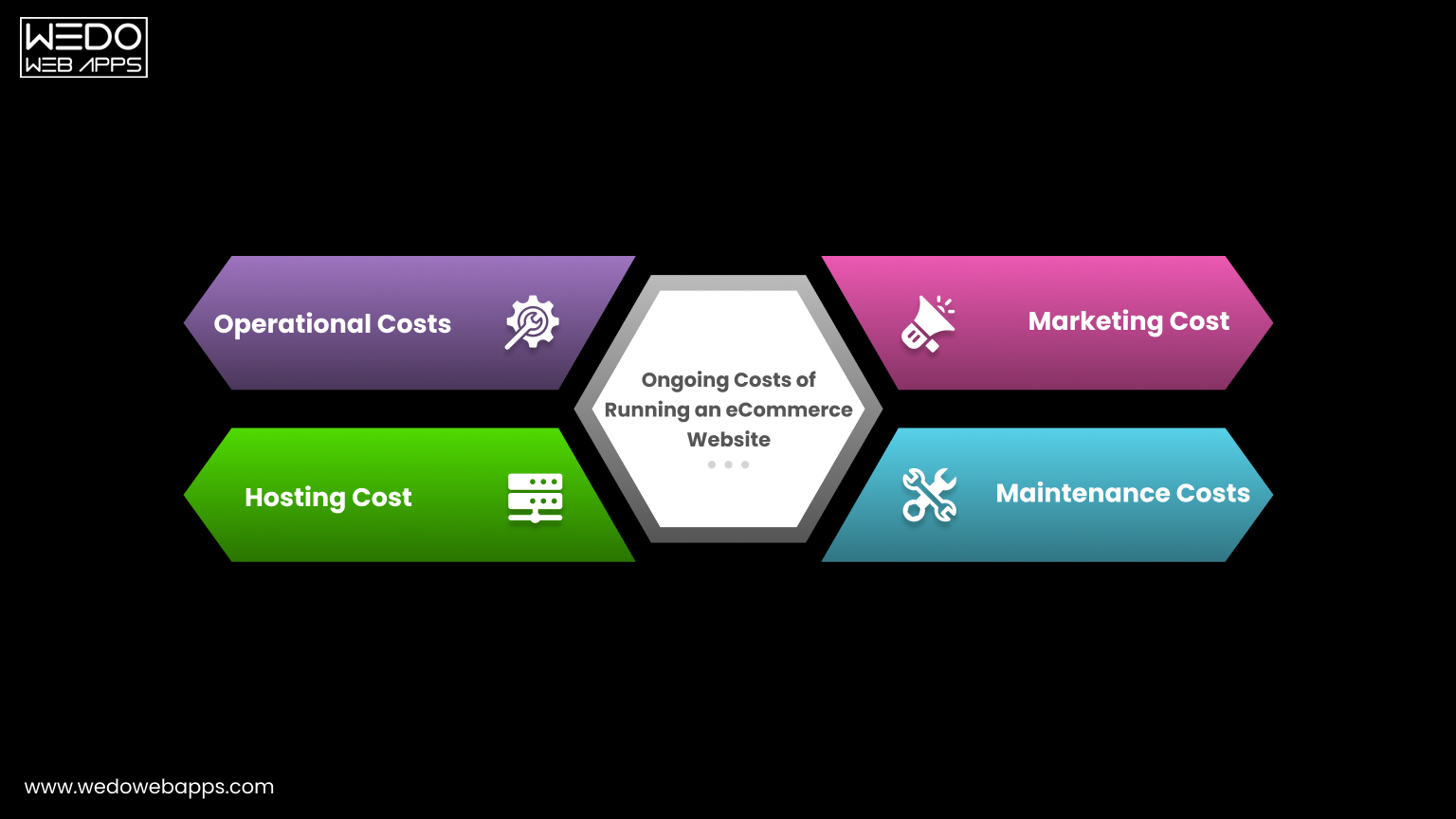
Building a website is only part of the investment. After launch, you should also need to plan for the additional cost of ongoing maintenance to keep the store running smoothly. These costs support website performance, security, and marketing activities.
Understanding these attached costs will help you estimate the long-term eCommerce website development cost more accurately.
| Ongoing Expenses | Average Cost (per month) | What It Covers |
|---|---|---|
| Web Hosting | $30 to $200 | Server infrastructure, uptime, and website performance. |
| Website Maintenance | $50 to $500 | Updates, bug fixes, and technical support. |
| Security & Backups | $10 to $100 | Data protection, malware scans, and automated backups. |
| Marketing & SEO Tools | $50 to $500 | Email marketing, SEO software, and analytics tools. |
| Plugin & Software Renewals | $50 to $300 | Premium plugins, extensions, and feature updates. |
These recurring expenses vary depending on the size of the eCommerce store and the tools used to manage operations.
Hidden Costs of Building an eCommerce Website
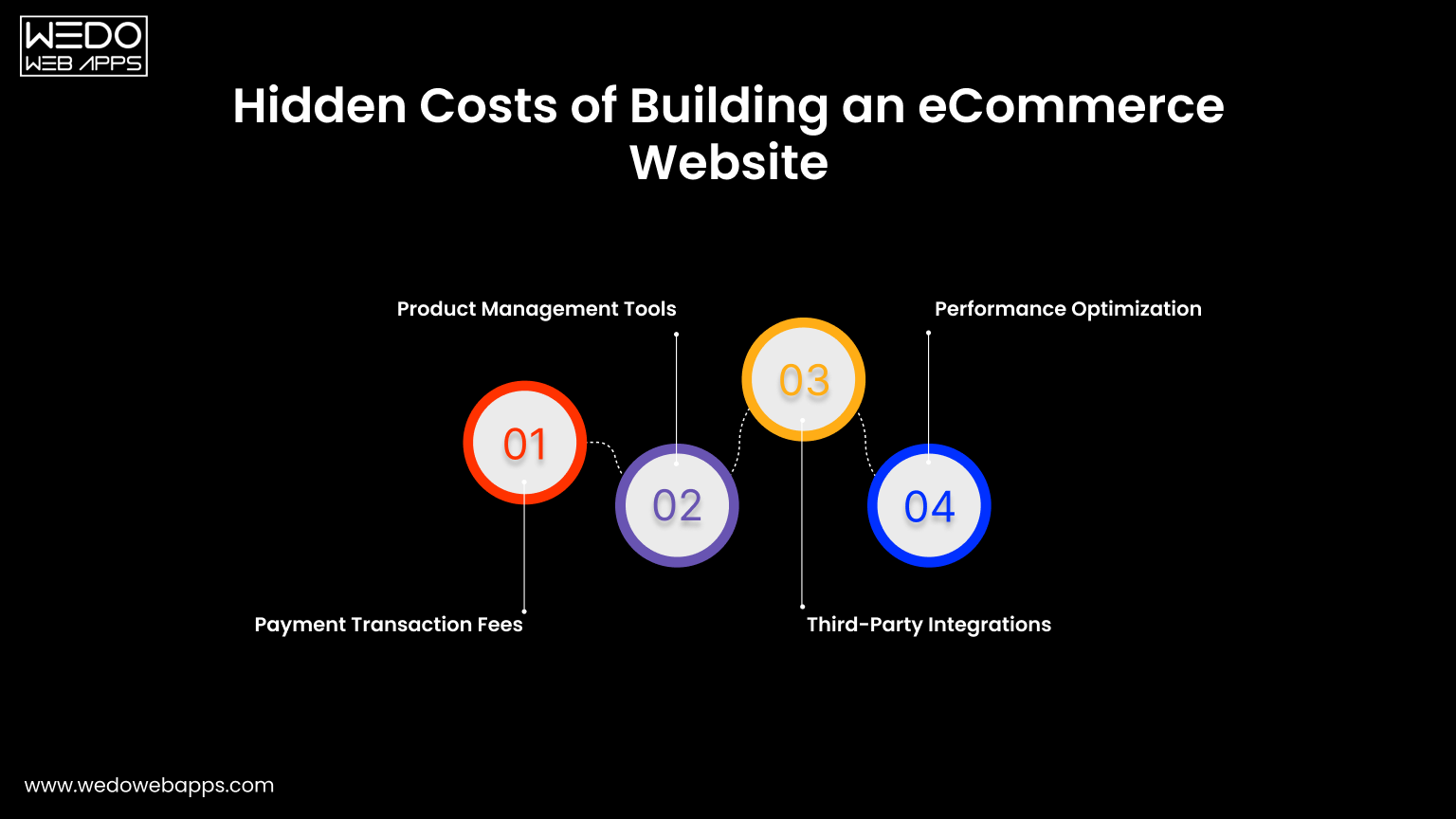
While estimating the cost of building eCommerce website, many businesses focus mainly on design and development. However, some operational expenses appear after the website starts running. These additional costs can influence the overall eCommerce website development cost over time.
Payment Transaction Fees
Every online purchase revolves around the payment processing charges. Most payment gateways apply a small percentage fee on each transaction.
Common charges include:
- 2-3% per transaction.
- Additional fee for international payment.
- Currency conversion charges for global stores.
Product Management Tools
Managing a large number of products often requires dedicated tools. These tools help businesses organize product listings and monitor inventory.
Typical uses include:
- Inventory tracking
- Stock alerts and updates
- Product catalog management
An advanced product management system may require a monthly subscription fee.
Third-Party Integrations
eCommerce websites frequently connect with external tools to support business operations.
Common integrations include:
- Shipping and logistics providers.
- CRM systems
- Accounting software
- Email marketing tools
Many of these services operate on recurring subscription plans.
Performance Optimization
As website traffic grows, businesses may need performance improvement to maintain speed and stability.
Performance-related investments may include:
- Content delivery network services.
- Server upgrades.
- Database optimization.
Planning for these hidden costs gives businesses a more realistic estimate of the actual eCommerce website cost.
Low Cost eCommerce Website Options for Startups
Not every business needs a large budget to start selling online. Many startups begin with affordable tools that provide essential eCommerce features. But with the right approach, you can launch your low cost eCommerce website while keeping the initial investment manageable.
Using SaaS eCommerce Platform
SaaS platform provides a ready-to-use eCommerce solution where hosting, security, and platform maintenance are already managed.
Common platforms include:
- Shopify
- BigCommerce
- Wix eCommerce
Typical cost range
- $20 to $100 per month, which also depends on the plan and features.
This option is often preferred by startups because the setup process is simple and the development costs remain low.
Using Open-Source eCommerce Platform
An open-source platform allows businesses to build an eCommerce website with greater flexibility. These platforms are free to install, but they require hosting and additional plugins.
Popular open-source options include:
- WooCommerce
- Magento Open-Source
- OpenCart
Typical cost range
- $500 to $5000, depending on customization and hosting requirements
This approach works well for businesses that want more control over their eCommerce store.
Using Website Builders
Website builders offer simple tools for creating eCommerce websites without advanced technical knowledge.
Examples include:
- Squarespace
- Wix
- Zyro
Typical cost range
- $15to $50 per month.
Website builders are suitable for small businesses that want to launch a basic online store quickly with minimal development efforts.
How to Reduce eCommerce Website Development Cost
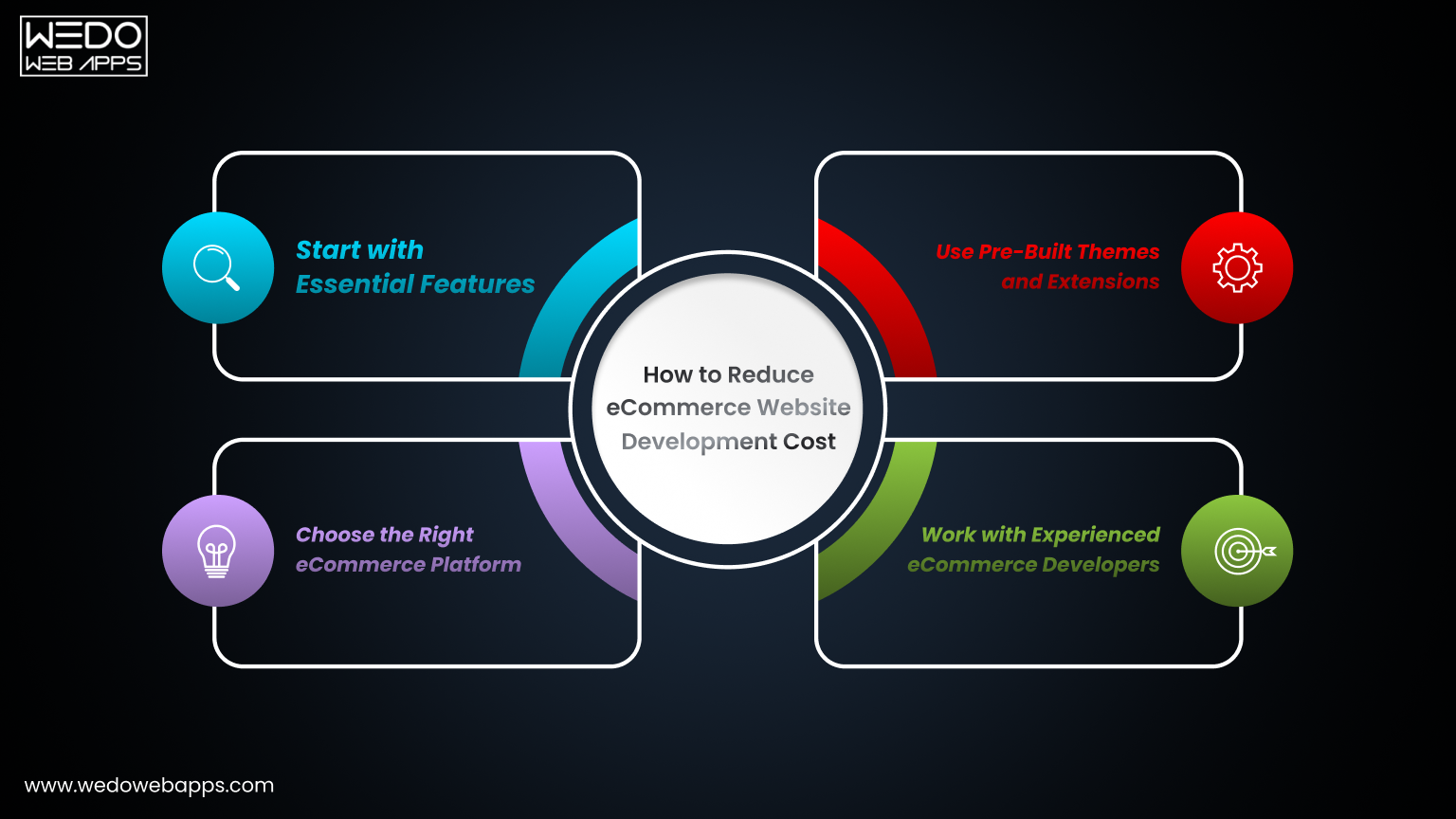
The cost of developing an eCommerce website can increase quickly when too many features or complex systems are added during the early stage of development. You can control your budget by focusing on all the essential requirements and scaling the website gradually.
Here are some practical ways to reduce eCommerce website development costs.
1. Start with Essential Features
Launching with the core eCommerce feature helps you reduce the initial development cost.
Focus on features such as:
- Product catalog
- Cart
- Checkout
- Payment Gateways
Additional features can be added later as the business grows.
2. Choose the Right eCommerce Platform
Selecting the right platform can significantly affect the eCommerce website development pricing. SaaS platforms usually require lower development costs because many features are already included.
Platforms like Shopify or WooCommerce help businesses launch online stores without heavy development work.
3. Use Pre-Built Themes and Extensions
Custom design and development require more time and investment. Using pre-built themes and extensions can reduce the design and development costs while still providing a professional look for the store.
Many eCommerce platforms offer affordable themes and plugins that support essential functionality.
4. Work with Experienced eCommerce Developers
Hire eCommerce developers who are experienced and can build eCommerce websites more efficiently and avoid technical mistakes that may increase cost later. Clear project planning and defined requirements also help to reduce unnecessary development work.

How Long Does It Take to Build an Ecommerce Website?
The timeline for building an eCommerce website depends on the size of the store, added features, and customization required. A simple store can be launched quickly, while a complex eCommerce platform development requires more time.
| Website Type | Typical Timeline | What It Usually Includes |
|---|---|---|
| Basic eCommerce Website | 1-3 weeks | Ready-made themes, basic product catalog, standard checkout, and payment integrations. |
| Medium Complexity eCommerce Store | 4-8 weeks | Custom design adjustments, larger product catalog, shipping, and marketing integrations. |
| Large eCommerce Platforms | 3-6 months or more | Custom development, complex integrations, a large product database, and advanced features. |
These timelines may vary depending on the eCommerce team and the needs of the project. Planning the features and functionality clearly at the beginning can help you reduce the development delays.
Real Examples of Ecommerce Website Development Pricing
Understanding the attached various price ranges becomes easier when you look at the real business scenarios. Different types of eCommerce businesses require different levels of development, which directly affect the eCommerce website development cost.
| Business Type | Estimated Cost | What the Website Usually Includes |
|---|---|---|
| Startups | $1,000 to $5,000 | Product pages, template-based design, checkout, and payment gateways. |
| Growing Businesses | $5,000 to $30,000 | Custom design, advanced product filters, shipping integrations, and marketing tools. |
| Enterprise eCommerce Platform | $30,000 to $100,000+ | Custom development, large product catalog, ERP integration, and advanced analytics. |
These examples show how the cost of building eCommerce website increases as the business grows and requires more advanced functionality. A smaller store can launch quickly with limited investment, while large eCommerce operations often require a custom solution and large development teams.
Conclusion
The overall cost of developing an eCommerce website depends on several factors, such as the platform, design complexity, required features, and development approaches. Some businesses can launch a basic eCommerce store with a limited budget, while larger eCommerce platforms may require significant investment to support advanced functionality and integrations.
When you understand the different cost components, you can design your store more efficiently by having all the elements that are needed in your eCommerce website development objective.
By identifying the right platform, prioritizing essential features, and planning your long-term operational expenses, businesses can build an eCommerce website that fits both the budget and long-term growth.