Introduction
Selling once is easy. Getting customers to come back every month is where real growth happens. That's why many DTC brands are moving towards subscription models powered by an eCommerce subscription platform.
A well-built subscription box eCommerce platform helps you move beyond one-time transactions. It allows you to deliver products on a recurring basis, manage subscriptions smoothly, and give customers more control over what they receive and when.
From curated boxes of essential product refills, subscriptions create consistency for both the businesses and the buyer.
In this guide, you will learn how a subscription platform works, what features are required, how to choose the right approach, and what it costs in terms of eCommerce development to build a scalable eCommerce subscription box solution. If you are planning to launch or upgrade your subscription offerings, this will help you make clear and practical decisions.
Let's discuss it all.
What Is a Subscription Box Platform?
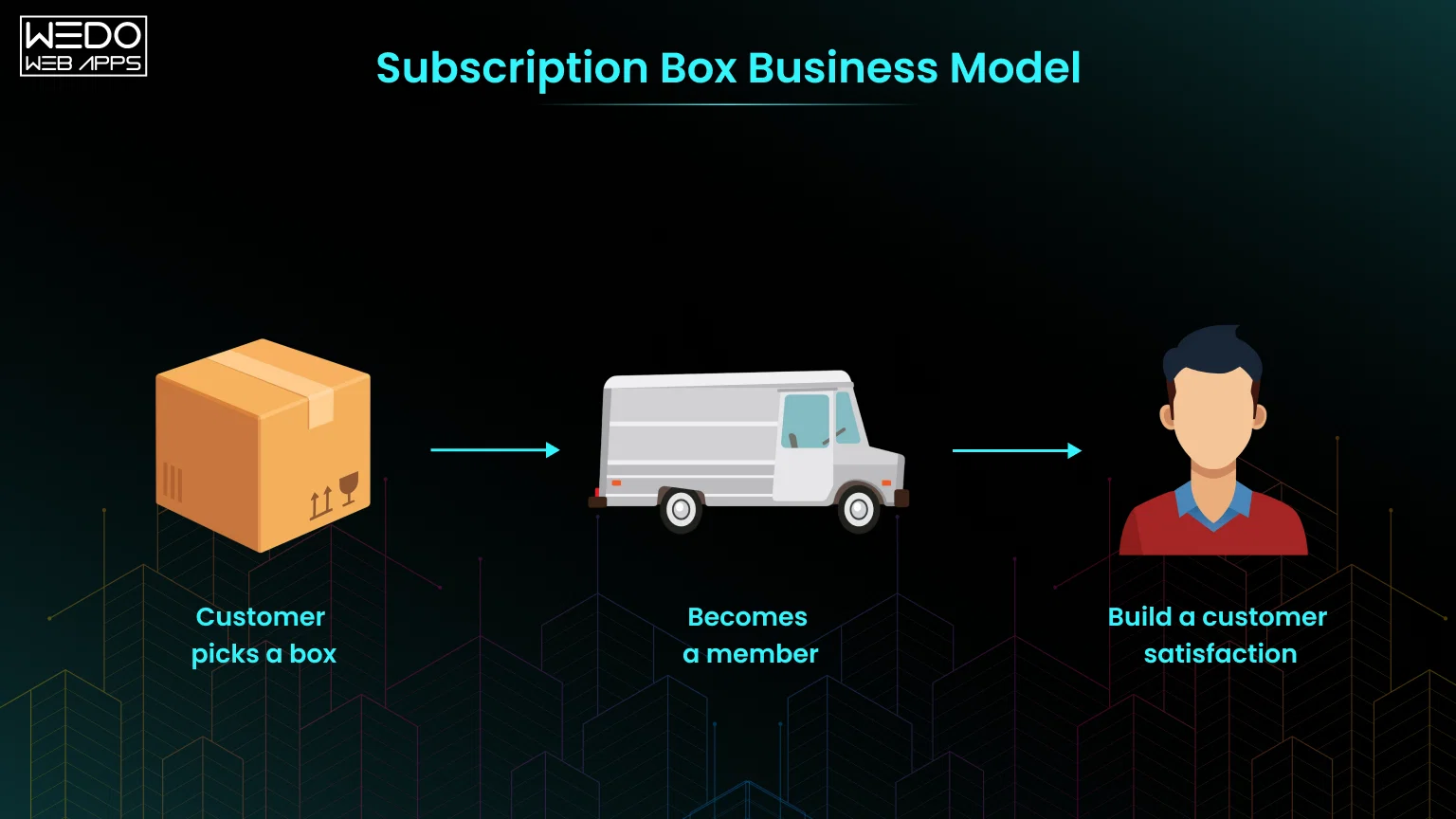
A subscription box platform is a type of eCommerce system designed to handle recurring orders instead of one-time purchases. It allows businesses to deliver products to customers on a fixed schedule, such as weekly, monthly, or quarterly, while managing payments automatically.
Unlike a traditional online store, an eCommerce subscription box platform is built around continuity. Customers do not need to place an order every time. Once they subscribe, the platform takes care of billing, order creation, and the delivery cycle. This creates a smoother experience for both the business and the customer.
At its core, a subscription box platform includes three essential components.
- A recurring billing system that charges customers at set intervals.
- A subscription management system that allows users to pause, skip, or modify their plans.
- A box configuration setup that lets businesses define what goes into each delivery, whether it is fixed, customizable, or curated.
Well-known examples of this model include brands like Birchbox, Dollar Shave Club, and HelloFresh. Each of them uses subscriptions differently, but all rely on a platform that can manage recurring relationships instead of single transactions.
In simple terms, if a regular eCommerce store is like a one-time purchase at a shop, a subscription box platform works like a monthly service that keeps running in the background while the customer stays subscribed.
Curated vs Replenishment vs Access - Which Model Fits
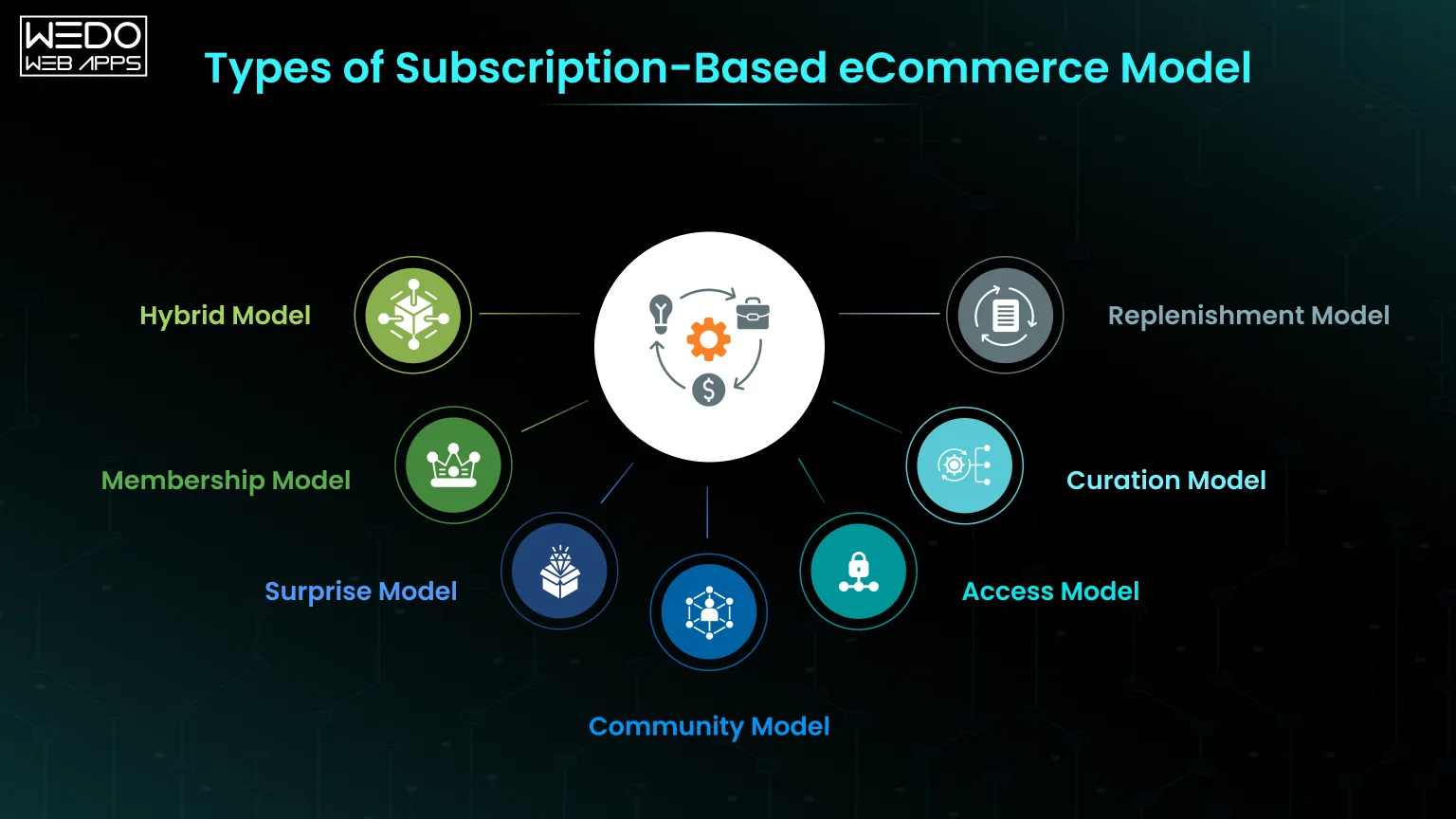
When evaluating subscription commerce business model types, choosing the right model is one of the most important early decisions. Each model shapes how your platform works, how customers interact with it, and how predictable your revenue becomes.
1. Curated Subscription (Surprise Box)
This model focuses on discovery. Customers receive a selection of products chosen by the brand, often without knowing the exact content in advance.
Examples include brands like Birchbox.
Key characteristics:- High excitement and engagement.
- Strong brand storytelling.
- Flexible product combinations.
- Higher churn due to unpredictability.
- Requires strong personalization to retain users.
2. Replenishment Subscription (Auto-Refill)
This model is built around convenience. Customers subscribe to receive essential products at regular intervals without needing to reorder.
A well-known example is Dollar Shave Club.
Key characteristics:- Predictable demand
- Lower churn rates
- Simple user experience
- Limited upsell opportunities.
- Less excitement compared to curated models.
3. Access-Based Subscription (Membership Model)
In this model, customers pay for ongoing access to benefits such as discounts, exclusive products, or faster delivery.
A common example is Amazon Prime.
Key characteristics:- Strong customer retention.
- High perceived value over time.
- Encourages frequent engagement.
- Requires continuous value delivery.
- Needs integration across multiple services.
Comparison Overview
| Model | Churn Rate | Average Order Value | Best Industries | Tech Complexity |
|---|---|---|---|---|
| Curated | High (10-15%) | Medium to High | Beauty, lifestyle, fashion | Medium |
| Replenishment | Low (5-8%) | Low to Medium | Personal care, groceries | Low |
| Access | Very Low (3-6%) | High (long-term value) | Retail, services, marketplace | High |
Most businesses start with one model and later combine elements from others as they grow. The right approach depends on your product type, how often customers need it, and how much flexibility you want to offer within your web app development practices.
DTC Subscription Platform - Feature Checklist
When planning a recurring revenue platform development for DTC brands, features are not just technical components. They directly impact how customers subscribe, stay engaged, and continue paying over time. A well-structured platform should balance operational efficiency with customer control.
Below is a practical feature checklist to guide your platform development.
Core Features
These are the essentials for running any subscription-based business.
- Recurring billing engine: Automate payments on a fixed schedule to ensure consistent revenue without manual intervention.
- Subscription management dashboard: Allows businesses to create plans, manage pricing, and control subscriptions.
- Customer self-service portal: Let users pause, skip, cancel, or modify their subscriptions without support dependency.
- Box customization builder: Enable customers to choose products, variants, or preferences within their subscription.
- Variable product inventory management: Handles changing product combinations and prevents stock mismatches.
Growth Features
These features help to improve retention and increase customer value over time:
- Churn prediction analytics: Identify users likely to cancel so proactive actions can be taken.
- Referral program engine: Encourages existing customers to bring in new subscribers.
- Gift subscriptions: Allows users to purchase subscriptions for others, increasing acquisition channels.
- Multi-currency support: Helps expand into global markets with localized pricing.
- Dunning management: Automatically retries failed payments and recovers lost revenue.
Integrations
A subscription platform does not operate in isolation. These integrations ensure smooth operations.
- Shipping APIs: Automate order fulfillment and delivery tracking.
- CRM Systems: Manage customer data and communication workflows.
- Email marketing tools: Send lifecycle emails such as onboarding, reminders, and win-back campaigns.
- Analytics dashboards: Track metrics like churn rate, monthly recurring revenue, and customer lifetime value.
A strong feature set acts like the backbone of your subscription business. If the foundation is weak, even the best marketing efforts will struggle to retain customers. Getting these features right from the start helps to reduce friction, improve retention, and support long-term growth.
Billing Engine - Stripe vs ReCharge vs Bold Subscriptions
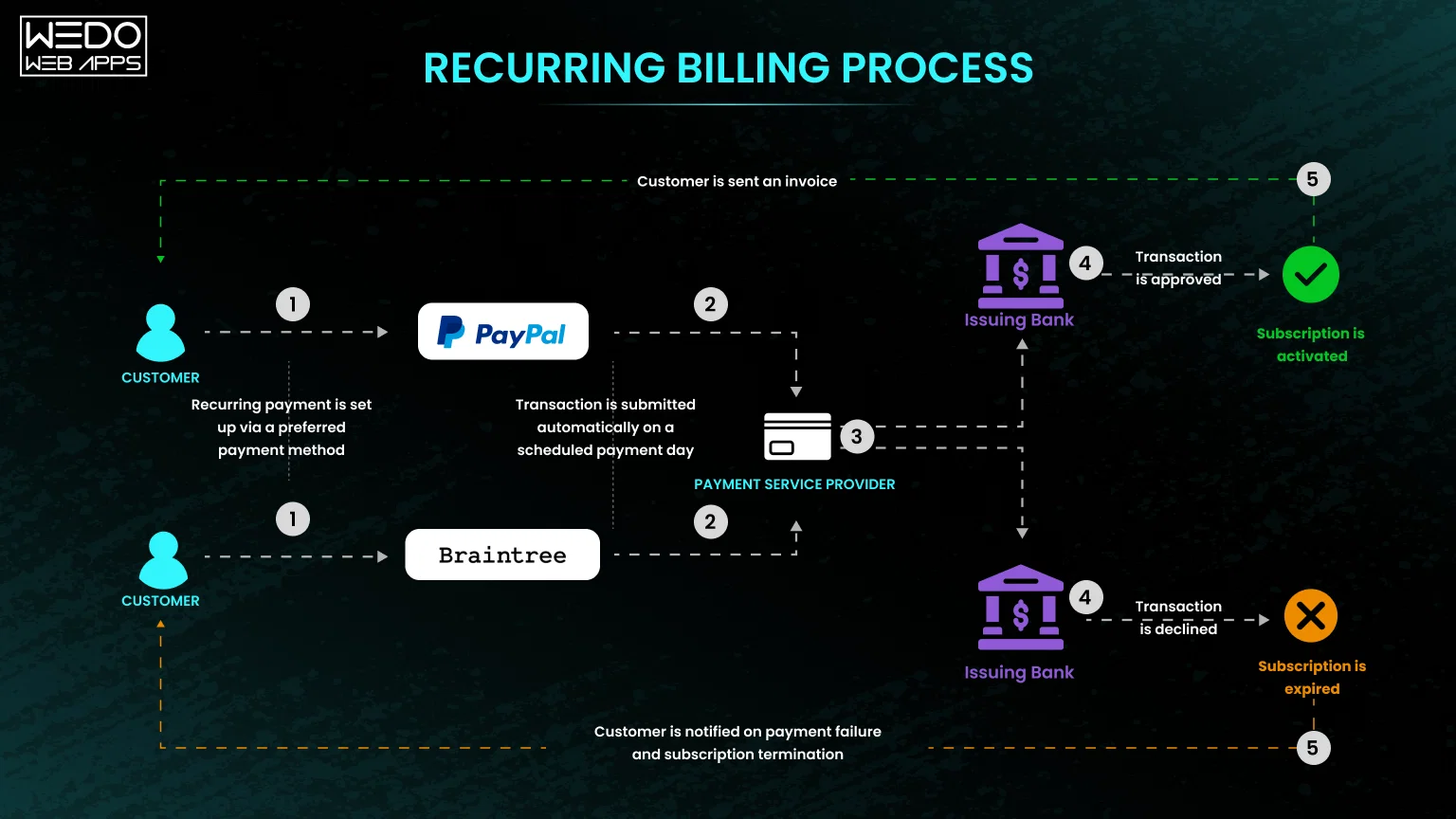
Choosing the right billing system is a core part of subscription billing integration, Stripe ReCharge for eCommerce. This layer controls how payments are processed, how subscriptions renew, and how failed transactions are handled. A weak billing setup can lead to revenue loss, while a well-configured system keeps cash flow stable and predictable.
These are three commonly used options, each suited for a different type of business.
Stripe Billing
Stripe is widely used for custom-built subscription platforms. It offers full control over billing logic, pricing models, and payment workflows.
Best for:- Custom platforms.
- Business with complex subscription rules.
- Multi-region or multi-currency setups.
- Requires development effort.
- Standard pricing is around 2.9% + $0.30 per transaction.
ReCharge
ReCharge is designed specifically for Shopify-based subscription businesses. It connects directly with the store and manages recurring billing without heavy development.
Best for:- Shopify users
- Quick subscription setup
- DTC brands launching fast
- Monthly fee starts around $99.
- Additional transaction percentage.
- Limited flexibility compared to custom setups.
Bold Commerce Subscriptions
Bold offers a simple subscription solution that works well for basic use cases. It is easier to set up, but not as flexible as Stripe or ReCharge.
Best for:- Small businesses
- Basic subscription models
- Quick implementation
- Starts around $49.99 per month.
- Limited advanced customization.
Comparison Overview
| Feature | Stripe | ReCharge | Bold |
|---|---|---|---|
| Flexibility | High | Medium | Low |
| Setup Effort | High | Low | Low |
| Custom Logic Support | Full | Limited | Basic |
| Platform fit | Custom builds | Shopify | Shopify/Basic setups |
| Pricing Model | Per transaction | Monthly + % | Monthly |
In most cases, businesses using Shopify choose ReCharge for speed, while brands building a custom platform prefer Stripe for control. The right choice depends on how complex your subscription model is and how much flexibility you need in the long run.

Build Custom vs Shopify + ReCharge - Decision Framework
Choosing between a ready-made setup and a custom solution is a key step in build vs buy subscription eCommerce platform decisions. The right choice depends on your budget, growth plans, and how complex your subscription model is.
Many founders ask: What is the best eCommerce platform for subscription box businesses?
The answer depends on how much control and scalability you need.
1. Budget
Your budget often decides the starting point.
- Shopify + ReCharge setup typically ranges from $5K to %20K.
- Custom-built platforms can range from $50K to $150K or more.
If you are validating an idea or launching quickly, a ready-made setup is more practical. If you are building for long-term scale, custom development becomes a stronger option.
2. Customization
Flexibility is where the difference becomes clear.
- Shopify with ReCharge offers limited customization.
- Custom platforms allow full control over subscription rules, pricing logic, and user experience.
If your business requires unique workflows like advanced box customization or dynamic pricing, a custom build is more suitable.
3. Scale
Your expected growth should guide your decision.
- Shopify works well for businesses up around $5M in annual revenue.
- Custom platforms are better suited for scaling beyond $10M or managing large subscriber bases.
As operations grow, limitations in a ready-made platform can start affecting performance and flexibility.
4. Speed to Market
Time plays a major role, especially for startups.
- Shopify + ReCharge can be launched within 2 to 4 weeks.
- A custom platform usually takes 3 to 6 months, depending on complexity.
If speed is critical, a pre-built solution helps you go live faster.
5. Unique Business Logic
Some subscription models require more than standard features.
- Fixed subscription plans work well with Shopify.
- Advanced needs like AI-driven personalization, multi-region billing, or complex bundling require custom development.
If your goal is to launch quickly with a proven setup, Shopify-based solutions are a practical starting point. If your focus is long-term scalability, deeper customization, and control over every part of the subscription experience, investing in a custom platform becomes the better choice.
Best eCommerce Platforms for Subscription Boxes
Choosing the right eCommerce subscription platform is the key decision for your brand planning to run recurring orders. The platform you select directly impacts how smoothly subscriptions are managed, how customers experience their plans, and how easily the business can scale over time.
For most businesses, the goal is to find the right balance between speed, flexibility, and long-term control over their subscription box eCommerce platform setup.
Below are the most widely used options, explained with practical use cases.
Shopify + ReCharge
This is one of the most common setups used in the eCommerce subscription box industry is Shopify app development. Shopify handles the store operations, while ReCharge manages recurring billing and subscription workflows.
Why brands choose this setup:- Fast setup for launching a subscription model.
- Business testing product-market fit.
- Simple to moderately complex subscription model.
- Early-stage subscription box brands.
- Businesses testing product-market fit.
- Simple to moderately complex subscription models.
- Limited flexibility for advanced subscription logic.
- Dependence on third-party apps for customization.
- Scaling can require additional paid tools.
WooCommerce + Stripe
This setup is often used by businesses that prefer more control over their eCommerce subscription platform. WooCommerce provides store flexibility, while Stripe manages secure recurring payments.
Why brands choose this setup:- Greater customization control compared to SaaS platforms.
- Suitable for content-heavy or SEO-driven stores.
- Flexible subscription configuration using plugins.
- WordPress-based businesses.
- Teams with technical support or development resources.
- Medium complexity subscription setups.
Custom-Built Subscription Platform
A custom-built subscription box eCommerce platform is designed from scratch based on business requirements. It removes platform limitations and allows full control over subscription logic, user experience, and integrations.
Why brands choose this setup:- Complete control over subscription workflows.
- Ability to build advanced features like personalization engines.
- Easier integration with internal systems and enterprise tools.
- Large-scale subscription businesses.
- Brands with unique subscription models.
- Companies are planning long-term expansion.
- Higher development cost.
- Longer build time.
- Requires ongoing technical management.
Quick Comparison
| Platform | Best For | Limitation |
|---|---|---|
| Shopify + ReCharge | Fast launch, simple setup | Limited customization |
| WooCommerce + Stripe | Flexible, WordPress-based | Requires technical management |
| Custom Platform | Scalable, fully controlled | High cost and development time |
Most businesses start with a ready-made eCommerce subscription platform to validate their idea quickly. As they grow, many transition toward custom solutions when they need more control over their subscription box eCommerce platform and advanced business logic.
In simple terms, the right best eCommerce platform for subscription box depends on your stage of growth, technical capacity, and how complex your subscription experience needs to be.
Tech Stack for Subscription Box Platforms
Once you have selected the right eCommerce subscription platform, the next step is understanding the technology that powers it. The tech stack defines how your platform performs, how flexible it is, and how easily it can scale as your eCommerce subscription box business grows.
Broadly, there are two approaches. A ready-made stack using pre-built platforms, and a custom stack built from the ground up.
Shopify-Based Tech Stack
A Shopify stack is the fastest way to launch a subscription box eCommerce platform without heavy development. It combines hosted infrastructure with plug-and-play integrations.
Typical setup includes:- Shopify for storefront, checkout, and product management.
- ReCharge for recurring billing and subscription workflows.
- Apps for shipping, email marketing, and analytics.
- No need to manage hosting or backend systems.
- Quick implementation with minimal technical effort.
- Reliable performance for small to mid-scale businesses.
- Customization is restricted to available apps and APIs.
- Complex subscription logic can be difficult to implement.
- Long-term costs increase with multiple app dependencies.
Custom Tech Stack
A custom stack is built based on your specific business requirements. It offers complete flexibility and control over how your eCommerce subscription platform operates.
Typical setup includes:- Front-end frameworks like React or Vue for the user interface.
- Backend system using Node.js or Laravel.
- Payment processing via Stripe.
- Database systems for managing subscriptions, users, and orders.
- Full control over subscription workflows and user experience.
- Ability to build advanced features like dynamic pricing or AI-driven personalization.
- Easier integration with internal tools such as ERP or custom CRM systems.
- Higher development time and cost.
- Requires ongoing technical maintenance.
- Needs a dedicated development team.
How to Choose the Right Stack
- Choose a Shopify-based stack if you want speed and simplicity.
- Choose a custom stack if you need flexibility and long-term scalability.
- Consider your growth plans before finalizing the architecture.
The tech stack acts like the engine of your platform. A simple setup works well at the start, but as your subscription model becomes more complex, the need for a more flexible and scalable system becomes clear. Picking the right stack early can save both time and cost in the long run.
How Much Does Subscription Platform Development Cost?
The cost of building an eCommerce subscription box platform development cost and features setup depends on how complex your requirements are, the level of customization needed, and the technology you choose. A simple setup can be launched quickly, while a fully custom platform requires more time and investment.
Below is a realistic breakdown to help you estimate your budget.
Cost by Platform Type
| Platform Type | Estimated Cost | Timeline | What You Get |
|---|---|---|---|
| Basic (SHopify + ReCharge) | $5K - $20K | 2-4 weeks | Ready-made store, subscription setup, basic customization |
| Mid-Level Custom | $50K - $80K | 3-4 weeks | Custom features, box logic, integrations |
| Enterprise Custom | $100K - $200K | 5-8 months | Advanced workflows, multi-region, high scalability |
Cost Breakdown by Component
Understanding where your budget goes helps in planning better:
- Backend development (30%): Handles subscription logic, billing workflows, and database structure.
- Frontend development (25%): Builds the customer-facing experience and user interface.
- Billing integration (15%): Setup and configuration of recurring payments using systems like Stripe.
- Admin dashboard (15%): Internal tools for managing subscriptions, users, and reports.
- Quality assurance (15%): Testing subscription flows, payments, and edge cases.
Ongoing Costs to Consider
Building the platform is only part of the investment. Ongoing costs are equally important for maintaining performance and stability.
- Hosting and infrastructure: $200 - $2000 per month, depending on scale.
- Maintenance and updates: 15-20% of the initial development cost per year.
- Third-party tools: Subscription apps, analytic tools, and integrations.
What Increases Development Cost
Several factors can push your costs higher:
- Complex subscription logic or dynamic pricing models.
- Advanced box customization features.
- Multi-currency and multi-region support.
- Integration with CRM, ERP, or external systems.
- High scalability requirements.
In most cases, businesses start with a lower-cost setup to validate their idea and then invest in a more advanced platform as they grow. The key is to align your budget with your current stage and future expansion plans.
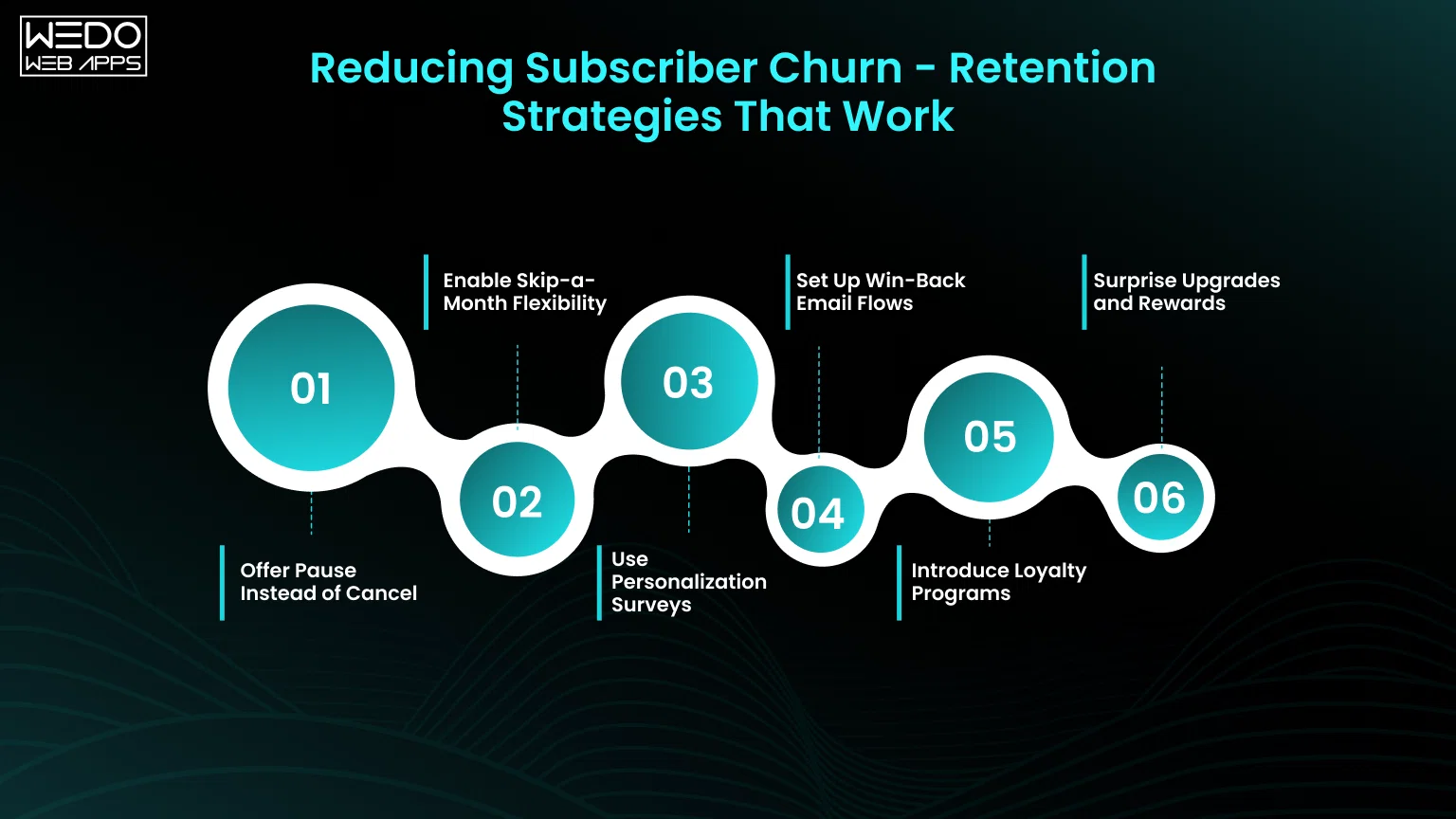
Reducing Subscriber Churn - Retention Strategies That Work
Acquiring subscribers is only half the job. Retaining them is what makes a subscription business profitable. This is where subscription box churn reduction strategies become critical. Even a small improvement in retention can significantly increase lifetime value and recurring revenue.
On average, subscription businesses see monthly churn rates between 10% and 15%, while top-performing brands keep it close to 5% to 7%. The difference comes down to how well the platform and customer experience are designed.
Below are practical strategies that consistently improve retention.
1. Offer Pause Instead of Cancel
Many users cancel because they want a temporary break. Giving them a pause option keeps them in your system instead of losing them completely.
Impact:- Reduces cancellations by 15% to 20%.
- Keeps customers engaged for future reactivation.
2. Enable Skip-a-Month Flexibility
Customers may not always need a delivery every cycle. Allowing them to skip shipments without canceling reduces friction.
Why it works:- Gives users more control.
- Prevents unnecessary cancellations due to timing issues.
3. Use Personalization Surveys
Understanding customer preferences helps deliver better product experiences. Simple onboarding or periodic surveys can guide box customization.
Result:- Higher satisfaction.
- Lower churn due to irrelevant products.
4. Set Up Win-Back Email Flows
Not all cancellations are permanent. Automated email sequences can bring users back.
Recommended timing:- Day 3 after cancellation
- Day 7 reminder
- Day 14 incentive offer
5. Introduce Loyalty Programs
Reward long-term subscribers with exclusive benefits, discounts, or early access.
Why it matters:- Encourages long-term commitment.
- Increases perceived value over time.
6. Surprise Upgrades and Rewards
Occasionally, adding a premium product or bonus item can improve customer experience.
Effect:- Builds positive emotional connection.
- Encourages continued subscriptions.
Retention is not just a marketing effort. It depends heavily on how your platform is built. Features like flexible controls, personalization, and automated communication play a direct role in reducing churn and improving customer lifetime value.
Conclusion
Building a successful subscription business goes beyond recurring payments. It requires the right combination of model, platform features, billing setup, and long-term scalability. From choosing the right eCommerce subscription platform to deciding between ready-made solutions and custom builds, each step directly impacts how your subscription business performs.
As the demand for eCommerce subscription box businesses continues to grow, brands that invest in the right technology early are better positioned to scale, retain customers, and create consistent revenue streams. The key is to align your platform decisions with your current stage while keeping future growth in mind.
If you are planning to build or upgrade your subscription platform, having a clear roadmap can save both time and cost.