Introduction
The eCommerce industry is becoming increasingly competitive, and businesses can no longer rely only on historical reports to make important decisions. Online retailers today need smarter ways to forecast customer behavior, manage inventory, improve retention, and increase revenue opportunities. This is why predictive analytics for eCommerce is becoming a major growth driver for modern online businesses.
Predictive analytics uses artificial intelligence, machine learning, and historical business data to identify patterns and predict future outcomes. Instead of reacting to problems after they happen, businesses can make proactive decisions using data-backed forecasts and customer insights.
For example, eCommerce businesses can use predictive analytics in eCommerce to:
- Forecast inventory demand
- Reduce overstock and stock shortages
- Identify customers likely to churn
- Personalize product recommendations
- Optimize pricing strategies
- Improve customer lifetime value
These capabilities help businesses improve operational efficiency while delivering better customer experiences across websites, mobile apps, and digital commerce platforms.
A growing number of startups, SMEs, and enterprise retailers are now investing in eCommerce predictive analytics to gain a competitive edge. AI-powered forecasting and automation systems are no longer limited to large enterprises with massive budgets. With scalable cloud technologies and modern machine learning frameworks, businesses of all sizes can implement predictive analytics solutions personalized to their goals.
However, building successful predictive systems requires more than just collecting customer data. Businesses also need the right AI models, scalable architecture, quality assurance processes, and seamless platform integrations. This is why many companies partner with experienced AI development and integration companies to build reliable predictive analytics solutions.
In this guide, we will explore how predictive analytics for eCommerce works, its major business use cases, implementation strategies, development costs, and the technologies businesses use to create scalable AI-powered eCommerce systems.
What is Predictive Analytics in eCommerce?
Predictive analytics in eCommerce refers to the use of artificial intelligence, machine learning, statistical models, and historical business data to predict future outcomes. Instead of only analyzing what happened in the past, predictive analytics helps eCommerce businesses forecast what is likely to happen next.
Modern online stores generate large volumes of data every day through customer purchases, browsing activity, product searches, cart behavior, inventory movement, and marketing campaigns. Predictive analytics systems use this data to identify patterns and generate actionable insights that support better business decisions.
For example, predictive analytics for eCommerce can help businesses:
- Forecast product demand
- Predict customer churn
- Optimize pricing strategies
- Personalize product recommendations
- Estimate customer lifetime value
- Improves sales forecasting accuracy
Traditional analytics mainly focuses on historical reporting. Predictive analytics goes one step further by helping businesses anticipate customer behavior and operational trends before they impact revenue or customer experience.
For instance, if an online retailer notices repeated cart abandonment from a specific customer segment, predictive models can identify those customers as high churn risks. Businesses can then trigger personalized offers, reminders, or loyalty campaigns before losing potential repeat buyers.
Similarly, inventory forecasting models can analyze:
- Seasonal demand trends
- Historical sales data
- Shopping behavior
- Regional buying patterns
- Promotional campaign performance
To help businesses maintain optimal stock levels and reduce inventory waste.
One of the biggest advantages of eCommerce predictive analytics is its ability to support real-time decision-making. Businesses no longer need to rely entirely on manual forecasting or guesswork. AI-powered systems can continuously process incoming customer and operational data to improve forecasting accuracy over time.
Predictive analytics also plays a major role in improving customer experiences. Recommendations engines powered by machine learning can analyze user behavior and automatically suggest relevant products, increasing customer engagement and average order value.
As eCommerce competition continues to grow, businesses are increasingly adopting predictive analytics solutions to improve operational efficiency, customer retention, and revenue growth. Startups often use predictive systems to scale efficiency, while enterprises rely on advanced AI models to manage large customer bases and complex supply chain operations.
However, implementing predictive analytics successfully requires proper data management, scalable infrastructure, and ongoing model optimization. Many businesses work with experienced AI development and integration companies to build reliable predictive systems that align with their operational and growth goals.
Key Benefits of Predictive Analytics for eCommerce Businesses
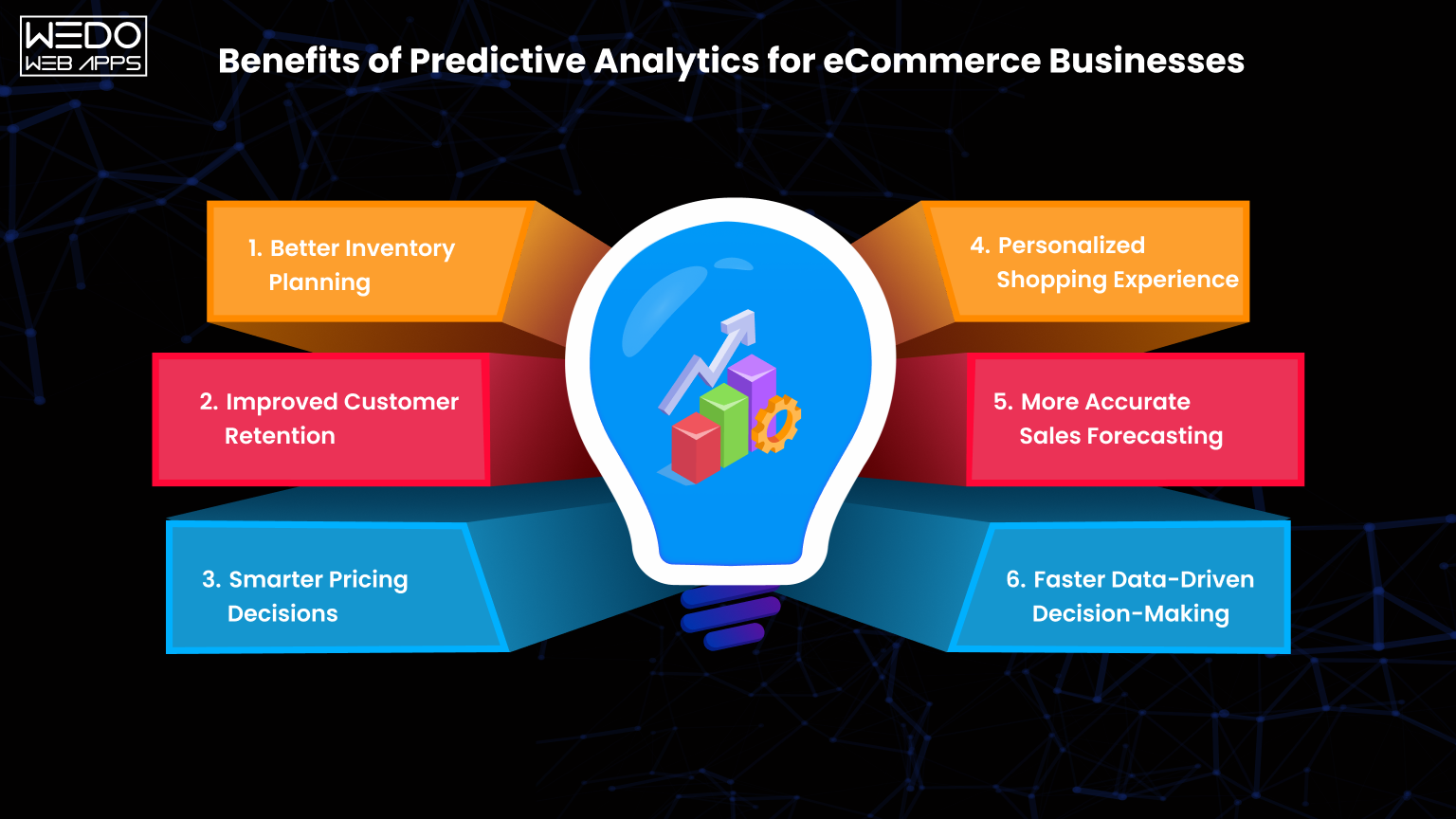
Businesses today are under constant pressure to improve customer experiences, optimize operations, and increase profitability while managing growing competition. This is where predictive analytics for eCommerce delivers measurable business value across multiple areas of an online retail ecosystem.
Instead of relying on assumptions or delayed reporting, predictive analytics helps businesses make faster and more accurate decisions using real-time and historical data patterns.
Better Inventory Planning
Inventory management is one of the biggest challenges for eCommerce businesses. Overstocking increases storage costs and inventory waste, while stock shortages can lead to lost sales and poor customer experiences.
Predictive analytics systems help businesses forecast future product demand using:
- Historical sales data
- Seasonal trends
- Customer purchasing behavior
- Regional buying patterns
- Marketing campaign performance
This allows businesses to maintain optimal stock levels and improve supply chain planning.
Improved Customer Retention
Acquiring new customers is often more expensive than retaining existing ones. Predictive models help businesses identify customers who may stop purchasing or disengage from the platform.
AI-powered churn prediction systems can analyze:
- Declining purchase frequency
- Reduced website activity
- Abandoned carts
- Lower engagement rates
Businesses can then launch targeted retention campaigns to prevent customers from leaving permanently.
Smarter Pricing Decisions
Pricing directly impacts customer conversions and profit margins. Predictive analytics in eCommerce helps businesses adjust pricing strategies based on demand fluctuations, competitor pricing, inventory levels, and customer behavior.
Dynamic pricing systems can automatically recommend or apply pricing updates in real time, helping businesses stay competitive while maximizing profitability.
Personalized Shopping Experience
Modern customers expect highly personalized online shopping experiences. Predictive recommendation engines use deep learning for eCommerce algorithms to analyze browsing history, purchase patterns, search behavior, and customer preferences.
These systems help businesses:
- Recommend relevant products
- Improve cross-selling opportunities
- Increase average order value
- Boost repeat purchases
Personalization also improves customer satisfaction and long-term engagement.
More Accurate Sales Forecasting
Sales Forecasting becomes significantly more accurate when businesses use predictive analytics models rather than relying solely on manual estimates.
Predictive systems can identify:
- Seasonal sales trends
- Product demand fluctuations
- Customer purchasing cycles
- Upcoming revenue opportunities
This helps businesses make better operational, marketing, and financial planning decisions.
Faster Data-Driven Decision-Making
One of the biggest advantages of eCommerce predictive analytics is the ability to process large amounts of business data quickly and continuously. Businesses can respond faster to market changes, customer behavior shifts, and operational challenges without depending entirely on manual analysis.
As predictive analytics adoption continues to grow, businesses are increasingly partnering with AI development and integration companies to build scalable forecasting systems, intelligent recommendation engines, and automated decision-making solutions personalized to their eCommerce operations.
Demand Forecasting AI for eCommerce Inventory Management
Managing inventory accurately is one of the biggest operational challenges for online retailers. Excess inventory increases storage costs and capital blockage, while stock shortages can result in lost sales and poor customer experiences. This is where predictive analytics for eCommerce helps businesses improve inventory planning through AI-powered demand forecasting.
Demand forecasting uses historical sales data, customer behavior patterns, seasonal trends, and external market signals to predict future product demand. Instead of relying only on manual estimates or past sales reports, businesses can use AI models to forecast inventory requirements with greater accuracy.
For example, an online fashion retailer may experience sudden demand spikes during festive seasons or promotional campaigns. Predictive forecasting systems can analyze previous seasonal sales, customer purchasing behavior, and product trends to estimate how much inventory will be required in advance.
Businesses using AI-based demand forecasting often improve:
- Inventory accuracy
- Warehouse efficiency
- Procurement planning
- Supplier coordination
- Order fulfillment performance
More importantly, predictive systems help reduce overstock and stockout situations that directly affect profitability and customer satisfaction.
One of the major advantages of predictive analytics in eCommerce is continuous learning. Machine learning models improve forecasting accuracy over time by analyzing updated sales and customer data regularly. This allows businesses to respond faster to changing customer preferences and market trends.
Demand forecasting is especially useful for:
- Seasonal businesses
- Multi-category eCommerce store
- Subscription-based retailers
- High-volume marketplaces
- Fast-growing D2C brands
For startups and SMEs, forecasting models help avoid unnecessary inventory investments during early growth stages. Enterprise retailers use advanced predictive systems to manage complex supply chains, regional demand fluctuations, and large-scale warehouse operations.
Modern forecasting systems can also integrate with:
- ERP platforms
- CRM systems
- Inventory management software
- Warehouse management systems
- eCommerce platforms
This creates a centralized decision-making process across business operations.
Accurate forecasting not only improves operational efficiency but also supports better customer experiences. Customers are more likely to trust online stores that consistently maintain product availability and delivery reliability.
As AI adoption continues to grow, many businesses are investing in machine learning development solutions to build custom forecasting systems personalized to their inventory structures, sales cycles, and operational workflows.
Customer Churn Prediction Models for Online Stores
Customer retention has become one of the most important growth factors for modern eCommerce businesses. While acquiring new customers often requires significant marketing investment, retaining existing customers is usually more cost-effective and profitable over the long term. This is why predictive analytics for eCommerce is increasingly used to identify customers who may stop purchasing before churn actually happens.
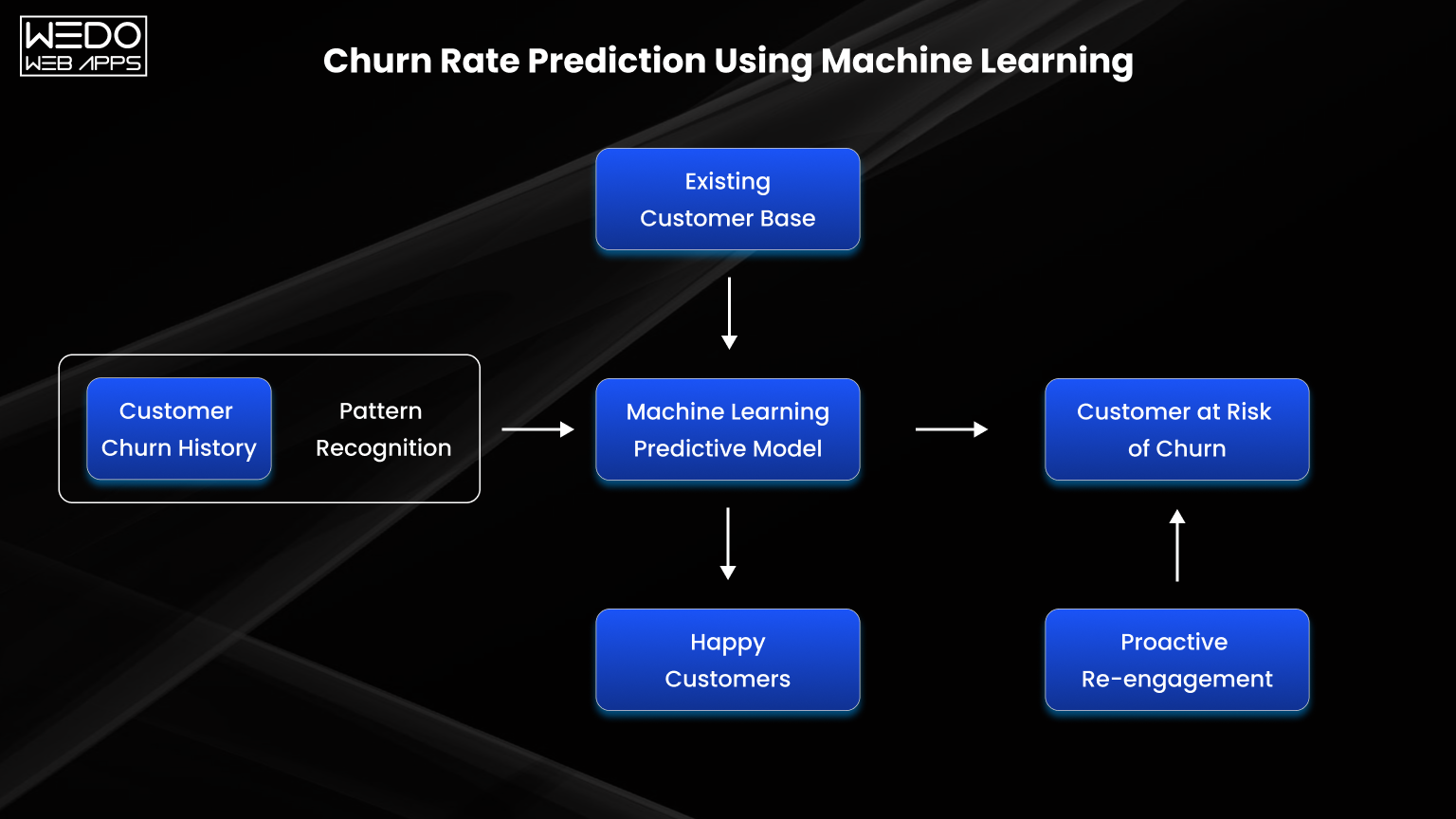
Customer churn prediction uses artificial intelligence and behavioral analysis to detect early warning signs of disengagement. These predictive models analyze customer activity patterns and identify users who are at high risk of leaving the platform or reducing their purchase frequency.
Churn prediction systems typically evaluate:
- Declining purchase activity
- Reduced website visits
- Abandoned carts
- Lower email engagement
- Inactive user sessions
- Reduced average order value
By identifying these behavioral signals early, businesses can take proactive steps to improve retention.
For example, if a customer who previously purchased every month suddenly becomes inactive for several weeks, the system can flag that user as a churn risk. Businesses can then trigger personalized retention campaigns such as:
- Discount offers
- Loyalty rewards
- Product recommendations
- Re-engagement emails
- Personalized notifications
This allows online retailers to reduce customer loss before revenue is affected.
Predictive analytics in eCommerce also helps businesses segment customers based on retention probability and long-term value. Instead of applying the same marketing strategy to every customer, brands can prioritize high-risk and high-value customer groups more effectively.
Subscription-based eCommerce businesses benefit especially from churn prediction models because recurring revenue depends heavily on customer retention. D2C brands and loyalty-driven online stores also use predictive analytics to improve repeat purchase behavior and customer engagement.
Machine learning models continuously improve churn prediction accuracy by analyzing updated customer interactions and engagement patterns. Over time, these systems become better at identifying which behaviors are most likely to result in customer drop-offs.
Businesses implementing churn prediction systems often achieve:
- improved customer retention
- lower customer acquisition dependency
- Higher repeat purchases
- stronger customer engagement
- improved marketing ROI
When combined with personalization and recommendation systems, churn prediction becomes even more effective in creating long-term customer relationships.
As competition continues to grow across digital commerce platforms, businesses are increasingly investing in predictive customer intelligence and AI development solutions to build smarter retention strategies and improve long-term customer value.
Dynamic Pricing Algorithm Development for eCommerce
Pricing plays a major role in customer purchasing decisions and overall business profitability. Setting prices too high can reduce conversions, while aggressive discounting can impact margins and long-term revenue. This is why many businesses are adopting predictive analytics for eCommerce to build dynamic pricing systems that respond to changing market conditions in real time.
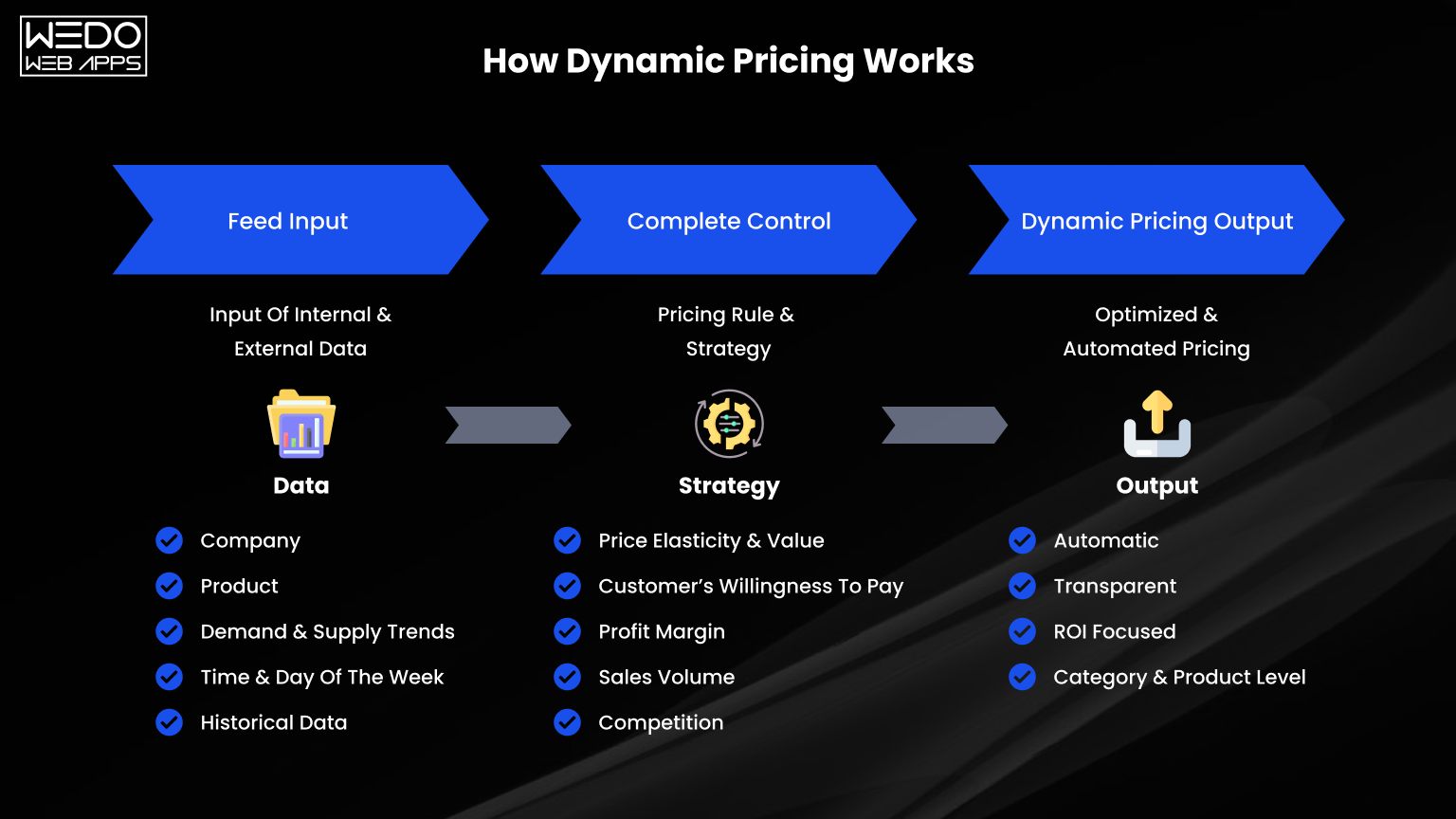
Dynamic pricing uses artificial intelligence, machine learning, and market data analysis to automatically adjust product prices based on multiple factors. Instead of relying on fixed pricing models, businesses can continuously optimize pricing strategies using predictive insights.
Dynamic pricing algorithms typically analyze:
- Customer demand
- Competitor pricing
- Inventory availability
- Seasonal trends
- Purchasing behavior
- Market fluctuations
- Promotional performance
These systems help businesses maintain competitive pricing while maximizing profitability and conversion opportunities.
For example, an electronics retailer may increase prices slightly during periods of high demand or limited inventory availability. Similarly, businesses can offer strategic discounts for products with slower sales performance to improve inventory movement.
Predictive analytics in eCommerce also helps businesses identify pricing trends across different customer segments and geographic regions. This allows retailers to create more targeted pricing strategies based on customer behavior and purchasing patterns.
Dynamic pricing is widely used in:
- Online marketplaces
- Travel booking platforms
- Electronics stores
- Fashion eCommerce businesses
- Grocery delivery apps
- Subscription commerce platforms
One of the biggest advantages of AI-driven pricing systems is automation. Businesses no longer need to manually monitor competitor prices or constantly update pricing strategies. Predictive models continuously analyze incoming data and recommend pricing adjustments automatically.
These systems can also improve:
- Profit margins
- Promotional effectiveness
- Sales velocity
- Conversion rates
- Inventory turnover
- Campaign performance
However, pricing automation must be implemented carefully to avoid customer dissatisfaction or inconsistent pricing experiences. Businesses need reliable testing, monitoring, and optimization processes to maintain pricing accuracy and platform stability.
Many growing brands combine predictive pricing systems with eCommerce development solutions to create scalable digital commerce platforms capable of supporting real-time pricing updates, personalized offers, and automated promotional strategies across web and mobile channels.
Personalized Recommendation Engines in eCommerce
Modern customers expect personalized shopping experiences across every digital touchpoint. Generic product listings and one-size-fits-all marketing strategies are no longer enough to maintain customer engagement. This is why predictive analytics for eCommerce plays a major role in powering intelligent recommendation engines.
Recommendation systems use artificial intelligence and customer behavior analysis to suggest products that are most relevant to individual users. These systems analyze large amounts of customer and product data to identify purchasing patterns and predict future buying preferences.
Recommendation engines typically use:
- Browsing history
- Purchase behavior
- Search activity
- Wishlist data
- Cart interactions
- Product preferences
- Customer similarity patterns
Based on these insights, the system automatically recommends products that customers are more likely to purchase.
For example, if a customer frequently purchases fitness-related products, the recommendation engine may suggest workout accessories, nutritional products, or related equipment during future visits. Similarly, eCommerce platforms often display sections such as:
- "Customers also bought"
- "Recommended for you"
- "Frequently purchased together"
- "Recently viewed products"
These personalized experiences help businesses improve customer engagement and increase conversion opportunities.
Predictive analytics in eCommerce also helps recommendation systems improve continuously over time. Machine learning models analyze updated customer interactions regularly, allowing recommendations to become more accurate as user behavior changes.
Recommendation engines are especially valuable for:
- Fashion retailers
- Electronics stores
- Streaming commerce platforms
- Online marketplaces
- Subscription-based businesses
- Grocery delivery platforms
Businesses implementing personalized recommendation systems often achieve:
- Higher average order value
- Improved repeat purchases
- Stronger customer engagement
- Increased conversion rates
- Better cross-selling opportunities
Personalization also improves customer satisfaction by helping users discover products more efficiently. This creates a smoother shopping journey and encourages long-term customer loyalty.
As personalization becomes a core competitive advantage, many online retailers are investing in predictive recommendation systems and scalable mobile app development solutions to deliver consistent personalized experiences across websites, mobile apps, and omnichannel commerce platforms.
Customer Lifetime Value Prediction Using Machine Learning
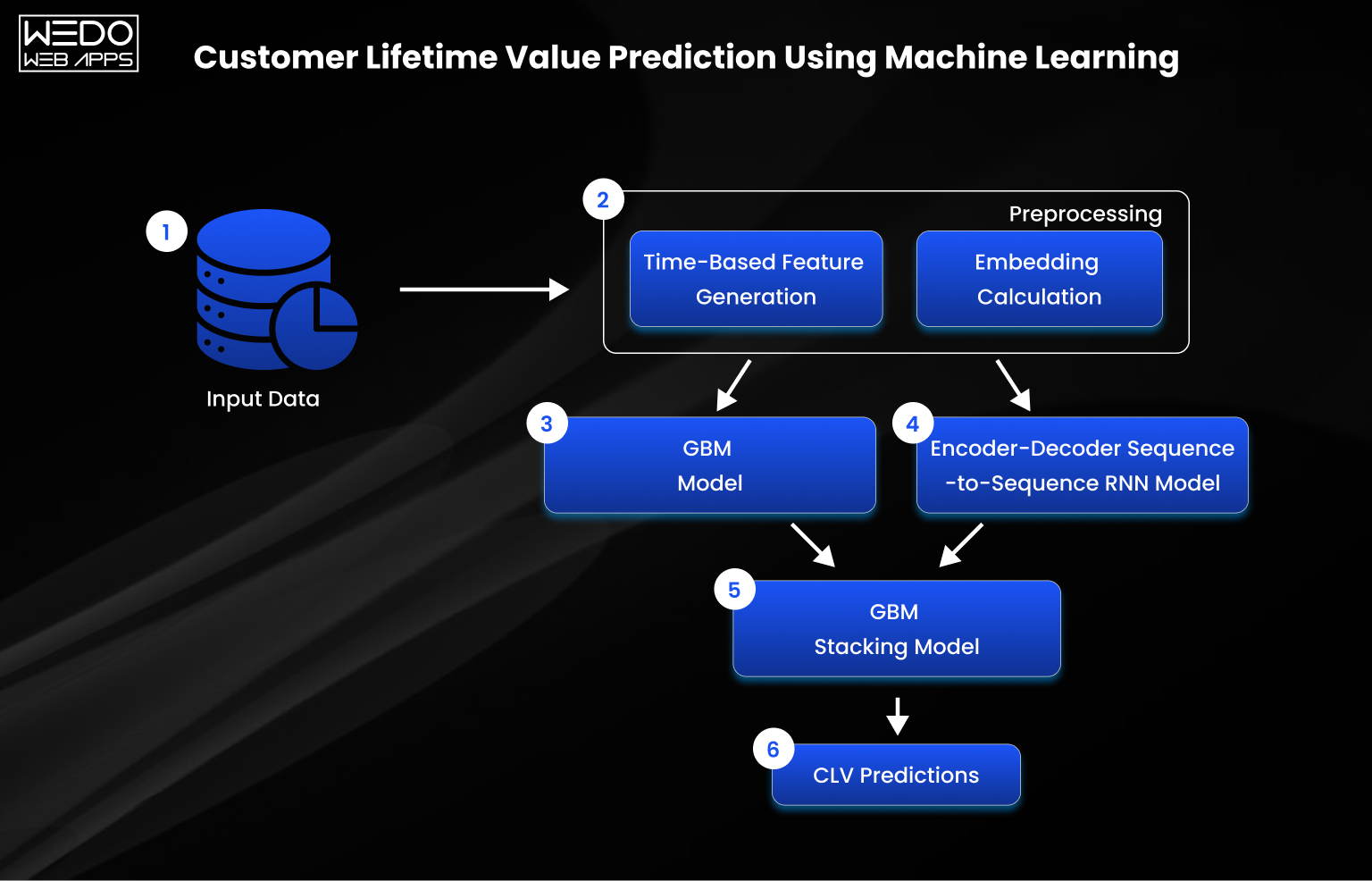
Not all customers contribute the same long-term value to an eCommerce business. Some customers make frequent repeat purchases and generate consistent revenue over time, while others may purchase only once and never return. This is why predictive analytics for eCommerce is widely used to estimate customer lifetime value (CLV) and improve long-term business decision-making.
Customer lifetime value prediction helps businesses estimate how much revenue a customer is likely to generate throughout their relationship with the brand. Instead of focusing only on short-term sales, businesses can identify high-value customer segments and invest in long-term retention strategies more effectively.
CLV prediction models typically analyze:
- Purchase frequency
- Average order value
- Customer engagement
- Browsing behavior
- Repeat purchase history
- Retention patterns
- Loyalty activity
Using these insights, predictive systems estimate which customers are likely to deliver the highest long-term value.
For example, if a customer consistently purchases premium products every month and actively engages with the brand, predictive models may classify that user as a high-value customer. Businesses can then prioritize personalized experiences, loyalty rewards, and premium support for that segment.
Predictive analytics in eCommerce also helps businesses optimize marketing investments. Instead of spending equally across all customer groups, brands can allocate budgets toward customers with stronger long-term revenue potential.
CLV prediction supports multiple business functions, including:
- Customer retention strategies
- Loyalty program optimization
- Personalized marketing campaigns
- Upselling opportunities
- Customer segmentation
- Revenue forecasting
For startups and fast-growing online retailers, CLV analysis helps improve customer acquisition efficiency by identifying which channels attract the most valuable customers over time.
Enterprise eCommerce businesses often combine lifetime value prediction with churn prediction and recommendation systems to build highly personalized customer journeys. This creates better engagement while improving overall customer profitability.
Machine learning models continuously improve CLV prediction accuracy as more customer interaction data becomes available. Businesses can therefore adapt marketing and retention strategies dynamically based on changing customer behavior patterns.
Building reliable lifetime value prediction systems requires accurate data processing, model testing, and performance validation. Many businesses use quality assurance services to ensure predictive models deliver consistent accuracy, scalability, and reliable customer insights across large eCommerce environments.
Technologies Used for Predictive Analytics Development
Building scalable predictive analytics systems requires the right combination of technologies, data infrastructure, machine learning frameworks, and cloud services. The technology stack directly impacts forecasting accuracy, system scalability, integration capabilities, and overall performance.
Modern predictive analytics for eCommerce solutions are designed to process large volumes of customer, operational, and transactional data in real time. Businesses, therefore, need flexible and scalable technologies that support continuous learning and fast decision-making.
Programming Languages for Predictive Analytics
Python is one of the most widely used programming languages for predictive analytics and machine learning development. It offers extensive libraries, faster development capabilities, and strong support for AI model training and data processing.
Other commonly used languages include:
- R
- Java
- Scala
However, Python remains the preferred choice for most eCommerce predictive analytics projects due to its ecosystem and scalability.
Machine Learning Frameworks and Libraries
Machine learning frameworks help businesses build, train, and optimize predictive models more efficiently.
Popular frameworks include:
- scikit-learn
- TensorFlow
- PyTorch
- XGBoost
These frameworks support multiple predictive use cases, such as Deep Learning for eCommerce, including:
- Demand forecasting
- Recommendation systems
- Churn prediction
- Pricing optimization
- Customer segmentation
Machine learning frameworks support the development and training of predictive models for eCommerce use cases. For more complex datasets and advanced prediction requirements, businesses can also use deep learning models. These models can process large volumes of data and identify complex patterns for applications such as demand forecasting, customer behavior analysis, and recommendation systems. Businesses looking to build customized models can consider deep learning development services.
Data Processing and Analytics Tools
Predictive analytics systems depend heavily on accurate data processing and analysis. Businesses use data management tools to clean, organize, and transform large datasets before training predictive models.
Commonly used technologies include:
- Pandas
- NumPy
- Apache Spark
- Hadoop
Visualization tools such as:
- Power BI
- Tableau
- Google Looker Studio
help businesses monitor predictive insights and operational performance more effectively.
Cloud Infrastructure and Scalability
Cloud platforms play a major role in modern predictive analytics in eCommerce because predictive systems require scalable computing power, storage, and real-time processing capabilities.
Popular cloud platforms include:
- Amazon Web Services (AWS)
- Microsoft Azure
- Google Cloud Platform (GCP)
Cloud infrastructure helps businesses:
- Scale AI workload efficiently
- Process large datasets faster
- Reduce infrastructure management complexity
- Support real-time analytics
Data Sources and Platform Integrations
Predictive analytics systems usually integrate with multiple business platforms to collect and process operational data effectively.
Common integrations include:
- CRM platforms
- ERP systems
- Shopify
- Magento
- WooCommerce
- Inventory management system
- Marketing automation platforms
These integrations create centralized data environments that improve forecasting accuracy and business visibility.
Choosing the right technology stack depends on factors such as business size, operational complexity, scalability goals, and customer data volume. Businesses often build custom predictive ecosystems that align with their long-term digital commerce strategies and operational requirements.
How to Implement Predictive Analytics in eCommerce
Implementing predictive analytics successfully requires more than deploying AI models or collecting customer data. Businesses need a structured implementation strategy that aligns predictive systems with operational goals, customer experiences, and long-term scalability.
The implementation process typically involves data preparation, model development, integration planning, testing, and continuous optimization.
Step 1: Define Clear Business Objectives
The first step is identifying the specific business problems predictive analytics should solve. Different eCommerce businesses may prioritize different goals depending on their operational challenges and growth stage.
Common objectives include:
- Reducing inventory waste
- Improving customer retention
- Increasing repeat purchases
- Optimizing pricing strategies
- Improving sales forecasting
- Enhancing personalization
Clearly defined goals help businesses select the right predictive models and implementation approach.
Step 2: Collect and Organize Business Data
Predictive analytics systems rely heavily on data quality. Businesses must collect accurate and structured data from multiple operational sources before training predictive models.
Important data sources include:
- Transaction history
- Customer behavior data
- Website interactions
- Inventory records
- CRM data
- Marketing campaign performance
- Support interactions
Poor quality or incomplete data can significantly reduce prediction history.
Step 3: Choose the Right Predictive Models
Different use cases require different AI and machine learning models. For example:
- Demand forecasting models help predict inventory requirements
- Churn prediction models identify at-risk customers
- Recommendation engines personalize shopping experiences
- Pricing models optimize product pricing dynamically
The model selection process depends on business goals, available data, and operational complexity.
Step 4: Train and Validate the Models
After selecting predictive models, businesses must train them using historical business data. During this phase, machine learning systems identify patterns and improve forecasting accuracy over time.
Model validation is equally important because businesses must ensure:
- Prediction accuracy
- Scalability
- Data consistency
- Operational reliability
This stage often includes testing multiple forecasting scenarios before deployment.
Step 5: Integrate Predictive Systems with Existing Platforms
Predictive analytics solutions typically integrate with:
- eCommerce platforms
- Inventory management systems
- CRM software
- Marketing automation tools
- Mobile applications
- Analytics dashboards
Seamless integration improves operational visibility and allows businesses to automate decision-making across departments.
Many businesses invest in AI development solutions to build customized predictive systems that align with their platform architecture and operational workflows.
Step 6: Monitor, Optimize, and Scale Continuously
Predictive analytics is not a one-time implementation process. Customer behavior, market conditions, and operational patterns continuously evolve over time.
Businesses must regularly:
- Monitor prediction performance
- Retrain AI models
- Update datasets
- Optimize forecasting accuracy
- Improve automation workflows
Continuous optimization helps businesses maintain reliable predictive performance as operations scale.
Companies that implement predictive analytics strategically often achieve stronger operational efficiency, improved customer experiences, and better long-term decision-making across their eCommerce ecosystems.
Predictive Analytics Development Cost for eCommerce
The cost of implementing predictive analytics for eCommerce depends on multiple factors, including business size, project complexity, data volume, AI model requirements, and platform integration needs. Some businesses only require basic forecasting capabilities, while others need enterprise-grade predictive systems capable of processing large-scale real-time customer and operational data.
For startups and SMEs, predictive analytics projects often begin with smaller MVP development implementations focused on solving a specific business problem, such as inventory forecasting or customer churn prediction. Enterprise businesses, on the other hand, usually require more advanced predictive ecosystems integrated across multiple departments and platforms.
Several factors directly influence predictive analytics development costs.
Data Collection and Preparation
Data preparation is one of the most important stages of predictive analytics implementation. Businesses often need to collect, clean, organize, and standardize large amounts of historical and operational data before training predictive models.
The complexity of:
- Customer data
- Sales records
- Inventory data
- Behavioral analytics
- Third-party integrations
can significantly impact development timelines and overall project costs.
AI Model Complexity
Different predictive use cases require different machine learning models and processing capabilities.
For example:
- Basic forecasting models are generally less expensive
- Recommendation engines require more advanced behavioral analysis
- Real-time pricing systems involve continuous data processing
- Enterprise AI ecosystems require higher computational infrastructure
As predictive systems become more sophisticated, development costs increase accordingly.
Platform Integrations
Most predictive analytics systems integrate with existing business platforms such as:
- Shopify
- Magento
- WooCommerce
- ERP systems
- CRM software
- Inventory management platforms
- Analytics dashboards
Complex integrations often require additional deployment, testing, and infrastructure optimization efforts.
Cloud Infrastructure and Scalability
Cloud infrastructure costs also play a major role in predictive analytics implementation. Businesses processing large volumes of real-time data may require scalable cloud environments capable of supporting:
- AI model training
- High-volume data storage
- Automated processing
- Real-time analytics
Infrastructure costs generally increase as predictive systems scale across multiple regions, products, and customer segments.
Development Team Requirements
Predictive analytics projects may involve:
- AI engineers
- Data scientists
- Backend developers
- Cloud architects
- QA specialists
- DevOps teams
Large and more customized projects naturally require broader technical expertise and longer implementation timelines.
Estimated Predictive Analytics Development Timeline
| Project Type | Estimated Timeline |
|---|---|
| Basic Predictive MVP | 6 - 8 weeks |
| Mid-Level Predictive System | 3 - 5 months |
| Enterprise Predictive Ecosystem | 6 - 12 months |
Estimated Cost Ranges
| Project Complexity | Estimated Cost Range |
|---|---|
| Basic Forecasting Solution | Moderate |
| Mid-Level Predictive Platform | High |
| Enterprise AI Analytics System | Very High |
Ongoing maintenance, model optimization, infrastructure scaling, and performance monitoring should also be considered as part of long-term predictive analytics investment planning.
Businesses planning large-scale predictive implementations often work with specialized development teams to build scalable AI ecosystems that align with operational goals, customer growth strategies, and long-term digital transformation plans.
Common Challenges in Predictive Analytics Implementation
Although predictive analytics for eCommerce offers significant business advantages, implementation is not always straightforward. Many businesses struggle with data quality issues, integration complexity, scalability limitations, and forecasting accuracy during the adoption process.
Understanding these challenges early helps businesses build more reliable and scalable predictive analytics systems.
Poor Data Quality
Predictive models depend heavily on accurate and structured data. If customer, sales, or inventory data is incomplete, outdated, or inconsistent, forecasting accuracy can decrease significantly.
Common data quality issues include:
- Duplicate records
- Missing customer information
- Inconsistent product data
- Fragmented analytics system
- Inaccurate inventory records
Businesses must establish strong data management processes before implementing predictive analytics solutions.
Siloed Business Systems
Many eCommerce businesses use multiple disconnected platforms for:
- CRM management
- Inventory tracking
- Marketing automation
- Customer support
- Sales analytics
When systems operate independently, predictive models may not receive complete operational data. This reduces forecasting reliability and limits overall business visibility.
Integrating centralized data pipelines is often necessary to improve predictive performance.
Model Accuracy and Bias
Predictive models improve over time, but inaccurate training data or biased datasets can affect prediction quality. For example, recommendation engines trained on limited customer behavior data may generate irrelevant suggestions.
Similarly, churn prediction systems may fail to identify customer risks accurately if historical engagement patterns are incomplete.
Businesses must regularly:
- Retrain predictive models
- Monitor forecasting accuracy
- Validate AI outputs
- Update datasets
to maintain reliable performance.
Scalability Challenges
As eCommerce businesses grow, predictive systems must handle larger data volumes, increased customer activity, and more complex operational workflows.
Scalability issues often appear when businesses:
- Expand product catalogs
- Enter new markets
- Increase transaction volumes
- Scale omnichannel operations
Without scalable cloud infrastructure and optimized architecture, predictive systems may experience slower processing and reduced efficiency.
Real-Time Processing Complexity
Modern eCommerce operations increasingly depend on real-time decision-making. Dynamic pricing, personalized recommendations, and inventory forecasting often require instant data processing capabilities.
Building real-time predictive systems can be technically challenging because businesses need:
- continuous data synchronization
- fast processing pipelines
- low-latency infrastructure
- scalable APIs
This increases both implementation complexity and infrastructure requirements.
Privacy and Compliance Concerns
Predictive analytics systems process large amounts of customer and behavioral data. Businesses must therefore comply with privacy regulations and ensure secure data handling practices.
Important considerations include:
- customer consent management
- data encryption
- secure cloud storage
- access controls
- regulatory compliance
Failure to manage customer data responsibly can create legal and reputational risks.
Ongoing Maintenance and Optimization
Predictive analytics is not a static implementation. Customer behavior, market conditions, and operational patterns constantly evolve, requiring businesses to continuously optimize their predictive systems.
Regular monitoring, testing, and quality assurance services help businesses maintain forecasting accuracy, platform stability, and long-term predictive performance across evolving eCommerce environments.
Future Trends in eCommerce Predictive Analytics
As artificial intelligence and data technologies continue to evolve, predictive analytics for eCommerce is becoming more advanced, automated, and real-time driven. Businesses are moving beyond basic forecasting models and adopting intelligent systems capable of making faster and more accurate operational decisions across the entire customer journey.
The future of predictive analytics will focus heavily on automation, personalization, and real-time customer intelligence.
Real-Time Predictive Decision-Making
Traditional forecasting models often rely on periodic data updates. Modern predictive systems are now shifting toward real-time analytics that continuously process customer and operational data as it is generated.
This allows businesses to:
- Adjust pricing instantly
- Update recommendations dynamically
- Forecast inventory changes faster
- Respond to customer behavior immediately
Real-time predictive systems help businesses improve responsiveness and operational agility.
Hyper-Personalized Shopping Experiences
Personalization is expected to become even more advanced in the coming years. Predictive models will increasingly analyze:
- Browsing behavior
- Purchasing intent
- Engagement patterns
- Contextual interactions
- Device usage
to deliver highly individualized shopping experiences across websites, mobile apps, and digital commerce platforms.
Future recommendation systems will likely predict customer intent before customers actively search for products.
AI-Powered Autonomous Pricing
Dynamic pricing systems are evolving toward autonomous pricing engines capable of making intelligent pricing decisions with minimal manual intervention.
These systems will continuously evaluate:
- Market demand
- Competitor pricing
- Inventory movement
- Customer purchasing patterns
- Regional buying behavior
to optimize pricing automatically in real time.
This will help businesses improve both conversion rates and profit margins more efficiently.
Predictive Supply Chain Intelligence
Supply chain optimization will become a major focus area for predictive analytics in eCommerce. AI-powered forecasting systems will help businesses anticipate:
- Supplier delays
- Shipping disruptions
- Inventory shortages
- Regional demand fluctuations
more accurately than traditional planning methods.
This will improve operational resilience and reduce supply chain inefficiencies.
Generative AI and Predictive Commerce
Generative AI and Agentic AI for eCommerce are expected to play a growing role in predictive commerce experiences. Businesses may increasingly use AI systems to generate:
- Personalized shopping journeys
- Intelligent product bundles
- Automated marketing content
- Predictive customer support interactions
based on customer behavior and real-time engagement data.
This creates more adaptive and interactive digital commerce experiences.
Omnichannel Predictive Analytics
As customer journeys become more fragmented across devices and platforms, businesses are investing in predictive systems that unify data across:
- Websites
- Mobile applications
- Marketplaces
- Social commerce channels
- Physical retail touchpoints
This allows businesses to create more consistent and connected customer experiences across all channels.
Companies investing early in predictive intelligence and scalable AI development and integration companies partnerships are likely to gain a stronger competitive advantage as eCommerce becomes increasingly automated, data-driven, and customer-centric in the coming years.
Conclusion
As eCommerce competition continues to grow, businesses can no longer rely only on historical reports and manual decision-making. Predictive analytics for ecommerce helps brands forecast demand, reduce customer churn, personalize shopping experiences, and optimize pricing using real-time data and AI-driven insights.
From startups to enterprise retailers, businesses are increasingly adopting predictive analytics in eCommerce to improve operational efficiency, customer retention, and long-term scalability. Companies that invest early in intelligent forecasting and automation systems will be better positioned to deliver faster, smarter, and more personalized digital commerce experiences in the years ahead.