



Introduction: Why eCommerce Website Security Matters
eCommerce websites handle sensitive customer data, including payment details, login credentials, and personal information. Without proper security, these platforms become easy targets for cyberattacks, fraud, and data breaches.
For online businesses, weak security can lead to:
- Financial losses from fraud or downtime
- Customer data breaches
- Loss of trust and brand reputation
- Compliance and legal issues
Implementing strong eCommerce website security helps protect customer data, secure transactions, and maintain a trustworthy online store.
In this guide, we will cover:
- What eCommerce website security means
- Common threats affecting eCommerce sites
- Essential security features for eCommerce websites
- Proven eCommerce security solutions and best practices
A well-secured eCommerce website not only protects your business but also builds customer confidence in online shopping. Businesses investing in custom ecommerce development solutions can integrate advanced security features directly into their online store architecture.

What is eCommerce Website Security?
eCommerce website security refers to the technologies, protocols, and practices used to protect online stores, customer data, and digital transactions from cyber threats.
Since eCommerce websites process payments and personal information, they must implement multiple layers of protection to prevent unauthorized access, fraud, and data breaches.
In simple terms, eCommerce security ensures that:
- Customer data remains private and protected
- Online transactions are encrypted and secure
- Websites are protected from malware, hacking attempts, and fraud
- Businesses comply with industry security standards
What Does Security for eCommerce Sites Protect?
A secure eCommerce website protects several critical components of an online store:
1. Customer Data
- Names, addresses, phone numbers
- Email accounts and login credentials
- Payment and billing details
2. Payment Transactions
- Credit and debit card information
- Payment gateway communications
- Checkout process security
3. Website Infrastructure
- Servers and hosting environments
- Databases storing customer and order data
- Admin dashboards and backend systems
4. Business Operations
- Inventory and order management
- Customer accounts
- Website uptime and performance
Core Security Principles Behind Secure eCommerce
Strong eCommerce security strategies are based on four key principles:
- Confidentiality: Ensures sensitive customer information remains private.
- Integrity: Protects data from being altered or manipulated by attackers.
- Authentication: Verifies the identity of users, administrators, and systems.
- Availability: Keeps the eCommerce website accessible and operational without disruptions.
Together, these principles form the foundation of secure eCommerce environments that protect both businesses and customers during online shopping.
Why Security is Critical for eCommerce Sites
eCommerce websites process large volumes of customer data and financial transactions every day. This makes them attractive targets for hackers looking to steal payment details, access databases, or disrupt business operations.
Without strong eCommerce website security, even a small vulnerability can expose sensitive information and damage customer trust.
Major Risk of Poor eCommerce Security
If an online store lacks proper security measures, businesses may face several serious risks:
- Data breaches exposing customer information and payment details
- Financial fraud through stolen credit card data
- Unauthorized access to admin dashboards or databases
- Website downtime caused by cyberattacks like DDoS
- Malware infections that compromise website functionality
These incidents can lead to significant financial losses and long-term damage to a brand’s reputation.
Business Impact of eCommerce Security Breaches
A successful cyberattack can affect multiple areas of an eCommerce business.
Financial Losses
- Fraudulent transactions
- Revenue loss due to downtime
- Cost of incident response and recovery
Legal and Compliance Issues
- Violations of payment security standards, such as PCI DSS
- Data protection regulations
- Potential lawsuits or regulatory penalties
Loss of Customer Trust
- Customers may stop purchasing from a compromised website
- Negative reviews and reputational damage
Benefits of Secure eCommerce Websites
Implementing strong security features for eCommerce websites helps businesses operate safely and build customer confidence.
Key benefits include:
- Safe online transactions
- Protection of customer data
- Reduced risk of fraud and cyberattacks
- Higher customer trust and loyalty
- Improved website reliability and uptime
A secure eCommerce website not only protects the business but also creates a safe and reliable environment for online shopping.
Common eCommerce Security Threats
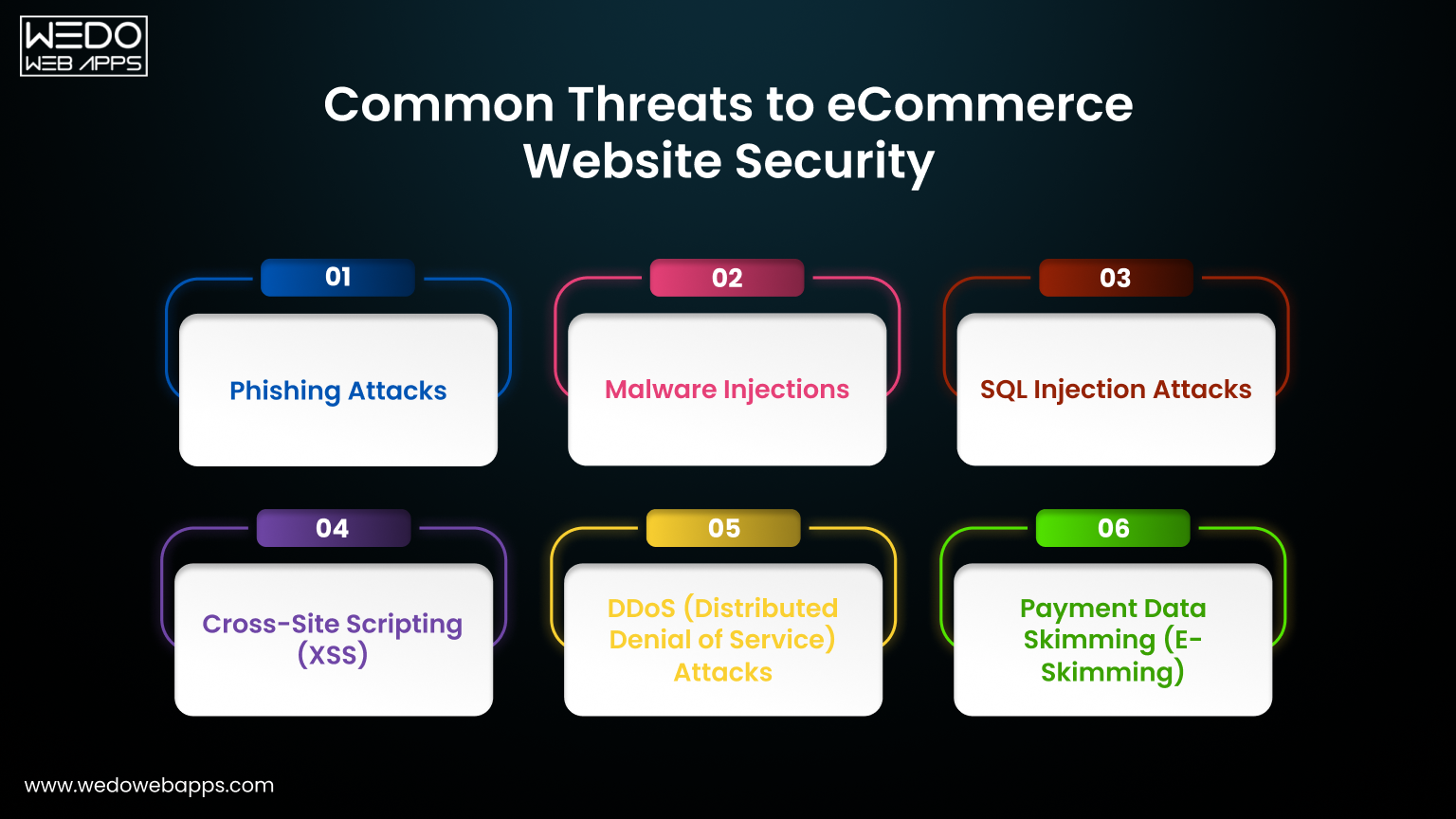
eCommerce websites face a wide range of cyber threats that can compromise customer data, payment transactions, and overall website functionality. Understanding these threats is the first step toward implementing effective eCommerce security solutions.
Below are some of the most common security risks affecting online stores today.
1. Phishing Attacks
Phishing is one of the most common threats to security in online shopping. Attackers create fake emails, messages, or websites that appear legitimate in order to trick users into revealing sensitive information.
Common phishing targets include:
- Customer login credentials
- Admin dashboard access
- Payment information
- Email accounts connected to the store
If attackers gain access to admin credentials, they can manipulate the website, steal data, or redirect payments.
2. Malware Injections
Malware refers to malicious software inserted into an eCommerce website to steal data or damage systems.
Hackers typically inject malware through:
- Vulnerable plugins or extensions
- Outdated eCommerce platforms
- Weak admin passwords
- Compromised hosting environments
Once installed, malware can:
- Steal customer payment information
- Redirect users to malicious websites
- Monitor user activity on the store
3. SQL Injection Attacks
SQL injection is a technique where attackers insert malicious database queries into website forms or input fields.
If successful, attackers may be able to:
- Access sensitive customer data
- Modify or delete a database record
- Bypass login authentication
- Gain administrative control of the website
This attack targets the database layer of eCommerce websites, making it particularly dangerous.
4. Cross-Site Scripting (XSS)
Cross-Site Scripting attacks occur when attackers inject malicious scripts into web pages that are later executed in a user’s browser.
These scripts can:
- Steal session cookies
- Capture login credentials
- Redirect users to malicious pages
- Perform unauthorized actions on behalf of users
XSS attacks often occur when websites fail to properly validate user input.
5. DDoS (Distributed Denial of Service) Attacks
DDoS attacks flood a website with massive volumes of traffic, overwhelming the server and making the website unavailable.
For eCommerce businesses, this can result in:
- Website downtime during peak sales periods
- Interrupted checkout processes
- Loss of revenue and customers
- Damage to brand reputation
Even short periods of downtime can significantly impact online stores.
6. Payment Data Skimming (E-Skimming)
E-skimming attacks specifically target eCommerce checkout pages. Hackers inject malicious code that captures payment card information as customers enter it.
Stolen information often includes:
- Credit card numbers
- CVV codes
- Billing addresses
- Customer names
This type of attack directly impacts security for eCommerce sites, as it compromises the most sensitive part of the purchasing process.
Why Understanding Threats Matters
Recognizing these threats allows businesses to implement the right security features for eCommerce websites and proactively protect their platforms.
Strong eCommerce security strategies focus on:
- Preventing vulnerabilities
- Detecting suspicious activity early
- Responding quickly to cyber threats
The next step is implementing the essential security features that every eCommerce website should have to stay protected. Businesses often hire dedicated ecommerce developers to implement secure payment systems, authentication layers, and protection against common cyber threats.
Essential Security Features for eCommerce Websites
To protect customer data and transactions, every online store must implement multiple layers of security. These security features for eCommerce websites help prevent cyberattacks, protect payment information, and ensure a safe online shopping experience.
Below are the most important security features that help create a secure eCommerce environment.
1. SSL Certificates and HTTPS Encryption
An SSL (Secure Sockets Layer) certificate encrypts the data transferred between a user’s browser and the eCommerce server.
This ensures that sensitive information, such as:
- Credit card numbers
- Login credentials
- Personal details
Cannot be intercepted by attackers during transmission.
Key benefits of SSL encryption:
- Secure communication between users and servers
- Protection of payment and login data
- HTTP trust indicator in the browser
- Improved customer trust
Most modern browsers also warn users when a website does not use HTTPS, which can negatively affect conversions.
2. Secure Payment Gateways
Payment gateways play a critical role in security in online shopping by safely processing transactions.
Secure payment systems provide:
- Encrypted payment processing
- Fraud detection mechanisms
- Tokenization of card details
- Compliance with payment security standards
Using trusted payment gateways reduces the risk of payment fraud and protects customer financial information.
3. PSI DSS Compliance
PCI DSS (Payment Card Industry Data Security Standard) is a global security standard designed to protect cardholder data.
eCommerce websites handling payment cards must comply with PCI DSS requirements, which include:
- Secure network infrastructure
- Protection of stored card data
- Strong access control measures
- Regular security testing and monitoring
Compliance helps businesses maintain strong eCommerce website security practices and reduce fraud risks.
4. Multi-Factor Authentication (MFA)
Multi-factor authentication adds an extra layer of security beyond passwords. Instead of relying on a single password, MFA requires additional verification, such as:
- One-time codes sent to mobile devices
- Authentication apps
- Biometric verification
MFA significantly reduces the risk of unauthorized access to:
- Admin dashboards
- Customer accounts
- Backend systems
5. Web Application Firewalls (WAF)
Web Application Firewall protects eCommerce websites by filtering and monitoring incoming traffic.
WAF solutions help block:
- SQL injection attempts
- Cross-site scripting attacks
- Malicious bots
- Suspicious traffic patterns
This acts as the first line of defense against many common cyber threats.
6. Data Encryption
Encryption protects sensitive information stored within the eCommerce system.
Important data that should be encrypted includes:
- Customer personal information
- Stored payment data
- Login credentials
- Order history and transaction records
Encryption ensures that even if attackers gain access to data, it remains unreadable without the proper decryption keys.
7. Automated Backups
Regular backups are essential for recovering from cyber incidents such as hacking, malware infections, or server failures.
Automated backup systems help businesses:
- Restore website data quickly
- Minimize downtime after attacks
- Protect critical business information
- Maintain operational continuity
Backups should be stored securely and updated regularly.
8. Role-Based Access Control (RBAC)
Role-based access control restricts access to sensitive systems based on user roles.
For example:
- Developers access technical systems
- Customer support accesses order data
- Administrators manage system settings
This prevents unauthorized employees or compromised accounts from accessing critical data.
Building a Secure eCommerce Infrastructure
A strong eCommerce security strategy combines several security layers rather than relying on a single solution.
By implementing the right eCommerce security features, businesses can:
- Protect customer data
- Prevent cyberattacks
- Secure online transactions
- Build trust with shoppers
These features form the foundation of secure eCommerce websites that support safe and reliable online shopping experiences. Security is just one part of a successful store. Explore other essential features of ecommerce websites that improve performance and conversions.

Best Practices for eCommerce Website Security
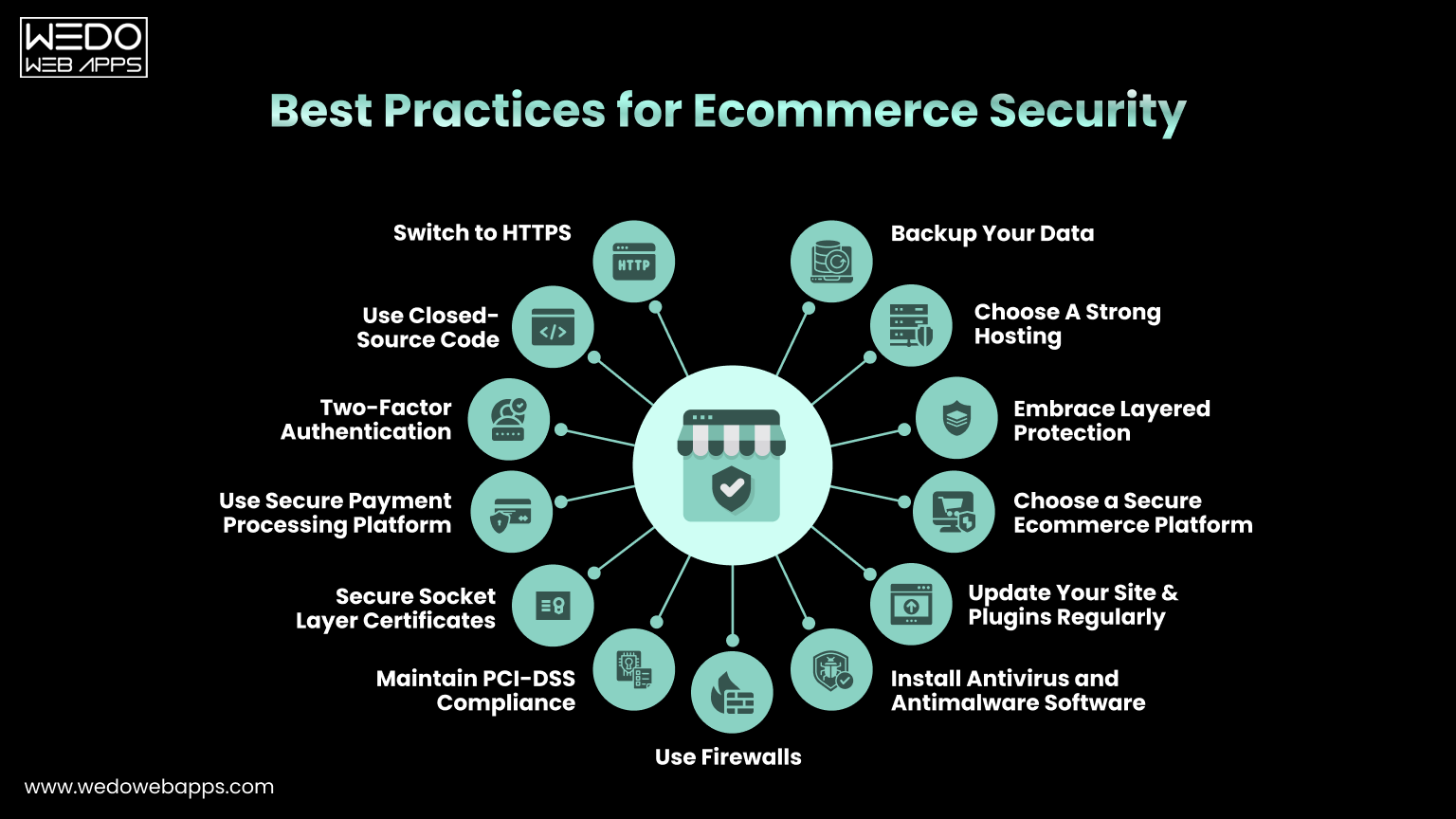
Implementing security features is important, but maintaining a secure eCommerce website also requires continuous monitoring, updates, and proactive security practices. Businesses must regularly evaluate their systems to ensure vulnerabilities are identified and addressed before attackers exploit them.
Below are some of the most effective best practices for security in eCommerce websites.
1. Keep eCommerce Platforms and Plugins Updated
Outdated software is one of the most common causes of security vulnerabilities.
Regular updates help:
- Fix known security flaws
- Improve system stability
- Protect against newly discovered threats
- Maintain compatibility with modern security standards
Businesses should ensure that their:
- eCommerce platforms
- Themes and extensions
- Plugins and integrations
are always updated to the latest versions.
2. Use Strong Password Policies
Weak passwords make it easier for attackers to gain unauthorized access to accounts.
Strong password practices should include:
- Minimum password length requirements
- Combination of letters, numbers, and symbols
- Regular password updates
- Restrictions on repeated or commonly used passwords
Businesses should enforce strong password rules for both administrators and customers.
3. Enable Multi-Layer Authentication
Multi-layer authentication helps prevent unauthorized access even if passwords are compromised.
Recommended authentication measures include:
- Multi-factor authentication for admin accounts
- Two-step verification for customer logins
- Authentication apps for backend systems
Adding extra verification layers significantly improves security for eCommerce sites.
4. Monitor Website Activity
Continuous monitoring allows businesses to detect suspicious activity early.
Monitoring systems can help identify:
- Unusual login attempts
- Suspicious transactions
- Traffic spikes from unknown sources
- Unauthorized system access
Early detection helps prevent small security issues from turning into major breaches.
5. Perform Regular Security Audits
Security audits help businesses identify vulnerabilities before attackers do.
A typical eCommerce security audit includes:
- Website vulnerability scanning
- Code security analysis
- Penetration testing
- Database security reviews
Regular audits strengthen eCommerce security solutions and help maintain a secure infrastructure.
6. Secure the Hosting Environment
The hosting provider plays a major role in eCommerce website security.
Secure hosting environments offer:
- Server-level firewalls
- Intrusion detection systems
- Malware scanning
- DDoS protection
Choosing a reliable hosting provider ensures better protection against infrastructure-level attacks.
7. Implement Real-Time Threat Monitoring
Real-time monitoring tools help businesses respond to security threats immediately.
These tools can:
- Detect suspicious behavior patterns
- Block malicious IP addresses
- Prevent automated bot attacks
- Trigger alerts for security incidents
Proactive monitoring helps maintain secure eCommerce operations.
Maintaining Long-Term eCommerce Security
Security is not a one-time implementation. It requires continuous updates, monitoring, and improvements.
By following these best practices, businesses can:
- Reduce cyber risks
- Protect customer data
- Maintain secure payment processing
- Ensure safe online shopping experiences
Strong security practices ultimately support a trustworthy and reliable eCommerce platform. Secure architecture begins with reliable web development services that prioritize scalable infrastructure and secure backend systems.

How to Make Online Shopping Secure for Customers
Security in eCommerce is not only about protecting business systems , it also involves ensuring that customers can shop safely without worrying about fraud or data theft. A secure shopping experience helps build trust and encourages customers to complete purchases.
Businesses can improve security in online shopping by implementing the following measures.
1. Provide Secure Checkout Pages
The checkout process is the most sensitive part of an eCommerce transaction. Businesses must ensure that payment pages are fully protected.
Secure checkout practices include:
- Using HTTPS encryption on all checkout pages
- Integrating trusted payment gateways
- Avoiding storage of raw payment card data
- Displaying security trust badges
A secure checkout process reassures customers that their payment information is protected.
2. Use Trusted Payment Methods
Offering reliable payment options helps reduce fraud and improve transaction security.
Common secure payment methods include:
- Credit and debit cards through trusted gateways
- Digital wallets
- Secure third-party payment processors
These systems add extra security layers to protect financial transactions.
3. Implement Strong Account Protection
Customer accounts should be protected with advanced authentication methods.
Businesses should encourage users to:
- Create strong passwords
- Enable multi-factor authentication
- Avoid reusing passwords across multiple platforms
Strong account protection helps prevent unauthorized access to customer profiles and order histories.
4. Display Security Indicators on the Website
Visible security indicators help customers feel confident while shopping.
These may include:
- HTTPS padlock icon in the browser
- SSL certificate verification
- Payment security badges
- Privacy policy and data protection notices
Clear security signals increase trust and improve customer confidence.
5. Educate Customers About Safe Online Shopping
Businesses can also improve security by helping customers recognize potential risks.
Customers should be encouraged to:
- Shop only from trusted websites
- Avoid clicking suspicious emails or links
- Monitor bank statements for unusual activity
- Log out from accounts after completing purchases
Educating users reduces the likelihood of fraud and phishing attacks.
6. Maintain Transparent Data Protection Policies
Customers want to know how their information is handled and protected.
eCommerce businesses should clearly communicate:
- What customer data is collected
- How it is stored and protected
- Whether information is shared with third parties
- How customers can manage their data
Transparency strengthens trust and supports secure eCommerce relationships.
Creating a Safe Online Shopping Experience
When businesses prioritize security and transparency, customers feel more comfortable making purchases.
By implementing secure checkout processes, reliable payment systems, and strong account protections, eCommerce businesses can create safe and trustworthy online shopping environments.
This ultimately leads to:
- Higher customer confidence
- Improved conversion rates
- Stronger long-term customer relationships
Secure ecommerce websites also require responsive web design services that ensure safe and consistent shopping experiences across devices.
Future Trends in eCommerce Security
As cyber threats continue to evolve, eCommerce businesses must adopt more advanced security technologies to stay protected. Modern eCommerce security solutions increasingly rely on intelligent systems, automation, and stronger authentication methods.
Below are some key trends shaping the future of security for eCommerce sites.
1. AI-Powered Threat Detection
Artificial intelligence is becoming an important tool for identifying cyber threats in real time.
AI-driven security systems can:
- Detect unusual user behavior patterns
- Identify suspicious transactions instantly
- Block automated bot attacks
- Improve fraud detection accuracy
These systems help eCommerce businesses respond to threats much faster than traditional security tools.
2. Biometric Authentication
Biometric authentication is gaining popularity as a secure alternative to traditional passwords.
Examples include:
- Fingerprint verification
- Facial recognition
- Voice authentication
Biometric security adds another layer of protection while also improving user convenience.
3. Passwordless Authentication
Passwordless login systems are designed to reduce the risks associated with weak or stolen passwords.
Common passwordless authentication methods include:
- One-time login links via email
- Authentication apps
- Device-based verification
- Security keys
These approaches enhance secure eCommerce access while simplifying the login experience for users.
4. Advanced Fraud Detection Systems
Future fraud detection tools will rely heavily on machine learning algorithms that analyze transaction patterns and customer behavior.
These systems can detect:
- Suspicious purchase activity
- Abnormal payment behavior
- Fraudulent transactions in real time
Advanced fraud detection helps protect both businesses and customers during online shopping.
5. Blockchain for Secure Transactions
Blockchain technology is increasingly explored for secure and transparent payment processing.
Potential benefits include:
- Tamper-resistant transaction records
- Improved transparency in payments
- Reduced risk of payment manipulation
- Enhanced trust in digital transactions
Although still emerging in eCommerce, blockchain has the potential to strengthen security in online shopping.
Conclusion
eCommerce websites handle sensitive customer information and financial transactions, making strong security measures essential for protecting both businesses and shoppers.
Implementing the right eCommerce website security features, security solutions, and best practices helps businesses:
- Protect customer data
- Prevent cyberattacks and fraud
- Secure online transactions
- Build customer trust
As online shopping continues to grow, investing in robust eCommerce security strategies will remain critical for maintaining safe, reliable, and trustworthy digital stores.















 Sharing Project Details
 Let's have a
call
Let's have a
call Got
Questions? Let’s Chat!
Got
Questions? Let’s Chat!