Understanding Hybrid Application vs Native Application Before You Start Building
Developing a successful mobile app begins with a clear decision. The choice between the hybrid application and native application sets the standard for speed, usability, and overall experience. Many businesses compare native apps vs hybrid apps to understand which structure supports their goals, budgets, and long-term plans.
This comparison becomes even more important as users expect fast responses, stable performance, and smooth interaction from every mobile app. Each approach brings different strengths, like native apps, which offer direct access to device features. Hybrid apps allow a wider reach through a unified code base.
Understanding the difference between native application and hybrid application helps you to pick the better mobile app development method that aligns with your product priority. This guide will walk you through every part of the decision clearly and practically. It helps you choose the direction that fits your vision and supports growth without confusion.
What is a Native Application
A native application is built using platform-approved languages. iOS apps use Swift or Objective-C. Android apps use Kotlin or Java. This allows the app to communicate with device features while maintaining strong accuracy. It also helps to deliver a smooth interaction because the code runs inside the system environment.
The developer uses platform-approved languages, which help the app interact smoothly with the device tools.
How native apps are built:
- iOS uses Swift or Objective-C.
- Android uses Kotlin or Java.
- The code runs within the system environment.
- Interaction with the camera, GPS, sensors, and notification stays accurate.
Many teams compare the native apps vs hybrid apps at this early stage to decide which structure supports them with the performance and feature requirements. This also helps you understand the difference between native application and hybrid application before moving ahead.
When to Choose a Native Application
A native structure app works well when the project demands fast responses, advanced animations, or direct access to the hardware tools. You can pick the option when the product is required to meet the strict performance standards with the native mobile app development.
A native app setup fits the project that requires the application to perform strongly and needs advanced device controls.
Best suited for:
- Apps with high animation or visual processing.
- A product that must respond quickly.
- Tools that rely on GPS, Bluetooth, a camera, or sensors.
- Services that must work offline.
- Projects that need a reliable and consistent user flow.
You can compare the mobile apps, hybrid vs native, to pick the one that is accurate and matters more to have effective development.
Benefits of Native Applications
Native applications often provide a more polished experience because the structure matches the operating system.
Key advantages:- Fast response due to direct system access.
- Smooth interaction with stable performance.
- Strong security as per the platform rules.
- Better use of push notifications and device tools.
- A familiar interface because it follows platform-specific design and guidelines.
These strengths often influence the decision during the app native vs hybrid evaluation when the team wants predictable performance.
Limitations of Native Applications
Native apps offer strong performance, but they also bring certain challenges, and here are the points that you can consider while choosing a native app.
Points to consider:
- A separate version is needed for iOS and Android.
- Required high development efforts.
- Longer build and release cycles.
- More detailed maintenance work.
- Larger team involvement in some cases.
These factors shape early discussion around hybrid application vs native application, especially for businesses that are aiming for a quick multi-platform release.
Examples of Native Applications
There are several well-known apps that rely on native development due to their functional needs.
Common examples:
- High-graphic mobile games.
- A navigation tool that relies on real-time GPS.
- Photo and video editing apps.
- Banking apps require secure access.
- Fitness tracking using motion and sensor data.
These examples help you illustrate that native vs hybrid mobile app comparison with real use cases.

What is a Hybrid Application
A hybrid app is an application created using a single code base that works on both iOS and Android. The core structure is built with web-based languages, then combined with native apps that allow the app to interact with device features. This setup will help you release the product across two different platforms without building a separate version. It also becomes a common choice during early evaluations of hybrid application vs native application when speed and accuracy are important factors.
How hybrid apps are built:- One code base for iOS and Android.
- Developed with HTML, CSS, and JavaScript.
- Runs inside the native shell that connects to the device's tools.
- Frameworks such as React Native, Iconic, and Flutter are widely used.
Businesses often compare hybrid application vs native application at this point to deduce if a fast multi-platform release will matter more than the deeper system integration.
When to Choose a Hybrid Application
Many businesses consider hybrid application development when they want a faster release across both platforms. The structure suits projects that depend on content delivery rather than on heavy system interaction. The team also prefers this method when the budget or timeline limit separates native builds. These points often guide early discussion around mobile app hybrid vs native to see which option matches product expectations.
Best suited for:
- Apps with moderate speed and interaction needs.
- Content-focused products, such as listings or media.
- Early-stage ideas that need quick market entry.
- Businesses that are targeting iOS and Android users together.
- Teams with limited resources for dual development.
During planning, you can analyze mobile apps, hybrid vs native, to check if a unified code base can support timelines and given budgets.
Benefits of Hybrid Applications
Hybrid apps bring practical advantages for you if you need simplicity in development. Since the same code works for both platforms. The build process becomes quicker and easier to handle the application. The updates for the app take less time because changes apply across all devices. These strengths often influence the comparison between native apps vs hybrid apps for your project needs.
Key advantages:
- Lower effort due to a single code base.
- Faster development for both platforms.
- Lower initial investment.
- Uniform updates across the system.
- Broad plugin support for device features.
These benefits will often help you highlight the comparison of native apps vs hybrid apps for the project that needs a quick release cycle.
Limitations of Hybrid Applications
Hybrid apps offer convenience, but they also come with performance and feature-related restrictions. Some apps may not achieve the same responsiveness as native builds. Access to advanced device tools often relies on plugins, which can limit customization. These factors shape the difference between native application and hybrid application for businesses planning for long-term growth.
Points to consider:
- May not match native responsiveness for heavy tasks.
- Limited access to deeper system functions.
- UI may not fully match platform behavior.
- Performance for graphics and complex animation may vary.
- Dependence on third-party plugins for feature support.
These factors influence the difference between native application and hybrid application, helping businesses to understand where each method fits.
Examples of Hybrid Applications
A wide range of apps may choose hybrid development because they focus on content, reach, and simpler interactions. These apps do not rely on heavy functions and can deliver consistent results with the unified structure. This helps the product team understand the native vs hybrid mobile app with the help of relatable examples.
Common examples:
- News and media apps.
- Service booking platform.
- eCommerce catalog browsing apps.
- Corporate internal tools.
- Social apps with moderate device interaction.
These examples help teams understand native vs hybrid mobile app decisions through practical scenarios.

Difference Between Native Application and Hybrid Application
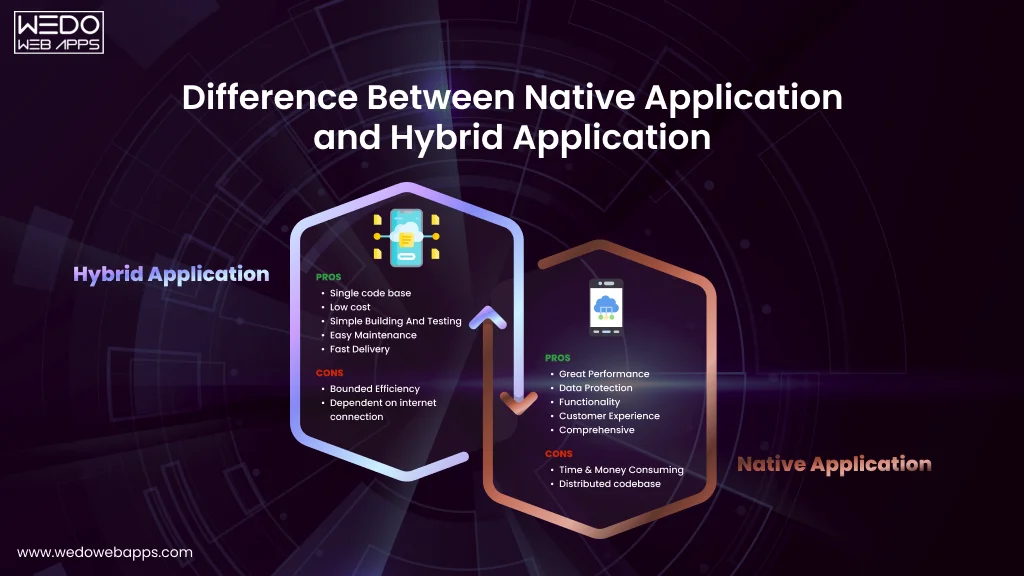
Understanding the difference between native application and hybrid application becomes easier when you look at how each option shapes your overall experience. The points below help you evaluate hybrid application vs native application without reading the same information twice.
| Comparison Areas | Native Application | Hybrid Application |
|---|---|---|
| Performance | Native apps are rich in performance and are built using the design and development timeline. | Uses a web-based layer that can give a direct impact on overall speed. |
| System Access | Full access to GPS, camera, sensor, and notifications. | Access through a plugin that can restrict deeper features. |
| Design Consistency | Matches the platform design rules while maintaining strong accuracy. | The interface may differ slightly across different devices. |
| Code Base | Separate code for iOS and Android. | One shared code for both platforms. |
| Development Timeline | More time is required due to separate builds. | Faster delivery because of one build server for all platforms. |
| Maintenance | Updated inventory. | One update applied everywhere. |
| Budget Requirements | Usually higher due to parallel development. | Lower because of the structure. |
| Best Fit | High-performing apps, gaming, multimedia, and navigation. | Content apps, eCommerce catalog, service platform, and MVPs. |
Below is the simplified breakdown of the key areas shown in the table. This helps you understand the difference between native application and hybrid application with clear context.
1. Performance
Native apps perform well because they operate within the device's system, which allows for a smooth transition and stable speed. This becomes an important decision around native apps vs hybrid apps, especially for products that require heavy visuals and real-time interaction.
A hybrid application runs through a shared base that works across multiple platforms. For the most general feature, the speed remains consistent. In many hybrid application vs native application comparisons, this becomes a strong advantage for the team to work quietly.
2. User Interface Flow
Native apps follow Android and iOS design with device compatibility to make the interface look natural and consistent. Users recognize the gestures, layouts, and motion patterns instantly, which aligns well during the comparison in the app native vs hybrid evaluation.
Hybrid apps follow the platform design pattern, and some visual elements may require putting in some extra effort for adjustments. This can influence the early user perceptions of mobile app hybrid vs native.
3. Development Flexibility
Native development gives you deeper control over the visual elements and hardware connections. This helps in managing the demand of the project with refined elements, strong security measures, and specialized features.
A hybrid app supports one codebase platform, which reduces the development time and simplifies the expansion. You can consider this to have a strong influence when evaluating native apps vs hybrid apps in a project that needs faster and frequent modification.
4. Use of Device Features
Native apps interact directly with the device components like the camera, GPS, sensors, and processor modules. This reduced the chances of delays and helped to accelerate the results, especially in apps that rely on real-time data and complex processing.
Hybrid apps can access device hardware using the plugins. The experience depends on the quality of the plugin and community support. This model works well for standard features such as notification, camera access, and basic sensor functions.
5. Maintenance Outlook
Native applications require individual updates for Android and iOS. This allows precise control over improvements and optimisation. Businesses often choose this model to have detailed feature refinement on each platform.
Since hybrid apps share a unified codebase and are updated with a single cycle. This simplifies the long-term maintenance, which becomes a practical benefit when comparing the hybrid application vs native application for mobile to improve the team efficiency.
Native vs Hybrid App Summary with Practical Scenarios
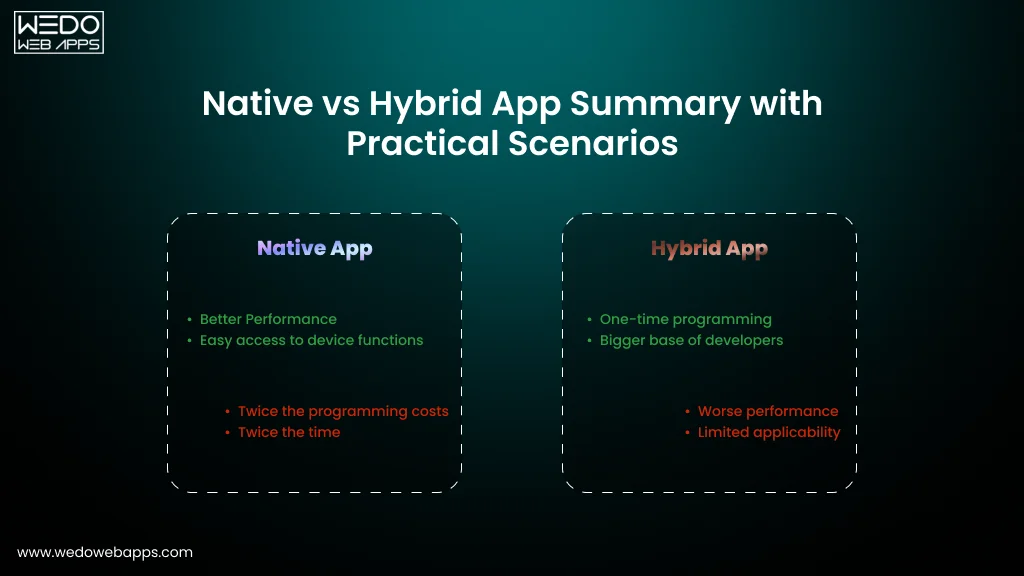
Choosing between native and hybrid apps often depends on the purpose of your product, the expected experience, and how quickly the team wants to launch. With the help of this section, you will understand about the native apps vs hybrid apps, especially when comparing the real situation where each option performs differently. It also supports the search intent for app native vs hybrid and hybrid application vs native application through the practical examples.
Quick Summary Table
| Scenario | Native App Outcome | Hybrid App Outcome |
|---|---|---|
| High-performance needs such as video editing or gaming. | Smooth flow with fast response due to platform-specific build. | Acceptable speed for simpler workloads, but may show minor delay in heavy tasks. |
| Early-stage startup aiming for faster release. | Longer development time since separate builds are required. | Quicker launch because the codebase is shared. |
| Apps with advanced device integration, such as sensors or camera-based tools. | Direct access to hardware results in accurate output. | Works with plugins that may require extra setup. |
| Long-term brand-centric products. | Greater visual control and polished interactions. | A common interface that fits both platforms with moderate adjustments. |
| Budget-sensitive projects. | Higher investment due to two builds. | Lower upfront cost because one codebase powers both apps. |
How Native Works in Real Use Cases
A native structure fits well when the app must deliver high precision, strong interaction, and a polished interface. Brands that rely heavily on mobile experience prefer native because users require a smooth interface and fast responses. For instance, a fitness tracking product needs an app to monitor steps and heart rate benefits from direct access to device sensors.
This matches what users expect when they compare native apps vs hybrid apps, especially in performance-centric cases.
How Hybrid Fits Practical Situations
A hybrid build is suitable when your primary aim is faster availability without managing two separate versions. If you want to test the idea quickly or reach both Android and iOS at the same time, you can choose a hybrid app. For example, a service booking app or a news app with basic interactive pages works well in this structure. This aligns with the intent behind app native vs hybrid, particularly for teams with limited time or budgets.

How to Select the Right Approach for Your Mobile App
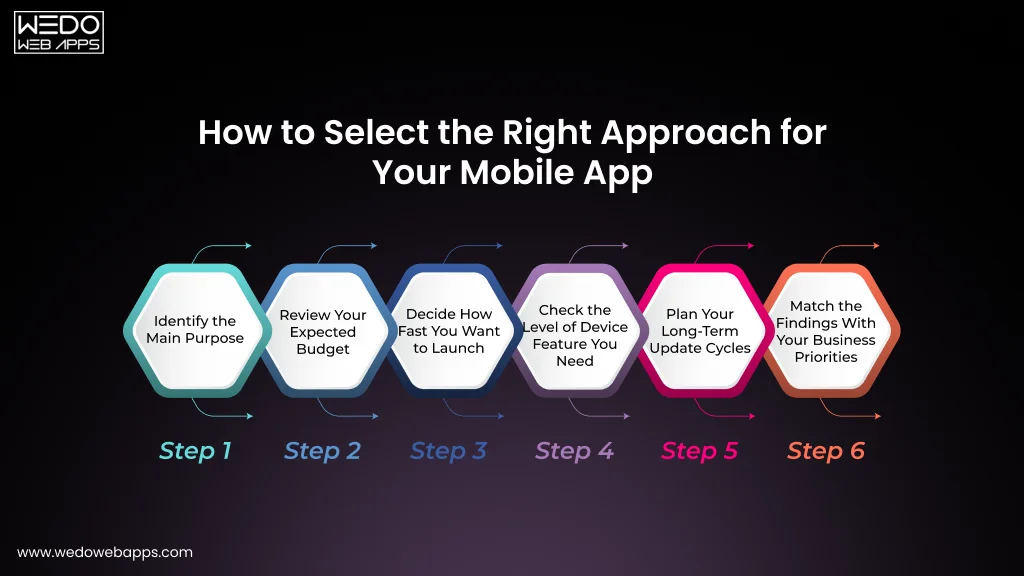
When you compare hybrid application vs native application, the decision becomes easier if you follow the clear process, and that too in sequence. These steps guide you through every step so that you can choose the right structure with confidence.
Step 1: Identify the Main Purpose
Start by understanding the core goal of your application and the purpose that it will solve.
- If the app must deliver high speed, smooth interaction, or advanced features, then a native app becomes a better option.
- If your goal is quick availability across all platforms, then a hybrid app works well.
This step directly gives support to your search intent for native vs hybrid mobile apps.
Step 2: Review Your Expected Budget
Check how much you can invest in the development of your application and your long-term plans.
- Native requires a separate build, which increases spending.
- Hybrid support to share a codebase, which helps when the budget is controlled.
This gives you clarity while knowing about the difference between native application and hybrid application.
Step 3: Decide How Fast You Want to Launch
If your aim is to have the fastest development, then a hybrid offers the shortest development time. Native apps take longer to develop for different operating systems, but give better refinement. This helps you easily compare mobile apps hybrid vs native, based on the timelines.
Step 4: Check the Level of Device Feature You Need
Native apps provide direct access to device systems such as sensors, camera tools, and secure payment functions. Hybrid can use these features through plugins, which may require extra work. This supports knowing better for app native vs hybrid for your business.
Step 5: Plan Your Long-Term Update Cycles
Native is ideal when it comes to having frequent improvements, high-scale interactions, and large design updates. The hybrid works well if your app is more focused on the content update or routine adjustments.
Step 6: Match the Findings With Your Business Priorities
List your needs in simpler terms. Assess which structure aligns with your goals, budget, and timeline, along with the technical expectations. This structured approach gives a clear path for choosing between native apps vs hybrid apps.
Deciding What Works Best: Hybrid Application vs Native Application
Choosing the right approach between a native build and a hybrid build allows you to maintain the future of your mobile app. Each option supports a different version. Native fits are suitable where refined interaction, accuracy, and long-term experience are top priority. Hybrid support brands that want quicker availability and shared code structured without adjusting the budget.
Once you understand how both approaches work, it becomes simpler for you to decide which one matches your end goal. The comparison between hybrid application vs native application gives a strong base for shaping a product that feels right and fits your long-term plans.
If you want expert guidance on picking the right structure or planning your next mobile project, our team can help you move forward with a clear strategy. Reach out to the mobile app development company you have the product you need.