Introduction
Every minute, thousands of customers book rides, order food, schedule home services, and shop online through on-demand apps. For businesses entering this fast-moving market, choosing the right platform is one of the first decisions that can influence growth, customer reach, and profitability.
This is one of the main reasons Android for on-demand app development remains a preferred choice for businesses worldwide. With a larger global user base, flexible customization options, and strong integration with Google's ecosystem, Android allows companies to build applications that can scale across different markets and customer segments.
When evaluating Android vs iOS for on-demand apps, many businesses find that Android offers broader market access, lower entry barriers, and greater flexibility for feature implementation. These advantages make it particularly attractive for startups and enterprises looking to launch and expand on-demand services efficiently.
In this guide, we will examine why Android is preferred for on-demand app development, compare leading mobile platforms, and discuss the key benefits of Android for on-demand apps that help businesses reach more users and support long-term growth.
Quick Answer: Why Is Android Preferred for On-Demand App Development?
Android is preferred for on-demand app development because it offers access to a larger global audience, supports a wide range of devices, provides extensive customization options, and allows businesses to launch cost-effective solutions. Its integration with services such as Google Maps, Firebase, and Google Pay also makes it easier to build feature-rich on-demand applications.
Some of the key Android advantages for on-demand apps include:
- Wider markets reach across different regions and customer segments.
- Flexible customization for industry-specific requirements.
- Strong support for real-time tracking and push notifications.
- Easier integration with location, payment, and communication services.
- Lower barriers for startups entering competitive markets.
- Scalability to support growing user bases and service areas.
For businesses comparing Android vs iOS for on-demand apps, Android often stands out when the goal is to maximize user acquisition, expand into multiple markets, and create highly customizable on-demand experiences.

Understanding the Growth of On-Demand Apps
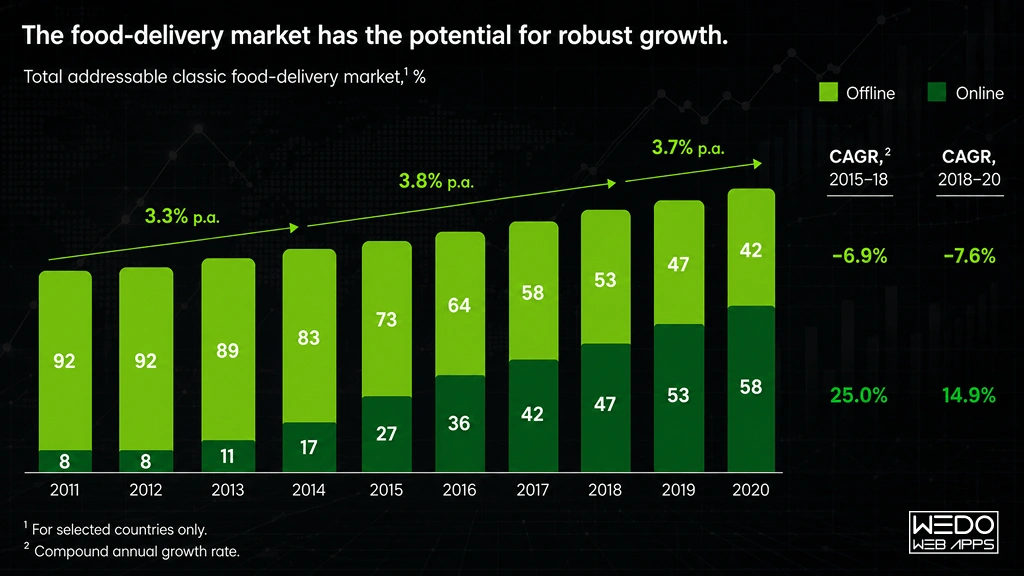
The way consumers access products and services has changed significantly over the past decade. Instead of planning ahead or visiting physical locations, people now expect instant access through mobile applications. From ordering meals and booking rides to scheduling healthcare appointments and hiring home service professionals, on-demand apps have become a part of everyday life.
At their core, on-demand apps connect users with service providers in real-time. They simplify the entire process by allowing customers to search, book, pay, and track services from a single platform. This convenience has driven rapid adoption across both developed and emerging markets.
What Are On-Demand Apps?
On-demand apps are mobile applications that enable users to request products or services whenever they need them. These platforms act as intermediaries, matching customer requests with available providers and facilitating transactions.
Common examples include:
- Food delivery applications
- Ride-hailing platforms
- Grocery delivery services
- Healthcare booking apps
- Home maintenance and repair platforms
- Logistics and courier solutions
Industries Driving On-Demand App Adoption
The on-demand economy is expanding across multiple sectors because it benefits both businesses and customers.
| Industry | Popular On-Demand Services |
|---|---|
| Food & Beverage | Food ordering and delivery |
| Transportation | Taxi and ride booking |
| Healthcare | Telemedicine and appointment scheduling |
| Home Services | Cleaning, plumbing, and repairs |
| Retail | Grocery and product delivery |
| Logistics | Courier and parcel tracking |
Why Platform Selection Impacts Business Success
A successful on-demand app requires more than a good business idea. The platform determines how many users you can reach, how quickly you can scale, and how effectively you can deliver key features such as real-time tracking, notifications, payments, and customer communication.
This is where Android for on-demand app development gains attention. Its broad user reach, flexibility, and support for business-critical features make it a practical choice for companies aiming to serve large and diverse audiences.
Why Android Is Preferred for On-Demand App Development
As the demand for mobile-first services continues to grow, businesses need a platform that can support rapid expansion, diverse user needs, and feature-rich experiences. This is exactly why Android development is preferred for on-demand app development across industries such as food delivery, transportation, healthcare, logistics, and home services.
Android offers a combination of market reach, flexibility, and scalability that aligns well with the requirements of modern on-demand businesses.
Access to the Largest Mobile User Base
One of the biggest reasons businesses choose Android for on-demand app development is its extensive global presence. Android powers the majority of smartphones worldwide, allowing businesses to reach customers across both developed and emerging markets.
A larger user base creates opportunities for:
- Faster customer acquisition
- Greater brand visibility
- Higher app download potential
- Wider service coverage
Wider Device Compatibility Across Price Segments
Unlike platforms limited to a specific range of devices, Android operates across smartphones available at different price points. This allows businesses to serve users regardless of their device budget.
Key advantages include:
- Access to budget-conscious consumers
- Better penetration in growing markets
- Increased user adoption potential
- Broader customer demographics
Faster Market Reach in Emerging Economies
Many fast-growing economies have a strong Android user base due to the availability of affordable smartphones. Businesses planning regional or international expansion can benefit from Android's established presence in these markets.
This makes Android particularly suitable for:
- Delivery applications
- Ride-hailing platforms
- Healthcare service apps
- Multi-service marketplaces
Better Opportunities for Customer Acquisition
Customer acquisition is often one of the largest expenses for on-demand businesses. Android's larger audience provides a bigger pool of potential users, helping businesses attract customers at scale.
Some of the notable benefits of Android for on-demand apps include:
- Increased app visibility
- Higher download opportunities
- Greater accessibility across user segments
- Strong support for local and global expansion
For businesses focused on growth, these factors explain why Android is preferred for on-demand app development and why many companies choose Android as their first platform before expanding to other ecosystems.
Key Benefits of Android for On-Demand Apps
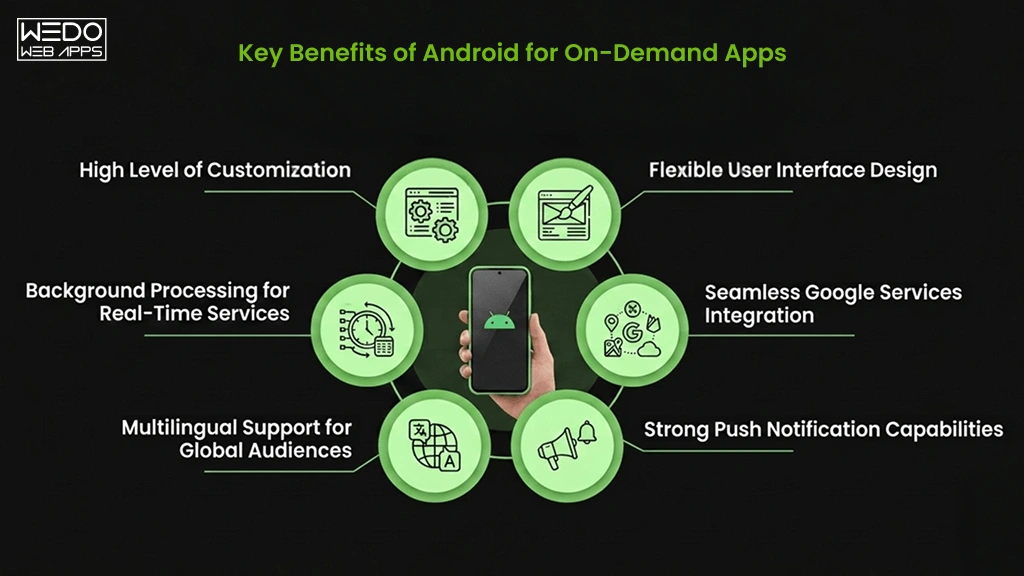
The growing popularity of Android for on-demand app development is not driven by market share alone. Businesses choose Android because it offers the flexibility, functionality, and scalability needed to support modern on-demand services. From real-time tracking to personalized user experiences, Android provides several advantages that help businesses build applications tailored to their goals.
Let's look at the most important benefits of Android for on-demand apps.
High Level of Customization
Every on-demand business has unique requirements. A food delivery platform operates differently from a healthcare booking app or a home service marketplace. Android's open ecosystem gives developers greater freedom to customize features, workflows, and user experiences based on specific business needs.
Customization benefits include:
- Tailored customer journeys
- Industry-specific functionalities
- Flexible feature implementation
- Easier integration with third-party tools
Flexible User Interface Design
User experience plays a major role in customer retention. Android allows developers to create highly adaptable interfaces that work across different screen sizes, device types, and user preferences.
This flexibility helps businesses:
- Improve usability across devices
- Create personalized user experiences
- Maintain consistent performance
- Increase customer engagement
Seamless Google Services Integration
One of the most valuable Android advantages for on-demand apps is direct access to Google's ecosystem. These services help businesses implement critical features without building everything from scratch.
| Google Service | Business Benefit |
|---|---|
| Google Maps | Real-time navigation and location tracking |
| Google Pay | Secure and convenient digital payments |
| Google Assistant | Voice-based interactions and accessibility |
| Firebase | Analytics, notifications, authentication, and backend support |
These integrations are particularly useful for delivery, transportation, healthcare, and marketplace applications where location, communication, and payment are central to the user experience.
Strong Push Notification Capabilities
On-demand services rely heavily on real-time communication. Android supports advanced push notification systems that keep users informed throughout their journey.
Common notification use cases include:
- Order confirmations
- Driver or service provider updates
- Delivery status tracking
- Promotional campaigns
- Appointment reminders
Timely notifications help improve user engagement and reduce service-related uncertainty.
Multilingual Support for Global Audiences
Businesses expanding across various regions often need to serve customers who speak different languages. Android provides extensive multilingual support, allowing applications to offer localized experiences without significant development complexity.
Advantages include:
- Better customer accessibility
- Higher user adoption rates
- Improved regional engagement
- Easier international expansion
Background Processing for Real-Time Services
Many on-demand applications depend on continuous background operations to function effectively. Android supports background processing that enables apps to perform essential tasks even when users are not actively interacting with them.
Examples include:
- Live location updates
- Order tracking
- Route optimization
- Instant status synchronization
- Automated notifications
This capability is one of the key reasons why Android is preferred for on-demand app development, particularly for businesses that depend on real-time service delivery and customer communication.

Android Features That Support On-Demand Business Models
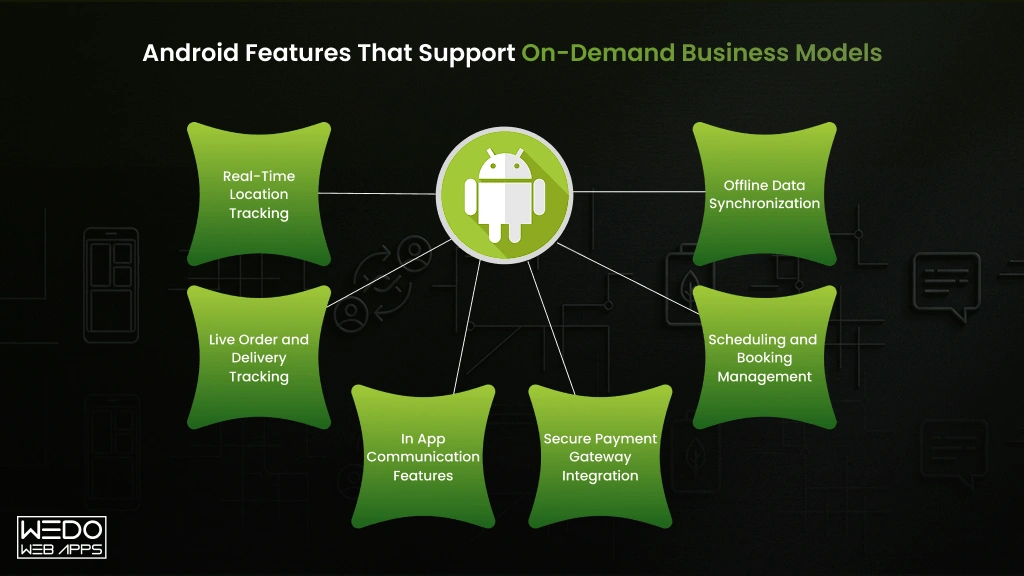
Successful on-demand applications depend on speed, convenience, and real-time interactions. Customers expect instant updates, accurate tracking, secure payments, and seamless communication throughout their journey. Android provides the technical capabilities required to support these expectations, making it a strong choice for businesses building service-based platforms.
These capabilities further explain why Android is preferred for on-demand app development across industries such as transportation, food delivery, healthcare, logistics, and home services.
Real-Time Location Tracking
Location tracking is a core feature of most on-demand applications. Whether users are tracking a delivery driver, booking a ride, or scheduling a nearby service provider, accurate location data is essential.
Android supports:
- GPS-based tracking
- Live route updates
- Geofencing capabilities
- Location sharing features
This helps businesses provide greater transparency and improve customer satisfaction.
Live Order and Delivery Tracking
Customers want visibility into every stage of their order or service request. Android enables real-time status updates that allow users to monitor progress without contacting support teams.
Typical tracking stages include:
- Order received
- Service assigned
- Provider en route
- Service in progress
- Order completed
Real-time tracking helps build trust while reducing customer inquiries.
In App Communication Features
Effective communication is critical for smooth service delivery. Android supports various communication channels that allow customers, service providers, and administrators to stay connected.
Common communication features include:
- In-app chat
- Voice calling integration
- Video consultation support
- Automated service updates
These tools help resolve issues quickly and improve the overall user experience.
Secure Payment Gateway Integration
Secure and convenient payment processing is a requirement for every on-demand platform. Android allows businesses to integrate multiple payment options based on customer preferences and regional requirements.
Popular payment options include:
- Credit and debit cards
- Digital wallets
- UPI payments
- Net banking
- Subscription billing
This flexibility improves transaction success rates and customer convenience.
Scheduling and Booking Management
Many on-demand services operate on appointments rather than instant requests. Android supports advanced scheduling features that simplify booking management for both businesses and users.
Examples include:
- Appointment scheduling
- Time slot selection
- Booking confirmations
- Automated reminders
- Rescheduling options
These features help businesses manage operations more efficiently.
Offline Data Synchronization
Internet connectivity may not always be stable, especially for field service professionals and delivery personnel. Android supports offline functionality that allows applications to continue operating and synchronize information once a connection becomes available.
Benefits include:
- Reduced service interruptions
- Improved operational efficiency
- Better user experience
- Consistent data accuracy
Combined, these capabilities highlight the practical benefits of Android for on-demand apps and demonstrate why Android remains a leading platform for businesses seeking scalable and customer-focused on-demand solutions.

Android vs iOS for On-Demand Apps: Which Platform Is Better?
One of the most common questions businesses ask before launching a mobile application is whether to choose Android or iOS. The answer depends on factors such as target audience, budget, geographic reach, and business goals.
When comparing Android vs iOS for on-demand apps, both platforms offer strong capabilities. However, Android often becomes the preferred choice for businesses focused on reaching a large audience, scaling quickly, and providing services across diverse markets.
Market Reach Comparison
One of the biggest factors in the Android vs iOS for on-demand apps discussion is market reach. Android's presence across a wide range of devices allows businesses to connect with a larger and more diverse audience.
| Market Reach Factor | Android | iOS |
|---|---|---|
| Global Smartphone Share | Higher | Lower |
| Device Availability | Multiple brands and models | Apple devices only |
| Emerging Market Adoption | Strong | Moderate |
| Audience Diversity | Broad | More concentrated |
| User Accessibility | High across price segments | Primarily premium segment |
Development Cost Comparison
Development budget often influences platform selection, especially for startups and growing businesses.
| Cost Factor | Android | iOS |
|---|---|---|
| Initial Development Flexibility | High | Moderate |
| Device Testing Requirements | Higher | Lower |
| Developer Availability | Large talent pool | Large but more specialized |
| Market Entry Cost | Cost-effective for a broad reach | Often focused on premium users |
| Scalability Investment | Flexible | Moderate to high |
App Store Approval Comparison
The app review process can impact launch timelines and update cycles.
| Approval Factor | Android | iOS |
|---|---|---|
| Publishing Process | More flexible | More stringent |
| Review Time | Generally faster | Generally longer |
| Update Deployment | Faster rollout | Additional review required |
| Policy Restrictions | Moderate | Higher |
| Iteration Speed | High | Moderate |
Customization Flexibility Comparison
Customization is one of the leading Android advantages for on-demand apps because many service businesses require unique workflows and integrations.
| Customization Factor | Android | iOS |
|---|---|---|
| UI Flexibility | High | Moderate |
| Third-Party Integrations | Extensive | Extensive but controlled |
| Feature Experimentation | Easier | More restricted |
| Device-Level Customization | High | Limited |
| Development Freedom | Greater | More controlled |
Revenue Potential Comparison
Revenue generation depends on business model, target audience, and market strategy.
| Revenue Factor | Android | iOS |
|---|---|---|
| User Base Size | Larger | Smaller |
| Average User Spending | Moderate | Higher |
| Subscription Opportunities | Strong | Strong |
| Transaction Volume Potential | High | Moderate |
| Market Expansion Potential | High | Moderate |
Which Platform Should Startups Choose?
Startups should evaluate both immediate and long-term business goals before making a decision.
The following comparison highlights the key differences in an on-demand app development platform comparison.
| Factor | Android | iOS |
|---|---|---|
| Market Reach | Larger global audience | Strong in premium markets |
| Development Cost | Generally cost-effective | Often higher for premium targeting |
| Device Variety | Extensive | Limited |
| Customization | High | Moderate |
| App Approval Process | Faster and more flexible | More restrictive |
| Scalability | Strong for broad expansion | Strong for premium ecosystems |
While both platforms have advantages, businesses focused on customer acquisition, market expansion, and operational flexibility often find that Android for on-demand app development aligns more closely with their growth objectives.

On-Demand App Development Platform Comparison
Choosing the right platform is not just a technical decision. It directly affects customer reach, operational costs, scalability, and long-term business growth. An effective on-demand app development platform comparison helps businesses understand which platform aligns best with their target audience and expansion plans.
While both Android and iOS app development offer strong capabilities, each platform serves different business objectives.
Android for Rapid Market Expansion
Businesses looking to acquire users quickly and enter multiple markets often choose Android as their primary platform. Its widespread adoption across different regions and device categories makes it ideal for scaling services.
| Android Advantage | Business Impact |
|---|---|
| Large user base | Higher customer acquisition potential |
| Wide device compatibility | Reach users across all budget segments |
| Strong emerging market presence | Easier regional expansion |
| Flexible development environment | Faster feature implementation |
| Extensive developer community | Easier maintenance and support |
iOS for Premium User Segments
iOS is often preferred by businesses targeting users with higher purchasing power and strong brand loyalty. It can be practically effective for premium services and subscription-based models.
| iOS Advantage | Business Impact |
|---|---|
| Premium user base | Higher spending potential |
| Consistent device ecosystem | Simplified testing and optimization |
| Strong brand perception | Increased customer trust |
| Higher engagement rates | Better user retention |
| Secure ecosystem | Strong data protection standards |
Cross-Platform Development Considerations
Many businesses eventually decide to support both Android and iOS. Cross-platform development frameworks can help reduce development effort while maintaining a consistent user experience.
| Consideration | Benefit |
|---|---|
| Single codebase | Reduced development time |
| Faster deployment | Simultaneous platform launches |
| Lower maintenance effort | Easier updates and bug fixes |
| Consistent branding | Unified customer experience |
| Cost optimization | Better resource utilization |
However, businesses should carefully evaluate performance requirements, feature complexity, and long-term scalability before selecting a development approach.
Choosing the Right Platform Based on Business Goals
The best platform depends on your business priorities, customer demographics, and growth strategy.
| Business Goal | Recommended Platform |
|---|---|
| Maximum market reach | Android |
| Premium audience targeting | iOS |
| Multi-region expansion | Android |
| Subscription-based premium services | iOS |
| Cost-effective market entry | Android |
| Broad customer acquisition strategy | Android |
| Balanced coverage across user segments | Android or iOS |
This on-demand app development platform comparison shows that there is no one-size-fits-all answer. However, for businesses prioritizing scalability, accessibility, and wider customer reach, Android for on-demand app development often provides the strongest foundation for growth.
Android Advantages for On-Demand Apps That Businesses Cannot Ignore
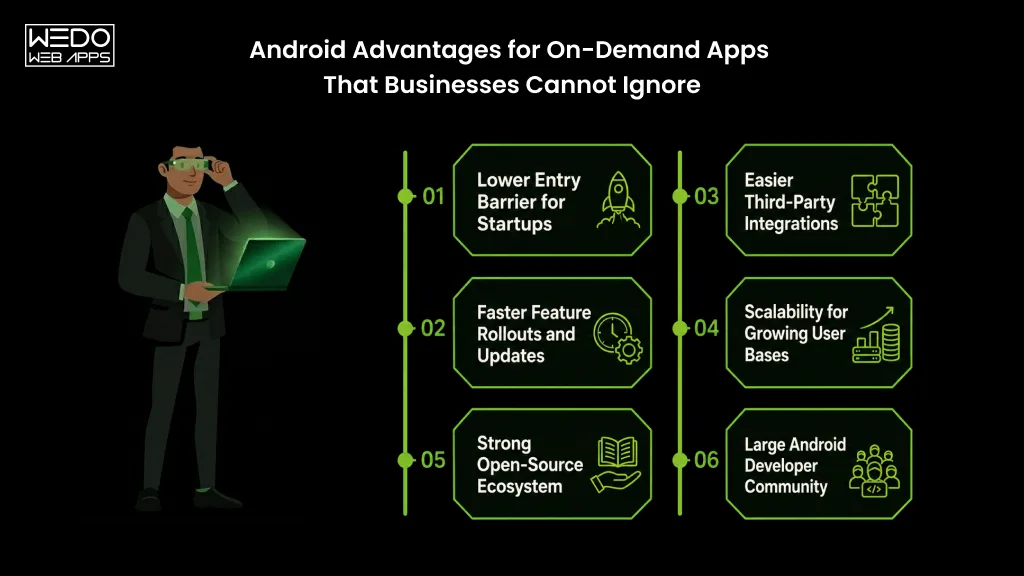
Beyond market share and device compatibility, Android offers several business-focused benefits that make it an attractive platform for on-demand services. These advantages can influence development costs, operational efficiency, and long-term scalability.
For businesses evaluating Android advantages for on-demand apps, the following factors often play a major role in the decision-making process.
Lower Entry Barrier for Startups
Launching an on-demand app requires careful budget management. Android provides startups with an opportunity to enter the market and reach a large audience without focusing solely on premium device users.
| Startup Benefit | Business Value |
|---|---|
| Broad audience access | Faster user acquisition |
| Flexible development options | Better budget control |
| Large developers ecosystem | Easier hiring and support |
| Scalable architecture | Support future growth |
Faster Feature Rollouts and Updates
On-demand businesses often need to introduce new features, address customer feedback, and optimize service quickly. Android's relatively flexible publishing process helps businesses make updates more efficiently.
| Update Advantage | Impact |
|---|---|
| Faster app releases | Reduced time to market |
| Quicker bug fixes | Better user experience |
| Rapid feature deployment | Faster innovation |
| Continuous improvement cycles | Increased competitiveness |
Easier Third-Party Integrations
Modern on-demand applications depend on multiple external services to deliver seamless experiences. Android supports integration with a wide range of third-party tools and platforms.
| Integration Type | Common Use Cases |
|---|---|
| Payment gateways | Secure transactions |
| Mapping services | Navigation and tracking |
| Analytics tools | User behavior insights |
| CRM platforms | Customer management |
| Communication APIs | Messaging and notifications |
These integrations simplify development while supporting business operations.
Scalability for Growing User Bases
As user demand increases, applications must handle more transactions, service requests, and real-time interactions. Android provides the flexibility needed to support expanding business operations.
| Scalability Factor | Benefit |
|---|---|
| High user capacity | Supports growth |
| Real-time processing | Better service delivery |
| Flexible infrastructure options | Easier expansion |
| Performance optimization tools | Stable user experience |
Strong Open-Source Ecosystem
Android's open-source foundation gives developers greater control over application development. Businesses can customize solutions based on their operational needs without being limited by a closed ecosystem.
| Open-Source Benefit | Business Advantage |
|---|---|
| Greater flexibility | Customized solutions |
| Community-driven improvements | Faster problem solving |
| Extensive development resources | Reduced development challenges |
| Technology adaptability | Easier innovation |
Large Android Developer Community
Access to skilled developers is an important consideration for long-term app success. Android has one of the largest developer communities, making it easier for businesses to find talent, solve technical challenges, and maintain applications.
| Community Advantage | Business Impact |
|---|---|
| Large talent pool | Easier recruitment |
| Extensive documentation | Faster development |
| Active knowledge sharing | Better problem resolution |
| Long-term platform support | Sustainable growth |
Collectively, these benefits of Android for on-demand apps help businesses build scalable, feature-rich, and cost-effective solutions. This combination of flexibility, accessibility, and growth potential is a major reason why Android is preferred for on-demand app development across a wide range of industries.
When Should Businesses Choose Android First?
Choosing a mobile platform is not only about technical capabilities. It is also about aligning technology decisions with business goals. For many companies, Android for on-demand app development offers the right balance of market reach, flexibility, and scalability. Whether the objective is customer acquisition, regional expansion, or service diversification, Android often provides a strong starting point.
Launching in Price-Sensitive Markets
If your target audience includes users who rely on affordable and mid-range smartphones, Android should be your first choice. Android devices dominate many emerging and developing markets, making it easier to attract a larger user base from day one.
Android is particularly beneficial when:
- Targeting mass-market consumers
- Expanding into emerging economies
- Offering everyday services such as delivery or transportation
- Focusing on high user acquisition volumes
Building Multi-Service Marketplace Apps
Marketplace applications often require complex workflows involving customers, service providers, and administrators. Android's flexibility allows businesses to create customized experiences for each user group.
Android works well for:
- Home service marketplaces
- Food delivery platforms
- Healthcare service networks
- Multi-vendor commerce applications
- Logistics and courier platforms
Expanding Across Multiple Regions
Businesses planning to operate across different cities, states, or countries need a platform capable of serving diverse audiences. Android's widespread adoption and multilingual capabilities support this type of expansion.
Key advantages include:
- Broader geographic reach
- Support for multiple languages
- Accessibility across different device categories
- Easier localization for regional markets
Targeting High User Acquisition Goals
Many on-demand businesses prioritize rapid growth during the early stages. Since Android has a larger global user base, it provides more opportunities to attract new customers and increase app downloads.
Android becomes a strong option when your goals include:
- Building brand awareness quickly
- Increasing app installations
- Expanding service coverage
- Growing transaction volume
- Scaling customer acquisition efforts
Quick Checklist: Should You Choose Android First?
Android is often the right starting point if your business aims to:
- Reach the largest possible audience
- Launch in multiple regions
- Minimize market entry barriers
- Build a highly customizable application
- Support rapid business growth
- Scale services across diverse customer segments
When businesses conduct an on-demand app development platform comparison, Android frequently stands out because of its accessibility and growth potential. While the debate around Android vs iOS for on-demand apps will vary based on business requirements, companies focused on scale, flexibility, and customer reach often find that the benefits of Android for on-demand apps make it the most practical platform for launching and growing on-demand services.

Common Challenges of Android App Development and How to Overcome Them
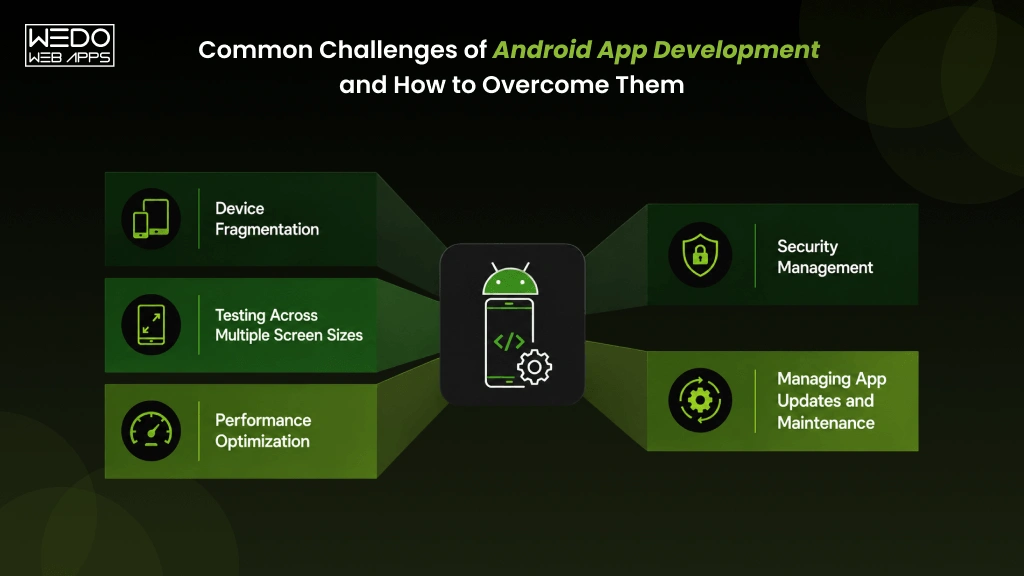
While there are many benefits of Android for on-demand apps, businesses should also understand the challenges that come with Android development. Addressing these issues early can improve performance, user experience, and long-term scalability.
The good news is that most Android-related challenges can be effectively managed with the right development strategy and testing approach.
Device Fragmentation
Android runs on thousands of devices from different manufacturers. These devices vary in screen sizes, hardware capabilities, operating system versions, and performance levels.
This diversity allows businesses to reach a larger audience, but it can also create compatibility challenges.
To address device fragmentation:
- Prioritize support for the most commonly used Android versions
- Use responsive design principles
- Test applications across multiple device categories
- Monitor performance metrics regularly
Testing Across Multiple Screen Sizes
Unlike iOS, where device variations are limited, Android applications must perform consistently across smartphones and tablets with different resolutions and display dimensions.
Poor optimization can lead to layout issues and inconsistent user experiences.
Best practices include:
- Designing adaptable user interfaces
- Using scalable design components
- Conducting testing on various screen sizes
- Following Android design guidelines
Performance Optimization
On-demand applications often rely on real-time features such as location tracking, notifications, communication tools, and payment processing. Without proper optimization, these functions can affect app performance.
Businesses can improve performance by:
- Reducing unnecessary background activities
- Optimizing API requests
- Compressing images and media files
- Implementing efficient caching mechanisms
- Regularly monitoring application performance
Security Management
Security is a critical consideration for any on-demand platform, especially those handling customer information, payments, and location data.
A strong security strategy should include:
- Secure authentication methods
- Data encryption during storage and transmission
- Regular security audits
- Compliance with relevant data protection regulations
- Secure payment gateway integrations
Managing App Updates and Maintenance
As use expectations evolve, businesses must continuously improve their applications through updates, bug fixes, and feature enhancements.
To maintain long-term app quality:
- Establish a regular update schedule
- Collect and analyze user feedback
- Monitor crash reports and performance issues
- Keep third-party integrations updated
- Plan for future scalability requirements
Although these challenges require attention, they rarely outweigh the advantages. In fact, many organizations still choose Android for on-demand app development because the platform's flexibility, market reach, and customization capabilities provide significant long-term value.
With proper planning and development practices, businesses can overcome these obstacles and fully capitalize on the Android advantages for on-demand apps.
How to Decide Whether Android Is the Right Platform for Your On-Demand App
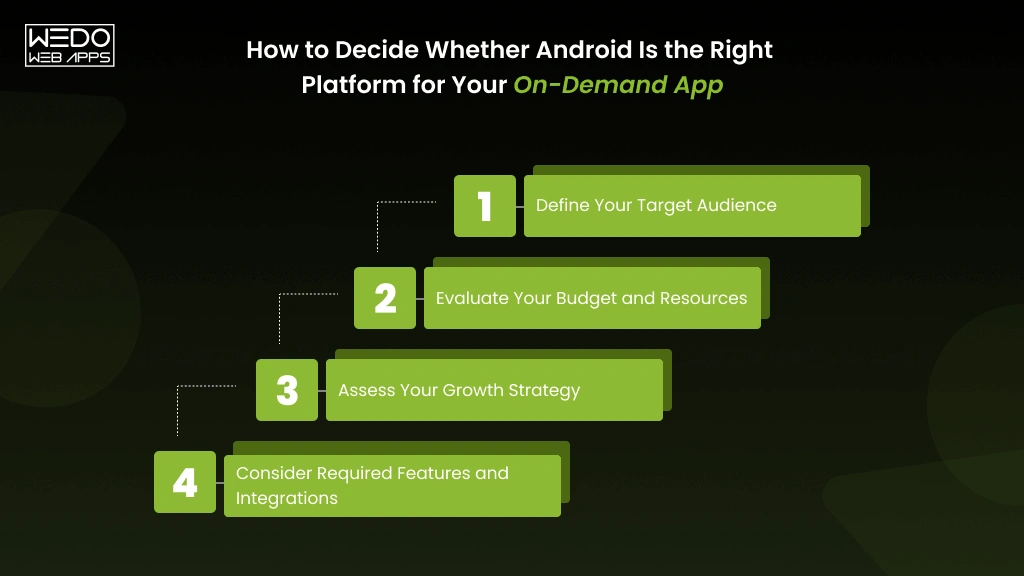
Selecting a mobile platform is a business decision as much as a technical one. While Android offers extensive reach and flexibility, the right choice ultimately depends on your target audience, budget, growth plans, and service model.
If you are evaluating Android for on-demand app development, consider the following factors before making your decision.
1. Define Your Target Audience
The first step is understanding who will use your application. Customer demographics, location, and purchasing behavior can significantly influence platform selection.
Ask yourself:
- Which countries or regions are you targeting?
- What devices does your audience commonly use?
- Are you targeting mass-market users or premium customers?
- How important is broad accessibility to your business model?
If reaching the largest possible audience is a priority, Android often provides a strong advantage.
2. Evaluate Your Budget and Resources
Development and maintenance costs vary depending on app complexity and business requirements.
Consider:
- Initial development budget
- Ongoing maintenance costs
- Feature expansion plans
- Availability of development resources
Many startups choose Android first because it offers a practical path to market while supporting future growth.
3. Assess Your Growth Strategy
The platform you choose today should support your business goals tomorrow. Businesses planning rapid expansion often prioritize Android due to its strong presence across global markets.
Key questions include:
- Do you plan to expand into multiple regions?
- Will your user base grow significantly over time?
- Do you require extensive customization?
- Are real-time features central to your service?
These considerations often influence the outcome of an on-demand app development platform comparison.
4. Consider Required Features and Integrations
Different on-demand services require different technical capabilities. Android supports a wide range of integrations and business-critical features.
Examples include:
- Real-time location tracking
- Secure payment processing
- Push notifications
- In-app communication
- Analytics and reporting tools
- Third-party service integrations
Businesses requiring extensive customization often benefit from the flexibility Android provides.
Quick Decision Checklist
Android may be the right choice if you want to:
- Reach a broad and diverse audience
- Launch in multiple geographic markets
- Build a highly customizable application
- Scale your services over time
- Support real-time interactions and tracking
- Optimize customer acquisition efforts
Ultimately, the decision between Android vs iOS for on-demand apps depends on your business objectives. However, for organizations focused on accessibility, scalability, and market reach, the benefits of Android for on-demand apps often make Android the preferred platform for launching and growing on-demand services.
Conclusion
Choosing the right platform can influence how quickly your on-demand business grows, how effectively it serves customers, and how easily it adapts to future demands. While both Android and iOS have their strengths, Android continues to be a compelling choice for businesses seeking wider market reach, greater flexibility, and long-term scalability.
From extensive customization capabilities and seamless Google integrations to support for real-time services and diverse user segments, the benefits of Android for on-demand apps align closely with the needs of modern on-demand businesses. These advantages become even more valuable for startups and enterprises aiming to expand across multiple regions and customer demographics.
When conducting an on-demand app development platform comparison, it is important to evaluate your audience, business goals, budget, and growth strategy. However, for organizations focused on accessibility, user acquisition, and operational flexibility, the answer to why Android is preferred for on-demand app development is clear: it provides the tools, reach, and scalability needed to build and grow successful on-demand applications.