


Introduction
WooCommerce has become one of the most widely used platforms for running online stores. From small businesses to growing brands, many merchants rely on it to manage products, payments, and day-to-day operations without depending on complex or costly systems. What began as a simple WordPress extension now supports a significant share of eCommerce websites worldwide.
The steady rise of the WooCommerce eCommerce platform reflects a larger shift in how online stores are built. Businesses today prefer flexible tools, ownership of their data, and the freedom to customise their store as needs change. WooCommerce has grown alongside these expectations, expanding its capabilities and eCommerce platform ecosystem year after year.
Looking at its evolution, core features, and current trends helps build clarity on why it remains an effective part of eCommerce conversions. By the end of this blog, you will understand how it compares with other platforms available to online stores today.
The Growth of WooCommerce: From Plugin to Platform
WooCommerce started as a simple WordPress plugin created to add basic selling functionality to existing websites. At that time, launching an online store often required custom software development. WooCommerce offered a practical alternative by allowing businesses to turn a regular WordPress site into a store with minimal setup.
Its growth was closely tied to WordPress itself. As WordPress became one of the most widely used content management systems, WooCommerce benefited from the same user base. Installation was straightforward, updates were easy to manage, and store owners could build on a familiar environment instead of learning an entirely new system. This strong connection helped WooCommerce spread quickly among website owners.
Early adoption increased as developers and agencies began creating themes, plugins, and integrations around the platform. Payment gateways, shipping tools, marketing extensions, and design templates expanded its capabilities. This growing community played a major role in the WooCommerce evolution, transforming it from a basic add-on into a complete WooCommerce eCommerce platform suitable for different types of WooCommerce for online stores.
Several milestones marked this progress. eCommerce feature updates improved scalability, the ecosystem of extensions expanded, and ongoing support from the WordPress community strengthened reliability. Over time, WooCommerce moved beyond small stores and became capable of supporting more complex eCommerce operations.
Today, it stands not just as a plugin but as a mature platform that many businesses consider when evaluating eCommerce solutions.

Key Features That Drove Adoption of WooCommerce
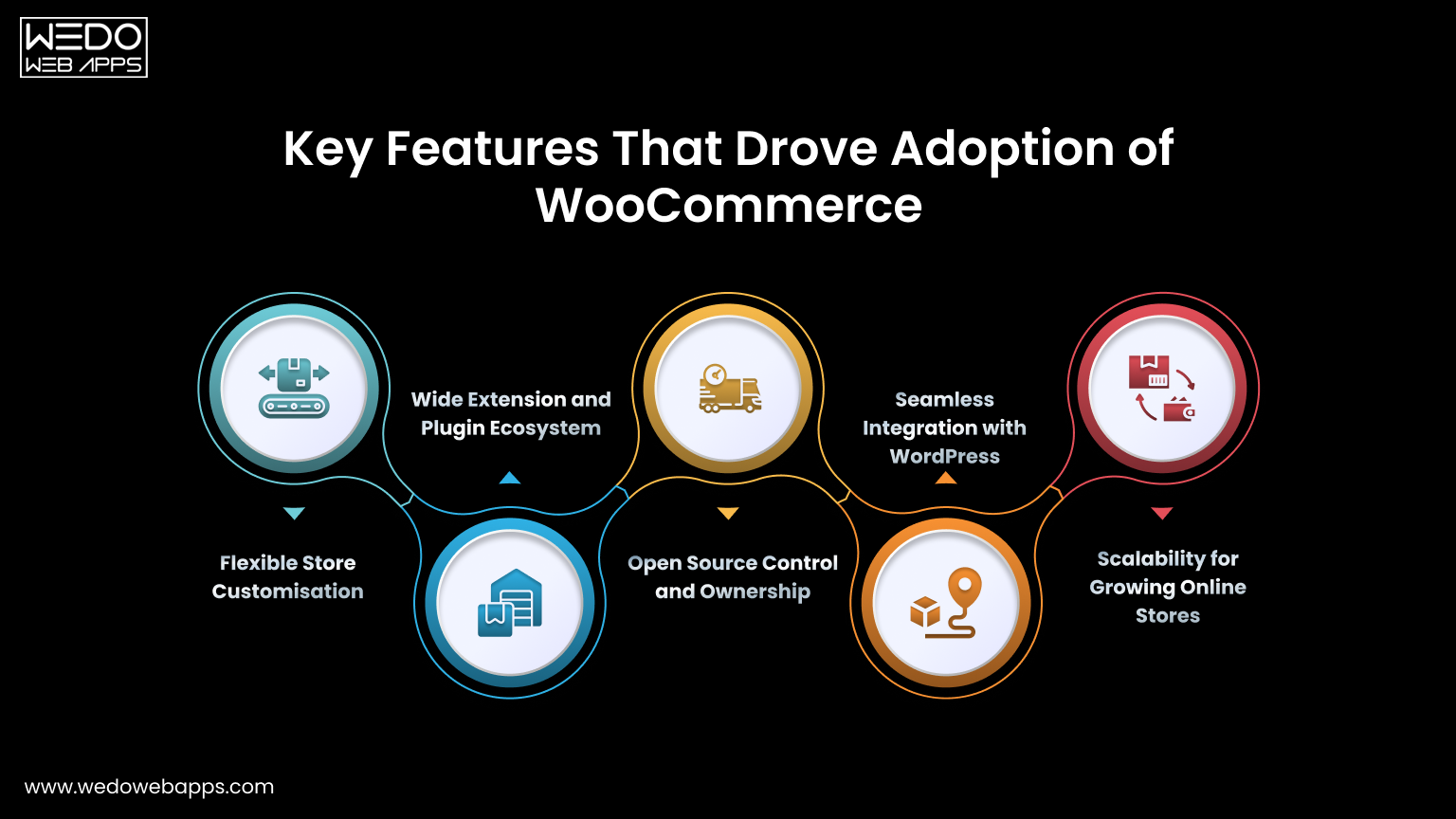
WooCommerce gained consistent traction because it addressed practical business needs. Instead of limiting how stores operate, the platform gives merchants flexibility and control over their setup. These capabilities made it easier for businesses to launch, manage, and expand their online stores without depending on complex systems with the WooCommerce development services.
Below are the core WooCommerce features that supported this steady adoption.
Flexible Store Customisation
One of the main reasons businesses prefer WooCommerce is the ability to shape the store according to their specific requirements. The platform does not restrict design or functionality, which allows teams to create a shopping experience that matches their brand.
- Modify layouts, themes, and checkout flows.
- Add or remove features based on business needs.
- Avoid fixed templates or rigid structures.
Wide Extension and Plugin Ecosystem
As the platform grew, developers began contributing tools and integrations that extended its capabilities. This ecosystem allows store owners to add features without heavy development work.
- Payment gateways for multiple regions.
- Shipping and tax management tools.
- Marketing, analytics, and automation plugins.
- Thousands of third-party integrations.
This expanding ecosystem played a direct role in the WooCommerce evolution, helping it move beyond basic selling functionality.
Open Source Control and Ownership
WooCommerce operates as open source software, which gives businesses full ownership of their store environment. This control is often important for brands that want long-term flexibility.
- Host the store on preferred servers.
- Access and manage store data freely.
- Customise the code when advanced changes are required.
- Avoid dependency on a single provider.
Seamless Integration with WordPress
Because WooCommerce works inside WordPress, many teams can manage both content and eCommerce from one place. This setup simplifies daily operations and reduces the learning curve.
- Manage products and pages in the same dashboard.
- Combine blogging, SEO, and selling easily.
- Use existing WordPress themes and tools.
This integration makes the WooCommerce eCommerce platform practical for businesses that rely heavily on content marketing.
Scalability for Growing Online Stores
Businesses often start small and expand gradually. WooCommerce supports this growth by allowing stores to add functionality over time instead of migrating to a new system.
- Launch quickly with basic features.
- Add tools as traffic and orders increase.
- Support different types of WooCommerce for online stores, from small catalogs to larger inventories.
Together, these features explain why WooCommerce moved from a simple plugin to a widely adopted ecommerce solution. Its focus on flexibility and control continues to shape current WooCommerce trends across the market.
Trends Shaping WooCommerce in Modern Ecommerce
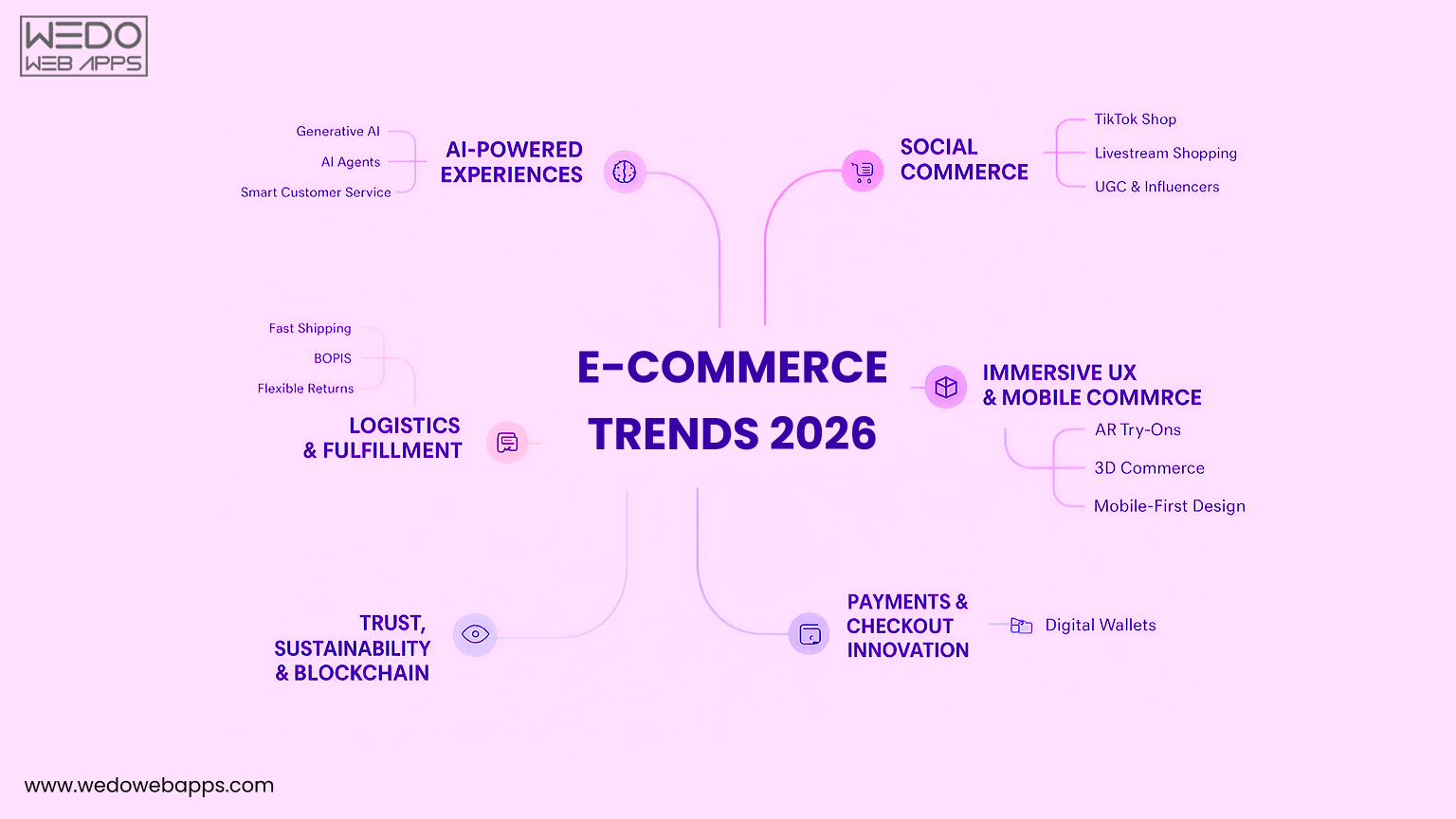
Online selling is growing quickly, and businesses now expect more from their ecommerce platform. They want speed, flexibility, easier integrations, and the freedom to adapt as their store expands. These expectations directly influence how the WooCommerce eCommerce platform evolves and why more brands continue adopting it.
Recent WooCommerce trends show steady improvements that help store owners manage operations better and deliver smoother buying experiences.
Market Trends Influencing Adoption
The eCommerce market has shifted toward platforms that offer ownership and flexibility instead of fixed structures. Businesses prefer systems they can customise without ongoing platform restrictions.
WooCommerce fits this need because it runs on WordPress and gives complete control over store setup.
- Full access to code and customisation.
- No mandatory monthly platform fees.
- Wide plugin ecosystem.
- Freedom to choose hosting and tools.
These factors explain why the WooCommerce eCommerce platform remains a strong choice for many online sellers.
Growing Use Among Small and Mid-Sized Online Stores
Startups and growing businesses often need an affordable solution that can scale step by step. WooCommerce supports this approach by allowing stores to start simple and expand features as needed.
Instead of paying for advanced capabilities upfront, businesses can add them gradually.
- Low initial setup costs.
- Easy product and catalog management.
- Scales from small shops to large inventories.
- Suitable for niche and local brands.
This flexibility has increased adoption among small and mid-sized WooCommerce for online stores use cases.
Headless, AI, and Mobile First Strategies
Modern commerce now goes beyond basic storefronts. Brands expect faster interfaces, smarter tools, and better mobile performance. WooCommerce has adapted to support these technical needs.
It integrates easily with modern architectures and intelligent systems.
- Headless commerce using APIs for custom frontends.
- AI-powered product recommendations and search.
- Marketing automation tools.
- Mobile-friendly checkout experiences.
- Responsive themes for all devices.
These capabilities align with current WooCommerce trends focused on performance and personalisation.
Changing Ecommerce Expectations Driving Platform Updates
Customer behaviour has changed. Shoppers expect fast pages, simple navigation, secure payments, and smooth experiences across devices. Platforms must evolve regularly to meet these standards.
WooCommerce benefits from an active open source community that releases updates based on real store requirements.
- Frequent feature improvements.
- Security updates.
- New extensions and integrations.
- Better compatibility with modern tools.
This continuous improvement shapes the future of WooCommerce and keeps it relevant as eCommerce demands grow.

Comparing WooCommerce With Other Platforms
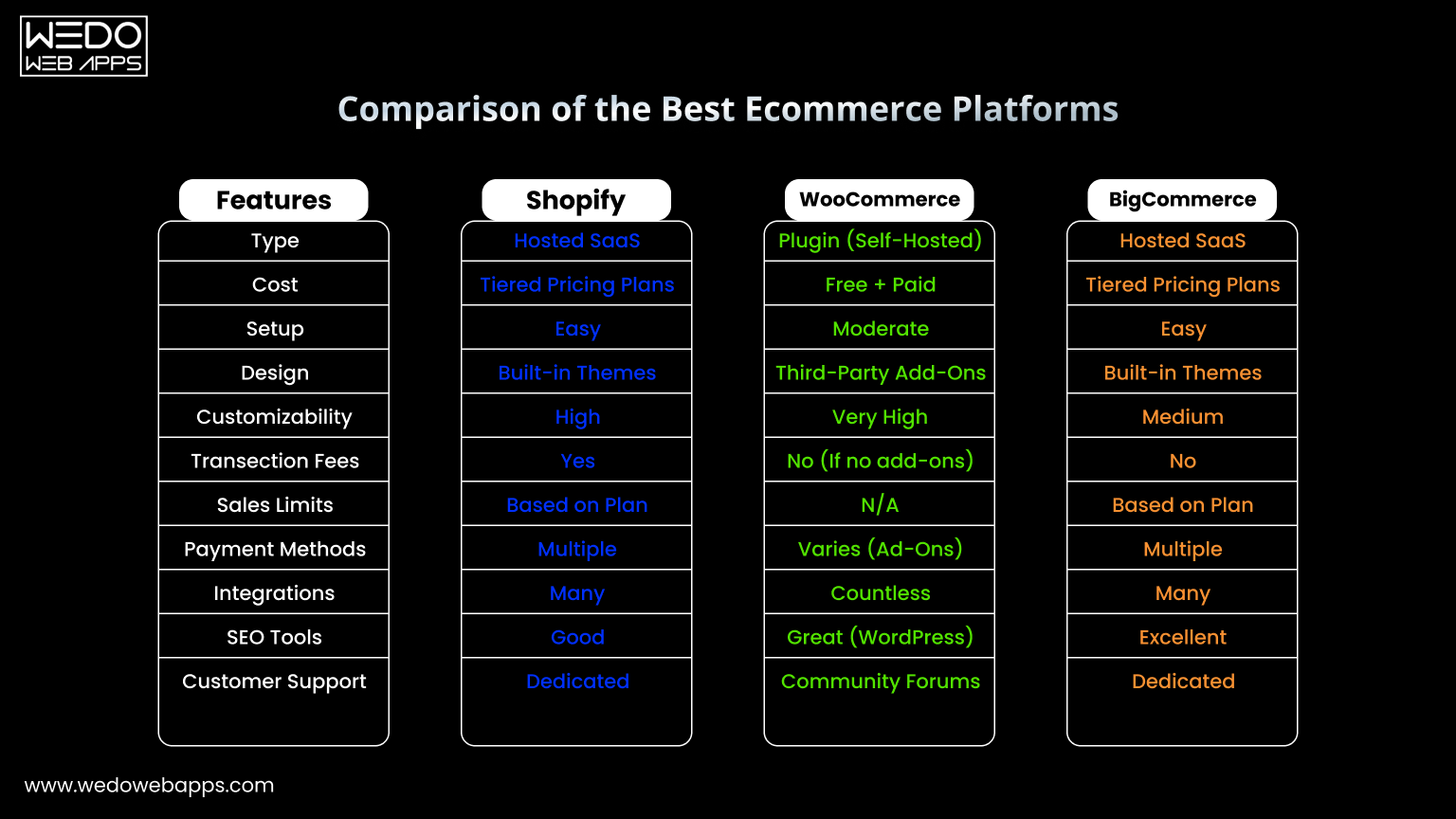
Businesses evaluating eCommerce options often compare WooCommerce with other widely used platforms such as Shopify, Magento, and BigCommerce. Understanding differences in adoption trends, flexibility, and ecosystem size helps decision makers select the right platform for their store’s needs.
Below is a neutral breakdown of key aspects.
Adoption Trends
WooCommerce has grown steadily due to its open source model and WordPress integration. Other platforms have different adoption patterns based on business type and size.
- WooCommerce: Widely adopted by small and mid-sized stores, with over 5 million active websites.
- Shopify: Strong adoption among small to medium merchants, especially for ease of setup.
- Magento: Popular with large enterprises and high-volume stores.
- BigCommerce: Used by mid-market businesses with multi-channel selling needs.
Flexibility and Customisation
Platform flexibility affects store design, workflow, and long-term growth options.
- WooCommerce: High customisation through plugins, themes, and open source code.
- Shopify: Limited backend access. Flexibility mostly appears through apps and themes.
- Magento: Very flexible, but requires technical expertise to implement.
- BigCommerce: Offers configurable features, less open than WooCommerce, more managed solution.
Ecosystem and Extensions
A strong ecosystem supports features, integrations, and ongoing platform development.
| Platform | Plugin or Extension Availability | Community Support | Third-Party Integration |
| WooCommerce | 5000+ plugins | Large global developer community. | Payment gateways, shipping, marketing, and analytics. |
| Shopify | 4500+ apps | Active community forums. | Multi-channel, POS, and marketing tools. |
| Magento | 3000+ extensions | Developer-heavy. | Enterprise integrations and B2B features. |
| BigCommerce | 1000+ apps | Growing community. | Payment and marketing tools. |
The comparison shows that each platform has a specific niche.
- WooCommerce excels in flexibility and ecosystem size for small to mid-sized stores.
- Shopify prioritises simplicity and quick setup.
- Magento suits enterprise stores requiring full technical control.
- BigCommerce fits mid-market businesses needing managed solutions.
This neutral comparison highlights WooCommerce vs other platforms from an adoption, flexibility, and ecosystem perspective without any service promotion.
Challenges and Considerations for Businesses
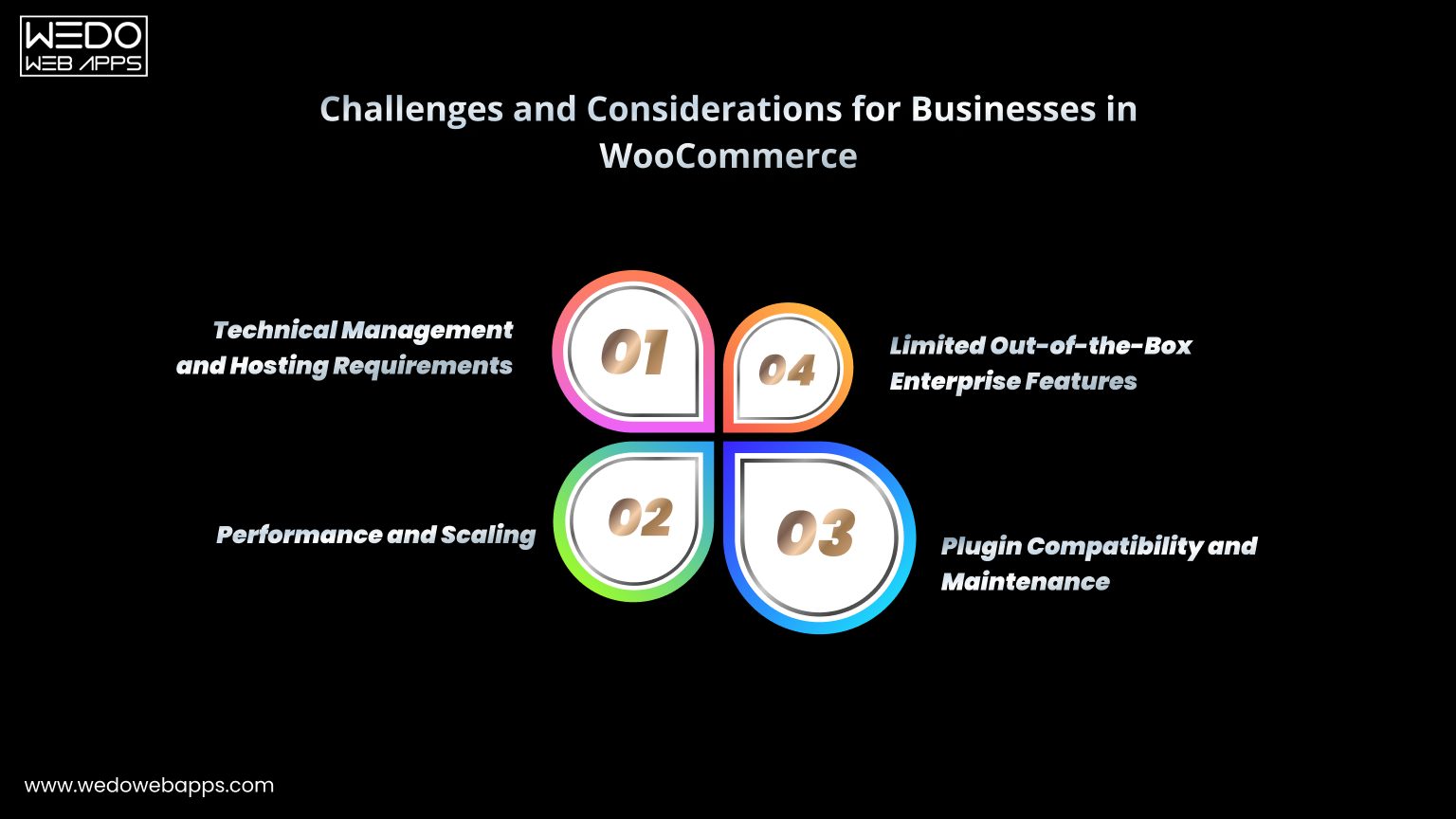
While WooCommerce provides flexibility and a widely adopted eCommerce solution, businesses should be aware of certain challenges before implementing it. Understanding these considerations helps store owners plan technical resources, growth strategies, and maintenance requirements effectively.
Technical Management and Hosting Requirements
WooCommerce is self-hosted, which means businesses must manage hosting, updates, and security. While this gives control, it also requires planning and technical knowledge.
- Choosing reliable hosting for speed and uptime.
- Regularly updating WordPress, WooCommerce, and plugins.
- Managing backups and security internally.
- Troubleshooting custom code or plugin conflicts.
Performance and Scaling
The platform’s performance depends heavily on hosting, plugins, and site optimisation. Businesses with large inventories or high traffic need additional technical planning.
- Optimising themes and plugins for speed.
- Using caching and performance tools.
- Ensuring server resources match traffic and product catalog size.
- Seeking support from WooCommerce developers for complex scaling needs.
Plugin Compatibility and Maintenance
WooCommerce relies on third-party extensions for advanced features. While this adds flexibility, it introduces potential maintenance challenges.
- Ensuring plugins remain compatible after updates.
- Monitoring for conflicts that could disrupt functionality.
- Some advanced plugins require a paid license.
- Ongoing management is required to maintain smooth operations.
Limited Out-of-the-Box Enterprise Features
WooCommerce is ideal for small and mid-sized stores but lacks some enterprise functionality by default. Businesses requiring complex operations may need additional tools or development.
- Multi-currency and advanced tax handling often need plugins.
- B2B or wholesale features may require customisation.
- Advanced reporting or analytics is usually done through third-party tools.
- Some enterprise-grade tools are natively available in platforms like Magento.
Understanding these challenges and considerations ensures businesses can use WooCommerce effectively. The platform remains a highly flexible WooCommerce eCommerce platform suitable for a variety of WooCommerce for online stores, but proper planning for technical management, scaling, and maintenance is key to long-term success.

The Future of WooCommerce
WooCommerce continues to evolve alongside changing business and customer expectations. Understanding emerging trends and the platform’s future direction helps businesses plan long-term strategies and anticipate new opportunities.
Expansion of the Ecosystem
The WooCommerce ecosystem is expected to grow further, driven by developers, agencies, and third-party service providers. This expansion will provide more tools, integrations, and specialised solutions.
- Increasing number of extensions for marketing, shipping, and analytics.
- New themes and design options for diverse industries.
- Developer contributions that improve performance and security.
- Stronger support for multi-channel and omnichannel selling.
Emphasis on Performance and Scalability
Future updates will continue addressing performance and scalability needs as online stores grow in size and traffic.
- Better optimisation tools for speed and reliability.
- Support for larger product catalogs and high-traffic volume.
- Cloud hosting and managed performance solutions.
- Enhanced caching, image optimisation, and mobile responsiveness.
Adoption of Modern Technologies
Emerging technologies like AI, headless commerce, and automation are becoming increasingly relevant for online stores. WooCommerce is adapting to these trends.
- AI-powered product recommendations and search.
- Automated marketing workflows and analytics insights.
- Headless setups for custom frontend experiences.
- Integration with emerging eCommerce tools and platforms.
Growing Role Among Small and Mid-Sized Stores
WooCommerce is expected to maintain its popularity among SMBs due to its flexibility and cost efficiency. Businesses will continue to choose it for stores that need scalability without high initial costs.
- Affordable setup with control over features and hosting.
- Ability to customise stores to specific business needs.
- Gradual scalability for growing catalogs and customer base.
- Strong community support for guidance and troubleshooting.
The future of WooCommerce looks focused on ecosystem growth, performance improvements, and adoption of modern ecommerce technologies. It remains a flexible and reliable WooCommerce eCommerce platform for a wide variety of WooCommerce for online stores, supporting both small businesses and growing brands.
Conclusion
Choosing an ecommerce platform is one of the first major decisions any online business makes. The right system should match current needs while leaving room to grow over time.
WooCommerce has steadily moved from a simple WordPress plugin to a widely adopted WooCommerce eCommerce platform used by millions of WooCommerce for online stores. Its open architecture, growing ecosystem, and expanding WooCommerce features continue to attract businesses that value flexibility and control. At the same time, comparisons like WooCommerce vs other platforms show that every solution serves different operational needs.
From its early WooCommerce evolution to the latest WooCommerce trends, the platform has adapted to performance demands, integrations, and modern shopping behaviour. This steady progress shapes the future of WooCommerce and keeps it relevant for startups, mid-sized brands, and growing online stores alike.
Explore our eCommerce development services to see how we help businesses launch and scale online stores with clarity and confidence.















 Sharing Project Details
 Let's have a
call
Let's have a
call Got
Questions? Let’s Chat!
Got
Questions? Let’s Chat!