Introduction
WooCommerce has redefined how online stores are built by combining WooCommerce flexibility with complete control. As an open-source platform built on WordPress, it allows you to shape every aspect of your website from product presentation to the checkout process without being restricted by templates or vendor limitations.
Its extensive library of plugins and extensions lets you add features, integrate with third-party tools, and scale your store efficiently. Whether you sell physical products, digital goods, or subscription services, WooCommerce adapts to your setup while keeping all data and functionality under your control.
Understanding WooCommerce open-source capabilities is essential when evaluating eCommerce platforms. This guide walks through its customization options, core features, and practical applications. By the end, you'll understand how WooCommerce development supports growth, flexibility, and long-term control, making it a platform that can evolve alongside your store.
The Growing Popularity of Open Source eCommerce Platforms
Open-source platforms have changed how online stores are built. They give freedom, control, and the ability to create a store that meets exact needs without being limited by templates or vendor rules. WooCommerce open source is a leading example that offers flexibility and reliability for all types of online stores.
Why Open Source Works Well
- Full Control Over Your Store: Adjust pages, features, and workflows to suit your requirements.
- Data Ownership: Maintain complete control over your store data and customer information.
- Cost Flexibility: The core platform is free, with optional paid extensions for added functionality.
What Makes WooCommerce Stand Out
- Built on WordPress: Access thousands of plugins and themes for customization and integrations.
- Suitable for Any Store: Supports physical products, digital goods, and subscription services.
- Active Community: Developers worldwide provide updates, tutorials, and plugins, keeping the platform reliable and up-to-date.
Key Takeaways
- WooCommerce open source provides flexibility and control for building an online store.
- Its plugin ecosystem and community support make it a dependable long-term solution.
- An open-source platform allows you to scale, customize, and innovate without limitations.

What Makes WooCommerce Open Source Platform
WooCommerce open source is designed to give full control over your store, combining WooCommerce flexibility with ownership. Its open-source nature allows you to modify features, integrate tools, and scale your store without relying on templates or external vendors.
Free and Self-Hosted Architecture
You can start with the free core platform and choose your hosting environment based on your requirements. This self-hosted setup gives you control over performance, security, and updates.
- No licensing fees for the core system.
- Select your own server for hosting, speed, and security control.
- Apply updates and maintenance on your schedule.
This architecture ensures your store is fully adaptable while keeping costs under control and providing independence from third-party limitations.
Access to Source Code and Full Control
The open-source structure gives direct access to the platform's source code. This allows you to adjust workflows, add custom features, and integrate third-party tools seamlessly.
- Modify the core functionality to suit unique business needs.
- Customize layouts, checkout processes, and product pages.
- Integrate payment gateways, plugins, and external services easily.
Having access to the source code ensures that your store can evolve as your needs change, providing unmatched WooCommerce flexibility for growth and customization.
Ownership of Store Data and Infrastructure
With WooCommerce, you retain complete control over all store data and infrastructure. This independence allows you to manage security, backups, and scaling without restrictions from a vendor.
- Full control over products, orders, and customer information.
- Implement security measures and data backups independently.
- Scale servers and infrastructure as traffic and sales grow.
By owning the data and infrastructure, you ensure reliability, security, and the freedom to expand your store according to your long-term goals.
Key Benefits of Using WooCommerce for eCommerce Development
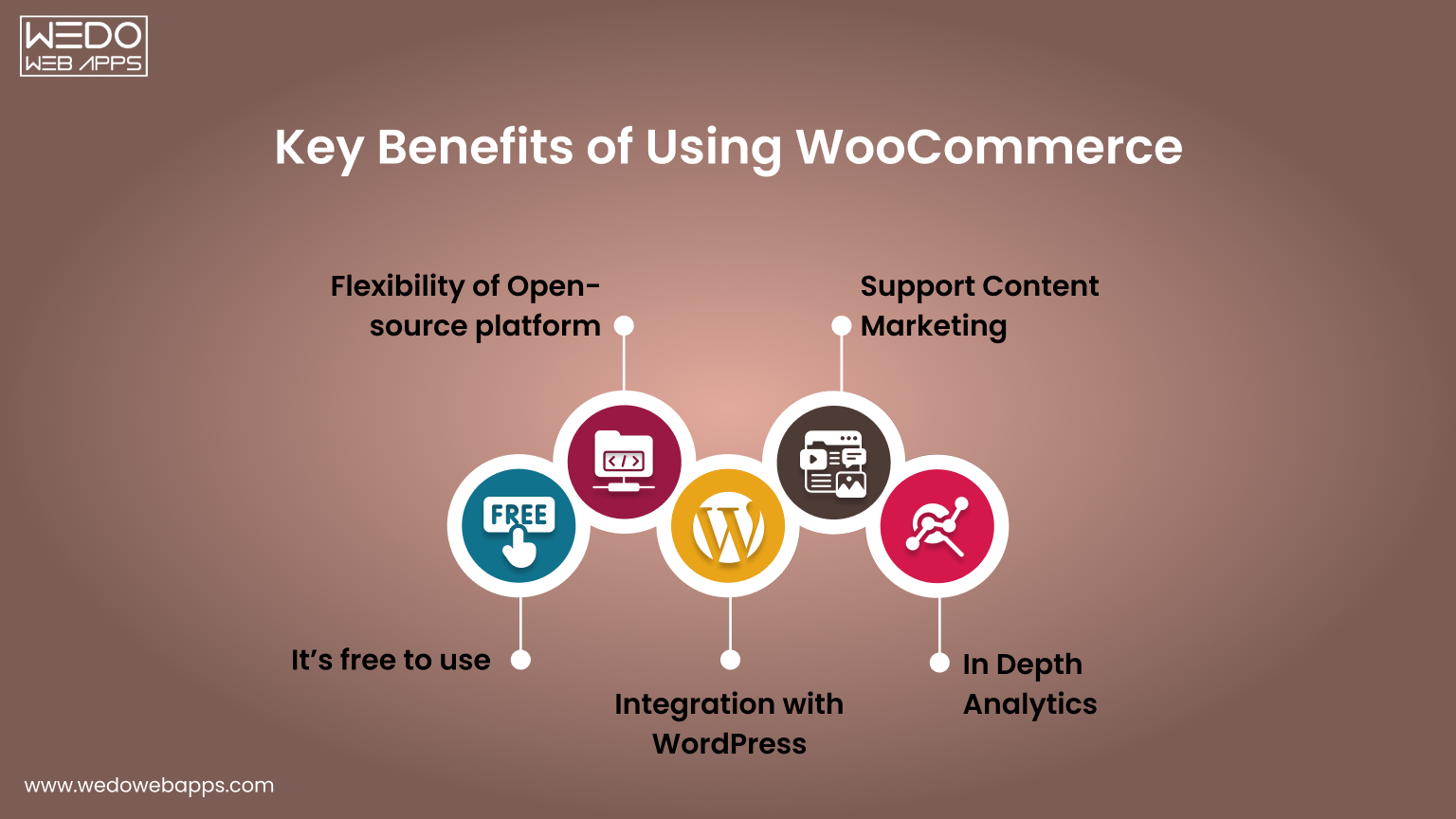
WooCommerce provides a flexible, scalable, and fully customizable framework for building online stores. Its open-source nature allows you to create a store that aligns perfectly with your business needs while giving full control over design, features, and performance.
Flexibility and Customization
One of the biggest advantages of WooCommerce open source is the ability to tailor every part of your store. You can adjust layouts, workflows, and functionality without restrictions.
- Customize product pages, checkout flows, and shipping options.
- Integrate with third-party tools and APIs.
- Use thousands of plugins to extend features without writing new code.
This WooCommerce flexibility ensures your store can match your unique business requirements and provide a seamless experience for customers.
Scalability and Performance
WooCommerce open source platform is built to grow with your store. Whether you're managing a small shop or a high-traffic eCommerce site, it can handle expansion efficiently.
- Supports large product catalogs and multiple product types.
- Can handle increasing traffic with proper hosting and optimization.
- Compatible with caching, CDN, and performance-enhancing tools.
WooCommerce scalability ensures your store remains responsive and reliable as sales and customer interactions increase.
Robust Plugin Ecosystem
The WooCommerce plugins ecosystem allows you to add new capabilities quickly without extensive WooCommerce development work.
- Access thousands of free and premium plugins for payments, marketing, and reporting.
- Integrate specialized tools like subscription management or advanced shipping.
- Leverage plugins to enhance customer experience and store functionality.
A strong plugin ecosystem makes it easy to expand your store's features while keeping development manageable and cost-effective.
Cost-Effectiveness
Using WooCommerce open source can also be cost-efficient compared to proprietary platforms.
- The core platform is free.
- Paid plugins are optional and chosen based on specific needs.
- No vendor lock-in means you control costs for hosting, extensions, and maintenance.
This combination of WooCommerce flexibility, WooCommerce scalability, and a strong ecosystem makes WooCommerce a reliable choice for long-term eCommerce growth.
Core Capabilities That Support Store Growth
WooCommerce open source provides the foundation to build stores that can grow, adapt, and perform under increasing demand. Its features and architecture are designed to support expansion while giving full control over WooCommerce customization, integrations, and data management.
Integration with WordPress and Content Management
Built on WordPress, WooCommerce benefits from seamless content management and website integration. This allows you to combine eCommerce functionality with rich content features for marketing and customer engagement.
- Manage blog posts, landing pages, and product content in a single platform.
- Use WordPress themes to customize the store's appearance and layout.
- Leverage content blocks and page builders to enhance product presentation.
Integration with WordPress ensures that your store remains flexible, easy to manage, and consistent with your overall website experience.
APIs and Third-Party Integrations
WooCommerce open source platform supports a wide range of integrations through APIs and plugins, making it easy to connect with other tools or services.
- Integrate payment gateways, shipping solutions, and tax tools.
- Connect marketing platforms, CRM systems, and analytics services.
- Build custom integrations for unique business workflows.
These capabilities allow your store to interact with essential tools efficiently, supporting automation, reporting, and seamless operations.
Performance and Scalability Potential
Designed to scale, WooCommerce can handle increasing traffic, large product catalogs, and high transaction volumes when configured correctly.
- Supports multiple product types, variations, and categories.
- Optimized for caching, CDN, and database performance improvements.
- Allows independent server scaling to manage growing traffic and orders.
By leveraging these capabilities, your store can expand without sacrificing speed, reliability, or user experience.
Common Use Cases Where WooCommerce Works Well
WooCommerce development isn't limited to a single type of store. Its flexibility and open-source nature make it suitable for a variety of eCommerce setups, from small shops to subscription-based businesses. Understanding where WooCommerce excels helps decide if it's the right solution for your needs.
Small and Medium Online Stores
Many small and medium businesses rely on WooCommerce to launch quickly without high upfront costs.
- Manage a catalog of products with ease.
- Customize the store's design and layout without complex coding.
- Scale gradually as sales and traffic increase.
For businesses looking for control and adaptability, WooCommerce for small businesses offers a cost-effective solution that grows with the store.
Digital Products and Downloads
Selling digital goods like e-books, software, or music is straightforward with WooCommerce.
- Deliver downloadable products automatically after purchase.
- Protect content with secure access and download limits.
- Integrate with payment gateways for smooth transactions.
This makes WooCommerce for digital products ideal for creators and businesses focusing on digital sales.
Subscription-Based Businesses
WooCommerce's ecosystem supports recurring payments, making subscriptions simple to manage.
- Automate billing for memberships, subscription boxes, or SaaS products.
- Send reminders, invoices, and notifications automatically.
- Track recurring revenue and customer activity with reporting tools.
With these capabilities, WooCommerce for subscriptions provides a reliable platform for recurring revenue models.
B2B and Niche Marketplaces
WooCommerce can support more complex business models like B2B stores or specialized marketplaces.
- Offer tiered pricing, bulk discounts, and custom catalogs.
- Integrate specialized shipping, tax, or inventory systems.
- Build niche marketplaces with multiple sellers or product categories.
Even for specialized scenarios, WooCommerce's open-source framework ensures you can adapt and extend functionality to meet unique business needs.

Things to Consider Before Choosing WooCommerce
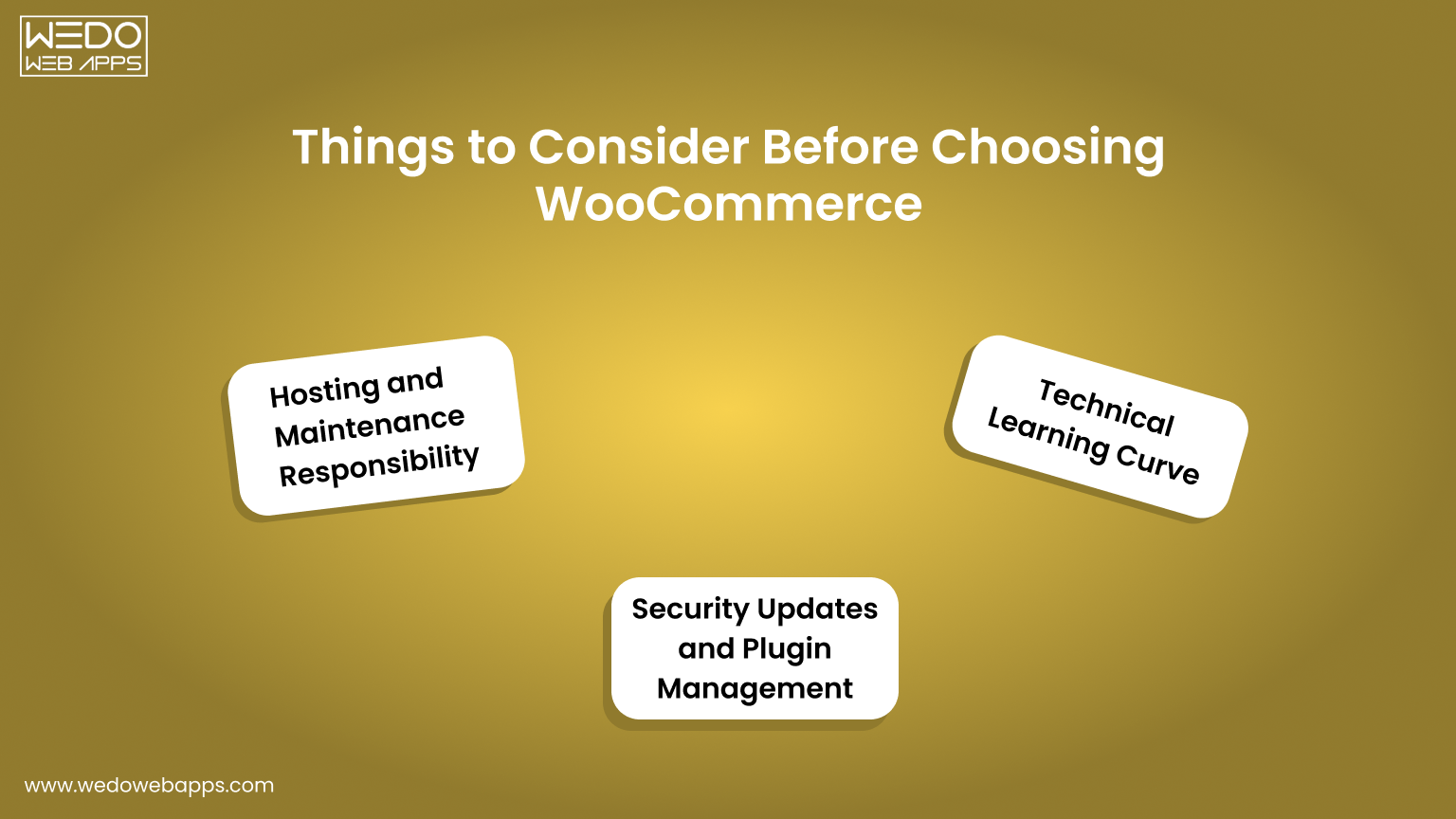
While WooCommerce offers flexibility and control, it also comes with responsibilities. Understanding these factors before building your store ensures smoother operations and avoids surprises down the line.
Hosting and Maintenance Responsibility
Unlike hosted eCommerce solutions, WooCommerce is self-managed, meaning you are responsible for hosting and maintenance.
- Choose a reliable WooCommerce hosting provider to ensure speed and uptime.
- Regularly monitor server performance and handle updates.
- Plan for backups and disaster recovery to protect your store.
Proper hosting and maintenance planning help your store remain fast, secure, and reliable as it grows.
Security Updates and Plugin Management
Security is a key consideration with WooCommerce maintenance. Being open-source means you need to manage updates and third-party plugins carefully.
- Keep WordPress, WooCommerce, and all plugins updated.
- Audit installed plugins for compatibility and security risks.
- Implement SSL certificates, firewalls, and malware scanning tools.
Managing security and plugins proactively reduces downtime and protects customer data.
Technical Learning Curve
Although WooCommerce is user-friendly, it still requires some technical knowledge, especially for WooCommerce customizations or integrations.
- Understanding WordPress basics is necessary for content management.
- Some plugin configurations or custom workflows may require developer support.
- Familiarity with hosting, databases, and backups helps maintain store stability.
Being prepared for this learning curve ensures a smoother experience and reduces reliance on external resources.
WooCommerce vs Hosted eCommerce Platforms
Choosing the right eCommerce platform depends on your goals, technical comfort, and growth plans, and the eCommerce development partner. Here's a quick glance at the key differences between WooCommerce open source and hosted platforms.
- Control: WooCommerce offers deep customization. Hosted platforms are more limited.
- Cost: WooCommerce core is free. Hosted platforms usually charge monthly or transaction fees.
- Scalability: WooCommerce scales with your hosting setup. Hosted platforms manage scaling for you.
- Security and Maintenance: WooCommerce requires updates and plugin management. Hosted platforms handle most updates automatically.
Control and Customization
WooCommerce open source provides control over design, features, and workflows, unlike hosted solutions that rely on templates.
- Modify code, layouts, and checkout processes freely.
- Add plugins or develop custom features without restrictions.
- Tailor product pages and content management to your needs.
Hosted platforms offer convenience but limit customization beyond their built-in features.
Cost and Pricing Flexibility
Open-source and hosted platforms differ in how costs are managed.
- WooCommerce core is free. Hosting and premium plugins or extensions are optional.
- Hosted platforms often charge monthly or per-transaction fees, which can grow with traffic.
- Open-source allows cost control based on actual business needs rather than fixed subscriptions.
Scalability and Performance
WooCommerce can handle growth efficiently when hosting is optimized.
- Supports large product catalogs and multiple product types.
- Compatible with caching, CDN, and database optimization.
- Server scaling is independent, allowing the store to handle high traffic.
Hosted platforms handle scaling automatically but may limit advanced optimization or control.
Security and Maintenance
Security responsibilities differ between open-source and hosted platforms.
- With WooCommerce, you manage security, updates, and plugins.
- Hosted solutions maintain security automatically but offer limited control over advanced settings.
- Open-source requires proactive management but gives ownership of store data.

Is WooCommerce the Right Fit for Your Business
Deciding if WooCommerce is the best platform depends on your business goals, technical capabilities, and growth plans. Use this checklist to evaluate whether WooCommerce flexibility and open-source eCommerce platform benefits match your needs.
Checklist: Is WooCommerce Right for You?
- You need control over WooCommerce customization, including workflows, product pages, and checkout processes.
- You prefer cost flexibility, starting with a free core platform and selectively investing in plugins or hosting.
- You require scalability to accommodate growing traffic, product ranges, or order volumes.
- You want ownership of customer data, sales information, and store infrastructure.
- You plan to integrate third-party tools such as payment gateways, marketing platforms, or analytics.
- Your team or partner can manage updates, security, and plugin maintenance efficiently.
- You sell multiple product types, including physical products, digital goods, or subscriptions.
- You want access to a robust plugin ecosystem to extend features as your store grows.
If most of these points align with your business requirements, WooCommerce open source is likely a suitable platform. Its flexibility, scalability, and ecosystem make it a reliable solution for many eCommerce stores.
Conclusion
WooCommerce open source gives you the freedom to build your store the way you want. You can customize every part of your site, from product pages to checkout, while keeping control over your data and operations.
Whether you run a small online shop, sell digital products, or manage subscriptions, WooCommerce adapts to your needs. Its plugin ecosystem and WordPress integration make it easy to add features and allow WooCommerce developers to grow your store as your business expands.
Managing WooCommerce maintenance and security requires attention, but the payoff is a store that performs reliably and scales with your goals.
Choosing WooCommerce means choosing flexibility, control, and long-term growth. It's a platform that lets you innovate, adapt, and create an online store that can evolve with your business.