Introduction
What if you could launch your mobile app on both Android and iOS without doubling your development budget or managing two separate applications?
For many businesses, mobile app development is a balancing act between cost, speed, and market reach. While customers expect a seamless experience across devices, building and maintaining separate apps for different platforms can quickly increase development efforts and long-term expenses. This often leaves decision makers searching for a more efficient way to deliver high-quality mobile experiences without stretching resources.
The growing importance of cross-platform app development lies in its ability to address these challenges. By enabling a single application to run across multiple operating systems, businesses can reach a wider audience while simplifying development and maintenance processes. This approach has become increasingly popular among startups, established enterprises, and organizations looking to bring products to market faster.
As mobile strategies continue to evolve, understanding the benefits of cross-platform app development is essential for making informed technology decisions. From reducing costs and accelerating development to improving scalability, the approach offers several advantages that can directly impact business growth and operational efficiency.
In this guide, we will explore why choose cross-platform app development, discuss the leading cross-platform app development advantages, compare cross-platform vs native apps, and examine the most valuable cross-platform mobile app benefits for modern businesses.

What Is Cross-Platform App Development?
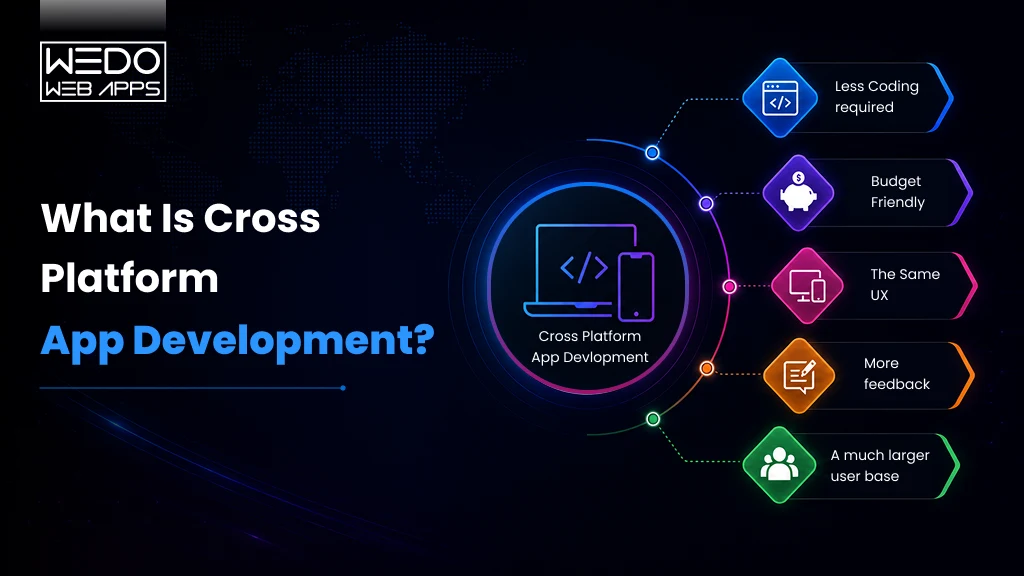
Cross-platform app development is the process of creating a mobile application that runs on multiple operating systems, such as Android and iOS, using a shared codebase. Instead of building separate applications for each platform, businesses can develop one app and deploy it across different devices, making development more efficient and cost-effective.
Understanding Cross-Platform App Development
The growing importance of cross-platform app development comes from its ability to help businesses reach a wider audience while reducing development efforts. By using a single codebase, companies can launch applications faster and simplify long-term maintenance.
Key features of cross-platform development include:- One codebase for multiple platforms
- Faster app deployment
- Easier updates and maintenance
- Better deployment efficiency
How Cross-Platform Development Works
Cross-platform frameworks allow mobile app developers to write code once and use it across different operating systems. This approach is one of the key cross-platform app development advantages for businesses looking to optimize resources.
The development process typically includes:- Creating a shared codebase.
- Building an app using a cross-platform framework.
- Testing the application on Android and iOS devices.
- Deploying the app across multiple platforms.
Popular Cross-Platform Development Frameworks
Several frameworks support cross-platform mobile app development, each offering unique features and capabilities.
| Framework | Developed By | Best Known For |
|---|---|---|
| Flutter | Fast development and customizable UI | |
| React Native | Meta | JavaScript-based mobile app development |
| .NET MAUI | Microsoft | Development within the .NET ecosystem |
These frameworks contribute to many benefits of cross-platform app development, including faster development cycles, lower maintenance efforts, and broader market reach.
Why Is Cross-Platform App Development Important for Businesses?
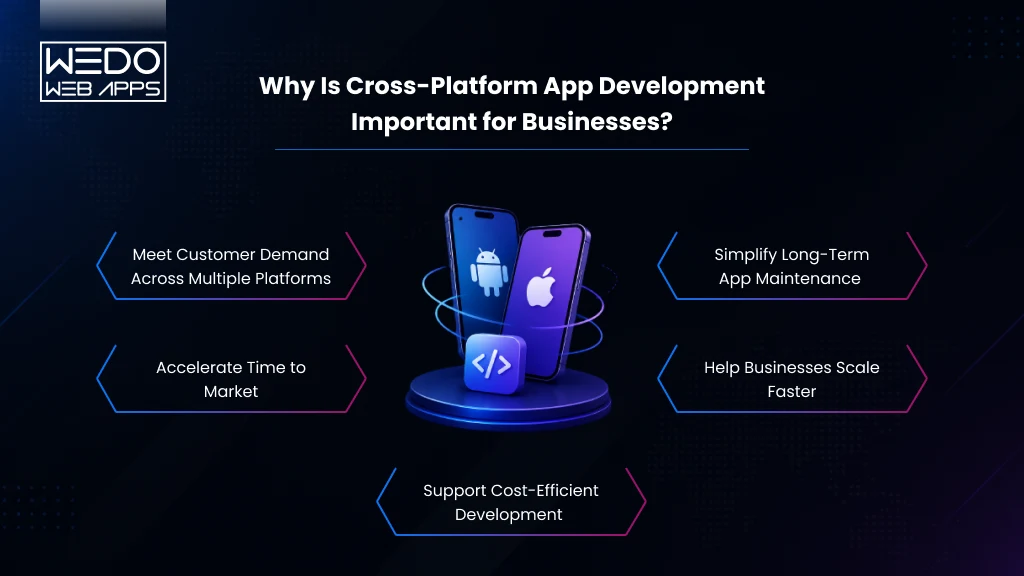
Customers no longer rely on a single device or operating system. They expect businesses to provide a consistent experience whether they are using an Android smartphone, an iPhone, or a tablet. As a result, the importance of cross-platform app development continues to grow for businesses looking to reach more users while managing development costs and timelines effectively.
Meet Customer Demand Across Multiple Platforms
Modern customers interact with businesses through different devices and operating systems. Developing separate applications for each platform can increase complexity and delay launches.
Cross-platform development helps businesses:
- Reach Android and iOS users simultaneously.
- Deliver a consistent user experience.
- Expand their market presence more efficiently.
Accelerate Time to Market
Speed can be a major competitive advantage. Businesses that launch faster can gather customer feedback sooner and respond to market opportunities more effectively.
This is one of the key reasons many organizations choose cross-platform app development for new mobile projects.
Key advantages include:
- Faster development cycles
- Quicker testing and deployment
- Earlier market entry
Support Cost-Efficient Development
Building and maintaining separate applications often requires additional resources, development efforts, and a testing process.
With a shared codebase, businesses can:
- Reduce overall development costs
- Optimize resource allocation
- Lower long-term operational expenses
These cost savings are among the most recognized cross-platform app development advantages.
Simplify Long-Term App Maintenance
Regular updates, bug fixes, and feature enhancements are necessary for every mobile application. Managing these changes across multiple codebases can become time-consuming.
Cross-platform development simplifies maintenance by allowing teams to:
- Manage one primary codebase
- Release updates more efficiently
- Maintain consistency across platforms
Help Businesses Scale Faster
As businesses grow, their applications often need new features, integrations, and performance improvements. A cross-platform approach provides the flexibility needed to support expansion without significantly increasing development complexity.
This is one of the most valuable benefits of cross-platform app development for startups and growing businesses planning for long-term growth.
Business Benefits Summary
| Business Goal | How Cross-Platform Development Helps |
|---|---|
| Faster Launch | Enables simultaneous deployment across multiple platforms |
| Cost Reduction | Reduces development and maintenance efforts through a shared codebase |
| Market Reach | Helps businesses connect with Android and iOS users more efficiently |
| Maintenance | Simplifies updates, bug fixes, and feature releases |
| Scalability | Supports future growth without significantly increasing development complexity |
The combination of faster delivery, broader market reach, and operational efficiency explains why choose cross-platform app development has become a common consideration for businesses planning their mobile strategy.
Top Benefits of Cross-Platform App Development
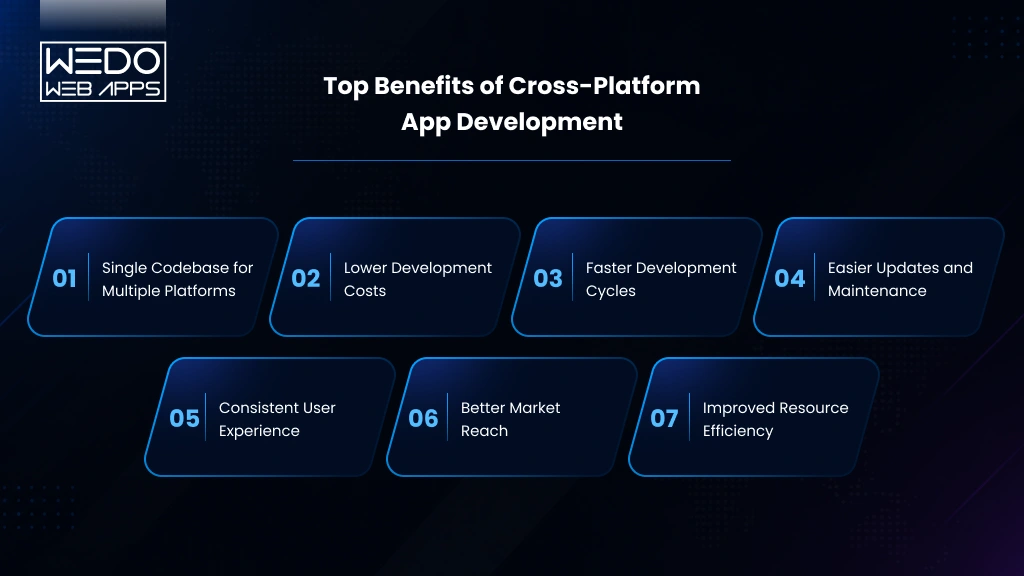
The growing adoption of cross-platform frameworks is driven by the practical value they offer to businesses. From reducing development efforts to improving operational efficiency, the benefits of cross-platform app development make it an attractive choice for organizations looking to build and manage mobile applications more effectively.
Single Codebase for Multiple Platforms
One of the biggest cross-platform app development advantages is the ability to use a single codebase for multiple operating systems. Instead of developing separate applications for Android and iOS, developers can write code once and deploy it across platforms.
This approach helps:
- Reduce duplicate development work
- Maintain consistency across platforms
- Simplify project management
Lower Development Costs
Developing separate applications often requires additional resources, time, and expertise. Cross-platform development reduces these requirements by allowing teams to work from a shared codebase.
Businesses can benefit from:
- Lower development expenses
- Reduced testing efforts
- More efficient use of development resources
Faster Development Cycles
Speed is often a critical factor in mobile app projects. Since cross-platform app developers work on a single codebase, the development process becomes more streamlined.
As a result, businesses can:
- Launch products faster
- Implement features more quickly
- Respond to market demands sooner
Easier Updates and Maintenance
Mobile applications require regular updates to improve functionality, fix bugs, and address security concerns. Managing updates across separate platforms can increase maintenance efforts.
With cross-platform development, teams can:
- Apply updates more efficiently
- Reduce maintenance complexity
- Maintain feature consistency across platforms
Consistent User Experience
Customers expect a smooth and familiar experience regardless of the device they use. Cross-platform frameworks help businesses maintain consistency in design, navigation, and functionality.
This contributes to:
- Improved user satisfaction
- Stronger brand consistency
- Better customer engagement
Better Market Reach
Reaching users on both Android and iOS is essential for many businesses. Cross-platform development makes it easier to target a broader audience without creating separate applications.
This is one of the most valuable cross-platform mobile app benefits for businesses seeking growth and wider customer adoption.
This is one of the most valuable cross-platform mobile app benefits for businesses seeking growth and wider customer adoption.
Improved Resource Efficiency
Cross-platform development enables teams to focus their efforts on improving application quality rather than managing multiple development projects.
This can lead to:
- Better productivity
- More efficient project execution
- Optimized use of budgets and resources
Benefits Checklist
| Benefit | Business Impact |
|---|---|
| Single Codebase | Reduces duplicate development efforts |
| Lower Development Costs | Optimizes project budgets |
| Faster Development Cycles | Speeds up product launches |
| Easier Updates and Maintenance | Simplifies long-term app management |
| Consistent User Experience | Improves customer satisfaction |
| Better Market Reach | Expands audience across platforms |
| Improved Resource Efficiency | Maximizes team productivity |
These benefits of cross-platform app development explain why many businesses adopt this approach when building mobile applications. By balancing cost, speed, and scalability, cross-platform development helps organizations deliver mobile experiences more efficiently while supporting long-term business goals.

Cross-Platform vs Native Apps: Key Differences Explained
When planning a mobile application, one of the most common questions businesses ask is whether to choose cross-platform or native development. While both approaches have their strengths, the right choice depends on factors such as budget, project requirements, performance expectations, and long-term goals.
Understanding the differences between cross-platform vs native apps can help businesses make more informed development decisions.
Cross-Platform vs Native Apps Comparison
| Factor | Cross-Platform Apps | Native Apps |
|---|---|---|
| Development Cost | Generally lower due to a shared codebase | Higher because separate apps are developed for each platform |
| Development Time | Faster development and deployment | Requires maintaining multiple codebases |
| Maintenance | Easier to maintain one codebase | Requires maintaining multiple codebases |
| Performance | Suitable for most business applications | Ideal for performance-intensive applications |
| User Experience | Consistent experience across platforms | Platform-specific user experience |
| Scalability | Supports growth and feature expansion | Highly scalable with platform-specific optimization |
| Device Features | Access to most device capabilities | Full access to platform-specific features |
When Cross-Platform Development is the Better Choice
Cross-platform development is often a practical option when businesses want to reach a wider audience while optimizing resources.
It is commonly preferred when:
- Budget is a key consideration.
- A faster time to market is important.
- Android and iOS users are equally important.
- Long-term maintenance costs need to be controlled.
- The application does not require extensive platform-specific functionality.
These factors explain why choose cross-platform app development for many startup and business applications.
When Native Development Makes More Sense
Native development may be the better option for applications that require maximum performance or deep platform integration.
It is often suitable for:
- High-performance gaming applications.
- Augmented reality (AR) and virtual reality (VR) apps.
- Apps with advanced device-specific functionality.
Quick Decision Guide
| If Your Priority Is... | Recommended Approach |
|---|---|
| Faster Launch | Cross-platform |
| Lower Development Cost | Cross-platform |
| Easier Maintenance | Cross-platform |
| Reaching Multiple Platforms | Cross-platform |
| Maximum Performance | Native |
| Advanced Device Integration | Native |
| Platform-Specific Experience | Native |
There is no universal answer in the cross-platform vs native apps debate. The best approach depends on your business objectives, target audience, budget, and technical requirements. Evaluating these factors early can help ensure that your development strategy supports both current needs and future growth.

Common Challenges of Cross-Platform App Development
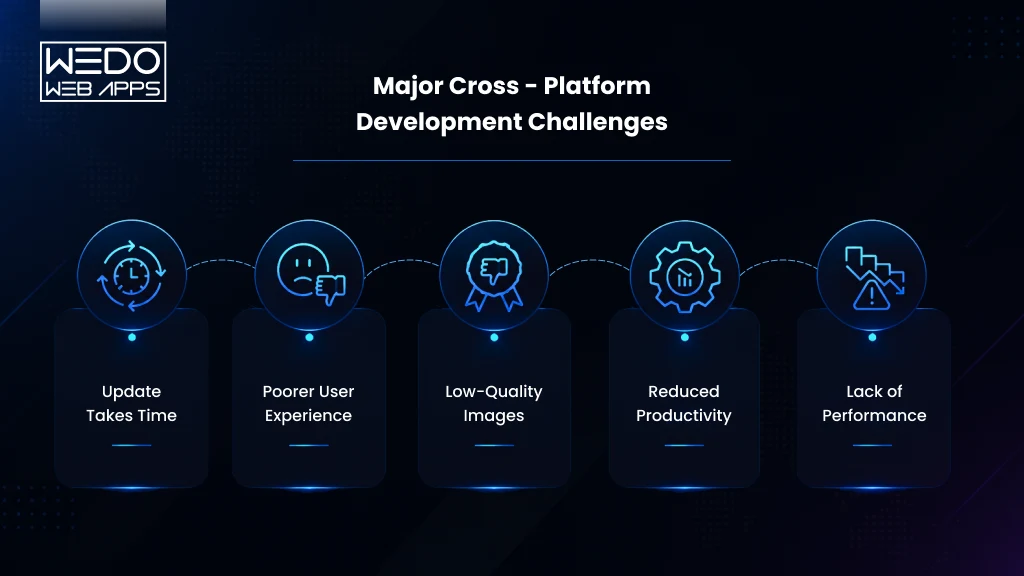
Although the benefits of cross-platform app development make it an attractive option for many organizations, no development approach is without limitations. Understanding these challenges helps businesses set realistic expectations and choose the right strategy for their project requirements.
Performance Limitations for Resource-Intensive Apps
Cross-platform frameworks are designed to support multiple operating systems through a shared codebase. While this improves development efficiency, applications with complex graphics, heavy animations, or intensive real-time processing may not always achieve the same level of performance as native apps.
This challenge is more noticeable in:
- High-end gaming applications
- AR and VR solutions
- Video editing applications
- Apps requiring extensive background processing
For most businesses, eCommerce, healthcare, education, and enterprise applications, modern cross-platform frameworks generally provide sufficient performance.
Platform-Specific Features and Integrations
Android and iOS continuously introduce new features and platform capabilities. While cross-platform frameworks support many of these functions, there can sometimes be delays before new platform features become fully available through the framework.
Businesses may need additional development work when implementing:
- Advanced camera functionalities
- Biometric authentication features
- Device-specific hardware integrations
- Newly released operating system capabilities
This can increase development complexity for applications that depend heavily on platform-specific features.
Device Testing Across Multiple Environments
One of the major cross-platform app development advantages is the ability to support multiple platforms with a single codebase. However, ensuring consistent performance across different devices remains an important responsibility.
Developers often need to test applications across:
- Different screen sizes
- Multiple operating system versions
- Various device manufacturers
- Different hardware specifications
Without proper testing, users may experience inconsistencies in layout, functionality, or performance on certain devices.
Dependency on Framework Updates and Support
Cross-platform applications rely on frameworks such as Flutter, React Native, and .NET MAUI. As a result, businesses are partially dependent on the framework's ecosystem, community support, and future updates.
Before selecting a framework, businesses should evaluate:
- Long-term support availability
- Community adoption
- Update frequency
- Compatibility with future technologies
Choosing a mature and widely adopted framework can help reduce long-term risks.
User Experience Customization Challenges
Android and iOS users are familiar with different navigation patterns, interface elements, and design conventions. While cross-platform development promotes consistency, creating an experience that feels natural on both platforms can sometimes require additional customization.
Businesses should balance:
- Brand consistency
- Platform-specific design expectations
- User preferences
- Accessibility requirements
This is particularly for customer-facing applications where user experience directly impacts engagement and retention.
Challenge Impact and Considerations
| Challenge | Potential Impact | Business Consideration |
|---|---|---|
| Performance Limitations | May affect highly complex applications | Evaluate performance requirements |
| Platform-Specific Features | Additional development effort may be needed | Identify critical platform features before development |
| Device Testing Requirements | Increased testing scope | Plan comprehensive testing across devices |
| Framework Dependency | Reliance on framework updates and support | Choose established frameworks with strong communities |
| UX Customization | Additional design effort may be required | Adapt experiences to platform guidelines where necessary |
While these challenges should be considered during project planning, they do not necessarily outweigh the cross-platform mobile app benefits. For many businesses, the ability to reduce development costs, accelerate time to market, and simplify maintenance makes cross-platform development a practical and scalable solution.
Best Use Cases for Cross-Platform App Development
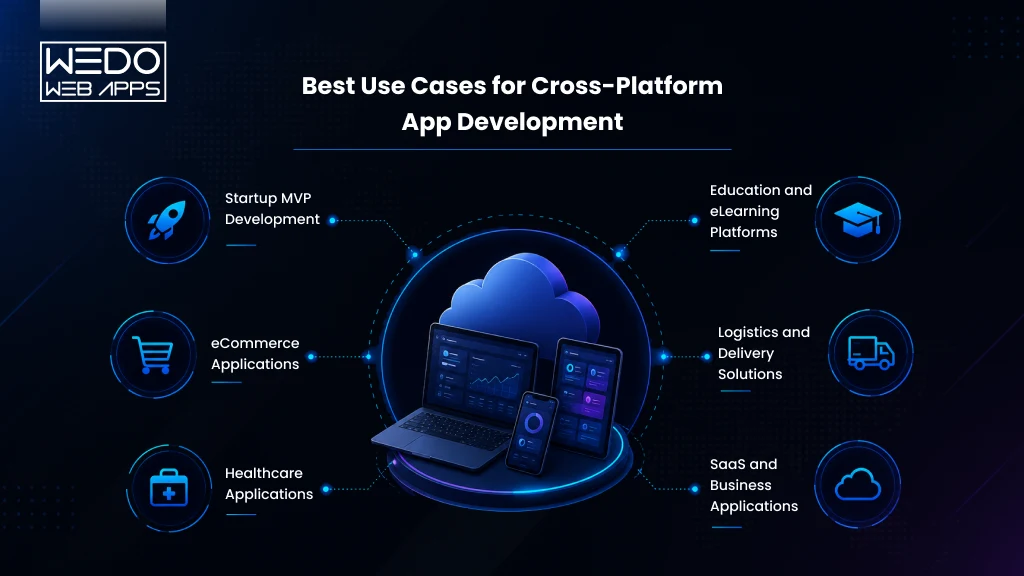
The importance of cross-platform app development becomes more evident when businesses evaluate where it delivers the greatest value. While this approach may not be ideal for every application, it works exceptionally well for projects that require broad market reach, faster deployment, and cost-efficient development.
Startup MVP Development
Startups often need to validate ideas quickly without investing heavily in separate Android and iOS applications. Cross-platform development allows businesses to launch a Minimum Viable Product (MVP) faster and gather user feedback from a wider audience.
Why it works well for startups:
- Lower initial development costs.
- Faster product launches.
- Easier feature updates based on user feedback.
- Efficient use of limited resources.
eCommerce Applications
eCommerce businesses rely on reaching customers wherever they shop. Cross-platform development enables brands to provide a consistent shopping experience across devices while reducing development and maintenance efforts.
Common eCommerce features include:
- Product catalogs
- Secure payment integration
- Order tracking
- Push notifications
- Customer accounts
This is one of the most common examples of cross-platform mobile app benefits in action.
Healthcare Applications
Healthcare providers and medical businesses often require applications that support appointment scheduling, patient communication, and health monitoring across multiple devices.
Cross-platform development help:
- Improve accessibility for patients
- Simplify application management
- Support faster deployment of healthcare services
Education and eLearning Platforms
Educational institutions and online learning providers need applications that work reliably across different operating systems and devices.
Key benefits include:
- Wider accessibility for learners
- Consistent learning experiences
- Simplified content updates
- Reduced maintenance efforts
Logistics and Delivery Solutions
Businesses operating in logistics, transportation, and delivery services often require applications for customers, drivers, and operational teams.
Cross-platform development supports:
- Real-time tracking
- Route management
- Delivery updates
- Communication between stakeholders
The ability to maintain a single codebase can significantly improve operational efficiency.
SaaS and Business Applications
Software as a Service (SaaS) companies frequently choose cross-platform development to provide consistent experiences across devices while keeping development processes manageable.
These applications often include:
- Customer portals
- Employee productivity tools
- Project management platforms
- Business communication solutions
Use Case Overview
| Industry | Why Cross-Platform Development Is Suitable |
|---|---|
| Startups | Faster MVP development and lower costs |
| eCommerce | Consistent shopping experience across platforms |
| Healthcare | Improved accessibility and easier maintenance |
| Education | Wider device compatibility for learners |
| Logistics | Efficient management of tracking and delivery operations |
| SaaS | Simplified development and scalable growth |
These examples highlight why choose cross-platform app development for applications that prioritize speed, scalability, market reach, and operational efficiency. By selecting the right use case, businesses can maximize the value of their mobile app investment while reducing development complexity.

Factors That Influence Cross-Platform App Development Costs
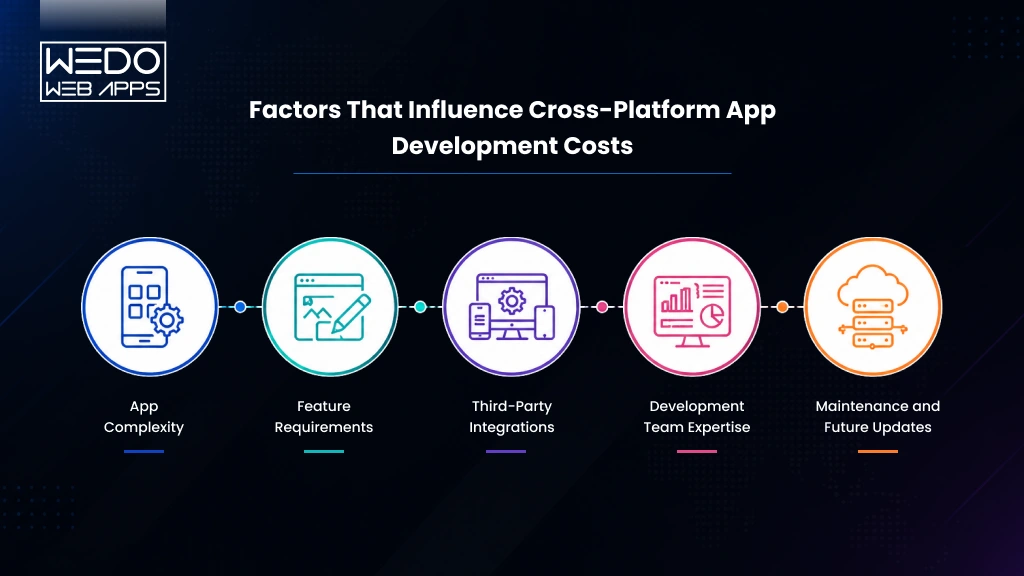
One of the main reasons businesses consider cross-platform development is its potential to reduce development expenses. However, the total cost of a project can vary significantly depending on the app's complexity, feature set, and long-term requirements.
Understanding these factors can help businesses estimate budgets more accurately and maximise the benefits of cross-platform app development.
App Complexity
The complexity of an application is often the biggest factor affecting development costs. Applications with simple functionality generally require less development time than platforms with advanced workflows, custom features, or complex user interactions.
Examples by complexity level:| Complexity Level | Typical Features |
|---|---|
| Basic | User registration, profiles, and simple content display |
| Medium | Payment integration, push notifications, and user dashboards |
| Advanced | Real-time communication, AI features, and advanced analytics |
As complexity increases, development time and overall project costs also increase.
Feature Requirements
Every additional feature adds to the scope of development, testing, and maintenance. Businesses should prioritize features that provide the most value to users during the initial launch.
Features that commonly influence costs include:
- User authentication
- Payment gateways
- Geolocation services
- Chat and messaging functionality
- Push notifications
- Third-party integrations
A well-defined feature roadmap can help control development expenses without affecting the user experience.
Third-Party Integrations
Most modern applications rely on external services for payments, analytics, customer communication, cloud storage, or mapping functionality.
Common integrations include:
- Payment processing systems
- CRM platforms
- Analytics tools
- Social media logins
- Cloud services
The number and complexity of integrations can directly impact development costs and timelines.
Development Team Expertise
The experience level of the development team can affect both project quality and efficiency. Skilled developers are often able to identify challenges earlier, optimize performance, and reduce costly rework.
When evaluating development resources, businesses should consider:
- Technical expertise
- Framework experience
- Industry knowledge
- Project management capabilities
Choosing the right team can contribute to the long-term success of a mobile application.
Maintenance and Future Updates
Development costs do not end after launch. Applications require ongoing maintenance to remain secure, functional, and compatible with new operating system updates.
Post-launch expenses may include:
- Bug fixes
- Security updates
- Performance improvements
- Feature enhancements
- Platform compatibility updates
One of the key cross-platform app development advantages is that updates can often be managed through a shared codebase, reducing maintenance efforts compared to maintaining separate applications.
Cost Impact Overview
| Cost Factor | Impact on Development Cost |
|---|---|
| App Complexity | Higher complexity increases development effort |
| Feature Requirements | More features require additional development and testing |
| Third-Party Integrations | Complex integrations increase project scope |
| Team Expertise | Experienced teams may improve efficiency and quality |
| Maintenance Requirements | Ongoing updates contribute to long-term costs |
While there is no fixed price for every project, businesses that carefully plan requirements and prioritize essential features can better control costs. This is one of the reasons why choose cross-platform app development remains a common consideration of organizations seeking a balance between functionality, scalability, and budget efficiency.

How to Choose Between Cross-Platform and Native Development
Choosing the right development approach is not about selecting the most popular option. It is about identifying the solution that best aligns with your business goals, budget, user expectations, and long-term growth plans.
While the benefits of cross-platform app development make it an attractive option for many businesses, native development may still be the better choice for certain projects. Evaluating a few key factors can help you make a more informed decision.
1. Define Your Business Objectives
Start by identifying what you want to achieve with your mobile application. Different goals often require different development approaches.
Ask questions such as:
- Are you trying to launch quickly?
- Do you need to reach Android and iOS users simultaneously?
- Is cost efficiency a priority?
- Are you building a long-term digital product?
If speed and broader market reach are important, cross-platform app development may be a suitable choice.
2. Assess Budget Constraints
Budget is often one of the first considerations for businesses planning a mobile app project.
Cross-platform development can help reduce costs by allowing developers to maintain a shared codebase across platforms. Native development typically requires separate development efforts, which may increase overall project expenses.
Cross-platform development is often preferred when:
- Budget is limited
- Faster development is required
- Resource optimization is important
3. Evaluate Performance Requirements
Application performance requirements should play a major role in the decision-making process.
Cross-platform development works well for:
- eCommerce applications
- Healthcare solutions
- Education platforms
- SaaS applications
- Business management tools
Native development may be more suitable for:
- High-end gaming applications
- AR and VR experiences
- Graphics-intensive applications
- Performance-critical mobile solutions
4. Consider Future Scalability
A mobile application should support business growth, not limit it. As user expectations evolve, businesses often need to add new features, integrations, and functionalities.
When evaluating scalability, consider:
- Expected user growth
- Future feature requirements
- Integration needs
- Long-term maintenance efforts
One of the major cross-platform app development advantages is the ability to manage growth through a shared codebase while maintaining operational efficiency.
5. Review Maintenance Expectations
Every application requires ongoing support after launch. Updates, bug fixes, security improvements, and feature enhancements are all part of the application lifecycle.
Cross-platform development can simplify maintenance because updates can often be implemented across platforms simultaneously.
This can result in:
- Faster update cycles
- Lower maintenance efforts
- Better resource utilization
Decision Matrix
| Business Requirement | Recommended Approach |
|---|---|
| Faster time to market | Cross-platform |
| Lower development costs | Cross-platform |
| Easier maintenance | Cross-platform |
| Wider market reach | Cross-platform |
| High-performance applications | Native |
| Advanced device features | Native |
| Platform-specific experiences | Native |
| Graphics-intensive applications | Native |
Quick Decision Checklist
Choose cross-platform app development if you:
- Need to launch on Android and iOS quickly
- Want to optimize development costs
- Need easier long-term maintenance
- Require consistent functionality across platforms
- Are you building a startup MVP, an eCommerce app, a SaaS platform, or a business application
Choose native development if you:
- Need maximum performance
- Require extensive platform-specific functionality
- Are you building graphic-intensive or gaming applications
- Need highly customized platform experiences
The choice between cross-platform vs native apps ultimately depends on your project requirements. By evaluating business goals, budget, scalability, and performance needs, organizations can select a development approach that supports both immediate objectives and long-term success.
Conclusion
The growing importance of cross-platform app development reflects the need for businesses to deliver mobile experiences across multiple platforms while managing costs and development efforts effectively. By enabling a shared codebase, this approach helps organizations accelerate development, simplify maintenance, and reach a broader audience.
While every project has unique requirements, the many benefits of cross-platform app development make it a strong option for businesses seeking faster deployment, operational efficiency, and long-term scalability. Evaluating your goals, budget, and performance needs can help determine whether cross-platform development is the right fit for your next mobile application.