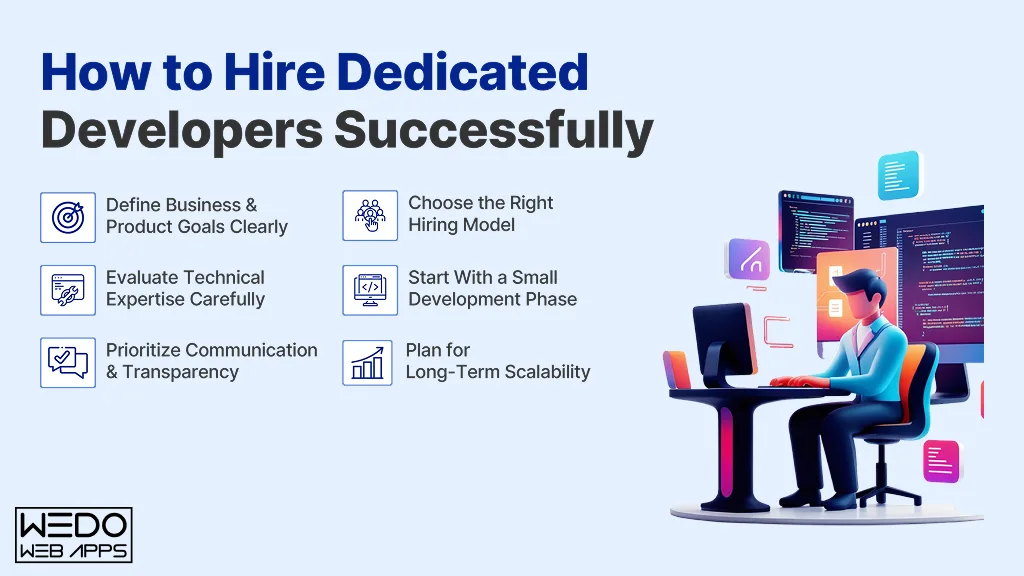
skip to content

Mobile App Development Partner: A Complete CEO Guide to Making the Right Choice

Mobile App Development Partner for Business Success

Imagine this. Your company has invested months in making this particular mobile app. And the launch day has arrived, but instead of getting user satisfaction, your user can face issues, and the product barely reflects the original vision.

Do not consider this bad luck. This is the result of choosing the wrong app development partner.

The right mobile app development partner changes everything. They become the trusted advisor who gives direction to your app to meet the specific requirements. They easily understand that a business launching an app is not a technical project. It is more of a strategic move that will help in maintaining the market presence, revenue, and customer loyalty.

In this guide, we will cover the information on how to identify what a development partner truly is. Why is choosing the right one to have a better impact, and what are the exact steps to choose a partner who will deliver accurate services?

What is a Development Partner in App Projects?

The app development partner is a team that shares the various responsibilities from the initial stage to achieving successful growth for the long-term. A right app development partner works with you at every stage. From strategy and designing an app to development and post-launch support.

The difference between a vendor and an app development partner is their level of engagement. A vendor only delivers the agreed-upon feature and steps out once the project is over.

A development partner stays invested even after the application is launched successfully and keeps giving recommendations on feature updates, and ensures that the app continues to meet business objectives over time.

This ongoing investment trunks app development from a one-time project into a sustained growth initiative. By treating the app like a living product, the app development partner helps to maintain the security and scalability while gaining a better return on the investment.

right app development partner

Why the Right Mobile App Development Partner Matters

Choosing the right app development partner is more than just making a technical choice. It is the decision that gives influence in the development process and the quality of the app.

Here are a few point that shows you why considering the right mobile app development partner matters:

Direct Impact on Product Quality and User Experience

A skilled mobile app development partner allows you to be sure that the app will meet the high standards when it comes to performance and usability. They:

  • Turn your business objective into a user-friendly design.
  • Follow better testing to detect and resolve issues early.
  • Build an app that is scalable and easily adaptable for users.

All these result in not only maintaining the reliability but also increasing the trust from the first interaction.

Role in Meeting the Deadlines and Staying Within the Budget

The timeline and budget of developing the app also define the success of the project. A reliable app development partner maintains control over both by:

  • Sets the clear time for the development of every stage of the application.
  • Track progress with the given schedule of development.
  • Manage the use of resources to avoid unnecessary costs.

This clear approach allows you to launch the app on time and within the budget that your company has decided.

Minimizing Project Risks and Delays

Every development process requires facing various challenges. An experienced partner works hard to reduce their impact with:

  • Easily identifying the technical or operational risks.
  • Make an efficient plan to handle unexpected issues.
  • Follow flexible development processes.

By addressing these issues before the launch, they help to keep your project on track and protect your investment.

Tips to Choose the Best App Development Partner

If you are willing to select the right app development for your business, then there are strategic options that you can look into.

Making the right choice will have an influence on your app’s quality and long-term success. The following are some of the detailed tips to choose the best app development partner:

1. Define Your Project Goals and Scope

Be clear regarding the needs of your projects before the development begins. Define:

  • Business objectives, like what problem will be solved with your application, and for whom.
  • Know about the need for features and various functionalities.
  • Set the platform preference and which operating system it will support.
  • Prepare the expected budget for your app and timeline for development.

A clear scope of the project enables your app development partner to operate appropriately and manage the process effectively.

2. Check For Skills And Expertise

An ideal mobile app development partner has skills and an understanding of mobile app development technology. Check:

  • Knowledge of multiple programming languages.
  • Practice adding various features, such as payment gateways, third-party APIs, and AI-powered features.
  • Experience in several sectors to ensure the accuracy of the application.

You can also consider the use of modern tools for version control and automated testing processes.

3. Review Portfolios and Case Studies for Proven Work

Knowing about the past form often says more about professionalism and work accuracy. Examine:

  • Check the portfolio of your selected app development performance to know about the design aesthetics, flow of the app, and its performance.
  • Case studies for gaining insight into handling risks and other processes.
  • Read the client review to know about the engagement and the achieved success in the market.

If possible, use some of the apps built by them to know about their impact, usability, and quality.

4. Evaluate Communication and Collaboration Practices

Transparent and clear communication shows that everyone is on the same page. Check for:

  • Regular communication through various sources or via email.
  • Schedule a meeting for the regular updates or weekly progress calls.
  • Approach towards the change and clarify their implementation before the launch.

An app developer can easily explain complex processes in simple terms. Sometimes, even the one who is highly skilled lacks communication.

5. Compare Pricing Models and Transparency of Cost

Make sure that the cost you pay is aligned with the given value. Understand that:

  • Pricing models are defined according to the needs of the project and the offered support.
  • Ask for the detailed breakdown cost.
  • Check for the fact that additional requests are having an impact on cost or timeline.

Be careful with the cost estimation as lower than others.

6. Post-Launch Support and Maintenance Support

Your app needs continuous monitoring for performance and security. Make sure that your app development partner provides:

  • Regular updates for versions
  • Keeps track of performance, stability, and user engagement.
  • Bug fixing and a quick solution to the urgent issues.
  • Feature upgrading abilities to meet market demands.

Strong post-launch support may reduce the possibility of downtime issues and increase the life of the application.

looking for the right mobile app development partner

Understanding the App Development Contract

An app development contract is more than being formal in terms of working methods. It is the paperwork that allows you to have clarity on the expectations between you and your mobile app development partner.

It defines the work, protects your interests, and keeps the project moving in the right direction. You can consider these discussed aspects at the time of signing the app development contract.

Clarity on Clauses Related to Work and Responsibilities

Before moving ahead with the contract, make sure these things are included:

  • Complete scope of the project, including information on features and functionalities.
  • Details on what will be delivered and what the dedicated developer will do.
  • A quality standard for how the application will be tested.

This gives the surety to both to know what needs to be expected from the partner.

Set Transparent Payment Terms and Realistic Deadlines

To avoid confusion, the details on money or timing should be included:

  • Schedule of the payment, whether it is monthly, after completion, or after achieving results.
  • Milestone with deliverables on design, prototypes, or a complete module.
  • Delivery of each stage with the steps to take if delays happen.

This keeps the payment details clear and allows you to know the actual work progress.

Ensure ownership rights and safeguard confidential information

Your contract should be clearer and include the following terms:

  • Details on the transfer of ownership for elements like design, code, and data.
  • Maintain confidentiality regarding the sensitive information.
  • Clarify the use of third-party tools and their licensing.

Clear ownership rights help you avoid future issues in managing operations.

Rules for Managing Modifications and Project Closure

Project expectations can change, or there might be chances that any problems may occur. The contract should explain:

  • How to submit and approve changes. And how will this affect the budget and timeline.
  • How conflicts will be resolved, whether through discussions or action.
  • How either party can end the agreement with notice and make payment for completed work.

These terms protect both sides if the project takes a new direction or needs to stop.

Common Mistakes to Avoid When Selecting a Partner

Even experienced business owners can face problems when selecting an app development partner. Knowing about these mistakes allows you to save time and money.

1. Not Researching Properly About the Partner

Do not conclude the first interaction. Check all details from the track record to the client feedback. Making fast decisions for the app development partner can lead to delays in work and affect the quality. A reliable app development partner has proven expertise and meets your project needs.

2. Not Checking Portfolios and Case Studies

A portfolio is something that gives you information on the quality of work delivered by the app development partner. Ignoring this can have an impact on the design standard, technical skills, and ability to meet project needs.

3. Selecting on the Basis of Low Cost

Low cost means you will not be able to receive value. If you are selecting the app development partner on the basis of price, then you may receive less quality of work and support. It is best that you consider someone who has expertise and can provide long-term benefits.

4. Poor Communication and Collaboration Standards

Poor communication often creates more problems in the development processes. Ensure that your partner uses a clear source to maintain communication and gives regular updates.

5. Lack of Offering Ownership and Support

If the company is unable to offer the ownership of the code and post-launch support, then the services are not clearly defined. A well-structured agreement prevents you from facing issues and ensures the app’s continued performance.

Final Checklist for CEOs Before Signing the Agreement

Before making any decision for the right mobile app development partner, look for these:

  • Make sure that the development partner has proven expertise and a strong portfolio.
  • Verify the experience with using their app or with a similar industry.
  • Review and agree on measurable KIPs such as deliverables, quality, and user adoption.
  • Check for the offered post-launch support and maintenance services.
  • Confirm that the ownership is given for the code and design.
  • Give value to scalability to meet future app updates or new features.
  • Evaluate their project management skills and reporting frequency.
  • Check reviews and feedback given by the previous clients and ask for references.
  • Know about the transparency in terms of pricing and payment options.

By knowing about all these, you will be able to select the best app development partner.

Why Partner with WeDoWebApps for Your Mobile App Development

Selecting the right partner for your business has an impact on the success of the app.

Here are the reasons why WEDOWEBAPPS is the best choice for you:

  • Delivered successful projects on mobile apps across different industries.
  • We ensure to maintain the flexibility and allow timely delivery without compromising the quality.
  • Set clear pricing with no hidden charges and ensure that the development process meets your budget.
  • Provide support in handling the updates and give support if any risk occurs to ensure your app remains competitive and reliable.

Securing the Right Partner for Your Mobile App

Mobile app development is no longer optional. It is a well-planned requirement for businesses that want to connect customers directly and stand out in a competitive market.

The process of development requires making use of a structured method and technology. By following a proper strategy, you can keep the focus on user experience and smooth updates.

Working with the correct mobile app development partner can save you time on development and also allow you to have the expected results.

If you are ready to choose your application needs, then connecting with a mobile app development company will be the best option to turn your idea into a high-performing mobile application.

App Partner Who Stays Beyond Launch

Instagram-Like App Development Cost and Key Cost Factors

Introduction

A few years ago, building the next social media platform sounded unrealistic for most businesses.

Today, it is a very different story.

From creator communities and fitness networks to professional platforms and industry-specific social apps, startups and enterprises are launching niche social ecosystems that attract highly engaged users without competing directly with Instagram.

The challenge is not whether the idea can be built.

The challenge is understanding what it will actually cost.

When founders start researching the cost to develop an app like Instagram, they quickly run into conflicting answers. Some sources claim it can be built for under $20,000, while others suggest budgets exceeding $500,000. The reality lies somewhere in between and depends heavily on the features, scalability requirements, technology stack, and long-term business goals behind the product.

For example, a startup validating a new creator platform may only need core features such as user profiles, content sharing, comments, and messaging. An enterprise launching a large-scale social network, however, may require AI-powered recommendations, advanced monitoring systems, real-time communication, video infrastructure, and the ability to support hundreds of thousands of users.

That is why there is no one-size-fits-all answer to the Instagram app development cost.

In this guide, we will break down everything decision-makers need to know before investing in social media platform, including Instagram like app features, development timelines, hidden expenses, and the key factors affecting app development cost. Whether you are planning an MVP or a full-scale social networking platform, this article will help you estimate budgets more accurately and make smarter development decisions.

Quick Answer – How Much Does it Cost to Develop an App Like Instagram?

The cost to develop an app like Instagram typically ranges from $30,000 to $500,000+, depending on the app’s features, platform selection, scalability requirements, and overall complexity.

A simple social media MVP focused on content sharing and user engagement can often be launched for under $60,000. However, if your vision includes advanced capabilities such as short-form video content, real-time messaging, AI-powered recommendations, content moderation, and enterprise-grade infrastructure, the investment can increase significantly.

Instagram App Development Cost Breakdown

App TypeEstimated CostTimeline
Basic Social Media MVP$30,000 – $60,0003 – 5 Months
Mid-Level Social Media App$60,000 – $150,0005 – 8 Months
Advanced Instagram-Like App$150,000 – $300,0008 – 12 Months
Enterprise Social Platform$300,000 – $500,00012+ Months

It is important to note that most businesses are not building a complete Instagram alternative from day one. Instead, they launch a focused product that solves a specific user problem, validates market demand, and expands features over time.

For example, a startup building a fitness community app may initially focus on user profiles, content sharing, comments, and messaging. A creator-focused platform may prioritize video uploads, engagement tools, and subscription features. Enterprise social platforms often require advanced analytics, AI-driven recommendations, moderation systems, and infrastructure capable of supporting large user bases.

Key Factors Affecting Instagram App Development Cost

Several variables influence the final social media app development cost:

FactorImpact on Cost
Number of FeaturesVery High
Video Upload and StreamingVery High
Real-Time MessagingHigh
AI RecommendationsHigh
Platform ChoiceMedium
UI/UX ComplexityMedium
Third-Party IntegrationsMedium
Scalability RequirementsVery High
Security and ComplianceHigh

As a result, two social media apps may look similar on the surface while having completely different development budgets behind the scenes.

Before setting a budget, businesses should first identify their core user journey, required features, growth expectations, and monetization strategy. These decisions often have a greater impact on cost than the technology itself.

Why Businesses are Still Investing in Instagram Like Apps
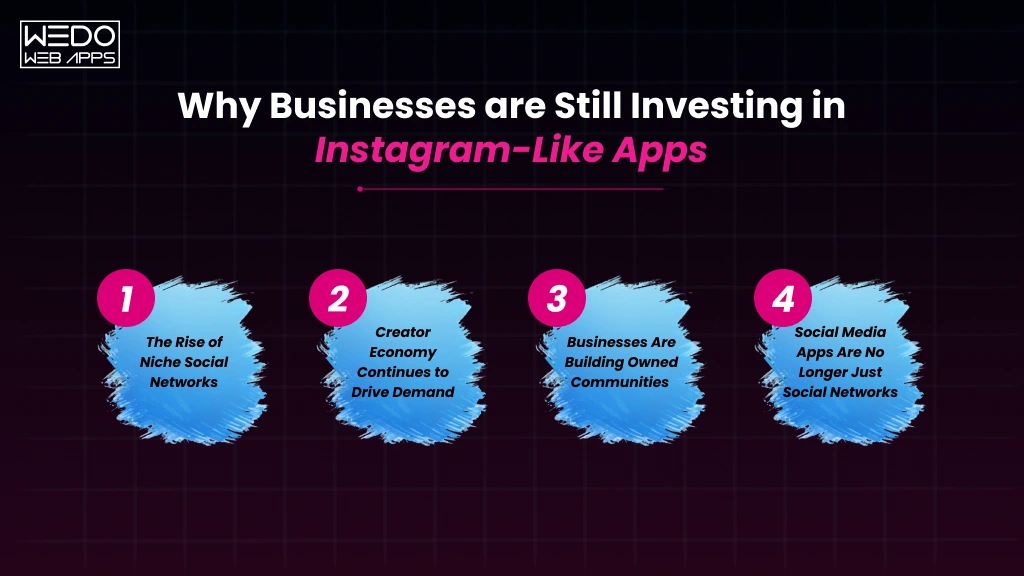
Social App Growth Opportunities

At first glance, building a social media platform may seem like a difficult market to enter. After all, platforms like Instagram, TikTok, Facebook, LinkedIn, and X already have billions of active users worldwide.

However, most successful social media startups are not trying to replace these platforms. Instead, they focus on serving specific audiences, industries, or communities that larger networks often overlook.

This shift is one of the biggest reasons businesses continue investing in social networking platforms despite the competition.

The Rise of Niche Social Networks

Modern users are increasingly seeking communities built around their interests, professions, lifestyles, and goals rather than broad social networks designed for everyone.

As a result, niche social platforms are gaining traction across industries such as:

  • Fitness and wellness
  • Education and learning
  • Professional networking
  • Healthcare communities
  • Creator and influencer networks
  • Gaming communities
  • Industry-specific business networks

For startups and entrepreneurs, this creates opportunities to build highly engaged communities without needing to compete directly with Instagram’s massive user base.

Creator Economy Continues to Drive Demand

The creator economy has transformed how individuals and brands engage with audiences online.

Content creators, coaches, educators, trainers, consultants, and influencers increasingly look for platforms that provide more control over audience engagement, monetization, and community building.

This has led to growing demand for social media platforms that offer features such as:

  • Content sharing
  • Short form video publishing
  • Community engagement
  • Direct messaging
  • Membership programs
  • Subscription-based content

Many businesses now choose to build dedicated platforms rather than relying entirely on third-party social networks where algorithms and platform policies can change without notice.

Businesses Are Building Owned Communities

One of the biggest trends driving social media app development cost investments is the move toward owned digital communities.

Instead of renting attention on existing platforms, businesses are creating environments where they control user experience, data, engagement, and monetization opportunities.

Examples include:

  • Customer communities
  • Employee networking platforms
  • Brand engagement apps
  • Learning communities
  • Industry collaboration networks

These platforms often combine social networking features with business-specific functionality, creating stronger user retention and long-term value.

Social Media Apps Are No Longer Just Social Networks

Today’s social applications often serve multiple business purposes beyond content sharing.

An Instagram-inspired platform may include:

  • eLearning capabilities
  • Marketplace functionality
  • Subscription management
  • Event hosting
  • Live streaming
  • AI-powered recommendations
  • Community management tools

This flexibility allows businesses to create platforms that align with their unique business models while leveraging familiar social networking experiences that users already understand.

For many founders and enterprises, the question is no longer whether social platforms can generate value. The real question is how to build a platform that serves a specific audience, delivers a unique experience, and justifies the investment required for development.

What Makes Instagram Expensive to Build?

Many founders researching the cost to develop an app like Instagram are surprised by how quickly development budgets can grow. On the surface, Instagram appears to be a simple platform where users share photos and videos, follow other accounts, and interact through likes and comments.

Behind the scenes, however, social media applications are among the most technically demanding digital products to build and scale.

Unlike standard business applications, social platforms must continuously process large volumes of content, support real-time interactions, and deliver seamless experiences to thousands or even millions of users simultaneously. These requirements significantly influence the overall cost to develop app like Instagram.

Media-Heavy Infrastructure

Photos, videos, stories, and reels form the foundation of modern social media platforms.

Every piece of content uploaded by users must be processed, compressed, stored, secured, and delivered efficiently across multiple devices and network conditions. As user-generated content grows, businesses often need scalable cloud infrastructure, content delivery networks (CDNs), and advanced storage solutions to maintain performance.

This is one of the biggest factors affecting app development cost, especially for platforms focused on video content.

Real-Time User Engagement

Users expect instant interactions when using social applications.

Actions such as:

  • Likes
  • Comments
  • Direct Messages
  • Push Notifications
  • Live Interactions

must happen in real time without delays.

Building and maintaining this level of responsiveness requires additional backend development, database optimisation, and communication services, all of which contribute to the overall social media app development cost.

Personalized Content Feeds

One of Instagram’s most powerful features is its ability to deliver personalized content to every user.

Instead of displaying posts in chronological order, modern social platforms use recommendation systems that analyze user behavior, engagement patterns, interests, and content preferences.

Creating intelligent feed requires:

  • Data collection systems
  • Recommendation algorithms
  • Analytics infrastructure
  • AI and machine learning capabilities

While basic feeds are relatively affordable to build, advanced personalisation features can significantly increase development complexity and budget requirements.

High Scalability Requirements

Many mobile applications serve a limited number of users at a given time.

Social media platforms operate differently.

A successful platform may experience thousands of users uploading content, sending messages, viewing videos, and interacting simultaneously. The application architecture must be designed to support growth without sacrificing performance or reliability.

Planning for scalability from the beginning often requires additional investment but helps avoid costly development in the future.

Security and Content Moderation

Users trust plays a critical role in the success of any social networking platform.

Businesses must protect personal information, secure user accounts, prevent unauthorized access, and comply with privacy regulations. At the same time, they must monitor content to reduce spam, abuse, misinformation, and inappropriate material.

As a result, social media platforms frequently require:

  • User verification systems
  • Privacy controls
  • Reporting mechanisms
  • Content moderation tools
  • Security monitoring solutions

These features may not be immediately visible to users, but they are essential components of a successful social media platform and have a direct impact on development costs.

Ultimately, the Instagram like app development cost is driven by far more than user-facing features. Infrastructure, scalability, security, real-time communications, and content management requirements often represent a significant portion of the overall investment, especially for businesses planning long-term growth.

Essential Instagram-Like App Features and Their Development Cost
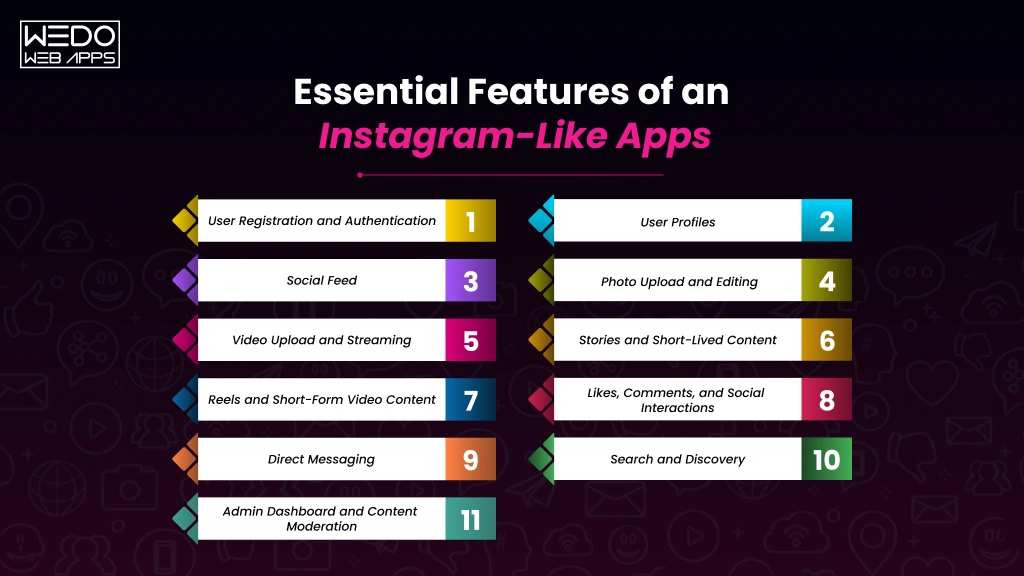
Essential Instagram App Features

The features you choose will have the biggest impact on the cost to develop an app like Instagram. While many businesses initially want every feature Instagram offers, successful social media products typically launch with a focused feature set and expand based on user feedback and market demand.

Understanding which features are essential and how they influence the Instagram app development cost can help businesses allocate budgets more effectively and avoid unnecessary development expenses.

FeatureBusiness PurposeEstimated Cost Range
User Registration & AuthenticationSecure user onboarding and account management$2,000 – $5,000
User ProfilesPersonalization and user identity$3,000 – $8,000
Social FeedContent discovery and engagement$8,000 – $20,000
Photo Upload & EditingCore content creation functionality$5,000 – $12,000
Video Upload & StreamingSupport video-based engagement$10,000 – $30,000+
StoriesTemporary content sharing$8,000 – $20,000
Reels/Short VideosIncrease engagement and retention$15,000 – $40,000+
Likes, Comments & SharesCommunity interaction$5,000 – $12,000
Direct MessagingUser communication$8,000 – $25,000
Push NotificationsUser retention and engagement$3,000 – $8,000
Search & DiscoveryContent and user exploration$5,000 – $15,000
Admin DashboardPlatform management and reporting$8,000 – $20,000
Content Moderation ToolsCommunity safety and compliance$5,000 – $20,000+

1. User Registration and Authentication

Every social media platform requires a secure onboarding process.

Users should be able to register through email, phone numbers, or social logins while maintaining strong security standards. Features such as password recovery, multi-factor authentication, and account verification can further increase development complexity and cost.

2. User Profiles

Profiles help users establish their identity within the platform.

A basic profile may include profile pictures, bios, and activity history, while advanced profiles can support creator badges, verification status, portfolio sections, subscriptions, and personalized content preferences.

3. Social Feed

The social feed is often the most frequently used feature within the application.

A simple chronological feed is relatively straightforward to develop. However, personalized feeds that prioritize content based on user behavior, engagement patterns, and relevance require more sophisticated backend systems and recommendation engines.

4. Photo Upload and Editing

Photo sharing remains one of the most recognizable social networking features.

Businesses often incorporate image filters, cropping tools, tagging functionality, captions, hashtags, and location tagging to improve engagement and user experience.

5. Video Upload and Streaming

Video functionality significantly increases the social media app development cost.

Unlike photos, videos require processing, compression, storage optimization, adaptive streaming, and high-performance delivery systems. The more video-centric the platform becomes, the higher the infrastructure and development requirements.

6. Stories and Short-Lived Content

Stories have become a standard feature across most social networking platforms.

Because stories automatically disappear after a specific time period, they require additional content management logic, media processing, and notification systems.

7. Reels and Short-Form Video Content

Short-form video is one of the most expensive yet valuable features to implement.

Reels often require advanced video processing, recommendation algorithms, content ranking systems, and engagement analytics. For many modern social platforms, this feature alone can represent a significant portion of the overall development budget.

8. Likes, Comments, and Social Interactions

Engagement features encourage users to participate within the platform and help build active communities.

Although they appear simple from a user perspective, these interactions often involve real-time updates, notification systems, and backend data synchronization.

9. Direct Messaging

Private communication has become an essential component of most social platforms.

Messaging systems require real-time infrastructure, media sharing support, message delivery tracking, read receipts, and notification capabilities, making them more complex than many businesses initially expect.

10. Search and Discovery

Search functionality helps users find content, creators, communities, and topics relevant to their interests.

As content volume grows, advanced search capabilities often require indexing systems, filtering options, and recommendation engines to deliver accurate results quickly.

11. Admin Dashboard and Content Moderation

Every successful social media platform needs administrative controls.

Admin dashboards allow platform owners to manage users, monitor engagement, review reports, analyze performance metrics, and oversee platform activity. Content moderation tools help maintain community standards and support long-term scalability.

When estimating the Instagram-like app development cost, businesses should prioritize features that directly support their target audience and business goals rather than attempting to replicate every Instagram feature at launch.

Cost Breakdown to Develop an App Like Instagram

The total cost to develop an app like Instagram depends largely on the scope of the product being built. While feature-level estimates provide useful guidance, most businesses plan their budgets based on overall product vision, growth strategy, and target audience.

A startup validating a new social networking idea will have very different requirements than an enterprise launching a large-scale community platform. Understanding these differences can help founders and decision-makers invest more strategically and avoid overbuilding during the early stages.

Instagram-Like App Development Cost by Project Scope

App TypeEstimated CostTimelineBest For
Basic Social Media MVP$30,000 – $60,0003 – 5 MonthsStartups and Idea Validation
Mid-Level Social Media App$60,000 – $150,0005 – 8 MonthsGrowing Businesses
Advanced Instagram-Like Platform$150,000 – $300,0008 – 12 MonthsEstablished Brands and Scale-Ups
Enterprise Social Network$300,000 – $500,00012+ MonthsLarge Organizations and Enterprises

1. Basic Social Media MVP

A minimum viable product focuses on validating the business concept while minimizing initial investment.

Instead of replicating every Instagram feature, MVPs typically include:

  • User registration and login
  • User profiles
  • Content posting
  • Basic social feed
  • Likes and comments
  • Push notifications
  • Basic admin panel

This approach allows startups to test market demand, gather user feedback, and attract potential investors before committing to larger development budgets.

Estimated Cost: $30,000 – $60,000

Estimated Timeline: 3 – 5 Months

Best For: Startup founders, early-stage businesses, niche community platforms, market validation projects, etc.

2. Mid-Level Social Media App

Once a product gains traction, businesses often invest in additional functionality to improve engagement and retention.

Common additions include:

  • Advanced user profiles
  • Search functionality
  • Direct messaging
  • Stories
  • Media management
  • Content recommendations
  • Enhanced analytics

At this stage, the application begins to resemble a fully functional social networking platform while remaining manageable from a budget and scalability perspective.

Estimated Cost: $60,000 – $150,000

Estimated Timeline: 5 – 8 Months

Best For: Growing startups, creator platforms, membership communities, industry-specific social networks, etc.

3. Advanced Instagram-Like Platform

An advanced social media application is designed to compete at a much larger scale.

These platforms often include:

  • Reels and short-form video content
  • Advanced recommendation engines
  • Real-time messaging
  • Video streaming
  • Monetization tools
  • Community management features
  • Advanced moderation systems
  • Comprehensive analytics

The infrastructure and engineering requirements increase significantly at this level, which directly impacts the overall Instagram app development cost.

Estimated Cost: $150,000 – $300,000

Estimated Timeline: 8 – 12 Months

Best For: Scale-ups, creator economy platforms, consumer-focused social networks, businesses targeting rapid growth, etc.

4. Enterprise Social Network

Enterprise-grade social platforms are built to support large user bases, complex workflows, strict security requirements, and extensive customization.

These solutions may include:

  • AI-powered personalization
  • Enterprise integrations
  • Advanced security controls
  • Multi-region deployment
  • Large-scale content moderation
  • High-availability infrastructure
  • Custom reporting and analytics
  • Compliance management tools

Enterprise platforms require significant planning, architecture design, and long-term scalability considerations, making them the most expensive category of social media application development.

Estimated Cost: $300,000 – $500,000+

Estimated Timeline: 12+ Months

Best For: Large enterprises, global brands, corporate communities, high-growth digital platforms, etc.

Which Option is Right for Your Business?

For most startups and growing businesses, launching with an MVP is often the smartest approach. It allows teams to validate assumptions, reduce risk, accelerate time-to-market, and make data-driven decisions before investing in advanced functionality.

Businesses that attempt to build a full-featured Instagram alternative from day one often face longer development cycles, higher costs, and increased market risk. A phased development strategy typically delivers better outcomes by aligning investment with actual user demand and business growth.

The right budget is not necessarily the largest one. It is the budget that aligns with your product goals, target audience, and long-term growth strategy.
Get a Custom Social App Cost Estimate

Factors Affecting App Development Cost
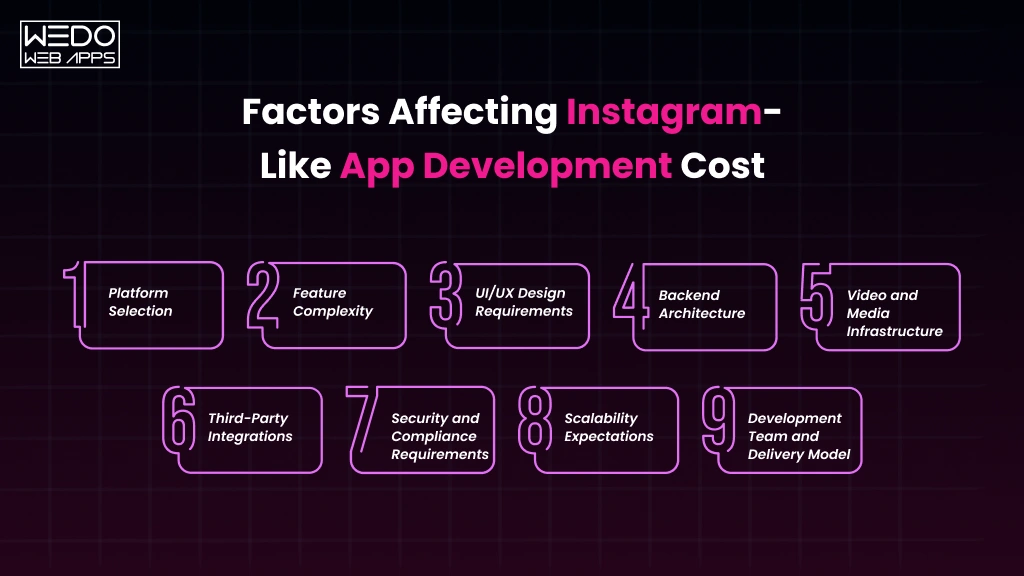
Factors Affecting Social App Cost

No two social media applications cost exactly the same to build.

Even if two businesses want similar features, their final budgets can differ significantly based on technical requirements, growth expectations, design preferences, and long-term business objectives. Understanding these variables can help decision-makers estimate the cost to develop an app like Instagram more accurately and allocate resources effectively.

1. Platform Selection

The platform you choose has a direct impact on development cost, timeline, and maintenance requirements.

Businesses typically choose between:

  • iOS app development
  • Android app development
  • Cross-platform app development

Developing separate native applications for iOS and Android often requires more development time and resources. Cross-platform frameworks such as Flutter and React Native can reduce initial development costs while accelerating time-to-market.

For startups launching their first social media product, cross-platform development is often the most cost-effective approach.

2. Feature Complexity

Feature requirements remain one of the largest contributors to the overall cost to develop app like Instagram.

Basic functionality such as user registration, profile creation, and content sharing requires significantly less effort than advanced capabilities such as:

  • Real-time messaging
  • Video streaming
  • AI-powered recommendations
  • Live broadcasting
  • Content moderation systems
  • Advanced search and discovery

As feature complexity increases, so do development hours, testing requirements, and infrastructure needs.

3. UI/UX Design Requirements

Design plays a critical role in the success of social media platforms.

A simple interface focused on usability may require a moderate design investment. However, businesses seeking highly customized user experiences, advanced animations, personalized user journeys, and premium visual elements should expect additional design and development costs.

Because social applications compete heavily on user experiences, investing in intuitive and engaging design can significantly influence user retention and growth.

4. Backend Architecture

The backend serves as the foundation of every social networking application. It manages:

  • User data
  • Content storage
  • Authentication
  • Notifications
  • Messaging
  • Analytics
  • Platform administration

Applications designed for a few thousand users require a very different architecture than platforms expected to support hundreds of thousands or millions of users. As scalability requirements increase, backend complexity and development costs rise accordingly.

5. Video and Media Infrastructure

Video-focused platforms typically require higher budgets than text-based or image-based applications.

Features such as:

  • Video uploads
  • Reels
  • Live streaming
  • Video processing
  • Media compression
  • Content delivery optimization

require specialized infrastructure and additional engineering effort.

This is one of the primary reasons why modern social media app development cost estimates vary so widely across projects.

6. Third-Party Integrations

Many social applications rely on external services to accelerate development and enhance functionality.

Common integrations include:

  • Social logins
  • Payment gateways
  • Cloud storage services
  • Analytics platforms
  • Push notification services
  • Video processing tools
  • AI and machine learning platforms

While third-party tools can reduce development time, they may introduce recurring licensing and usage costs that should be considered during budgeting.

7. Security and Compliance Requirements

As user data volumes increase, security becomes increasingly important. Businesses often implement:

  • Multi-factor authentication
  • Data encryption
  • Privacy controls
  • User verification
  • Fraud prevention systems
  • Regulatory compliance measures

Applications operating in regulated industries such as healthcare, finance, or education may require additional compliance-related investments that increase overall development costs.

8. Scalability Expectations

One of the most overlooked factors affecting app development cost is scalability planning.

A platform designed for 5,000 users can be built differently than one expected to support 500,000 users.

Planning for growth may require:

  • Scalable cloud infrastructure
  • Database optimization
  • Load balancing
  • Content delivery networks
  • Performance monitoring systems

While these investments increase upfront costs, they help prevent expensive reengineering efforts as the platform grows.

9. Development Team and Delivery Model

The composition of the development team also influences project costs.

Businesses may choose:

  • Freelancers
  • In-house developers
  • Dedicated development teams
  • Full-service app development companies

Each option offers different advantages in terms of expertise, project management, scalability, and long-term support. The best choice often depends on project complexity, internal capabilities, and business objectives.

Ultimately, the most accurate way to estimate the Instagram-like app development cost is to evaluate the combination of features, platforms, scalability requirements, and business goals rather than relying on generic pricing averages. A clear product roadmap helps businesses prioritize investments and avoid unnecessary development expenses.

MVP vs Full Instagram Clone – Which Should You Build?

One of the biggest mistakes businesses make when estimating the cost to develop an app like Instagram is assuming they need every feature from day one.

In reality, most successful social media platforms start with a focused set of features designed to validate the concept, attract early users, and gather real-world feedback. Once the product demonstrates market demand, businesses can gradually introduce more advanced functionality based on user behavior and growth objectives.

The question is not whether you can build a full Instagram-like platform. The question is whether you should.

MVP vs Full Instagram-Like App Comparison

FactorSocial Media MVPFull Instagram-Like Platform
Estimated Cost$30,000 – $60,000$150,000 – $500,000
Development Timeline3 – 5 Months8 – 12+ Months
Feature SetCore Features OnlyAdvanced Social Ecosystem
Investment RiskLowerHigher
Time to MarketFasterSlower
User Feedback CollectionEarlierDelayed Until Launch
Scalability RequirementsModerateHigh

When an MVP Makes Sense

An MVP, or Minimum Viable Product, focuses on solving a specific problem for a specific audience.

Instead of building a complete social networking platform, businesses launch with the features necessary to deliver value and test assumptions.

A typical social media MVP may include:

  • User registration and authentication
  • User profiles
  • Content posting
  • Social feed
  • Likes and comments
  • Push notifications
  • Basic administration tools

This approach allows startups to validate market demand before investing heavily in advanced functionality.

For founders operating with limited budgets, an MVP often provides the fastest path to launch and the lowest level of financial risk.

Benefits of Building an MVP First

Launching an MVP can help businesses:

  • Validate product-market fit
  • Reduce initial development costs
  • Enter the market faster
  • Gather real user feedback
  • Attract investors more effectively
  • Prioritize future features using real data

Many successful platforms evolved significantly after launch because they learned what users actually wanted rather than relying solely on assumptions during development.

When a Full Instagram-Like Platform Makes Sense

A full-featured social platform may be appropriate when businesses have:

  • Established market demand
  • Significant funding
  • Clear monetization strategies
  • Existing user communities
  • Long-term growth objectives

These platforms typically include advanced functionality such as stories, reels, real-time messaging, video streaming, AI-powered recommendations, advanced search and discovery, creator monetization tools, comprehensive analytics, etc.

While these features can improve engagement and retention, they also increase the overall Instagram app development cost, development timelines, and operational complexity.

The Cost of Building Too Much Too Early

One of the most common reasons digital products exceed budget expectations is overdevelopment during the initial launch phase.

Businesses often invest heavily in features users may never use or value.

For example, a niche fitness community may achieve strong user engagement with content sharing, comments, and messaging alone. Investing in advanced recommendation algorithms or complex video infrastructure before validating demand can increase costs without delivering immediate business value.

A phased development strategy often produces better results because investment decisions are based on actual user behavior rather than assumptions.

Recommended Approach for Most Startups

For most startups and growing businesses, launching with an MVP is the most practical strategy.

Start by building the core experience your audience needs. Once engagement grows and user feedback becomes available, expand the platform with additional features that support retention, monetization, and long-term growth.

This approach reduces risk, shortens time-to-market, and provides a clearer path to scaling without unnecessarily increasing the social media app development cost during the early stages of the project.
Schedule a Free Social App Strategy Call

Hidden Costs Most Founders Overlook

When businesses calculate the cost to develop an app like Instagram, they often focus entirely on design and development expenses.

However, launching the application is only the beginning.

Social media platforms require continuous investment in infrastructure, maintenance, security, and performance optimization to ensure a reliable user experience. Ignoring these expenses can lead to inaccurate budgeting and unexpected costs after launch.

Before starting development, founders should understand the total cost of ownership rather than focusing solely on the initial development budget.

Cloud Hosting and Infrastructure

Every social media application requires infrastructure to store content, process user activity, and deliver data efficiently.

As the platform grows, businesses often need to invest in:

  • Cloud servers
  • Databases
  • Load balancing
  • Backup systems
  • Performance monitoring

Infrastructure costs vary based on traffic volume, user activity, and content consumption. Applications with thousands of active users naturally require larger infrastructure investments than newly launched platforms.

Media Storage and Content Delivery

Photos and videos are among the most resource-intensive components of social media platforms.

Every uploaded file must be:

  • Stored securely
  • Optimized for performance
  • Delivered quickly across different regions
  • Protected against data loss

Businesses frequently use Content Delivery Networks (CDNs) and cloud storage services to improve performance and reduce loading times.

As media libraries grow, storage and delivery costs increase accordingly.

Maintenance and Feature Updates

Launching an application does not eliminate development needs.

Mobile operating systems, third-party services, security standards, and user expectations evolve constantly. To maintain platform stability and competitiveness, businesses typically release updates throughout the year.

Ongoing maintenance often includes:

  • Bug fixes
  • Performance improvements
  • Security updates
  • Compatibility updates
  • Feature enhancements

Many businesses allocate an annual maintenance budget to ensure the platform continues operating smoothly after launch.

Security and Data Protection

Security becomes increasingly important as user numbers grow.

Social networking platforms manage large volumes of user-generated content and personal information, making them attractive targets for malicious activity.

Common security-related investments include:

  • Security audits
  • Vulnerability testing
  • Data encryption
  • Account protection measures
  • Threat monitoring systems

These costs may not be visible to end users, but they play a critical role in protecting the platform and maintaining user trust.

Third-Party Service Costs

Many modern social media applications rely on external services to support specific functionality.

Examples include:

  • Push notifications
  • Analytics platforms
  • Authentication services
  • Payment gateways
  • AI and machine learning tools
  • Communication services

While these integrations accelerate development and improve functionality, they often introduce recurring monthly or usage-based fees.

Content Moderation and Community Management

As user-generated content increases, maintaining platform quality becomes more challenging.

Businesses may need moderation systems to:

  • Review reported content
  • Detect spam
  • Prevent abuse
  • Enforce community guidelines

Depending on platform size, moderation may involve automated tools, dedicated moderation teams, or a combination of both.

Scaling Costs as User Growth Increases

One of the most overlooked aspects of social media app development cost is scalability.

The infrastructure that supports 5,000 users may not be sufficient for 100,000 users.

As engagement grows, businesses often need to invest in:

  • Additional server capacity
  • Database optimization
  • Advanced caching solutions
  • Improved monitoring tools
  • Performance engineering

While these investments support growth, they should be considered during the planning stage rather than after performance issues appear.

Development Cost Is Only Part of the Investment

Many founders ask, “How much does it cost to build an app like Instagram?”

A more practical question is:

“How much will it cost to launch, maintain, and scale the platform successfully?”

The answer includes far more than development alone. Businesses that plan for infrastructure, maintenance, security, and future growth from the beginning are often better positioned to scale efficiently and avoid unexpected expenses after launch.

Understanding these hidden costs helps create a more realistic budget and ensures the platform remains sustainable as user adoption increases.

How Long Does It Take to Build an App Like Instagram?

The timeline to build an Instagram-like application depends on the project’s scope, feature requirements, design complexity, and development approach.

While many founders focus primarily on budget, time-to-market is equally important. A shorter development timeline can help businesses validate ideas faster, respond to market opportunities, and begin generating user feedback sooner.

The good news is that not every social media platform requires a year-long development cycle. Most businesses can launch an MVP significantly faster by focusing on core functionality first.

Estimated Development Timeline by Project Scope

App TypeEstimated Timeline
Basic Social Media MVP3 – 5 Months
Mid-Level Social Media App5 – 8 Months
Advanced Instagram-Like Platform8 – 12 Months
Enterprise Social Network12+ Months

While these estimates provide a general benchmark, actual timelines vary depending on project requirements and the development team’s execution process.

Discovery and Planning Phase

Every successful social media application begins with planning.

During this stage, businesses define:

  • Business objectives
  • Target audience
  • Core features
  • User journeys
  • Technical requirements
  • Product roadmap

Investing time in planning often reduces costly revisions later in the development process.

Estimated Timeline: 2 – 4 Weeks

UI/UX Design Phase

Once requirements are finalized, the design team creates the user experience and interface.

This phase typically includes:

  • Wireframes
  • User flows
  • Visual designs
  • Interactive prototypes
  • Design validation

Because social media applications rely heavily on user engagement, design quality can have a direct impact on adoption and retention.

Estimated Timeline: 3 – 6 Weeks

Application Development Phase

Development is usually the longest stage of the project.

Frontend and backend teams work together to build:

  • User authentication
  • Profiles
  • Content feeds
  • Media uploads
  • Messaging systems
  • Notifications
  • Administrative tools

The complexity of these features significantly influences both the timeline and the Instagram app development cost.

Estimated Timeline: 8 – 24+ Weeks

Testing and Quality Assurance

Before launch, every feature must be tested across multiple devices, operating systems, and usage scenarios.

Testing typically covers:

  • Functional testing
  • Performance testing
  • Security testing
  • Usability testing
  • Device compatibility testing

A thorough testing process helps reduce launch risks and improve overall product quality.

Estimated Timeline: 2 – 6 Weeks

Launch and Deployment

After testing is completed, the application is prepared for release.

This stage often involves:

  • App Store submission
  • Google Play submission
  • Infrastructure deployment
  • Performance monitoring setup
  • Analytics configuration

Although deployment is one of the shortest phases, proper preparation is critical for a successful launch.

Estimated Timeline: 1 – 2 Weeks

What Causes Development Delays?

Several factors can extend project timelines:

  • Expanding feature requirements
  • Frequent scope changes
  • Complex integrations
  • Extensive customization
  • Delayed stakeholder feedback
  • Scalability requirements

The more clearly project requirements are defined at the beginning, the easier it becomes to maintain development schedules and control costs.

How Can Businesses Reduce Development Time?

Businesses looking to accelerate time-to-market often:

  • Launch with an MVP
  • Prioritize essential features
  • Use cross-platform development
  • Follow an agile development process
  • Work with experienced development teams

These strategies can help reduce development timelines without compromising product quality.

Ultimately, the fastest path to launching a social media platform is not building fewer features. It is building the right features first. A focused product roadmap allows businesses to validate ideas sooner, control budgets more effectively, and scale based on actual user demand.

How Startups Can Reduce Social Media App Development Cost

Building a social networking platform does not necessarily require a massive budget.

Many successful products begin with limited resources and scale gradually as user adoption increases. The key is to invest strategically rather than attempting to replicate every Instagram feature from day one.

If you are concerned about the cost to develop an app like Instagram, the following strategies can help reduce expenses while maintaining a strong foundation for future growth.

1. Focus on Core Features First

One of the most common reasons development costs increase is feature overload.

Founders often try to launch with every feature available on established platforms such as Instagram, TikTok, or LinkedIn. However, many of these features were introduced years after those platforms launched.

Instead of building everything at once, focus on features that directly support your business goals and user needs.

For most social media startups, the initial feature set can include:

  • User registration and authentication
  • User profiles
  • Content sharing
  • Social Feed
  • Likes and comments
  • Push notifications

Launching with a focused feature set can significantly reduce both development costs and time-to-market.

2. Start With an MVP

An MVP allows businesses to validate product-market fit before making larger investments.

Rather than spending hundreds of thousands of dollars upfront, startups can launch a functional product, gather feedback, and prioritize future development based on actual user behavior.

Benefits of an MVP approach include:

  • Lower initial investment
  • Faster launch timelines
  • Reduced business risk
  • Better feature prioritization
  • Easier investor validation

For many startups, an MVP is the most effective way to manage Instagram app development cost while maintaining growth flexibility.

3. Choose Cross-Platform Development

Developing separate applications for iOS and Android can increase both development time and cost.

Cross-platform frameworks such as Flutter and React Native allow businesses to use a shared codebase across multiple platforms.

Advantages include:

  • Faster development
  • Lower initial costs
  • Easier maintenance
  • Consistent user experience

For startups targeting both Android and iOS users, cross-platform development often provides the best balance between performance and budget.

4. Prioritize Scalability Without Overengineering

Scalability is important, but many startups make the mistake of preparing for millions of users before acquiring their first thousand.

A more practical approach is to build a scalable foundation that can evolve as demand grows.

This allows businesses to avoid unnecessary infrastructure expenses while still supporting future expansion when needed.

5. Leverage Proven Third-Party Solutions

Building every component from scratch can dramatically increase development costs.

Many social media applications successfully integrate existing solutions for:

  • Authentication
  • Push notifications
  • Analytics
  • Cloud storage
  • Media processing
  • Payment processing

Using proven technologies can reduce development effort, accelerate launch timelines, and improve reliability.

6. Make Data-Driven Feature Decisions

Every feature added to a platform increases development effort, testing requirements, maintenance responsibilities, and long-term costs.

Before introducing new functionality, businesses should evaluate:

  • User demand
  • Business impact
  • Revenue potential
  • Development complexity

This approach helps ensure that every investment contributes meaningful value to the product.

7. Partner With an Experienced Development Team

Development mistakes are often more expensive than development itself.

Poor architecture decisions, scalability issues, security vulnerabilities, and inefficient workflows can lead to costly rework after launch.

Working with an experienced mobile app development team can help businesses:

  • Define realistic budgets
  • Prioritize features effectively
  • Select appropriate technologies
  • Avoid common development pitfalls
  • Accelerate time-to-market

The right development partner focuses not only on building the application but also on aligning technical decisions with business objectives.

Reducing Cost Should Never Mean Reducing Quality

The goal is not to build the cheapest social media app possible.

The goal is to build the right product with the right features at the right stage of growth.

Businesses that focus on validating ideas early, prioritizing high-impact features, and making strategic development decisions are often able to control social media app development cost more effectively while creating a stronger foundation for long-term success.

How to Choose a Mobile App Development Company for a Social Media App

Choosing the right development partner can have as much impact on project success as the budget itself.

Many businesses focus heavily on the cost to develop an app like Instagram, but selecting the wrong development team can lead to delays, scalability issues, poor user experiences, and unexpected expenses later in the project lifecycle.

Whether you’re building a niche community platform, creator network, professional networking application, or large-scale social ecosystem, evaluating development partners carefully can help reduce risk and improve long-term outcomes.

Look Beyond Development Cost

Price is important, but it should not be the only decision factor.

An unusually low estimate may indicate:

  • Limited feature understanding
  • Incomplete project scope
  • Inexperienced resources
  • Future change request costs
  • Scalability limitations

Instead of focusing solely on development cost, businesses should evaluate overall value, technical expertise, and long-term support capabilities.

Evaluate Relevant Industry Experience

Social networking applications introduce challenges that differ from many traditional mobile applications.

Features such as:

  • Content feeds
  • Real-time messaging
  • Media management
  • User engagement systems
  • Recommendation engines
  • Content moderation

require specialized experience.

When evaluating a development company, review previous projects, case studies, and technical capabilities related to social platforms, media-heavy applications, or community-driven products.

Assess Technical Expertise

The technology decisions made during development can directly affect performance, scalability, security, and future maintenance costs.

A reliable development partner should be able to explain:

  • Recommended technology stack
  • Platform strategy
  • Scalability approach
  • Security considerations
  • Infrastructure planning

Businesses should feel confident that technical recommendations align with both current requirements and future growth plans.

Understand Their Development Process

A structured development process often leads to better project outcomes.

Ask potential partners how they handle:

  • Discovery and planning
  • Feature prioritization
  • UI/UX design
  • Development sprints
  • Quality assurance
  • Launch preparation

A clear process improves communication, reduces misunderstandings, and helps maintain project timelines.

Discuss Scalability Early

Many social media applications are built with growth in mind.

Even if the initial launch targets a small user base, the architecture should support future expansion without requiring a complete rebuild.

Development partners should be able to discuss:

  • Scalability planning
  • Cloud infrastructure
  • Database growth strategies
  • Performance optimization
  • User growth management

These discussions are particularly important when estimating the long-term Instagram app development cost.

Review Post-Launch Support Capabilities

Launching the application is only the first phase of the product journey.

Ongoing support may include:

  • Maintenance updates
  • Security improvements
  • Performance optimization
  • Feature enhancements
  • Infrastructure management

Businesses should understand what level of support will be available after launch and how future development requests will be handled.

Prioritize Communication and Transparency

Successful development projects rely on strong collaboration between business stakeholders and technical teams.

Look for partners that provide:

  • Clear project estimates
  • Transparent communication
  • Regular progress updates
  • Defined responsibilities
  • Realistic timelines

Open communication often helps prevent budget overruns and project delays.

Choose a Partner That Understands Business Goals

The best development companies do more than write code.

They help businesses:

  • Validate ideas
  • Prioritize features
  • Reduce development risk
  • Plan for scalability
  • Align technology decisions with business objectives

This strategic perspective is particularly valuable when building social media platforms, where user engagement, growth, and monetization are often just as important as technical functionality.

Ultimately, the right development partner should help you build a product that supports your long-term vision rather than simply delivering a list of requested features. Businesses that invest time in selecting the right team are often better positioned to control costs, accelerate growth, and maximize return on investment.

Real-World Budget Scenarios

Every social media application has unique requirements, making it difficult to assign a single development cost to every project. However, reviewing realistic scenarios can help founders and decision-makers understand how project scope influences both budget and timeline.

Scenario 1: Startup Creator Community App

A startup wants to build a niche platform where creators can share content, engage with followers, and build communities around their expertise.

Key Features

  • User registration and profiles
  • Content sharing
  • Social feed
  • Likes and comments
  • Push notifications
  • Basic messaging
  • Admin dashboard

Estimated Cost: $30,000 – $60,000

Estimated Timeline: 3 – 5 Months

Ideal For

  • Early-stage startups
  • Creator communities
  • Membership platforms
  • Niche social networks

This approach allows founders to validate user demand before investing in advanced functionality.

Scenario 2: Fitness Social Platform

A fitness company wants to build a platform where users can share workout content, follow trainers, participate in challenges, and interact with community members.

Key Features

  • User profiles
  • Content sharing
  • Video uploads
  • Challenges and activity feeds
  • Messaging
  • Search and discovery
  • Push notifications

Estimated Cost: $80,000 – $180,000

Estimated Timeline: 6 – 9 Months

Ideal For

  • Fitness brands
  • Wellness communities
  • Coaching businesses
  • Subscription-based platforms

Because video content plays a significant role, development costs increase due to additional infrastructure and media processing requirements.

Scenario 3: Enterprise Social Network

An enterprise wants to create a large-scale social platform designed for employee engagement, knowledge sharing, collaboration, and communication.

Key Features

  • Advanced user management
  • Real-time communication
  • Video content support
  • Analytics dashboards
  • Enterprise integrations
  • AI-powered recommendations
  • Content moderation
  • Advanced security controls

Estimated Cost: $250,000 – $500,000+

Estimated Timeline: 10 – 15 Months

Ideal For

  • Enterprises
  • Global organizations
  • Corporate communities
  • Industry collaboration platforms

Enterprise platforms require significant investment in security, scalability, and integration capabilities, which contributes to higher development costs.

Final Thoughts

The cost to develop an app like Instagram depends on much more than the number of features included in the application. Platform strategy, scalability requirements, infrastructure planning, user engagement goals, and long-term business objectives all influence the final investment.

While some businesses may only require a focused MVP to validate a new idea, others may need advanced social networking platforms capable of supporting large user communities, complex interactions, and enterprise-grade functionality.

The most successful social media products are rarely built by launching every possible feature at once. They are built by identifying a specific audience, solving a clear problem, and expanding strategically based on user demand and business growth.

Before starting development, take time to define your goals, prioritize essential functionality, understand long-term operating costs, and create a roadmap that aligns technology investments with business outcomes. A well-planned approach can help reduce risk, improve time-to-market, and maximize the return on your social media app development investment.

If you’re evaluating the feasibility of a social media platform, consulting with an experienced mobile app development team can help you estimate costs accurately, identify potential challenges early, and build a scalable product roadmap tailored to your business objectives.
Talk to Our Social App Development Team

PHP vs Python: Which Language Should You Choose for Web Development in 2026?

Introduction

Choosing between PHP vs Python is one of the biggest decisions in modern web development. The programming language you select can affect your application’s performance, scalability, development cost, and long-term maintenance.

That is why the PHP vs Python debate continues to grow in 2026.

Some businesses choose PHP because it is widely used for dynamic websites, eCommerce platforms, and CMS development. Others prefer Python because of its clean syntax, automation capabilities, AI integration, and flexibility for modern applications.

When comparing PHP vs Python for web development, there is no single winner for every project. Both languages offer strong frameworks, active communities, and reliable performance. The right choice depends on your project requirements, budget, scalability goals, and development timeline.

If you are trying to understand the difference between PHP and Python, this guide will help you compare both technologies from a business and development perspective.

In this detailed PHP and Python comparison guide, you will learn:

  • PHP vs Python performance comparison.
  • Which language is easier to learn and maintain?
  • Best PHP vs Python use cases.
  • Framework and scalability differences.
  • Security and development cost comparison.
  • Python vs PHP which is better for your business goals?

By the end of this guide, you will have a clear understanding of whether PHP or Python is the better fit for your next web development project.

PHP vs Python: Quick Comparison Table

FeaturePHPPython
Primary PurposeServer-side web developmentGeneral-purpose programming
Best Known forWebsites, CMS platforms, and eCommerce developmentAI, automation, data science, backend systems
Syntax StyleSimple and web-focusedClean and highly readable
Learning CurveBeginner-friendly for web projectsBeginner-friendly across multiple domains
PerformanceFaster for many web-based tasksStrong performance with modern frameworks
Web DevelopmentBuilt specifically for web developmentWidely used for backend web applications
Popular FrameworksLaravel, Symfony, CodeIgniterDjango, Flask, FastAPI
Database SupportMySQL, PostgreSQL, MariaDBMySQL, PostgreSQL, SQLite, MongoDB
AI and Machine Learning SupportLimitedExcellent
Hosting AvailabilityEasily available and affordableSupported on most cloud platforms
ScalabilitySuitable for small to enterprise applicationsHighly scalable for modern applications
Security FeaturesStrong with modern frameworksStrong with secure coding practices
Community SupportLarge and mature communityMassive and rapidly growing community
Development SpeedFaster for traditional web projectsFaster for automation and complex systems
Best Use CasesCMS, eCommerce, portals, business websitesAI apps, SaaS platforms, automation, analytics
Popular Companies Using ItFacebook, WordPress, WikipediaInstagram, Netflix, Spotify
Development CostUsually lower for web projectsMay increase for advanced applications
Job Market DemandStrong in web developmentHigh across multiple industries

After understanding the quick overview of PHP vs Python, let’s first understand what PHP is, its core features, strengths, and where it is commonly used.

Book a Free Consultation

What is PHP?

What is PHP Explain

Before understanding the complete difference between PHP and Python, it is important to first understand what PHP actually is and why it is still widely used in modern web development.

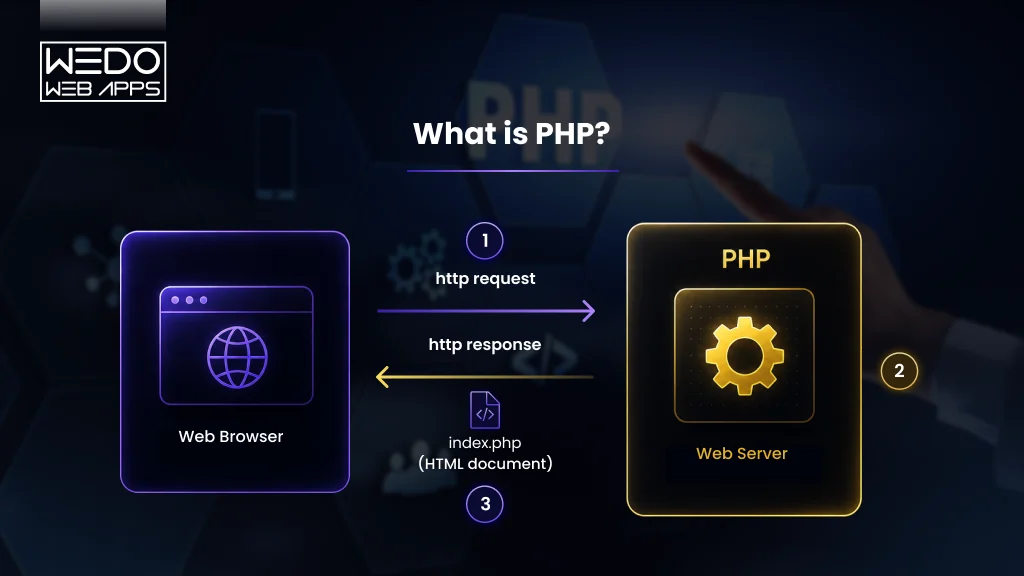
PHP is an open-source server-side scripting language mainly used for building dynamic websites and web applications. It is one of the oldest and most trusted technologies for backend development and continues to power millions of websites worldwide.

When discussing PHP vs Python for web development, PHP often stands out because it was originally created specifically for the web. This makes it highly efficient for developing CMS platforms, eCommerce websites, customer portals, and database-driven applications.

Its flexibility, lower hosting cost, and large ecosystem make PHP a practical choice for businesses of all sizes.

Key Features of PHP

PHP offers several features that keep it relevant in the ongoing PHP and Python comparison debate.

Some of the most important features include:

  • Open-source and free to use.
  • Easy integration with HTML and databases.
  • Cross-platform compatibility.
  • Fast execution for web applications.
  • Large ecosystem of frameworks and libraries.
  • Strong hosting support across servers.
  • Smooth database connectivity with MySQL and PostgreSQL.
  • Built-in session and form handling capabilities.

Popular frameworks like Laravel and Symfony also improve security, scalability, and development speed.

Advantages of PHP

One major reason PHP continues to perform strongly in the PHP vs Python use cases discussion is its simplicity and web-focused architecture.

Advantages of PHP include:

  • Faster development for website-based projects.
  • Lower hosting and maintenance costs.
  • Large global developer community.
  • Strong support for a CMS platform like WordPress.
  • Easier deployment process.
  • Suitable for startups and small businesses.
  • Reliable performance for web applications.

For companies focused mainly on web platforms, PHP often provides a faster route to launch projects without increasing infrastructure expenses.

Limitations of PHP

Although PHP remains highly effective for web development, it also has some limitations when compared in the PHP vs Python debate.

Some common limitations include:

  • Less suitable for AI and machine learning applications.
  • Limited use in data science projects.
  • Older codebases may become difficult to maintain.
  • Inconsistent coding practices in legacy applications.
  • Fewer built-in tools for advanced automation tasks.

Still, modern PHP frameworks and updated versions have solved many of the older performance and security concerns.

Popular Websites and Applications Built With PHP

Many globally recognized platforms still rely on PHP, proving its strength in real-world web development.

Popular examples include:

  • Facebook
  • WordPress
  • Wikipedia
  • Tumblr
  • Mailchimp

These examples clearly show that PHP can handle high-traffic applications, enterprise platforms, and scalable backend systems efficiently.

What is Python?

What is Python Explain

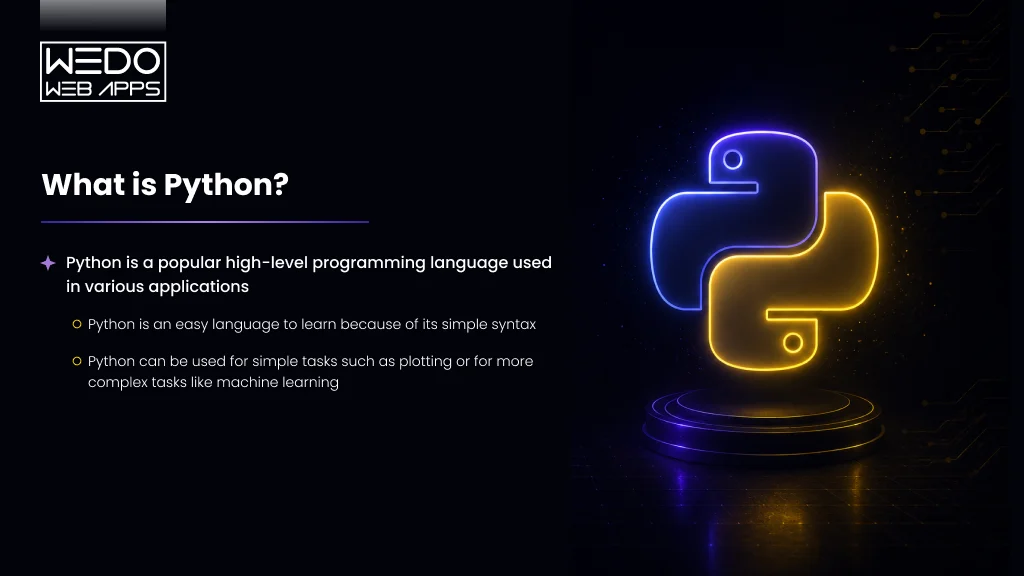
Python is a high-level, general-purpose programming language known for its clean syntax, readability, and flexibility. It is widely used for web development, automation, artificial intelligence, machine learning, data science, and backend application development.

In the ongoing PHP vs Python discussion, Python has gained massive popularity because it allows Python developers to build applications faster with less code. Its simple structure makes development easier, especially for complex projects that require scalability and advanced functionality.

When businesses compare Python vs PHP, which is better, Python often becomes a preferred choice for AI-driven platforms, automation tools, SaaS products, and data-focused applications.

Its ability to support multiple technologies with a single programming language makes it highly valuable for modern businesses.

Key Features of Python

Python includes several powerful features that make it a strong competitor in the PHP and Python comparison debate.

Some major features include:

  • Clean and readable syntax
  • Open-source and free to use
  • Cross-platform compatibility
  • Large collection of libraries and frameworks
  • Strong support for AI and machine learning
  • Easy integration with modern technologies
  • Faster development for complex applications
  • Excellent community support

Popular Python frameworks include Django, Flask, and FastAPI, which are widely used for backend and API development.

Advantages of Python

Python continues to grow rapidly in the PHP vs Python use cases comparison because of its versatility and developer-friendly structure.

Advantages of Python include:

  • Easy to learn and maintain
  • Suitable for AI, automation, and data science
  • Faster development process with less code
  • Large ecosystem of libraries and tools
  • Strong scalability for modern applications
  • Excellent for API and backend development
  • High demand in the developer job market

For businesses planning long-term scalability or AI integration, Python often provides more flexibility.

Limitations of Python

Although Python is highly versatile, it also has a few limitations in the difference between PHP and Python comparison.

Some common limitations include:

  • Slower execution speed compared to some compiled languages.
  • Higher memory consumption.
  • Less optimized for mobile app development.
  • Can become resource-intensive for large-scale applications.
  • Hosting costs may sometimes be higher than for PHP-based projects.

However, modern frameworks and cloud infrastructure have improved Python’s performance significantly.

Popular Websites and Applications Built With Python

Python is trusted by many large-scale companies and modern-tech platforms.

Popular examples include:

  • Instagram
  • Netflix
  • Spotify
  • Dropbox
  • Reddit

These companies use Python for backend systems, automation, recommendation engines, and scalable web applications, showing its strong capability in enterprise development.

Difference Between PHP and Python

Understanding the difference between PHP and Python is important before choosing a programming language for your next project. While both technologies are widely used for backend development, they are built for different purposes and development approaches.

In the ongoing PHP vs Python debate, PHP is mainly preferred for traditional web development and CMS-based platforms, while Python is known for AI, automation, machine learning, and scalable backend systems.

This detailed PHP and Python comparison will help you understand which language fits better for your business goals, scalability plans, and development requirements.

Syntax and Code Readability

One major difference between PHP and Python is their syntax style.

Python is famous for its clean and readable syntax. Developers can write shorter and more organized code, which improves long-term maintenance.

PHP syntax is designed mainly for web development and integrates directly with HTML, making it easier for building server-side web applications.

PHP

  • Easier HTML integrations.
  • Good for quick website development.
  • Familiar with web developers.

Python

  • Cleaner syntax structure.
  • Good for quick website development.
  • Familiar with web developers.

For beginners, comparing Python vs PHP which is better, Python is often considered easier to learn.

Performance and Execution Speed

The topic of PHP vs Python performance is one of the most discussed areas in backend development.

PHP generally performs faster for traditional websites because it was built specifically for server-side scripting. Python may consume more resources, but it performs strongly in automation and data processing environments.

PHP Performs Better For

  • CMS platforms
  • eCommerce websites
  • Dynamic web pages

Python Performs Better For

  • AI systems
  • Automation tools
  • Data-heavy applications

The actual performance also depends on frameworks, hosting, caching, and application architecture.

PHP vs Python for Web Development

When discussing PHP vs Python for web development, both languages offer strong frameworks and backend support, but their strengths differ.

PHP is highly optimized for website development and powers platforms like WordPress. Python is preferred for scalable web applications and advanced backend systems.

Choose PHP For

Choose Python For

  • SaaS applications
  • Enterprise platforms
  • AI-integrated web apps
  • API driven applications

If your focus is mainly on website development, PHP can be a cost-effective option. For scalable and future-ready applications, Python often provides greater flexibility.

Database Integration and Backend Handling

Both PHP and Python support major databases efficiently.

PHP works naturally with MySQL for website-based applications, while Python supports broad database integration for analytics and modern applications.

Supported Databases

  • MySQL
  • PostgreSQL
  • MongoDB
  • SQLite
  • MariaDB

This flexibility makes Python highly useful in modern PHP vs Python use cases involving large data handling.

Framework Ecosystem Comparison

Frameworks improve security, scalability, and development speed in both languages.

Laravel vs Django

Laravel

Laravel is one of the most popular PHP frameworks for modern web development. It offers elegant syntax, strong security, and faster development for CMS and eCommerce projects.

Django

Django is a powerful Python framework known for scalability, security, and rapid application development. It is widely used for enterprise applications and SaaS platforms.

Symfony vs Flask

Symfony

Symfony is a structured PHP framework suitable for large enterprise projects and long-term maintenance.

Flask

In the PHP and Python comparison, Laravel is often preferred for website development, while Django and Flask are popular for scalable backend systems.

Learning Curve for Beginners

Another important difference between PHP and Python is the learning experience.

Python is generally easier for beginners because of its simple and readable syntax.

PHP is also beginner-friendly, especially for developers entering web development directly.

Python is Better For

  • General programming learning
  • Automation
  • AI and data science

PHP is Better For

  • Website development
  • CMS customization
  • Backend scripting

Security Features and Risk Management

Security is a major factor in the PHP vs Python comparison.

Both languages offer strong security features through modern frameworks.

Common Security Features

  • Authentication systems
  • SQL injection prevention
  • CSRF protection
  • Session handling
  • Data validation

Django is known for strong built-in security, while Laravel also provides advanced security support for PHP applications.

Scalability and Enterprise Readiness

Both PHP and Python can support large-scale enterprise applications.

PHP Powers

  • Facebook
  • WordPress
  • Wikipedia

Python Powers

  • Instagram
  • Netflix
  • Spotify

In modern PHP vs Python use cases, Python is often selected for AI-driven scalability, while PHP remains highly reliable for high-traffic websites.

Hosting and Deployment Flexibility

Hosting is another major factor in the PHP vs Python performance discussion.

PHP hosting is widely available and affordable because most web hosting providers support PHP by default.

Python applications are commonly deployed on cloud platforms and container-based infrastructure.

PHP Hosting Advantages

  • Lower hosting costs
  • Easier shared hosting
  • Faster setup for websites

Python Hosting Advantages

  • Better cloud compatibility
  • Flexible deployment environments
  • Strong DevOps integration

Community Support and Documentation

Both PHP and Python have large global development communities.

Developers can easily access:

  • Tutorials
  • Plugins
  • Documentation
  • Open-sources libraries
  • Community forums

PHP has decades of web development resources, while Python continues to grow rapidly in AI and automation industries.

Testing and Debugging Capabilities

Testing tools improve application quality and stability.

PHP tools

  • PHPUnit
  • Xdebug

Python Tools

  • PyTest
  • PDB

Python often offers easier debugging for complex applications, especially in enterprise development.

API Development and Microservices Support

Modern applications require strong API and microservices support.

Both PHP and Python support API development, but Python frameworks are often preferred for scalable microservices.

PHP API Frameworks

  • Laravel
  • Symfony

Python API Frameworks

  • FastAPI
  • Flask
  • Django REST Framework

This makes Python highly valuable in advanced PHP vs Python for web development scenarios.

AI, Automation, and Data Science Capabilities

This is one of the biggest strengths of Python in the PHP and Python comparison.

Python dominates technologies like:

  • Artificial intelligence
  • Machine learning
  • Automation
  • Data analytics
  • Scientific computing

Popular Python libraries include:

  • TensorFlow
  • NumPy
  • Pandas
  • Scikit-learn

PHP has very limited adoption in these areas.

Job Market and Developer Availability

Both languages have strong market demand, but the industries differ.

PHP Developer Demand

  • Web development companies
  • CMS agencies
  • eCommerce businesses

Python Developer Demand

  • AI startups
  • SaaS companies
  • FinTech businesses
  • Automation platforms

Python currently shows faster growth across multiple industries.

Development Cost Comparison

Development cost is another important factor in the Python vs PHP which is better debate.

PHP projects are usually more affordable because hosting and development costs are lower.

Python development costs more for advanced applications but offers better scalability and flexibility.

PHP is Cost-Effective For:

  • Business websites
  • eCommerce stores
  • CMS platforms

Python is Valuable For

  • AI applications
  • SaaS products
  • Automation systems

Long-Term Maintenance and Project Stability

Long-term maintenance depends heavily on the code quality framework structure.

Python’s readable syntax helps simplify updates and maintenance for large applications.

Modern PHP frameworks also support structured development and long-term project stability.

Python Advantages

  • Easier code readability
  • Better maintainability
  • Faster debugging

PHP Advantages

  • Stable web ecosystem
  • Strong CMS support
  • Reliable hosting compatibility

Both technologies continue to receive regular updates, security improvements, and strong community support.

Not Sure Which Technology Fits Your Business

PHP vs Python Performance Comparison

Performance is one of the biggest deciding factors when comparing PHP vs Python. Businesses want applications that load faster, handle high traffic smoothly, and provide a better user experience.

However, the actual performance difference between PHP and Python depends on several factors, such as framework selection, database optimization, server configuration, and application architecture.

Let’s break down the PHP vs Python performance comparison in detail.

Which Language Offers Faster Execution?

PHP is generally faster for traditional web applications because it is optimized for server-side scripting and web page rendering.

Python may execute more slowly in some web environments because it is a general-purpose programming language designed for multiple use cases beyond web development.

PHP Advantages

  • Faster page loading for websites.
  • Optimized for server-side execution.
  • Lower response time for CMS platforms.

Python Advantages

  • Better handling of complex logic.
  • Strong support for automation processes.
  • Efficient for AI and data processing tasks.

For standard website development, PHP often delivers slightly faster execution speed.

Memory Usage and Resource Consumption

Python applications usually consume more memory because of their flexible and dynamic nature.

PHP applications are generally lighter for traditional web operations, which can reduce server resource usage.

PHP

  • Lower memory consumption for websites.
  • Cost-effective hosting environments.
  • Suitable for shared hosting.

Python

  • Higher resource usage for advanced applications.
  • Better for large-scale processing.
  • Suitable for cloud-based infrastructure.

The difference becomes more noticeable in large traffic environments.

Real-World Performance Factors Beyond Language Speed

The programming language alone does not decide application performance.

In real-world PHP and Python comparison scenarios, factors like coding quality, caching, hosting infrastructure, APIs, and database queries often impact performance more than the language itself.

Important Performance Factors

  • Server optimization
  • Database efficiency
  • Caching mechanisms
  • Framework selection
  • CDN integration
  • Application architecture

A well-optimized Python application can outperform a poorly structured PHP application and vice versa.

How Framework Choice Affects Performance

Frameworks play a major role in the PHP vs Python performance comparison.

PHP Framework Performance

  • Laravel offers strong scalability and security.
  • Symfony works well for enterprise applications.

Python Framework Performance

  • Django handles strong scalability and security.
  • FastAPI is suitable for high-performance APIs.

Lightweight frameworks usually provide faster response times than feature-heavy frameworks.

Best Language for High-Traffic Applications

Both PHP and Python can support high-traffic applications when properly optimized.

PHP is Commonly Used For

  • High-traffic websites
  • eCommerce platforms
  • CMS-based systems

Python is Commonly Used For

  • AI-powered platforms
  • SaaS products
  • Data-intensive applications

If your primary goals are fast and cost-effective web development, PHP can be a practical option. If your application requires AI integration, automation, and advanced scalability, Python may provide more long-term advantages.

Optimize Your Application

PHP vs Python Use Cases

The best way to understand PHP vs Python is by looking at where each language performs best in real-world projects. Both technologies are powerful, but they are used differently depending on business requirements, scalability goals, and application complexity.

Understanding these PHP vs Python use cases can help businesses choose the right technology stack for long-term success.

Best Use Cases for PHP

PHP is mainly used for web-focused applications and server-side development. It is highly suitable for projects that require fast development, lower hosting costs, and strong CMS support.

Common Use Cases

  • WordPress websites
  • eCommerce stores
  • CMS platforms
  • Business portals
  • Customer portals
  • Blogging platforms
  • Web-based dashboards

PHP is often preferred for businesses that want reliable website development without increasing infrastructure costs.

Best Use Cases for Python

Python is widely used in industries that require automation, AI integration, large-scale processing, and scalable backend systems.

Common Python Use Cases

  • Artificial intelligence applications
  • Machine learning platforms
  • Automation tools
  • SaaS products
  • Data analytics platforms
  • FinTech applications
  • API development
  • Cloud-based systems

In modern PHP and Python comparison discussions, Python is usually selected for projects that require future scalability and advanced technology integration.

When PHP is the Better Choice

PHP becomes a better option when your project is strongly focused on website development and quick deployment.

Choose PHP When You Need

  • Faster website development
  • Lower development costs
  • CMS based platforms
  • Shared hosting compatibility
  • Ecommerce website development
  • Simple backend systems

For startups and small businesses, PHP often provides a practical and budget-friendly solution.

When Python is the Better Choice

Python is a stronger option when the application requires advanced functionality, automation, or high scalability.

Choose Python When You Need

  • AI or machine learning integration
  • Complex backend systems
  • Automation workflows
  • Real-time data processing
  • Scalable SaaS applications
  • Cloud native applications

For businesses comparing Python vs PHP, which is better, Python usually stands out for innovation-focused and data-driven applications.

Start Your Project Today

Python vs PHP: Which is Better for Your Business?

The answer to Python vs PHP which is better, depends entirely on your business goals, application requirements, budget, and future scalability plans.

Both technologies are reliable and widely used across industries. However, choosing the wrong programming language can increase development costs, slow down scalability, and create long-term maintenance challenges.

Instead of choosing based on popularity, businesses should focus on selecting the technology that aligns with their project needs.

Choose PHP If You Need

PHP is a practical choice for businesses focused mainly on web development and cost-efficiency.

PHP is Better For

  • Business websites
  • CMS platforms
  • eCommerce stores
  • Fast project delivery
  • Lower hosting costs
  • Budget-friendly development

PHP is especially suitable for startups, small businesses, and companies building content-driven platforms.

Choose Python If You Need

Python is ideal for businesses planning advanced digital products and scalable backend systems.

Python is Better For

  • AI-powered applications
  • Automation platforms
  • SaaS platforms
  • Data-driven systems
  • Cloud-based applications
  • Machine learning integration

For companies planning future expansion and advanced functionality, Python often offers greater flexibility.

Best Language for Startups

For startups, both PHP and Python can work effectively depending on the business model.

PHP is Better for Startups That Need

  • Quick website launches
  • Lower development budgets
  • eCommerce platforms
  • CMS-based applications

Python is Better for Startups That Need

  • Scalable SaaS products
  • AI integration
  • Automation systems
  • Data-focused applications

The decision should depend on product vision and long-term scalability goals.

Best Language for Enterprise Applications

Enterprise applications require scalability, security, maintainability, and strong backend architecture.

PHP Enterprise Strengths

  • Stable web infrastructure
  • Strong CMS ecosystem
  • Mature frameworks like Laravel and Symfony

Python Enterprise Strengths

  • AI and automation support
  • Scalable backend architecture
  • Strong cloud integration

In many enterprise-level PHP vs Python use cases, Python is often selected for innovation-driven systems, while PHP remains highly effective for large-scale web platforms.

Best Option for Future Scalability

Scalability depends on both application architecture and technology selection.

PHP can efficiently scale high-traffic websites and eCommerce platforms. Python is often used for large-scale data processing.

PHP Scalability Benefits

  • Efficient web server performance
  • Lower infrastructure costs
  • Reliable website scalability

Python Scalability Benefits

  • Better support for advanced technologies
  • Easier integration with AI tools
  • Strong cloud scalability support

If your business roadmap includes automation, machine learning, or complex backend systems, Python may provide stronger long-term advantages.

PHP vs Python: Trends and Market Demand in 2026

The demand for both PHP vs Python continues to remain strong in 2026, but their adoption patterns are changing based on business requirements and technology trends.

PHP continues to dominate traditional web development, while Python is rapidly expanding across AI, automation, cloud computing, and data-driven applications.

Developer Popularity and Adoption Trends

FactorPHPPython
Primary DemandWeb developmentAI, automation, backend systems
Popular IndustriesEcommerce, CMS, mediaSaaS, FinTech, AI, analytics
Learning PopularityWebsite beginnersGeneral programming learners
Startup AdoptionStrong for websitesStrong for scalable products
Enterprise AdoptionMature web platformsInnovation-focused systems

Python is growing faster across emerging technologies, while PHP continues to maintain strong demand in website and CMS development.

Open Source Ecosystem Growth

Ecosystem AreaPHPPython
Popular FrameworksLaravel, SymfonyDjango, Flask, FastAPI
CMS SupportExcellentLimited
AI LibrariesMinimalExtensive
Plugin EcosystemVery largeRapidly growing
Community ContributionsMature ecosystemHighly active ecosystem

In the overall PHP and Python comparison, Python leads in AI and automation innovation, while PHP remains highly powerful for web-based ecosystems.

Business Demand Across Industries

IndustryPHP UsagePython Usage
EcommerceHighModerate
CMS PlatformsVery HighLow
SaaS ProductsModerateHigh
Artificial IntelligenceLimitedVery High
FinTechModerateHigh
Data AnalyticsLowVery High

Modern PHP vs Python use cases show PHP development dominating website development, while Python leads in data-focused and AI-driven industries.

Future Scope of PHP and Python

Future TrendPHPPython
Web DevelopmentStrong future demandStrong backend demand
AI and Machine LearningLimited growthMassive growth
Cloud ApplicationsModerate adoptionHigh adoption
Automation SystemsLimitedVery Strong
Enterprise ScalabilityStableRapidly expanding

For businesses evaluating Python vs PHP which is better, PHP remains a reliable long-term solution for web development, while Python offers stronger opportunities in future-focused technologies like AI, automation, and cloud platforms.

Common Myths About PHP and Python

The debate around PHP vs Python has created many misconceptions over the years. Some people believe PHP is outdated, while others assume Python is the perfect solution for every project.

In reality, both technologies have their own strengths, limitations, and ideal use cases. Understanding these myths helps businesses make more practical technology decisions.

Is PHP Outdated?

One of the biggest myths in the PHP and Python comparison is that PHP is no longer relevant.

The reality is completely different.

PHP still powers a large percentage of websites globally, including WordPress, ecommerce stores, and enterprise platforms. Modern frameworks like Laravel have also improved PHP’s security, scalability, and PHP developer experience significantly.

Reality Check

  • WordPress still dominates CMS development
  • Laravel remains highly popular
  • PHP continues to receive regular updates
  • Many large businesses still use PHP

PHP is evolving continuously rather than disappearing.

Will Python Replace PHP?

Another common misconception is that Python will completely replace PHP in web development.

While Python is growing rapidly, PHP still remains one of the strongest technologies for website development and CMS platforms.

Where Python Leads

  • AI and machine learning
  • Automation
  • Data science
  • Scalable backend systems

Where PHP Still Dominates

  • WordPress development
  • Ecommerce websites
  • CMS platforms
  • Budget-friendly web development

Instead of replacing PHP, Python is expanding into different technology areas.

Is Python Always Slower Than PHP?

The topic of PHP vs Python performance often creates confusion.

PHP is generally faster for traditional websites because it is optimized for server-side scripting. However, that does not mean Python applications are slow.

Performance depends on:

  • Framework optimization
  • Server configuration
  • Caching systems
  • Database queries
  • Application architecture

A properly optimized Python application can easily handle enterprise-scale traffic.

Can PHP Handle Large-Scale Applications?

Some developers assume PHP is suitable only for small websites.

In reality, PHP powers several high-traffic platforms and enterprise-level systems.

Large Platforms Using PHP

  • Facebook
  • WordPress
  • Wikipedia

Modern PHP frameworks support:

  • Scalable architectures
  • API development
  • Cloud deployment
  • Enterprise-level security

This proves that PHP can efficiently support large-scale applications when built correctly.

How to Choose Between PHP and Python

How to Choose Between PHP and Python

Choosing between PHP vs Python should not depend only on popularity trends. The right decision depends on your project goals, budget, scalability plans, and the type of application you want to build.

Both languages are powerful, but they solve different business problems more effectively.

Before selecting a technology stack, businesses should evaluate technical requirements as well as long-term growth plans.

Questions to Ask Before Selecting a Programming Language

Before making a final decision, ask these important questions:

  • Are you building a website or a complex software platform?
  • Do you need AI or automation features?
  • What is your development budget?
  • How quickly do you want to launch the project?
  • Will the application need large-scale scalability later?
  • What kind of developers are easier to hire for your project?

These questions help simplify the difference between PHP and Python based on practical business needs instead of trends.

Factors That Affect Technology Selection

FactorPHPPython
Website DevelopmentExcellentStrong
AI and AutomationLimitedExcellent
Development CostLowerModerate to High
Learning CurveEasyVery Easy
ScalabilityStrongVery Strong
Hosting CostAffordableHigher in some cases
CMS DevelopmentExcellentLimited
Data Science SupportMinimalExcellent

If your project is heavily focused on websites and CMS platforms, PHP can be a cost-effective choice. If you need automation, AI, or scalable backend systems, Python usually offers greater flexibility.

Decision Matrix for Businesses and Developers

Project RequirementBetter Choice
eCommerce websitePHP
WordPress developmentPHP
SaaS productPython
AI-powered applicationPython
Budget-friendly websitePHP
Data analytics platformPython
Fast website deploymentPHP
Automation systemPython

In the Python vs PHP which is better discussion, there is no universal winner. The best programming language is the one that aligns with your business goals, technical requirements, and future scalability plans.

Conclusion

The comparison between PHP vs Python is not about choosing a good or bad programming language. Both technologies are powerful, reliable, and widely used across modern application development.

PHP continues to remain a strong choice for website development, CMS platforms, ecommerce stores, and budget-friendly backend systems. Its lower hosting costs, faster web development process, and massive ecosystem make it highly practical for businesses focused on web-based platforms.

Python, on the other hand, stands out for scalability, automation, artificial intelligence, machine learning, and data-driven applications. Its flexibility and growing ecosystem make it a future-focused technology for businesses planning advanced digital products.

If your goal is fast and cost-effective web development, PHP can be the right option. If you need automation, AI integration, or scalable enterprise systems, Python may offer more long-term advantages.

Ultimately, the right decision in the PHP and Python comparison depends on:

  • Your project requirements
  • Business goals
  • Development budget
  • Scalability expectations
  • Future technology plans

Before selecting between PHP vs Python for web development, it is always better to evaluate your application architecture, growth strategy, and technical requirements carefully.

A well-planned technology decision today can reduce development challenges and improve long-term business scalability tomorrow.

Get Free Project Estimation

Cost of Hiring Dedicated Developers: Pricing, Hourly Rates & Budget Factors Explained

Introduction

“How much does it cost to hire dedicated developers?”

For startups, enterprises, and growing digital businesses, this is often the first question that comes up while planning a software product, scaling an engineering team, or accelerating development times. But the real challenge is not just finding developers within budget; it is understanding what actually affects the dedicated developer cost.

The cost of hiring dedicated developers can vary significantly based on developer expertise, project complexity, hiring model, technology stack, and location. While lower hourly rates may seem cost-effective initially, poor communication, delayed delivery, and scalability issues can increase long-term development expenses.

This is why many businesses today prefer dedicated remote developers and scalable development teams over traditional hiring models. Dedicated teams offer faster onboarding, specialized expertise, flexible scaling, and reduced operational overhead for startups and enterprises alike.

In this guide, we will break down:

  • Average dedicated developer hourly rates
  • Factors affecting developer hiring cost
  • Offshore vs in-house hiring comparisons
  • Hidden costs businesses often overlook
  • How to optimize development budgets without compromising product quality

More importantly, this guide will help you evaluate hiring dedicated developers from a long-term business and scalability perspective instead of focusing only on hourly pricing.

What Does it Cost to Hire Dedicated Developers: Quick Answer

The cost of hiring dedicated developers typically ranges between $20 to $150+ per hour, depending on the developer’s experience, technology expertise, project complexity, and geographic location. Businesses hiring offshore developers from regions like India or Eastern Europe usually pay significantly lower rates compared to hiring developers in North America or Western Europe.

For startups and growing businesses, the average monthly cost to hire remote developers can range from $3,000 to $12,000 per developer, depending on the engagement model and technical requirements. Senior developers, AI specialists, DevOps engineers, and enterprise architects generally command higher dedicated developer hourly rates due to their specialized expertise.

Average Dedicated Developer Hourly Rate by Region

RegionAverage Hourly Rate
North America$80 – $150+
Western Europe$60 – $120
Eastern Europe$35 – $70
India & Asia$20 – $50
Latin America$30 – $60

However, the dedicated developer cost is not determined by hourly pricing alone. Factors like communication efficiency, scalability, development speed, code quality, and long-term maintenance can significantly impact the total development investment.

For example, businesses often reduce operational overhead and hiring delays by partnering with dedicated development teams instead of building large in-house teams from scratch. This is one of the reasons startups, SaaS companies, and enterprises increasingly prefer flexible remote development models for long-term product growth.

Typical Monthly Cost to Hire Remote Developers

Developer LevelEstimated Monthly Cost
Junior Developer$3,000 – $5,000
Mid-Level Developer$5,000 – $8,000
Senior Developer$8,000 – $12,000

The final hiring dedicated developers cost depends on several factors, including:

  • Developer seniority
  • Technology stack
  • Project scope
  • Hiring model
  • Project duration
  • Communication requirements
  • Scalability expectations

This is why businesses should evaluate dedicated developers based on long-term delivery value rather than choosing developers purely based on the lowest hourly rate.

What Does Hiring Dedicated Developers Actually Mean?

Hiring dedicated developers means working with remote developers or a dedicated development team that focuses exclusively on your project for a fixed period or long-term engagement. Unlike freelancers handling multiple clients simultaneously, dedicated developers work as an extension of your internal team and align closely with your business goals, workflows, and delivery timelines.

This hiring model has become increasingly popular among startups, SaaS companies, eCommerce businesses, and enterprises looking for faster product development without the complexity of building large in-house engineering teams.

Dedicated Developers vs Traditional Hiring

Traditional in-house hiring often involves:

  • Lengthy recruitment cycles
  • Onboarding delays
  • Infrastructure costs
  • Employee benefits
  • Long-term operational overhead

In comparison, hiring dedicated developers gives businesses access to experienced technical talent with significantly faster onboarding and more flexible scaling options.

For example, startups launching MVPs often hire dedicated remote developers to accelerate product development while keeping operational costs manageable. Similarly, enterprises use dedicated teams to scale engineering capacity, modernize legacy systems, or support specialized technology requirements.

Common Dedicated Hiring Models

Dedicated Developers

Businesses hire individual developers based on specific technology requirements, such as:

  • React developers
  • NodeJS developers
  • Flutter developers
  • Shopify developers
  • AI/ML developers

This model works well for businesses that already have internal technical leadership and need additional development capacity.

Dedicated Development Teams

Companies hire an entire remote development team that may include:

  • Frontend developers
  • Backend developers
  • QA engineers
  • DevOps specialists
  • Project managers

This model is ideal for startups and enterprises building scalable long-term products.

Staff Augmentation

Businesses extend their existing in-house teams with remote developers for short-term or specialized requirements. Staff augmentation is commonly used for:

  • Faster project delivery
  • Temporary scaling
  • Specialized expertise
  • Enterprise modernization projects

Why Businesses Prefer Dedicated Developers

The growing demand for dedicated developers is largely given by:

  • Faster hiring timelines
  • Lower operational overhead
  • Flexible team scaling
  • Access to global talent
  • Reduced recruitment risks
  • Specialized technical expertise

More importantly, businesses gain the flexibility to scale development resources based on product requirements instead of committing to permanent in-house hiring immediately.

For startups and growing companies, this approach often creates a more cost-effective and scalable path for long-term product development.

Dedicated Developer Hourly Rates by Region

The dedicated developer hourly rate varies significantly across regions due to differences in living costs, talent availability, technical expertise, and market demand. For businesses planning development budgets, understanding these regional differences is essential before choosing a hiring model.

However, lower pricing should not be the only decision factor. Communication efficiency, scalability, time-zone overlap, and development quality also influence the actual cost of hiring dedicated developers over the long term.

RegionAverage Hourly RateBest Suited For
North America$80 – $150+Enterprise systems, high-complexity products
Western Europe$60 – $120Regulated industries, enterprise applications
Eastern Europe$35 – $70Scalable SaaS and product development
India & Asia$20 – $50Startups, eCommerce, long-term scaling
Latin America$30 – $60US businesses needing timezone alignment

North America

Developers in the US and Canada typically have the highest hourly rates due to strong market demand and higher operational costs. Businesses often prefer North American developers for enterprise-grade projects requiring local collaboration, advanced domain expertise, or strict compliance requirements.

Eastern Europe & Western Europe

European developers are widely preferred for SaaS platforms, fintech solutions, and enterprise applications. Eastern Europe offers a balance between affordability and technical expertise, while Western Europe generally comes with higher development costs.

India & Asia

India remains one of the most popular destinations for businesses looking to hire remote developers cost-effectively. Startups and growing companies often choose dedicated developers from India for:

  • Flexible scaling
  • Strong technical talent
  • Long-term development support
  • Reduced operational overhead

This hiring model is especially common for startups building MVPs and businesses seeking scalable product development within controlled budgets.

Latin America

Latin America has become increasingly popular among North American companies due to timezone compatibility and faster communication cycles. Businesses often choose this region for collaborative agile development and ongoing product support.

Ultimately, the right hiring decision depends on your project complexity, scalability goals, communication requirements, and long-term product strategy, not just the lowest dedicated developer cost.

Factors Affecting Developer Hiring Cost

Key Factors Affecting Developer Hiring Cost


The cost of hiring dedicated developers depends on far more than just hourly rates. Businesses evaluating development budgets should consider technical, operational, and scalability factors that directly influence the overall project investment.

Understanding these factors helps startups and enterprises make smarter hiring decisions while avoiding unexpected development costs later.

Developer Experience Level

Developer seniority is one of the biggest factors affecting developer hiring cost.

  • Junior developers usually handle basic development tasks at lower hourly rates.
  • Mid-level developers offer a balance between affordability and practical experience.
  • Senior developers and technical architects command higher pricing due to their ability to handle complex systems, scalability challenges, and faster problem-solving.

For long-term or high-complexity projects, experienced developers often reduce overall development costs by improving execution and reducing technical issues.

Technology Stack

The dedicated developer hourly rate also varies depending on the technologies required for the project.

For example:

  • React and NodeJS developers may have moderate pricing
  • AI/ML engineers and DevOps specialists usually charge higher rates
  • eCommerce technologies like Shopify and Magento may require platform-specific expertise.

Specialized skills generally increase the cost to hire remote developers because experienced talent is more limited globally.

Project Complexity

Simple MVPs and basic applications usually require smaller teams and lower development budgets. In contrast, enterprise platforms, SaaS products, and large eCommerce ecosystems often involve:

  • Advanced architecture
  • Third-party integrations
  • Security requirements
  • Scalability planning
  • Ongoing maintenance

As project complexity increases, the hiring dedicated developers cost also rises due to higher technical demands.

Hiring Model

The engagement model significantly impacts long-term development expenses.

For example:

  • Freelancers may offer lower upfront costs
  • In-house teams involve recruitment and operational overhead
  • Dedicated development teams provide scalability and long-term collaboration advantages

Businesses increasingly prefer dedicated developers because they combine flexibility, faster onboarding, and predictable scaling without the challenges of traditional hiring.

Team Size & Project Timeline

Larger teams and urgent delivery timelines typically increase development costs. Businesses trying to accelerate product launches often require:

  • Multiple developers
  • Parallel development cycles
  • QA engineers
  • Project managers
  • DevOps support

This directly affects the overall dedicated developer cost.

Communication & Collaboration Requirements

Projects requiring frequent meetings, overlapping work hours, agile collaboration, and dedicated project pricing. However, strong communication processes often reduce delays, rework, and operational inefficiencies in the long run.

Ultimately, businesses should evaluate developer hiring costs based on delivery efficiency, scalability, and long-term product goals rather than comparing hourly rates alone.

Work with experienced remote teams

Hidden Costs Businesses Often Ignore While Hiring Developers

Many businesses estimate software development budgets based only on the dedicated developer hourly rate. However, the actual cost of hiring dedicated developers often includes several operational and long-term expenses that are overlooked during the initial planning stage.

Ignoring these hidden costs can lead to budget overruns, delayed product launches, and scalability challenges later.

Recruitment & Onboarding Costs

Building an in-house development team requires significant investment in:

  • Recruitment
  • Onboarding
  • Training
  • Infrastructure setup

For startups and growing businesses, these processes can slow down product development timelines and increase operational overhead before actual development even begins.

Delayed Delivery & Rework

Hiring developers purely based on lower pricing can create expensive long-term issues. Poor code quality, communication gaps, and inefficient workflows often result in:

  • Missed deadlines
  • Repetitive revisions
  • Technical debt
  • Increased maintenance costs

In many cases, businesses end up spending more fixing poorly executed development work than they initially saved on hiring costs.

Scalability Challenges

As products grow, businesses may need:

  • Additional developers
  • DevOps support
  • QA engineers
  • Performance optimization
  • Cloud infrastructure scaling

Teams that are not structured for long-term scalability often struggle to handle increasing product complexity, which directly impacts future development costs.

Communication & Management Overhead

Managing distributed teams without clear workflows and communication processes can reduce development efficiency significantly. Time-zone gaps, unclear project ownership, and inconsistent reporting often slow down delivery cycles.

This is one reason many businesses prefer experienced dedicated development teams that already follow structured collaboration and agile development processes.

Developer Replacement Risks

Developer turnover can disrupt project continuity, delay releases, and create additional onboarding costs. Businesses working with unstable hiring models often face productivity losses whenever key developers leave mid-project.

For long-term projects, stability and continuity are just as important as the initial dedicated developer cost.

Ultimately, businesses should evaluate developer hiring from a total cost of ownership perspective rather than focusing only on short-term hourly pricing.

Cost Comparison: Dedicated Developers vs Freelancers vs In-House Teams

Choosing the right hiring model is just as important as understanding the cost of hiring dedicated developers. While freelancers, in-house teams, and dedicated developers all have their advantages, the ideal choice depends on your project goals, scalability requirements, budget, and long-term product vision.

For startups and enterprises alike, the wrong hiring model can increase operational costs, slow product delivery, and create scalability limitations later.

FactorFreelancersIn-House TeamsDedicated Developers
Upfront Hiring CostLowHighModerate
ScalabilityLimitedSlowFlexible
Recruitment TimeFastLengthyFast
Long-Term ReliabilityModerateHighHigh
Operational OverheadLowHighModerate
Team ExpansionDifficultExpensiveEasy
Specialized ExpertiseLimitedDepends on hiringEasily accessible

Freelancers

Freelancers are often suitable for short-term tasks, quick fixes, or highly specific project requirements. Businesses with limited budgets may initially prefer freelancers due to lower upfront costs.

However, freelancers can create challenges for:

  • Long-term product development
  • Team collaboration
  • Scalability
  • Project continuity

Managing multiple freelancers across larger projects may also increase communication and coordination overhead.

In-House Development Teams

In-house teams provide businesses with full control over workflows, culture, and internal collaboration. This model works well for enterprises managing highly sensitive systems or long-term internal operations.

However, in-house hiring usually involves:

  • Higher recruitment costs
  • Employee benefits
  • Infrastructure expenses
  • Slower onboarding timelines

For many startups, building large in-house engineering teams too early can become financially difficult.

Dedicated Developers

Dedicated developers offer a balance between scalability, flexibility, and operational efficiency. Businesses gain access to experienced remote developers who work as an extension of their internal team without the long hiring cycles associated with traditional recruitment.

This model is preferred for:

  • SaaS development
  • eCommerce platforms
  • Startup MVPs
  • Enterprise modernization
  • Long-term product scaling

Compared to freelancers, dedicated developers provide greater continuity and collaboration. Compared to in-house hiring, they offer faster scaling and lower operational overhead.

For businesses planning long-term digital growth, dedicated development teams often provide the most cost-effective balance between expertise, flexibility, and scalability.

Build Your Dedicated Team

How Startups Can Reduce Dedicated Developer Hiring Costs

For startups, managing development budgets efficiently is critical during the early growth stages. While hiring experienced developers is important, controlling unnecessary operational expenses is equally essential for long-term sustainability.

The good news is that startups can significantly reduce the cost of hiring dedicated developers without compromising product quality or scalability.

Start With a Lean MVP Team

Many startups overspend by hiring large development teams too early. Instead, businesses should begin with a lean MVP-focused team that includes only the essential roles required for initial product validation.

This approach helps startups:

  • Reduce early-stage development costs
  • Validate product-market fit faster
  • Avoid unnecessary hiring overhead

Prioritize Core Features First

Trying to build every feature during the first development phase often increases both timelines and budgets. Startups should focus on solving the primary user problem before expanding functionality.

A focused product roadmap usually leads to:

  • Faster launches
  • Lower development costs
  • Easier product iterations

Use Offshore Developers Strategically

Hiring offshore dedicated developers allows startups to access experienced technical talent at more affordable hourly rates compared to local hiring markets.

For many businesses, this reduces:

  • Recruitment expenses
  • Infrastructure costs
  • Operational overhead
  • Long hiring timelines

However, businesses should evaluate offshore teams based on communication quality, technical expertise, and scalability, not pricing alone.

Scale Teams Gradually

One of the biggest startup hiring mistakes is scaling engineering teams aggressively before achieving product validation. Instead of hiring large teams upfront, businesses should expand development capacity gradually based on:

  • User growth
  • Product complexity
  • Funding stage
  • Market demand

This helps maintain healthier operational efficiency and development ROI.

Choose Long-Term Development Partners Carefully

The cheapest development option is not always the most cost-effective long-term. Experienced dedicated development teams often help startups reduce technical debt, improve delivery speed, and avoid expensive redevelopment later.

For startups planning scalable digital products, choosing the right development partner can significantly impact both development costs and long-term business growth.

Start Your Development Team

When Should Businesses Hire Dedicated Developers?

Hiring dedicated developers becomes a strategic decision when businesses need faster development, specialized expertise, or scalable engineering support without expanding internal hiring operations.

While freelancers may work for short-term tasks and in-house teams suit certain enterprise environments, dedicated developers are often the better choice for businesses planning long-term product growth.

Startup MVP Development

Startups building MVPs often hire dedicated developers to accelerate product launches while keeping operational costs manageable. Dedicated teams help startups:

  • Launch faster
  • Scale gradually
  • Access specialized expertise
  • Avoid lengthy recruitment cycles

This approach is especially useful for non-technical founders and early-stage SaaS businesses.

Scaling SaaS & Digital Products

As products grow, businesses usually require:

  • Additional developers
  • Faster release cycles
  • Ongoing feature development
  • Performance optimization

Dedicated development teams provide the flexibility to scale engineering capacity without rebuilding internal teams repeatedly.

eCommerce Expansion

Growing eCommerce businesses frequently hire remote developers for:

  • Platform customization
  • Third-party integrations
  • Performance optimization
  • Multi-store management
  • Long-term technical support

Dedicated developers are commonly preferred for platforms like Shopify, Magento, and custom eCommerce ecosystems that require continuous improvements.

Enterprise Modernization Projects

Enterprises often use dedicated developers for:

  • Legacy system modernization
  • Cloud migration
  • Enterprise application upgrades
  • Digital transformation initiatives

In these cases, dedicated teams help businesses access specialized expertise without disrupting existing internal operations.

Faster Product Delivery Requirements

Businesses facing aggressive launch timelines or market competition often choose dedicated developers to speed up development without increasing internal recruitment pressure.

Instead of spending a month hiring locally, companies can quickly onboard experienced remote developers aligned with their project goals.

Ultimately, businesses should hire dedicated developers when flexibility, scalability, speed, and long-term collaboration become more important than maintaining large fixed internal teams.

Questions Businesses Should Ask Before Hiring Dedicated Developers

Hiring dedicated developers is not just about comparing hourly rates or technical skills. Businesses should evaluate communication processes, scalability, project management practices, and long-term collaboration potential before making a hiring decision.

Asking the right questions early can help startups and enterprises avoid expensive development mistakes later.

What Experience Do You Have With Similar Projects?

Businesses should assess whether the development team has experience handling similar:

  • Industries
  • Technologies
  • Product types
  • Scalability requirements

Relevant project experience often reduces onboarding time and improves development efficiency.

How Do You Handle Communication & Reporting?

Clear communication is critical for remote development success. Businesses should understand:

  • Reporting frequency
  • Project management tools
  • Escalation processes
  • Meeting schedules
  • Timezone overlap availability

Strong communication workflows usually improve delivery speed and reduce operational friction.

How Quickly Can the Team Scale?

As products grow, businesses may require additional developers, QA engineers, or DevOps specialists. Companies should evaluate how easily the development team can scale resources based on changing project needs.

This is especially important for startups planning rapid growth phases.

Who Owns the Code & Intellectual Property?

Before starting development, businesses should clarify

  • Source code ownership
  • NDA policies
  • Intellectual property rights
  • Security practices

Clear ownership agreements reduce future legal and operational risks.

How Do You Ensure Code Quality?

Development quality directly affects long-term maintenance costs and scalability. Businesses should ask about:

  • Code review processes
  • Testing practices
  • QA workflows
  • Performance optimization standards

Strong engineering processes often reduce technical debt significantly over time.

What Happens if a Developer Leaves Mid-Project?

Developer replacement planning is an overlooked but important factor affecting developer hiring cost and project continuity. Businesses should understand how team transitions, knowledge transfer, and backup resources are managed.

Ultimately, businesses should evaluate dedicated developers based on long-term collaboration efficiency rather than focusing only on the lowest pricing.

Common Mistakes Businesses Make While Hiring Remote Developers

Many businesses focus heavily on reducing the dedicated developer cost during the hiring process. However, choosing developers based only on lower pricing often leads to operational challenges, delayed delivery, and higher long-term development expenses.

Avoiding these common hiring mistakes can help businesses improve product quality, scalability, and overall development ROI.

Choosing Based Only on Hourly Rates

The lowest dedicated developer hourly rate does not always deliver the best long-term value. Lower-cost developers may lack the experience required for scalable architecture, efficient workflows, or complex problem-solving.

Businesses that prioritize quality, communication, and delivery efficiency often reduce overall project costs over time.

Hiring Too Many Developers Too Early

Startups frequently overestimate their initial development requirements and build larger teams before validating product-market fit. This increases:

  • operational overhead
  • management complexity
  • unnecessary development costs

A lean and scalable hiring approach is usually more effective during early growth stages.

Ignoring Communication Processes

Even technically skilled developers can slow projects down if communication workflows are unclear. Poor reporting structures, inconsistent collaboration, and timezone gaps often create delays and repeated revisions.

Strong communication processes are especially important when hiring remote developers across distributed teams.

Not Evaluating Scalability

Some businesses hire developers for immediate requirements without considering future product growth. As applications scale, businesses may require:

  • additional developers
  • cloud infrastructure support
  • DevOps expertise
  • , performance optimization

Teams that cannot scale efficiently often create bottlenecks later.

Overlooking Long-Term Product Maintenance

Development costs continue even after product launch. Businesses should evaluate whether their development team can support:

  • future feature updates
  • security improvements
  • performance monitoring
  • ongoing maintenance

Ignoring post-launch scalability often increases long-term software costs significantly.

Failing to Assess Technical Leadership

Strong technical leadership improves architecture decisions, development speed, and code quality. Businesses hiring dedicated developers for complex projects should evaluate whether experienced senior developers or technical leads are involved.

This is especially important for SaaS platforms, enterprise systems, and large ecommerce applications.

Ultimately, businesses should approach developer hiring as a long-term growth decision rather than simply a short-term cost-saving exercise.

How to Hire Dedicated Developers Successfully

How to Hire Dedicated Developers Successfully

Hiring dedicated developers successfully requires more than comparing pricing and portfolios. Businesses should follow a structured hiring approach that aligns technical expertise, scalability, communication processes, and long-term product goals.

A well-planned hiring strategy helps reduce operational risks while improving development efficiency and product delivery timelines.

Define Business & Product Goals Clearly

Before hiring developers, businesses should identify:

  • project scope
  • core product requirements
  • expected timelines
  • scalability expectations
  • long-term development goals

Clear project planning helps avoid unnecessary hiring costs and development confusion later.

Choose the Right Hiring Model

Different projects require different engagement models. Businesses should evaluate whether they need:

  • individual dedicated developers
  • a full dedicated development team
  • staff augmentation support
  • short-term specialized expertise

Choosing the right model directly affects both scalability and overall development costs.

Evaluate Technical Expertise Carefully

Beyond technical skills, businesses should assess:

  • industry experience
  • problem-solving ability
  • architecture understanding
  • communication efficiency
  • collaboration workflows

Experienced developers often improve delivery quality while reducing long-term maintenance challenges.

Start With a Small Development Phase

Many businesses reduce hiring risks by starting with:

  • a trial sprint
  • MVP development phase
  • smaller project module

This allows companies to evaluate workflow compatibility, communication quality, and delivery performance before scaling the team further.

Prioritize Communication & Transparency

Successful remote development depends heavily on:

  • regular reporting
  • agile workflows
  • clear ownership
  • milestone tracking
  • transparent collaboration

Businesses should ensure the development team follows structured project management and communication practices from the beginning.

Plan for Long-Term Scalability

As products evolve, businesses may require:

  • additional developers
  • QA engineers
  • DevOps specialists
  • cloud support
  • ongoing maintenance

Hiring scalable, dedicated development teams early helps businesses expand engineering capacity more efficiently without rebuilding teams repeatedly.

Ultimately, the most successful businesses evaluate dedicated developers based on long-term business value, delivery efficiency, and scalability, not just hourly pricing alone.

Why Businesses Prefer Dedicated Development Partners for Long-Term Growth

As digital products become more complex, many startups and enterprises are moving beyond traditional hiring models and choosing dedicated development partners for long-term scalability and operational efficiency.

Instead of managing fragmented teams, lengthy recruitment cycles, and ongoing hiring challenges internally, businesses increasingly prefer dedicated developers who can align closely with their product vision and growth roadmap.

One of the biggest advantages of dedicated development partnerships is flexibility. Businesses can scale teams based on changing product requirements without going through repeated recruitment and onboarding processes. This is especially valuable for SaaS companies, eCommerce businesses, and startups operating in fast-moving markets.

Dedicated development teams also help businesses reduce operational overhead associated with:

  • Infrastructure setup
  • Employee management
  • Internal hiring
  • Training
  • Resource scaling

For growing companies, this often creates a more efficient and predictable development model compared to building large in-house teams early.

Another major reason businesses prefer dedicated remote developers is access to specialized expertise. Modern software products frequently require skills across:

  • Frontend development
  • Backend architecture
  • DevOps
  • Cloud infrastructure
  • AI integrations
  • eCommerce customization

Partnering with experienced development teams allows businesses to access these capabilities faster without maintaining large permanent engineering departments internally.

Long-term development partnerships also improve:

  • Project continuity
  • Communication efficiency
  • Product understanding
  • Delivery consistency

Over time, dedicated teams become more aligned with business goals, user expectations, and product workflows, which often improves overall development efficiency significantly.

For startups and enterprises focused on sustainable digital growth, dedicated developers provide a scalable balance between flexibility, technical expertise, and long-term cost optimization.

Conclusion

The cost of hiring dedicated developers depends on factors like technical expertise, project complexity, scalability goals, and long-term product requirements. Instead of focusing only on hourly pricing, businesses should prioritize development quality, communication efficiency, and scalable collaboration for better long-term ROI.

For startups and enterprises planning sustainable digital growth, partnering with experienced teams offering dedicated developers can help accelerate product development while reducing operational challenges and scaling efficiently over time.

Talk to Our Experts