Introduction
Choosing between PHP vs Python is one of the biggest decisions in modern web development. The programming language you select can affect your application’s performance, scalability, development cost, and long-term maintenance.
That is why the PHP vs Python debate continues to grow in 2026.
Some businesses choose PHP because it is widely used for dynamic websites, eCommerce platforms, and CMS development. Others prefer Python because of its clean syntax, automation capabilities, AI integration, and flexibility for modern applications.
When comparing PHP vs Python for web development, there is no single winner for every project. Both languages offer strong frameworks, active communities, and reliable performance. The right choice depends on your project requirements, budget, scalability goals, and development timeline.
If you are trying to understand the difference between PHP and Python, this guide will help you compare both technologies from a business and development perspective.
In this detailed PHP and Python comparison guide, you will learn:
- PHP vs Python performance comparison.
- Which language is easier to learn and maintain?
- Best PHP vs Python use cases.
- Framework and scalability differences.
- Security and development cost comparison.
- Python vs PHP which is better for your business goals?
By the end of this guide, you will have a clear understanding of whether PHP or Python is the better fit for your next web development project.
PHP vs Python: Quick Comparison Table
| Feature | PHP | Python |
|---|---|---|
| Primary Purpose | Server-side web development | General-purpose programming |
| Best Known for | Websites, CMS platforms, and eCommerce development | AI, automation, data science, backend systems |
| Syntax Style | Simple and web-focused | Clean and highly readable |
| Learning Curve | Beginner-friendly for web projects | Beginner-friendly across multiple domains |
| Performance | Faster for many web-based tasks | Strong performance with modern frameworks |
| Web Development | Built specifically for web development | Widely used for backend web applications |
| Popular Frameworks | Laravel, Symfony, CodeIgniter | Django, Flask, FastAPI |
| Database Support | MySQL, PostgreSQL, MariaDB | MySQL, PostgreSQL, SQLite, MongoDB |
| AI and Machine Learning Support | Limited | Excellent |
| Hosting Availability | Easily available and affordable | Supported on most cloud platforms |
| Scalability | Suitable for small to enterprise applications | Highly scalable for modern applications |
| Security Features | Strong with modern frameworks | Strong with secure coding practices |
| Community Support | Large and mature community | Massive and rapidly growing community |
| Development Speed | Faster for traditional web projects | Faster for automation and complex systems |
| Best Use Cases | CMS, eCommerce, portals, business websites | AI apps, SaaS platforms, automation, analytics |
| Popular Companies Using It | Facebook, WordPress, Wikipedia | Instagram, Netflix, Spotify |
| Development Cost | Usually lower for web projects | May increase for advanced applications |
| Job Market Demand | Strong in web development | High across multiple industries |
After understanding the quick overview of PHP vs Python, let’s first understand what PHP is, its core features, strengths, and where it is commonly used.

What is PHP?
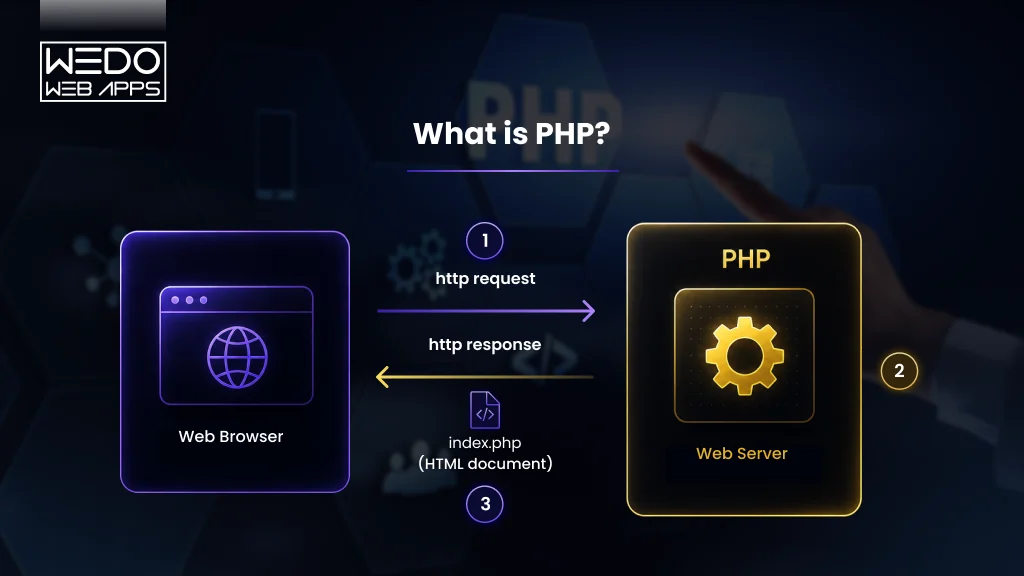
Before understanding the complete difference between PHP and Python, it is important to first understand what PHP actually is and why it is still widely used in modern web development.
PHP is an open-source server-side scripting language mainly used for building dynamic websites and web applications. It is one of the oldest and most trusted technologies for backend development and continues to power millions of websites worldwide.
When discussing PHP vs Python for web development, PHP often stands out because it was originally created specifically for the web. This makes it highly efficient for developing CMS platforms, eCommerce websites, customer portals, and database-driven applications.
Its flexibility, lower hosting cost, and large ecosystem make PHP a practical choice for businesses of all sizes.
Key Features of PHP
PHP offers several features that keep it relevant in the ongoing PHP and Python comparison debate.
Some of the most important features include:
- Open-source and free to use.
- Easy integration with HTML and databases.
- Cross-platform compatibility.
- Fast execution for web applications.
- Large ecosystem of frameworks and libraries.
- Strong hosting support across servers.
- Smooth database connectivity with MySQL and PostgreSQL.
- Built-in session and form handling capabilities.
Popular frameworks like Laravel and Symfony also improve security, scalability, and development speed.
Advantages of PHP
One major reason PHP continues to perform strongly in the PHP vs Python use cases discussion is its simplicity and web-focused architecture.
Advantages of PHP include:
- Faster development for website-based projects.
- Lower hosting and maintenance costs.
- Large global developer community.
- Strong support for a CMS platform like WordPress.
- Easier deployment process.
- Suitable for startups and small businesses.
- Reliable performance for web applications.
For companies focused mainly on web platforms, PHP often provides a faster route to launch projects without increasing infrastructure expenses.
Limitations of PHP
Although PHP remains highly effective for web development, it also has some limitations when compared in the PHP vs Python debate.
Some common limitations include:
- Less suitable for AI and machine learning applications.
- Limited use in data science projects.
- Older codebases may become difficult to maintain.
- Inconsistent coding practices in legacy applications.
- Fewer built-in tools for advanced automation tasks.
Still, modern PHP frameworks and updated versions have solved many of the older performance and security concerns.
Popular Websites and Applications Built With PHP
Many globally recognized platforms still rely on PHP, proving its strength in real-world web development.
Popular examples include:
- WordPress
- Wikipedia
- Tumblr
- Mailchimp
These examples clearly show that PHP can handle high-traffic applications, enterprise platforms, and scalable backend systems efficiently.
What is Python?
Python is a high-level, general-purpose programming language known for its clean syntax, readability, and flexibility. It is widely used for web development, automation, artificial intelligence, machine learning, data science, and backend application development.
In the ongoing PHP vs Python discussion, Python has gained massive popularity because it allows Python developers to build applications faster with less code. Its simple structure makes development easier, especially for complex projects that require scalability and advanced functionality.
When businesses compare Python vs PHP, which is better, Python often becomes a preferred choice for AI-driven platforms, automation tools, SaaS products, and data-focused applications.
Its ability to support multiple technologies with a single programming language makes it highly valuable for modern businesses.
Key Features of Python
Python includes several powerful features that make it a strong competitor in the PHP and Python comparison debate.
Some major features include:
- Clean and readable syntax
- Open-source and free to use
- Cross-platform compatibility
- Large collection of libraries and frameworks
- Strong support for AI and machine learning
- Easy integration with modern technologies
- Faster development for complex applications
- Excellent community support
Popular Python frameworks include Django, Flask, and FastAPI, which are widely used for backend and API development.
Advantages of Python
Python continues to grow rapidly in the PHP vs Python use cases comparison because of its versatility and developer-friendly structure.
Advantages of Python include:
- Easy to learn and maintain
- Suitable for AI, automation, and data science
- Faster development process with less code
- Large ecosystem of libraries and tools
- Strong scalability for modern applications
- Excellent for API and backend development
- High demand in the developer job market
For businesses planning long-term scalability or AI integration, Python often provides more flexibility.
Limitations of Python
Although Python is highly versatile, it also has a few limitations in the difference between PHP and Python comparison.
Some common limitations include:
- Slower execution speed compared to some compiled languages.
- Higher memory consumption.
- Less optimized for mobile app development.
- Can become resource-intensive for large-scale applications.
- Hosting costs may sometimes be higher than for PHP-based projects.
However, modern frameworks and cloud infrastructure have improved Python’s performance significantly.
Popular Websites and Applications Built With Python
Python is trusted by many large-scale companies and modern-tech platforms.
Popular examples include:
- Netflix
- Spotify
- Dropbox
These companies use Python for backend systems, automation, recommendation engines, and scalable web applications, showing its strong capability in enterprise development.
Difference Between PHP and Python
Understanding the difference between PHP and Python is important before choosing a programming language for your next project. While both technologies are widely used for backend development, they are built for different purposes and development approaches.
In the ongoing PHP vs Python debate, PHP is mainly preferred for traditional web development and CMS-based platforms, while Python is known for AI, automation, machine learning, and scalable backend systems.
This detailed PHP and Python comparison will help you understand which language fits better for your business goals, scalability plans, and development requirements.
Syntax and Code Readability
One major difference between PHP and Python is their syntax style.
Python is famous for its clean and readable syntax. Developers can write shorter and more organized code, which improves long-term maintenance.
PHP syntax is designed mainly for web development and integrates directly with HTML, making it easier for building server-side web applications.
PHP
- Easier HTML integrations.
- Good for quick website development.
- Familiar with web developers.
Python
- Cleaner syntax structure.
- Good for quick website development.
- Familiar with web developers.
For beginners, comparing Python vs PHP which is better, Python is often considered easier to learn.
Performance and Execution Speed
The topic of PHP vs Python performance is one of the most discussed areas in backend development.
PHP generally performs faster for traditional websites because it was built specifically for server-side scripting. Python may consume more resources, but it performs strongly in automation and data processing environments.
PHP Performs Better For
- CMS platforms
- eCommerce websites
- Dynamic web pages
Python Performs Better For
- AI systems
- Automation tools
- Data-heavy applications
The actual performance also depends on frameworks, hosting, caching, and application architecture.
PHP vs Python for Web Development
When discussing PHP vs Python for web development, both languages offer strong frameworks and backend support, but their strengths differ.
PHP is highly optimized for website development and powers platforms like WordPress. Python is preferred for scalable web applications and advanced backend systems.
Choose PHP For
- WordPress development
- eCommerce stores
- CMS websites
- Business portals
Choose Python For
- SaaS applications
- Enterprise platforms
- AI-integrated web apps
- API driven applications
If your focus is mainly on website development, PHP can be a cost-effective option. For scalable and future-ready applications, Python often provides greater flexibility.
Database Integration and Backend Handling
Both PHP and Python support major databases efficiently.
PHP works naturally with MySQL for website-based applications, while Python supports broad database integration for analytics and modern applications.
Supported Databases
- MySQL
- PostgreSQL
- MongoDB
- SQLite
- MariaDB
This flexibility makes Python highly useful in modern PHP vs Python use cases involving large data handling.
Framework Ecosystem Comparison
Frameworks improve security, scalability, and development speed in both languages.
Laravel vs Django
Laravel
Laravel is one of the most popular PHP frameworks for modern web development. It offers elegant syntax, strong security, and faster development for CMS and eCommerce projects.
Django
Django is a powerful Python framework known for scalability, security, and rapid application development. It is widely used for enterprise applications and SaaS platforms.
Symfony vs Flask
Symfony
Symfony is a structured PHP framework suitable for large enterprise projects and long-term maintenance.
Flask
In the PHP and Python comparison, Laravel is often preferred for website development, while Django and Flask are popular for scalable backend systems.
Learning Curve for Beginners
Another important difference between PHP and Python is the learning experience.
Python is generally easier for beginners because of its simple and readable syntax.
PHP is also beginner-friendly, especially for developers entering web development directly.
Python is Better For
- General programming learning
- Automation
- AI and data science
PHP is Better For
- Website development
- CMS customization
- Backend scripting
Security Features and Risk Management
Security is a major factor in the PHP vs Python comparison.
Both languages offer strong security features through modern frameworks.
Common Security Features
- Authentication systems
- SQL injection prevention
- CSRF protection
- Session handling
- Data validation
Django is known for strong built-in security, while Laravel also provides advanced security support for PHP applications.
Scalability and Enterprise Readiness
Both PHP and Python can support large-scale enterprise applications.
PHP Powers
- WordPress
- Wikipedia
Python Powers
- Netflix
- Spotify
In modern PHP vs Python use cases, Python is often selected for AI-driven scalability, while PHP remains highly reliable for high-traffic websites.
Hosting and Deployment Flexibility
Hosting is another major factor in the PHP vs Python performance discussion.
PHP hosting is widely available and affordable because most web hosting providers support PHP by default.
Python applications are commonly deployed on cloud platforms and container-based infrastructure.
PHP Hosting Advantages
- Lower hosting costs
- Easier shared hosting
- Faster setup for websites
Python Hosting Advantages
- Better cloud compatibility
- Flexible deployment environments
- Strong DevOps integration
Community Support and Documentation
Both PHP and Python have large global development communities.
Developers can easily access:
- Tutorials
- Plugins
- Documentation
- Open-sources libraries
- Community forums
PHP has decades of web development resources, while Python continues to grow rapidly in AI and automation industries.
Testing and Debugging Capabilities
Testing tools improve application quality and stability.
PHP tools
- PHPUnit
- Xdebug
Python Tools
- PyTest
- PDB
Python often offers easier debugging for complex applications, especially in enterprise development.
API Development and Microservices Support
Modern applications require strong API and microservices support.
Both PHP and Python support API development, but Python frameworks are often preferred for scalable microservices.
PHP API Frameworks
- Laravel
- Symfony
Python API Frameworks
- FastAPI
- Flask
- Django REST Framework
This makes Python highly valuable in advanced PHP vs Python for web development scenarios.
AI, Automation, and Data Science Capabilities
This is one of the biggest strengths of Python in the PHP and Python comparison.
Python dominates technologies like:
- Artificial intelligence
- Machine learning
- Automation
- Data analytics
- Scientific computing
Popular Python libraries include:
- TensorFlow
- NumPy
- Pandas
- Scikit-learn
PHP has very limited adoption in these areas.
Job Market and Developer Availability
Both languages have strong market demand, but the industries differ.
PHP Developer Demand
- Web development companies
- CMS agencies
- eCommerce businesses
Python Developer Demand
- AI startups
- SaaS companies
- FinTech businesses
- Automation platforms
Python currently shows faster growth across multiple industries.
Development Cost Comparison
Development cost is another important factor in the Python vs PHP which is better debate.
PHP projects are usually more affordable because hosting and development costs are lower.
Python development costs more for advanced applications but offers better scalability and flexibility.
PHP is Cost-Effective For:
- Business websites
- eCommerce stores
- CMS platforms
Python is Valuable For
- AI applications
- SaaS products
- Automation systems
Long-Term Maintenance and Project Stability
Long-term maintenance depends heavily on the code quality framework structure.
Python’s readable syntax helps simplify updates and maintenance for large applications.
Modern PHP frameworks also support structured development and long-term project stability.
Python Advantages
- Easier code readability
- Better maintainability
- Faster debugging
PHP Advantages
- Stable web ecosystem
- Strong CMS support
- Reliable hosting compatibility
Both technologies continue to receive regular updates, security improvements, and strong community support.

PHP vs Python Performance Comparison
Performance is one of the biggest deciding factors when comparing PHP vs Python. Businesses want applications that load faster, handle high traffic smoothly, and provide a better user experience.
However, the actual performance difference between PHP and Python depends on several factors, such as framework selection, database optimization, server configuration, and application architecture.
Let’s break down the PHP vs Python performance comparison in detail.
Which Language Offers Faster Execution?
PHP is generally faster for traditional web applications because it is optimized for server-side scripting and web page rendering.
Python may execute more slowly in some web environments because it is a general-purpose programming language designed for multiple use cases beyond web development.
PHP Advantages
- Faster page loading for websites.
- Optimized for server-side execution.
- Lower response time for CMS platforms.
Python Advantages
- Better handling of complex logic.
- Strong support for automation processes.
- Efficient for AI and data processing tasks.
For standard website development, PHP often delivers slightly faster execution speed.
Memory Usage and Resource Consumption
Python applications usually consume more memory because of their flexible and dynamic nature.
PHP applications are generally lighter for traditional web operations, which can reduce server resource usage.
PHP
- Lower memory consumption for websites.
- Cost-effective hosting environments.
- Suitable for shared hosting.
Python
- Higher resource usage for advanced applications.
- Better for large-scale processing.
- Suitable for cloud-based infrastructure.
The difference becomes more noticeable in large traffic environments.
Real-World Performance Factors Beyond Language Speed
The programming language alone does not decide application performance.
In real-world PHP and Python comparison scenarios, factors like coding quality, caching, hosting infrastructure, APIs, and database queries often impact performance more than the language itself.
Important Performance Factors
- Server optimization
- Database efficiency
- Caching mechanisms
- Framework selection
- CDN integration
- Application architecture
A well-optimized Python application can outperform a poorly structured PHP application and vice versa.
How Framework Choice Affects Performance
Frameworks play a major role in the PHP vs Python performance comparison.
PHP Framework Performance
- Laravel offers strong scalability and security.
- Symfony works well for enterprise applications.
Python Framework Performance
- Django handles strong scalability and security.
- FastAPI is suitable for high-performance APIs.
Lightweight frameworks usually provide faster response times than feature-heavy frameworks.
Best Language for High-Traffic Applications
Both PHP and Python can support high-traffic applications when properly optimized.
PHP is Commonly Used For
- High-traffic websites
- eCommerce platforms
- CMS-based systems
Python is Commonly Used For
- AI-powered platforms
- SaaS products
- Data-intensive applications
If your primary goals are fast and cost-effective web development, PHP can be a practical option. If your application requires AI integration, automation, and advanced scalability, Python may provide more long-term advantages.
PHP vs Python Use Cases
The best way to understand PHP vs Python is by looking at where each language performs best in real-world projects. Both technologies are powerful, but they are used differently depending on business requirements, scalability goals, and application complexity.
Understanding these PHP vs Python use cases can help businesses choose the right technology stack for long-term success.
Best Use Cases for PHP
PHP is mainly used for web-focused applications and server-side development. It is highly suitable for projects that require fast development, lower hosting costs, and strong CMS support.
Common Use Cases
- WordPress websites
- eCommerce stores
- CMS platforms
- Business portals
- Customer portals
- Blogging platforms
- Web-based dashboards
PHP is often preferred for businesses that want reliable website development without increasing infrastructure costs.
Best Use Cases for Python
Python is widely used in industries that require automation, AI integration, large-scale processing, and scalable backend systems.
Common Python Use Cases
- Artificial intelligence applications
- Machine learning platforms
- Automation tools
- SaaS products
- Data analytics platforms
- FinTech applications
- API development
- Cloud-based systems
In modern PHP and Python comparison discussions, Python is usually selected for projects that require future scalability and advanced technology integration.
When PHP is the Better Choice
PHP becomes a better option when your project is strongly focused on website development and quick deployment.
Choose PHP When You Need
- Faster website development
- Lower development costs
- CMS based platforms
- Shared hosting compatibility
- Ecommerce website development
- Simple backend systems
For startups and small businesses, PHP often provides a practical and budget-friendly solution.
When Python is the Better Choice
Python is a stronger option when the application requires advanced functionality, automation, or high scalability.
Choose Python When You Need
- AI or machine learning integration
- Complex backend systems
- Automation workflows
- Real-time data processing
- Scalable SaaS applications
- Cloud native applications
For businesses comparing Python vs PHP, which is better, Python usually stands out for innovation-focused and data-driven applications.
Python vs PHP: Which is Better for Your Business?
The answer to Python vs PHP which is better, depends entirely on your business goals, application requirements, budget, and future scalability plans.
Both technologies are reliable and widely used across industries. However, choosing the wrong programming language can increase development costs, slow down scalability, and create long-term maintenance challenges.
Instead of choosing based on popularity, businesses should focus on selecting the technology that aligns with their project needs.
Choose PHP If You Need
PHP is a practical choice for businesses focused mainly on web development and cost-efficiency.
PHP is Better For
- Business websites
- CMS platforms
- eCommerce stores
- Fast project delivery
- Lower hosting costs
- Budget-friendly development
PHP is especially suitable for startups, small businesses, and companies building content-driven platforms.
Choose Python If You Need
Python is ideal for businesses planning advanced digital products and scalable backend systems.
Python is Better For
- AI-powered applications
- Automation platforms
- SaaS platforms
- Data-driven systems
- Cloud-based applications
- Machine learning integration
For companies planning future expansion and advanced functionality, Python often offers greater flexibility.
Best Language for Startups
For startups, both PHP and Python can work effectively depending on the business model.
PHP is Better for Startups That Need
- Quick website launches
- Lower development budgets
- eCommerce platforms
- CMS-based applications
Python is Better for Startups That Need
- Scalable SaaS products
- AI integration
- Automation systems
- Data-focused applications
The decision should depend on product vision and long-term scalability goals.
Best Language for Enterprise Applications
Enterprise applications require scalability, security, maintainability, and strong backend architecture.
PHP Enterprise Strengths
- Stable web infrastructure
- Strong CMS ecosystem
- Mature frameworks like Laravel and Symfony
Python Enterprise Strengths
- AI and automation support
- Scalable backend architecture
- Strong cloud integration
In many enterprise-level PHP vs Python use cases, Python is often selected for innovation-driven systems, while PHP remains highly effective for large-scale web platforms.
Best Option for Future Scalability
Scalability depends on both application architecture and technology selection.
PHP can efficiently scale high-traffic websites and eCommerce platforms. Python is often used for large-scale data processing.
PHP Scalability Benefits
- Efficient web server performance
- Lower infrastructure costs
- Reliable website scalability
Python Scalability Benefits
- Better support for advanced technologies
- Easier integration with AI tools
- Strong cloud scalability support
If your business roadmap includes automation, machine learning, or complex backend systems, Python may provide stronger long-term advantages.
PHP vs Python: Trends and Market Demand in 2026
The demand for both PHP vs Python continues to remain strong in 2026, but their adoption patterns are changing based on business requirements and technology trends.
PHP continues to dominate traditional web development, while Python is rapidly expanding across AI, automation, cloud computing, and data-driven applications.
Developer Popularity and Adoption Trends
| Factor | PHP | Python |
|---|---|---|
| Primary Demand | Web development | AI, automation, backend systems |
| Popular Industries | Ecommerce, CMS, media | SaaS, FinTech, AI, analytics |
| Learning Popularity | Website beginners | General programming learners |
| Startup Adoption | Strong for websites | Strong for scalable products |
| Enterprise Adoption | Mature web platforms | Innovation-focused systems |
Python is growing faster across emerging technologies, while PHP continues to maintain strong demand in website and CMS development.
Open Source Ecosystem Growth
| Ecosystem Area | PHP | Python |
|---|---|---|
| Popular Frameworks | Laravel, Symfony | Django, Flask, FastAPI |
| CMS Support | Excellent | Limited |
| AI Libraries | Minimal | Extensive |
| Plugin Ecosystem | Very large | Rapidly growing |
| Community Contributions | Mature ecosystem | Highly active ecosystem |
In the overall PHP and Python comparison, Python leads in AI and automation innovation, while PHP remains highly powerful for web-based ecosystems.
Business Demand Across Industries
| Industry | PHP Usage | Python Usage |
|---|---|---|
| Ecommerce | High | Moderate |
| CMS Platforms | Very High | Low |
| SaaS Products | Moderate | High |
| Artificial Intelligence | Limited | Very High |
| FinTech | Moderate | High |
| Data Analytics | Low | Very High |
Modern PHP vs Python use cases show PHP development dominating website development, while Python leads in data-focused and AI-driven industries.
Future Scope of PHP and Python
| Future Trend | PHP | Python |
|---|---|---|
| Web Development | Strong future demand | Strong backend demand |
| AI and Machine Learning | Limited growth | Massive growth |
| Cloud Applications | Moderate adoption | High adoption |
| Automation Systems | Limited | Very Strong |
| Enterprise Scalability | Stable | Rapidly expanding |
For businesses evaluating Python vs PHP which is better, PHP remains a reliable long-term solution for web development, while Python offers stronger opportunities in future-focused technologies like AI, automation, and cloud platforms.
Common Myths About PHP and Python
The debate around PHP vs Python has created many misconceptions over the years. Some people believe PHP is outdated, while others assume Python is the perfect solution for every project.
In reality, both technologies have their own strengths, limitations, and ideal use cases. Understanding these myths helps businesses make more practical technology decisions.
Is PHP Outdated?
One of the biggest myths in the PHP and Python comparison is that PHP is no longer relevant.
The reality is completely different.
PHP still powers a large percentage of websites globally, including WordPress, ecommerce stores, and enterprise platforms. Modern frameworks like Laravel have also improved PHP’s security, scalability, and PHP developer experience significantly.
Reality Check
- WordPress still dominates CMS development
- Laravel remains highly popular
- PHP continues to receive regular updates
- Many large businesses still use PHP
PHP is evolving continuously rather than disappearing.
Will Python Replace PHP?
Another common misconception is that Python will completely replace PHP in web development.
While Python is growing rapidly, PHP still remains one of the strongest technologies for website development and CMS platforms.
Where Python Leads
- AI and machine learning
- Automation
- Data science
- Scalable backend systems
Where PHP Still Dominates
- WordPress development
- Ecommerce websites
- CMS platforms
- Budget-friendly web development
Instead of replacing PHP, Python is expanding into different technology areas.
Is Python Always Slower Than PHP?
The topic of PHP vs Python performance often creates confusion.
PHP is generally faster for traditional websites because it is optimized for server-side scripting. However, that does not mean Python applications are slow.
Performance depends on:
- Framework optimization
- Server configuration
- Caching systems
- Database queries
- Application architecture
A properly optimized Python application can easily handle enterprise-scale traffic.
Can PHP Handle Large-Scale Applications?
Some developers assume PHP is suitable only for small websites.
In reality, PHP powers several high-traffic platforms and enterprise-level systems.
Large Platforms Using PHP
- WordPress
- Wikipedia
Modern PHP frameworks support:
- Scalable architectures
- API development
- Cloud deployment
- Enterprise-level security
This proves that PHP can efficiently support large-scale applications when built correctly.
How to Choose Between PHP and Python
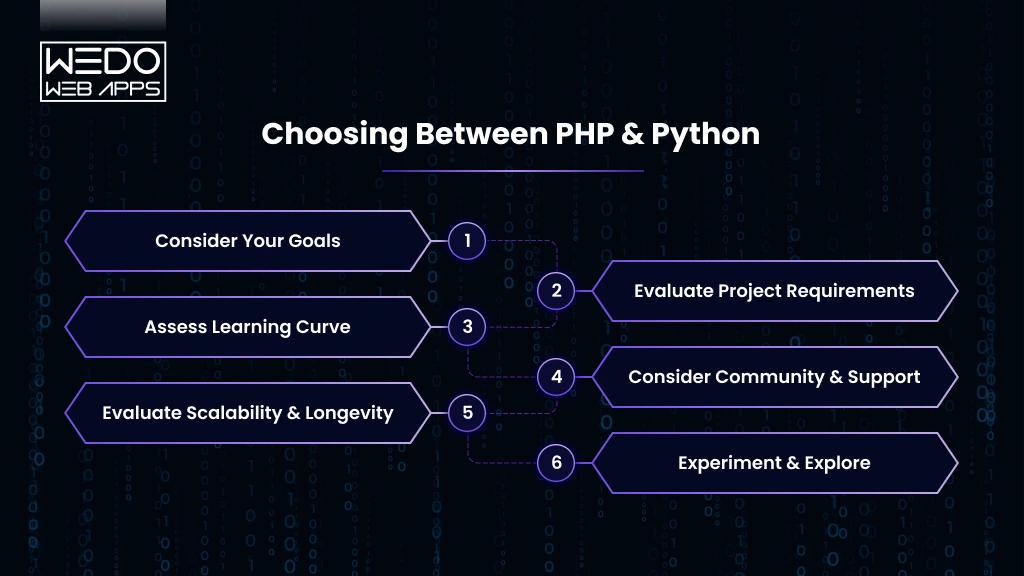
Choosing between PHP vs Python should not depend only on popularity trends. The right decision depends on your project goals, budget, scalability plans, and the type of application you want to build.
Both languages are powerful, but they solve different business problems more effectively.
Before selecting a technology stack, businesses should evaluate technical requirements as well as long-term growth plans.
Questions to Ask Before Selecting a Programming Language
Before making a final decision, ask these important questions:
- Are you building a website or a complex software platform?
- Do you need AI or automation features?
- What is your development budget?
- How quickly do you want to launch the project?
- Will the application need large-scale scalability later?
- What kind of developers are easier to hire for your project?
These questions help simplify the difference between PHP and Python based on practical business needs instead of trends.
Factors That Affect Technology Selection
| Factor | PHP | Python |
|---|---|---|
| Website Development | Excellent | Strong |
| AI and Automation | Limited | Excellent |
| Development Cost | Lower | Moderate to High |
| Learning Curve | Easy | Very Easy |
| Scalability | Strong | Very Strong |
| Hosting Cost | Affordable | Higher in some cases |
| CMS Development | Excellent | Limited |
| Data Science Support | Minimal | Excellent |
If your project is heavily focused on websites and CMS platforms, PHP can be a cost-effective choice. If you need automation, AI, or scalable backend systems, Python usually offers greater flexibility.
Decision Matrix for Businesses and Developers
| Project Requirement | Better Choice |
|---|---|
| eCommerce website | PHP |
| WordPress development | PHP |
| SaaS product | Python |
| AI-powered application | Python |
| Budget-friendly website | PHP |
| Data analytics platform | Python |
| Fast website deployment | PHP |
| Automation system | Python |
In the Python vs PHP which is better discussion, there is no universal winner. The best programming language is the one that aligns with your business goals, technical requirements, and future scalability plans.
Conclusion
The comparison between PHP vs Python is not about choosing a good or bad programming language. Both technologies are powerful, reliable, and widely used across modern application development.
PHP continues to remain a strong choice for website development, CMS platforms, ecommerce stores, and budget-friendly backend systems. Its lower hosting costs, faster web development process, and massive ecosystem make it highly practical for businesses focused on web-based platforms.
Python, on the other hand, stands out for scalability, automation, artificial intelligence, machine learning, and data-driven applications. Its flexibility and growing ecosystem make it a future-focused technology for businesses planning advanced digital products.
If your goal is fast and cost-effective web development, PHP can be the right option. If you need automation, AI integration, or scalable enterprise systems, Python may offer more long-term advantages.
Ultimately, the right decision in the PHP and Python comparison depends on:
- Your project requirements
- Business goals
- Development budget
- Scalability expectations
- Future technology plans
Before selecting between PHP vs Python for web development, it is always better to evaluate your application architecture, growth strategy, and technical requirements carefully.
A well-planned technology decision today can reduce development challenges and improve long-term business scalability tomorrow.