skip to content

6 Top PHP Frameworks in 2026: Features, Comparison, and Best Use Cases

Intro: Choose the Right PHP Framework for Your Next Project

PHP continues to power a large portion of the web, and its relevance remains strong for modern application development. From small business websites to large-scale platforms, developers rely on structured approaches to build efficient systems.

This is where PHP web frameworks come into play. They simplify PHP development by offering pre-built components, an organized architecture, and built-in security support. Instead of writing repetitive code, developers can focus on building features that matter.

The challenge, however, is choosing the right one. With several popular PHP frameworks available, each designed for different use cases, making the right decision can feel confusing.

This guide simplifies that process.

It compares the top PHP frameworks based on performance, scalability, and real-world use cases. Whether you are building a startup product or an enterprise application, you will get a clear understanding of which option fits your requirements.

If you need a quick recommendation:

  • Laravel works best for modern applications and rapid development.
  • Symfony is suitable for large and complex systems.
  • CodeIgniter is ideal for lightweight and fast projects.
  • Yii performs well for high-traffic applications.
  • CakePHP supports structured development.
  • Laminas fits enterprise-level architecture.

PHP framework recommendation for your project

What Is a PHP Framework

A PHP framework is a structured set of tools, libraries, and guidelines used to build web applications more efficiently. Instead of writing everything from scratch, developers use these frameworks to handle common tasks like routing, database interaction, authentication, and security.

Most PHP MVC frameworks follow the Model-View-Controller architecture. This separates the application into three parts:

  • Model handles data and database logic.
  • View manages the user interface.
  • Controller connects the data with the interface.

This structure keeps code organized and easier to maintain.

Think of a PHP framework like a pre-built foundation for a house. Instead of starting from raw materials, you begin with a strong base and focus on designing the final structure.

Using PHP web frameworks also improves development speed and reduces errors. Developers can reuse components, follow standard practices, and build scalable applications without unnecessary complexity.

Example:

If you are building a login system, a framework already provides authentication tools. You only need to configure them instead of creating everything manually.

How We Compared These PHP Frameworks

PHP framework comparison method

Choosing from multiple options is easier when you know what actually matters. Instead of listing features randomly, this guide evaluates each framework based on practical development needs.

Here are the key factors used in this PHP framework comparison:

1. Performance and Speed

How efficiently the framework handles requests and processes data. Lightweight frameworks usually load faster, while feature-rich ones may need optimization.

2. Scalability

The ability to support application growth over time. Some frameworks are better suited for large-scale systems and high user traffic.

3. Security Capabilities

Built-in protection against common vulnerabilities. Strong PHP framework features include safeguards for SQL injection, XSS, and CSRF attacks.

4. Ease of Learning and Development

How quickly developers can start working with the framework. Clear documentation and simple instructions reduce the learning curve.

5. Flexibility and Customization

The level of control developers have over application architecture. Flexible frameworks allow easier integration with third-party tools and custom logic.

6. Community Support and Ecosystem

Availability of tutorials, plugins, and developer support. Active communities help resolve issues faster and keep frameworks updated.

These criteria ensure that the selected best PHP frameworks are not just popular, but also practical for real-world applications.

Quick Overview of Top PHP Frameworks

Before going into detailed explanations, here is a quick snapshot of the top PHP frameworks. This helps you understand which options fit your needs at a glance.

FrameworkBest ForKey Strength
LaravelModern web applications and rapid development.Clean syntax and strong ecosystem.
SymfonyComplex and enterprise-level applications.High flexibility with reusable components.
CodeIgniterLightweight and fast development.Simple setup with minimal configuration.
YiiHigh-performance applications.Strong caching and optimization features.
CakePHPStructured and rapid development.Convention-based coding approach.
LaminasEnterprise applications and scalability.Modular and object-oriented architecture.

This quick view highlights the most popular PHP frameworks and their primary strengths.

Compare PHP frameworks with expert guidance

Top PHP Frameworks Explained

Top PHP frameworks for web development

Choosing from the multiple top PHP frameworks becomes easier when you understand how each one performs in real development scenarios. Every framework is built with a different purpose in mind. Some focus on speed and simplicity, while others are designed for large and complex systems.

This section gives a clear and practical breakdown of the most popular PHP frameworks, covering their purpose, core strengths, and where they actually fit in real projects.

1. Laravel

Purpose

Laravel is built for modern web application development, where speed, flexibility, and clean code structure are important.

Key Features:

  • Built-in authentication and authorization system.
  • Blade templating engine for structured UI development.
  • Eloquent ORM for easy database handling.
  • Strong ecosystem with tools for queues, caching, and scheduling.

Strengths

Laravel is easy to learn and widely used. Its ecosystem reduces development time and simplifies complex tasks.

Best Use Cases:

  • SaaS platforms
  • Custom web applications
  • RESTful APIs

2. Symfony

Purpose

Symfony is designed for complex applications that require flexibility and long-term stability.

Key Features:

  • Modular architecture with reusable components.
  • Advanced debugging and testing tools.
  • Long-term support for enterprise use.

Strengths

Symfony provides full control over application structure. It is highly scalable and suitable for large systems.

Best Use Cases:

  • Enterprise applications
  • Large content management systems
  • Complex backend platforms

3. CodeIgniter

Purpose

CodeIgniter focuses on simplicity and faster development with minimal configuration.

Key Features:

  • Lightweight structure with fast execution.
  • Easy setup without heavy dependencies.
  • Minimal configuration required.

Strengths

It is beginner-friendly and works well when speed matters. Developers can quickly build and deploy applications.

Best Use Cases:

  • Small to medium web applications
  • Lightweight backend systems

4. Yii

Purpose

Yii is built for performance-driven applications that require speed and efficiency.

Key Features:

  • Built-in caching support for better performance.
  • Strong security features.
  • Gii code generator for faster development.

Strengths

Yii handles high traffic efficiently. It is optimized for applications that need fast response times.

Best Use Cases

  • High-traffic applications
  • Performance-focused systems

5. CakePHP

Purpose

CakePHP supports rapid development through a structured and consistent coding approach.

Key Features:

  • Convention-over-configuration approach.
  • Built-in ORM and validation tools.
  • Scaffolding for quick prototyping.

Strengths

It reduces development effort by following predefined patterns. This helps maintain consistency across projects.

Best Use Cases:

  • CRUD-based applications
  • Business web applications

6. Laminas

Purpose

Laminas is designed for enterprise-grade applications that require scalability and stability.

Key Features:

  • Modular and object-oriented architecture.
  • Flexible components for customization.
  • Enterprise-level security features.

Strengths

It supports large-scale systems and long-term development. It is suitable for teams handling complex requirements.

Best Use Cases:

  • Large enterprise systems
  • Complex business applications

What This Means for You

Each of these popular PHP frameworks solves a different type of problem. Choosing the right one is less about popularity and more about how well it aligns with your project requirements.

PHP Frameworks Comparison (Side-by-Side)

This table gives a side-by-side view of the top PHP frameworks based on practical development factors. It helps you quickly evaluate which option fits your project.

FrameworkEase of UsePerformanceScalabilitySecurity FeatureBest Use Case
LaravelEasy to learn with strong documentation.Moderate, can be optimized with caching.High, suitable for growing applications.Built-in authentication, CSRF protection, encryption.SaaS platforms, web apps, APIs
SymfonyModerate, requires experience.High, optimized for complex systems.Very high, enterprise-ready.Strong security components and long-term support.Enterprise applications
CodeIgniterVery easy, beginner-friendly.High due to lightweight structure.Moderate, best for smaller apps.Basic security features with manual configuration.Small to medium projects
YiiModerate learning.High performance with efficient caching.High, handles heavy traffic well.Strong input validation and security tools.High-traffic applications
CakePHPEasy with a convention-based approach.Moderate performance.Moderate to high.Built-in validation and security features.CRUD-based applications
LaminasComplex, suited for experienced developers.High performance.Very high, designed for large systems.Enterprise-grade security components.Large-scale enterprise systems

Key Insights from This Comparison

  • Laravel framework is one of the best PHP frameworks for rapid development and modern applications.
  • Symfony and Laminas are better suited for large, enterprise-level systems.
  • CodeIgniter works well when speed and simplicity are priorities.
  • Yii stands out for performance-focused applications.
  • CakePHP is ideal for structured and database-driven projects.

This PHP frameworks comparison helps narrow down your options based on real requirements rather than just popularity.

framework recommendation for performance and scalability

Which PHP Framework Should You Choose

After reviewing the top PHP frameworks, the next step is selecting the one that actually fits your project. There is no single framework that works best for every situation. The right choice depends on what you are building, how complex it is, and how your application is expected to grow.

Instead of comparing everything again, here is a practical way to choose from the best PHP frameworks based on real scenarios.

Choose Based on Project Type

Different projects have different needs. Selecting a framework becomes easier when you match it with your use case.

  • For modern web applications and SaaS products. Laravel is a strong choice due to its speed and built-in features.
  • For enterprise and large-scale systems. Symfony or Laminas work better because of their flexibility and scalability.
  • For small or lightweight applications. CodeIgniter is suitable due to its simplicity and fast setup.
  • For performance-focused applications. Yii is a good option because of its efficient caching and speed.
  • For structured, database-driven applications. CakePHP works well with its convention-based approach.

Choose Based on Team Expertise

The experience level of your development team also plays a key role.

  • Beginner teams benefit from frameworks like Laravel or CodeIgniter.
  • Experienced teams can handle Symfony or Laminas for complex systems.

Choosing a familiar framework can reduce development time and improve efficiency.

Choose Based on Long-Term Goals

Think beyond the initial development phase.

  • If your application is expected to scale. Choose a framework that supports large systems like Symfony or Laminas.
  • If you need quick development and faster launch. Laravel or CodeIgniter can help you move faster.

What Matters Most

When comparing options, focus on these PHP framework features:

  • How easily it supports your application structure.
  • How well it handles performance and scalability.
  • How secure it is for long-term use.

Final Thought on Selection

Choosing the right framework is like selecting the right tools for a job. A lightweight tool works well for simple tasks, while complex systems need more advanced solutions.

The goal is not to pick the most popular option, but to choose the one that aligns with your project requirements and future growth.

PHP development for scalable applications

Performance, Scalability, and Security

Choosing from the top PHP frameworks is not only about features. It also depends on how well the framework performs under real conditions, how it handles growth, and how secure it is for long-term use.

This section focuses on the practical side of development, where performance, scalability, and security directly impact your application.

Performance

Performance defines how quickly your application responds to user requests. It depends on how efficiently the framework processes data and manages resources.

  • Lightweight frameworks like CodeIgniter offer faster load times due to minimal overhead.
  • Performance-focused frameworks like Yii use caching and optimization techniques.
  • Feature-rich frameworks like Laravel may require caching and tuning for better speed.

If your application handles frequent user interactions or real-time data, performance becomes a key factor.

Scalability

Scalability refers to how well your application can grow as traffic and data increase.

  • Symfony and Laminas are designed to support large-scale and enterprise applications.
  • Laravel also scales well with proper architecture and optimization.
  • Lightweight frameworks may need additional effort to handle very large systems.

A scalable framework ensures that your application does not break or slow down as it grows.

Security

Security is a critical part of modern web development. Most PHP web frameworks include built-in protection to reduce common risks.

Key PHP framework features include:

  • Protection against SQL injection.
  • Cross-site scripting protection.
  • CSRF token validation.
  • Input validation and data filtering.

Frameworks like Laravel and Symfony provide strong default security layers, while others may require additional configuration.

Why These Factors Matter

Ignoring performance, scalability, or security can lead to slow applications, poor user experience, or security risks. These factors become even more important as your application grows.

A balanced approach is important. A fast framework is useful, but it should also support growth and maintain strong security foundations.

Future Trends in PHP Frameworks

PHP frameworks continue to adapt to modern development needs. While the core purpose remains the same, the way PHP developers build and scale applications is changing.

Understanding these trends helps you choose from the top PHP frameworks with a long-term perspective.

API-First Development

Modern applications often rely on APIs to connect with mobile apps, front-end frameworks, and third-party services.

  • Frameworks like Laravel and Symfony provide strong support for RESTful APIs.
  • Developers focus on building a backend system that can serve multiple platforms.

This approach makes applications more flexible and easier to expand.

Microservices Architecture

Instead of building one large application, developers are shifting toward smaller, independent services.

  • Frameworks are being used to build modular components.
  • Applications become easier to maintain and scale.

This trend is especially useful for large and growing systems.

Cloud Integration

Applications are increasingly hosted on cloud platforms.

  • PHP frameworks are being optimized for cloud environments.
  • Better support for deployment, scaling, and resource management.

This allows businesses to handle traffic spikes without major infrastructure changes.

Performance Optimization

Speed continues to be a major focus.

  • Improved caching mechanisms.
  • Better database handling.
  • Optimized request processing.

Frameworks are evolving to deliver faster response times with fewer resources.

Focus on Developer Experience

Ease of use is becoming a priority.

  • Cleaner syntax and better documentation.
  • Built-in tools to simplify development.
  • Improved debugging and testing features.

This makes it easier for developers to work efficiently with popular PHP frameworks.

These trends show that PHP frameworks are not static. They continue to improve to meet modern application requirements.

When choosing from the best PHP frameworks, it is important to consider not just current features but also how well the framework aligns with future development practices.

Common Misconceptions About PHP Frameworks

PHP frameworks misconceptions

Even though PHP is widely used, there are still several misconceptions around it and the frameworks built on it. These misunderstandings often lead to poor decisions when selecting from the top PHP frameworks.

Let’s clear up some of the most common ones.

PHP Is Outdated

Many assume PHP is no longer relevant.

In reality, PHP still powers a large portion of websites and continues to evolve. Modern PHP web frameworks offer advanced features, better performance, and strong security support.

Frameworks Slow Down Development

Some believe using frameworks adds unnecessary complexity.

In practice, frameworks reduce repetitive work. They provide ready-to-use components, which help developers build applications faster and with fewer errors.

All PHP Frameworks Are the Same

This is one of the most common misconceptions.

Each framework serves a different purpose. Some focus on speed and simplicity, while others are designed for large-scale systems. This is why a proper PHP frameworks comparison is important before making a decision.

PHP Is Not Secure

Security concerns are often raised without proper context.

Most modern frameworks include built-in protection against common threats. Strong PHP framework features such as input validation, encryption, and a secure authentication system help maintain application safety.

You Need a Framework for Every Project

Not every project requires a framework.

For very small or simple applications, plain PHP may be sufficient. Frameworks are more useful when the project involves complexity, scalability, or long-term maintenance.

These misconceptions can lead to choosing the wrong approach or avoiding frameworks altogether.

Understanding the actual capabilities of popular PHP frameworks helps you make informed decisions based on real requirements instead of assumptions.

PHP framework recommendation for faster project decisions

Final Thoughts

Choosing from the top PHP frameworks is not about picking the most popular option. It is about selecting the one that fits your project requirements, development timeline, and long-term goals.

Each framework discussed in this guide serves a specific purpose. Laravel works well for modern applications, Symfony and Laminas handle large systems, while CodeIgniter and Yii are suitable for lightweight and performance-focused projects.

A clear PHP frameworks comparison helps you avoid confusion and focus on what actually matters. Instead of exploring every available option, narrow the choice based on use case, scalability needs, and team expertise.

The right decision at this stage can save time, reduce development effort, and improve application performance in the long run.

PHP framework selection with expert guidance

What Is PHP? Learning All About the Scripting Language

What is PHP?

PHP stands for Hypertext Preprocessor. It is server-side scripting language used to create dynamic and interactive websites. Unlike static HTML pages, PHP runs on a web server and generates content before the page reaches the visitor’s browser.

This means a website can show different information to different users at the same time. For example, a logged-in user can see their profile, orders, and messages, while other visitors see a signup page.

PHP was originally created by Rasmus Lerdorf in 1994. The name first meant Personal Home Page, but later it was changed to Hypertext Preprocessor as the language evolved into a full web development tool.

Today, PHP powers a large portion of the internet, including the platform such as Wikipedia and Facebook. It is also the core technology behind WordPress, which runs millions of websites worldwide.

In simple terms, HTML builds the structure of a page, while PHP decides what content should appear on that page.

Example: A shopping website shows different product recommendations based on the user’s past purchases. PHP fetches this data from the database and displays it instantly.

What is a Scripting Language?

A scripting language is a type of programming language that runs instructions automatically inside another program. Instead of creating standalone software, it controls how an application behaves.

These scripts execute at runtime, meaning they run when a user perform an action.

Example: When you submit a login form, a script checks your username and password and decides whether to open your dashboard or show an error message.

Server Side vs Client Side Scripting

Web applications use two types of scripting languages.

Server Side Scripting

Server-side scripts run on the web server before the page is sent to the browser. They handle data processing, authentication, and database operations.

PHP is a server-side scripting language. It decides what content should appear on the page.

Example: After login, PHP loads your personal account information from the database.

Client Side Scripting

Client-side scripts run directly in the user’s browser. They control how the page behaves visually and interactively.

JavaScript is the most common client-side scripting language.

Example: When you click a button and a pop-up appears without reloading the page, that is client-side scripting.

Simple Comparison

FeatureServer Side (PHP)Client Side (JavaScript)
Runs onWeb serverUser browser
PurposeProcess dataHandle user interaction
Access to databaseYesNo direct access
VisibilityHidden from usersVisible in browser

Scripting Language vs Programming Language

Both scripting languages and programming languages are used to write instructions for computers. The difference is mainly in how the code runs and what it is used for.

A programming language is usually compiled before execution. The entire program is converted into machine code and then runs as a standalone application.

A scripting language runs inside another program and executes line by line at runtime. It is mainly used to automate tasks and control applications.

PHP belongs to the scripting language category because it runs inside a web server and generates webpage content dynamically.

Simple Example

A desktop calculator application built using C++ is a programming language project.

A login system that checks user credentials on a website using PHP is a scripting language task.

Key Difference

FeatureProgramming LanguageScripting Language
ExecutionCompiled before runningInterpreted during runtime
EnvironmentStandalone softwareRuns inside another program
UsageSystem or desktop applicationsWeb and automation tasks
ExampleC, C++PHP, JavaScript

In short, every scripting language is a programming language, but it is designed for faster execution inside an existing environment rather than building a complete application from scratch.

What does PHP stand for?

PHP means personal homepage, personal home page, and now stands for PHP hypertext preprocessing. The PHP code can be embedded into HTML code or is compatible with HTML code in many web templates, web content management software, and web frameworks.

PHP Syntax

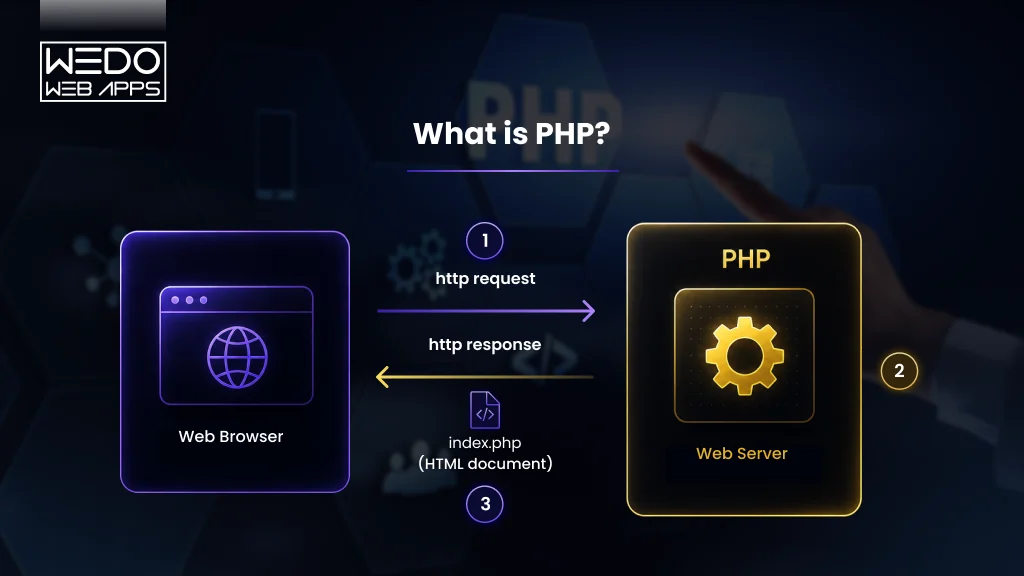
Alternatively, php files contain data without a corresponding HTML tag or script for Java. The flow chart below illustrates the basic version of PHP files, data, and website architecture in detail.

What Is Server-Side Scripting?

A script consists of a set of instructions to execute in another program or application. There is one type of scripting language a programming language that is written on most web servers or executed on the server backend and a script language which is written and executed on the server clients or frontend servers. PHP Scripts are a programming language that executes commands from a web server. The server then sends requests to the server channeling the requests to and organizing the data into databases to facilitate storage. A Web server that receives scripts, processes requests, and transmits the output to a web browser, using HTML formats. Web servers store the database so no one can access the source code.

Why Use PHP?

PHP is an excellent scripting language that is perfect for beginners or experts. PHP also keeps up with technological changes regularly. Among the popular programming languages, PHP is considered the 6th most popular language. PHP has many advantages over the others. PHP frameworks can be used by anyone wishing to learn to use PHP. Frameworks allow users to skip many of the foundation steps for creating their own web-based applications, websites, or products.

How PHP Works

When a user opens a webpage, the browser sends a request to the web server. If the page contains PHP, the server executes the PHP code first and then sends the final HTML to the browser.

So the visitor never sees the PHP code. They only see the result.

Step-by-Step Process

  1. User visits a webpage.
  2. Server detect PHP code.
  3. PHP processes logic and database data.
  4. Server sends generated HTML to the browser.
  5. Browser display the page.

Think of PHP like a chef in a restaurant kitchen.

The customer only sees the final dish, not the cooking process.

Basic PHP Syntax

PHP Code is written inside special tags:

<?php
// PHP code goes here
?>

The server reads everything inside these tags and executes it before sending the page to the browser.

Your First PHP Program

Here is a simple example:

<?php
echo “Hello World!”;
?>

When the page loads, the browser will display:

Hello World!

The PHP code runs on the server, converts into HTML output, and then appears in the browser.

Why Server-Side Processing Matters

Because PHP runs on the server, it can:

  • connect to databases
  • manage login sessions
  • process forms
  • handle payments
  • generate personalized pages

Example:

When you log into a website, PHP checks your credentials in the database and loads your account dashboard.

Why Use PHP?

PHP remains one of the most widely used languages for web development because it is practical, flexible, and easy to adopt for small or large projects.

  1. Easy to Learn

PHP syntax is simple and readable. Beginners can start building working pages quickly without a complex setup.

  1. Works With Databases

PHP connects smoothly with databases such as MySQL and PostgreSQL. This allow website to store user accounts, orders, and other data.

Example: An eCommerce site saves customer orders in a database and retrieves them when the user logs in.

  1. Runs on Almost Every Server

PHP works on Linux, Windows, and macOS servers and supports common web servers like Apache and Nginx. Hosting providers usually support PHP by default.

  1. Large Ecosystem

Many tools and platforms are built using PHP, including WordPress.

PHP Frameworks like Laravel and Symfony help developers build secure and structured applications faster.

  1. Open Source

PHP is free to use and backed by a large global community. Developers can access libraries, documentation, and ready-made solutions.

  1. Good Performance

Modern versions, such as PHP 8, execute faster and handle higher traffic efficiently compared to older versions.

How Is PHP Used in WordPress?

WordPress is built using PHP. Every page, theme, and plugin inside WordPress relies on PHP to generate content dynamically.

When a visitor opens a WordPress website, PHP performs several actions in the background.

  • Load posts from the database.
  • Applies the selected theme layouts.
  • Runs plugins and features.
  • Displays the final webpages.

The browser only receives the finished HTML page. The PHP code stays hidden on the server.

Example: When you publish a blog post in WordPress, the content is stored in a database. Each time someone visits that page, PHP fetches the post and displays it using the theme design.

Do You Need to Know PHP to Use WordPress?

No. A normal website owner can manage content without coding.

However, developers use PHP to:

  • Customize themes.
  • Create Plugins.
  • Modify website functionality.

Learning basic PHP helps when you want deeper control over a WordPress site.

What are PHP’s main uses and its market share?

There are over 200 million website applications that can be written using PHP code, script, and other languages. It could be due to a number of reasons. The graphs below show the common sites using PHP code and CSS.

Real World Uses of PHP

PHP is mainly used to build dynamic websites and web applications. It works behind the scenes to process data and generate content based on user actions.

  1. User Account Systems

PHP manages login and registration systems. It verifies credentials and loads personal data securely.

Example: A user logs into a dashboard and sees their saved profile and activity history.

  1. eCommerce Websites

Online stores use PHP to manage products, carts, and orders. It connects the website to the database and updates information instantly.

Example: When a customer places an order, PHP stores payment and shipping details in the database.

  1. Content Management System

A platform like WordPress runs entirely on PHP. They allow non-technical users to publish pages without coding.

  1. Social Platforms and Communities

Large platforms, including Facebook, started using PHP to handle a huge number of users and interactions.

  1. Data Processing and Forms

Whenever a website collects information through forms, PHP processes and stores that data.

Example: Contact forms, booking forms, and feedback forms all depend on server-side processing.

PHP Usage Share

According to industry surveys, PHP powers a large percentage of websites on the internet because it is stable, widely supported, and easy to deploy on hosting servers.

What Does PHP Mean?

PHP originally meant personal site. The acronym has evolved into the recursive term Hypertext Processing. (it is repetitive because the first words are actually abbreviations which makes the whole meaning not follow that abbreviation). PHP’s first release dates from 2004. Version 8 was released in November 2020, but version 7 is still widely used. PHP is run using the Zend engine. There are also several others that have been created on Facebook. PHP is often used to build websites.

Do you need to know PHP to use WordPress?

The user of WordPress has no knowledge of PHP. PHP is able to be easily integrated into WordPress because it is an open-source website management software. PHP offers free community documentation for all levels.

PHP vs Other Web Technologies

Different technologies in web development have different responsibilities. PHP mainly handles server logic, while others control the structure or interaction.

PHP vs HTML

HTML creates the structure of a webpage. PHP generates the content inside that structure.

Example: HTML shows a product page layout. PHP loads the product name, price, and stock from the database.

FeaturePHPHTML
TypeServer-side scriptingMarkup language
PurposeGenerates dynamic contentDefines page structure
Database accessYesNo
OutputChanges based on dataStatic

PHP vs JavaScript

PHP works on the server. JavaScript works inside the browser.

Example: PHP checks login credentials. JavaScript shows a popup if a field is empty.

FeaturePHPJavaScript
Runs onServerBrowser
Main jobData processingUser interaction
VisibilityHidden from userVisible in browser
Database accessDirectThrough API only

PHP vs Python

Both can build web applications, but they are commonly used differently.

FeaturePHPPython
Primary useWeb backend developmentGeneral-purpose programming
SetupSimple hosting supportRequires environment setup
Learning curveBeginner friendlySlightly steeper
Typical usageWebsites and CMSAI, automation, web apps

When Should You Use PHP?

Choose PHP when you need:

  • Database-driven websites
  • Content management systems
  • Fast hosting deployment
  • WordPress development

Is PHP a Coding Language?

Yeah, PHP is mainly used to create server-side web applications. Because of its open-source nature, PHP is incredibly flexible and useful for many applications. It can be used with many different UIs including the GUI and web applications.

Type changes and additions[]

PHP 8 introduced new types of unions and new dynamic types. The two new features are mix Type. [74] The attribute, also commonly known by other language terms in other languages as annotations, has been implemented in PHP 8, allowing storing information for a class in a database. [72] Throwing has been changed from mere statements into expressions.[73], So exceptions can happen at places previously unattainable. [75]

Syntax changes and additions[]

PHP 8 provides new syntaxes for alternative and simpler syntax in several situations. The operator of nilsafe may be the same as the operator of the coalesce operator. The code can also be called by a method. [85] Upon return of getBirthday(), the following code snippet is ignored; it contains the following: The constructor property is now being referred to as syntactically sugar, enabling the property to set automatically when a property is passed. It reduces the boilerplate code to write.

How to Write Your First Hello World Program in PHP

It’s time for you to create a Hello World web program! Then you must install PHP on the computer. This is easily accomplished by installing XAMP or WAMP. XAMP is compatible with any major operating systems and system, while WAMP only runs in Windows. We’re going to use WAMP. Open the WAMP or XAMP server and check that everything works correctly. In a WAMP environment, the WAMP logo should be visible in the toolbar in green. Start the CD drive. For me, it’s the WAMP 64.

Is PHP a programming language?

The PHP programming language provides a host-side programming language for creating websites, desktop applications, customer and software environments, relationship management systems, and many other software environments.

Is PHP Still Relevant Today?

Many developers wonder whether PHP is outdated. The short answer is no. PHP continues to run a large portion of active websites and remains widely supported by hosting providers and framework developers.

Its long presence in web development means businesses still maintain and expand PHP based platform, especially content-driven and database-heavy applications.

Modern Improvement in PHP 8

The recent version brought major performance and code quality improvements. PHP 8 executes requests faster and reduces server load compared to older versions.

Key updated includes:

  • Unique Types: Developers can define multiple data types in functions, reducing errors.
  • Attributes: Structured metadata can be added directly inside the code to improve the organization.
  • Constructor Property Promotions: Less repetitive code when creating classes, making development cleaner.

These changes make modern PHP closer to strongly structured languages while keeping its simplicity.

Is PHP a Dying Language?

No. The technology continues to be maintained and updated regularly. Many businesses prefer stability over constant rewrites, and PHP provides long-term reliability.

Instead of disappearing, PHP evolved from simple scripting into a mature backend language used in production systems.

Should You Learn PHP?

PHP is a good choice if you want to:

  • Build websites and dashboards.
  • Work with CMS platforms.
  • Create APIs and backend systems.
  • Enter web development quickly.

It may not be the primary choice for machine learning or scientific computing, but it remains practical for web application development.


programming language php

Read also: The Power of Web Development with PHP: Everything You Need to Know

What is PHP in computer programming?

PHP is a broad-purpose scripting language that can be used by developers to write websites. Mostly used to run scripts server-side it can be used in command-line scripting or for desktop programs in limited amounts.

What is PHP with example?

PHP can be used for any server-side script or a popular backend for websites. Examples of such functionality include PHP receiving forms generated by web browsers, dynamic page content working with web browsers, database sessions sending/receiving cookies or emailing, etc.

Is PHP considered coding?

Does everyone use PHP and have the ability to code? Yes PHP is the language that scripts web development mostly on servers and on mobile devices. PHP is largely open-source and is commonly used for various projects and graphic applications.

Is PHP similar to Java?

The backend language version of PHP and Java is extremely popular for the creation of dynamic websites together. Java is useful in making websites interactive. PHP is a web application that enables web developers to communicate with databases. The language has been taught quickly and is highly regarded.

What language is PHP?

PHP is a widely used open-source scripting language specifically suited for web developers may be embedded in HTML and is available.

Is PHP an HTML language?

HTML code is used for development on the front end of websites and web applications. the PHP code is a server-side script language used when creating the dynamic application. the HTML code’s results are static and are constant whereas the PHP code’s results are dynamic.


programming language php

What is PHP language used for?

PHP is a free software development language that provides server-side development capabilities for web browsers. Its general-purpose language is code easily embedded code in HTML.

Why PHP is a programming language?

Is PHP really necessary for a website that uses PHP? php application development services is a programming language that does everything from a server-side scripting language to client-side server-side scripting language to languages to language through to the back end of a webpage. PHP also supports storing data sources from forms and will also be able to create sessions.

What is the PHP programming language used for?

PHP is a free server language that allows you to use PHP to hire top PHP programmer to build websites, applications, customer relationship management systems, and many other types of web applications. This is because PHP supports a widely-used general-purpose language allowing embeds in HTML files.

Is PHP a programming language easy?

PHP has been described as a simple programming language for beginners. PHP is like most programming languages with coding rules acronyms and algorithmic structures. Learning to code PHP may prove challenging depending upon how much you learn.

Is PHP still a good language to learn?

PHP, Hyper Text Processing, is an open-source programming language that is primarily useful for web development and other software environments. PHP development services are becoming a popular choice for new operators and those who want to get into a new language in 2023.

Is PHP coding easy or hard?

PHP was initially deemed to be a simple programming language for beginners. Like all other languages though, PHP uses rules on coding, acronyms, and algorithms.

What programming language is PHP written in?

PHP uses C language. Originally PHP was PHP FI developed in 1994 by Rasmus Lerdorf. The article was written to help track his clients on his resume. What made it easy to create the first web page using a PHP file is the capability to embed it in HTML markup.

How can a CakePHP Development Company enhance the security of my web application?

CakePHP has built-in security features, and a professional CakePHP Development Company can further enhance security through best practices, regular updates, and audits to protect your web application from vulnerabilities.

What are custom CMS development services?

Custom CMS development services refer to the creation of a CMS that is tailored to meet the specific needs and requirements of a business or organization. It involves designing and building a CMS from scratch or modifying an existing one to suit unique content management needs.

PHP vs Python: Which Language Should You Choose for Web Development in 2026?

Introduction

Choosing between PHP vs Python is one of the biggest decisions in modern web development. The programming language you select can affect your application’s performance, scalability, development cost, and long-term maintenance.

That is why the PHP vs Python debate continues to grow in 2026.

Some businesses choose PHP because it is widely used for dynamic websites, eCommerce platforms, and CMS development. Others prefer Python because of its clean syntax, automation capabilities, AI integration, and flexibility for modern applications.

When comparing PHP vs Python for web development, there is no single winner for every project. Both languages offer strong frameworks, active communities, and reliable performance. The right choice depends on your project requirements, budget, scalability goals, and development timeline.

If you are trying to understand the difference between PHP and Python, this guide will help you compare both technologies from a business and development perspective.

In this detailed PHP and Python comparison guide, you will learn:

  • PHP vs Python performance comparison.
  • Which language is easier to learn and maintain?
  • Best PHP vs Python use cases.
  • Framework and scalability differences.
  • Security and development cost comparison.
  • Python vs PHP which is better for your business goals?

By the end of this guide, you will have a clear understanding of whether PHP or Python is the better fit for your next web development project.

PHP vs Python: Quick Comparison Table

FeaturePHPPython
Primary PurposeServer-side web developmentGeneral-purpose programming
Best Known forWebsites, CMS platforms, and eCommerce developmentAI, automation, data science, backend systems
Syntax StyleSimple and web-focusedClean and highly readable
Learning CurveBeginner-friendly for web projectsBeginner-friendly across multiple domains
PerformanceFaster for many web-based tasksStrong performance with modern frameworks
Web DevelopmentBuilt specifically for web developmentWidely used for backend web applications
Popular FrameworksLaravel, Symfony, CodeIgniterDjango, Flask, FastAPI
Database SupportMySQL, PostgreSQL, MariaDBMySQL, PostgreSQL, SQLite, MongoDB
AI and Machine Learning SupportLimitedExcellent
Hosting AvailabilityEasily available and affordableSupported on most cloud platforms
ScalabilitySuitable for small to enterprise applicationsHighly scalable for modern applications
Security FeaturesStrong with modern frameworksStrong with secure coding practices
Community SupportLarge and mature communityMassive and rapidly growing community
Development SpeedFaster for traditional web projectsFaster for automation and complex systems
Best Use CasesCMS, eCommerce, portals, business websitesAI apps, SaaS platforms, automation, analytics
Popular Companies Using ItFacebook, WordPress, WikipediaInstagram, Netflix, Spotify
Development CostUsually lower for web projectsMay increase for advanced applications
Job Market DemandStrong in web developmentHigh across multiple industries

After understanding the quick overview of PHP vs Python, let’s first understand what PHP is, its core features, strengths, and where it is commonly used.

Book a Free Consultation

What is PHP?

What is PHP Explain

Before understanding the complete difference between PHP and Python, it is important to first understand what PHP actually is and why it is still widely used in modern web development.

PHP is an open-source server-side scripting language mainly used for building dynamic websites and web applications. It is one of the oldest and most trusted technologies for backend development and continues to power millions of websites worldwide.

When discussing PHP vs Python for web development, PHP often stands out because it was originally created specifically for the web. This makes it highly efficient for developing CMS platforms, eCommerce websites, customer portals, and database-driven applications.

Its flexibility, lower hosting cost, and large ecosystem make PHP a practical choice for businesses of all sizes.

Key Features of PHP

PHP offers several features that keep it relevant in the ongoing PHP and Python comparison debate.

Some of the most important features include:

  • Open-source and free to use.
  • Easy integration with HTML and databases.
  • Cross-platform compatibility.
  • Fast execution for web applications.
  • Large ecosystem of frameworks and libraries.
  • Strong hosting support across servers.
  • Smooth database connectivity with MySQL and PostgreSQL.
  • Built-in session and form handling capabilities.

Popular frameworks like Laravel and Symfony also improve security, scalability, and development speed.

Advantages of PHP

One major reason PHP continues to perform strongly in the PHP vs Python use cases discussion is its simplicity and web-focused architecture.

Advantages of PHP include:

  • Faster development for website-based projects.
  • Lower hosting and maintenance costs.
  • Large global developer community.
  • Strong support for a CMS platform like WordPress.
  • Easier deployment process.
  • Suitable for startups and small businesses.
  • Reliable performance for web applications.

For companies focused mainly on web platforms, PHP often provides a faster route to launch projects without increasing infrastructure expenses.

Limitations of PHP

Although PHP remains highly effective for web development, it also has some limitations when compared in the PHP vs Python debate.

Some common limitations include:

  • Less suitable for AI and machine learning applications.
  • Limited use in data science projects.
  • Older codebases may become difficult to maintain.
  • Inconsistent coding practices in legacy applications.
  • Fewer built-in tools for advanced automation tasks.

Still, modern PHP frameworks and updated versions have solved many of the older performance and security concerns.

Popular Websites and Applications Built With PHP

Many globally recognized platforms still rely on PHP, proving its strength in real-world web development.

Popular examples include:

  • Facebook
  • WordPress
  • Wikipedia
  • Tumblr
  • Mailchimp

These examples clearly show that PHP can handle high-traffic applications, enterprise platforms, and scalable backend systems efficiently.

What is Python?

What is Python Explain

Python is a high-level, general-purpose programming language known for its clean syntax, readability, and flexibility. It is widely used for web development, automation, artificial intelligence, machine learning, data science, and backend application development.

In the ongoing PHP vs Python discussion, Python has gained massive popularity because it allows Python developers to build applications faster with less code. Its simple structure makes development easier, especially for complex projects that require scalability and advanced functionality.

When businesses compare Python vs PHP, which is better, Python often becomes a preferred choice for AI-driven platforms, automation tools, SaaS products, and data-focused applications.

Its ability to support multiple technologies with a single programming language makes it highly valuable for modern businesses.

Key Features of Python

Python includes several powerful features that make it a strong competitor in the PHP and Python comparison debate.

Some major features include:

  • Clean and readable syntax
  • Open-source and free to use
  • Cross-platform compatibility
  • Large collection of libraries and frameworks
  • Strong support for AI and machine learning
  • Easy integration with modern technologies
  • Faster development for complex applications
  • Excellent community support

Popular Python frameworks include Django, Flask, and FastAPI, which are widely used for backend and API development.

Advantages of Python

Python continues to grow rapidly in the PHP vs Python use cases comparison because of its versatility and developer-friendly structure.

Advantages of Python include:

  • Easy to learn and maintain
  • Suitable for AI, automation, and data science
  • Faster development process with less code
  • Large ecosystem of libraries and tools
  • Strong scalability for modern applications
  • Excellent for API and backend development
  • High demand in the developer job market

For businesses planning long-term scalability or AI integration, Python often provides more flexibility.

Limitations of Python

Although Python is highly versatile, it also has a few limitations in the difference between PHP and Python comparison.

Some common limitations include:

  • Slower execution speed compared to some compiled languages.
  • Higher memory consumption.
  • Less optimized for mobile app development.
  • Can become resource-intensive for large-scale applications.
  • Hosting costs may sometimes be higher than for PHP-based projects.

However, modern frameworks and cloud infrastructure have improved Python’s performance significantly.

Popular Websites and Applications Built With Python

Python is trusted by many large-scale companies and modern-tech platforms.

Popular examples include:

  • Instagram
  • Netflix
  • Spotify
  • Dropbox
  • Reddit

These companies use Python for backend systems, automation, recommendation engines, and scalable web applications, showing its strong capability in enterprise development.

Difference Between PHP and Python

Understanding the difference between PHP and Python is important before choosing a programming language for your next project. While both technologies are widely used for backend development, they are built for different purposes and development approaches.

In the ongoing PHP vs Python debate, PHP is mainly preferred for traditional web development and CMS-based platforms, while Python is known for AI, automation, machine learning, and scalable backend systems.

This detailed PHP and Python comparison will help you understand which language fits better for your business goals, scalability plans, and development requirements.

Syntax and Code Readability

One major difference between PHP and Python is their syntax style.

Python is famous for its clean and readable syntax. Developers can write shorter and more organized code, which improves long-term maintenance.

PHP syntax is designed mainly for web development and integrates directly with HTML, making it easier for building server-side web applications.

PHP

  • Easier HTML integrations.
  • Good for quick website development.
  • Familiar with web developers.

Python

  • Cleaner syntax structure.
  • Good for quick website development.
  • Familiar with web developers.

For beginners, comparing Python vs PHP which is better, Python is often considered easier to learn.

Performance and Execution Speed

The topic of PHP vs Python performance is one of the most discussed areas in backend development.

PHP generally performs faster for traditional websites because it was built specifically for server-side scripting. Python may consume more resources, but it performs strongly in automation and data processing environments.

PHP Performs Better For

  • CMS platforms
  • eCommerce websites
  • Dynamic web pages

Python Performs Better For

  • AI systems
  • Automation tools
  • Data-heavy applications

The actual performance also depends on frameworks, hosting, caching, and application architecture.

PHP vs Python for Web Development

When discussing PHP vs Python for web development, both languages offer strong frameworks and backend support, but their strengths differ.

PHP is highly optimized for website development and powers platforms like WordPress. Python is preferred for scalable web applications and advanced backend systems.

Choose PHP For

Choose Python For

  • SaaS applications
  • Enterprise platforms
  • AI-integrated web apps
  • API driven applications

If your focus is mainly on website development, PHP can be a cost-effective option. For scalable and future-ready applications, Python often provides greater flexibility.

Database Integration and Backend Handling

Both PHP and Python support major databases efficiently.

PHP works naturally with MySQL for website-based applications, while Python supports broad database integration for analytics and modern applications.

Supported Databases

  • MySQL
  • PostgreSQL
  • MongoDB
  • SQLite
  • MariaDB

This flexibility makes Python highly useful in modern PHP vs Python use cases involving large data handling.

Framework Ecosystem Comparison

Frameworks improve security, scalability, and development speed in both languages.

Laravel vs Django

Laravel

Laravel is one of the most popular PHP frameworks for modern web development. It offers elegant syntax, strong security, and faster development for CMS and eCommerce projects.

Django

Django is a powerful Python framework known for scalability, security, and rapid application development. It is widely used for enterprise applications and SaaS platforms.

Symfony vs Flask

Symfony

Symfony is a structured PHP framework suitable for large enterprise projects and long-term maintenance.

Flask

In the PHP and Python comparison, Laravel is often preferred for website development, while Django and Flask are popular for scalable backend systems.

Learning Curve for Beginners

Another important difference between PHP and Python is the learning experience.

Python is generally easier for beginners because of its simple and readable syntax.

PHP is also beginner-friendly, especially for developers entering web development directly.

Python is Better For

  • General programming learning
  • Automation
  • AI and data science

PHP is Better For

  • Website development
  • CMS customization
  • Backend scripting

Security Features and Risk Management

Security is a major factor in the PHP vs Python comparison.

Both languages offer strong security features through modern frameworks.

Common Security Features

  • Authentication systems
  • SQL injection prevention
  • CSRF protection
  • Session handling
  • Data validation

Django is known for strong built-in security, while Laravel also provides advanced security support for PHP applications.

Scalability and Enterprise Readiness

Both PHP and Python can support large-scale enterprise applications.

PHP Powers

  • Facebook
  • WordPress
  • Wikipedia

Python Powers

  • Instagram
  • Netflix
  • Spotify

In modern PHP vs Python use cases, Python is often selected for AI-driven scalability, while PHP remains highly reliable for high-traffic websites.

Hosting and Deployment Flexibility

Hosting is another major factor in the PHP vs Python performance discussion.

PHP hosting is widely available and affordable because most web hosting providers support PHP by default.

Python applications are commonly deployed on cloud platforms and container-based infrastructure.

PHP Hosting Advantages

  • Lower hosting costs
  • Easier shared hosting
  • Faster setup for websites

Python Hosting Advantages

  • Better cloud compatibility
  • Flexible deployment environments
  • Strong DevOps integration

Community Support and Documentation

Both PHP and Python have large global development communities.

Developers can easily access:

  • Tutorials
  • Plugins
  • Documentation
  • Open-sources libraries
  • Community forums

PHP has decades of web development resources, while Python continues to grow rapidly in AI and automation industries.

Testing and Debugging Capabilities

Testing tools improve application quality and stability.

PHP tools

  • PHPUnit
  • Xdebug

Python Tools

  • PyTest
  • PDB

Python often offers easier debugging for complex applications, especially in enterprise development.

API Development and Microservices Support

Modern applications require strong API and microservices support.

Both PHP and Python support API development, but Python frameworks are often preferred for scalable microservices.

PHP API Frameworks

  • Laravel
  • Symfony

Python API Frameworks

  • FastAPI
  • Flask
  • Django REST Framework

This makes Python highly valuable in advanced PHP vs Python for web development scenarios.

AI, Automation, and Data Science Capabilities

This is one of the biggest strengths of Python in the PHP and Python comparison.

Python dominates technologies like:

  • Artificial intelligence
  • Machine learning
  • Automation
  • Data analytics
  • Scientific computing

Popular Python libraries include:

  • TensorFlow
  • NumPy
  • Pandas
  • Scikit-learn

PHP has very limited adoption in these areas.

Job Market and Developer Availability

Both languages have strong market demand, but the industries differ.

PHP Developer Demand

  • Web development companies
  • CMS agencies
  • eCommerce businesses

Python Developer Demand

  • AI startups
  • SaaS companies
  • FinTech businesses
  • Automation platforms

Python currently shows faster growth across multiple industries.

Development Cost Comparison

Development cost is another important factor in the Python vs PHP which is better debate.

PHP projects are usually more affordable because hosting and development costs are lower.

Python development costs more for advanced applications but offers better scalability and flexibility.

PHP is Cost-Effective For:

  • Business websites
  • eCommerce stores
  • CMS platforms

Python is Valuable For

  • AI applications
  • SaaS products
  • Automation systems

Long-Term Maintenance and Project Stability

Long-term maintenance depends heavily on the code quality framework structure.

Python’s readable syntax helps simplify updates and maintenance for large applications.

Modern PHP frameworks also support structured development and long-term project stability.

Python Advantages

  • Easier code readability
  • Better maintainability
  • Faster debugging

PHP Advantages

  • Stable web ecosystem
  • Strong CMS support
  • Reliable hosting compatibility

Both technologies continue to receive regular updates, security improvements, and strong community support.

Not Sure Which Technology Fits Your Business

PHP vs Python Performance Comparison

Performance is one of the biggest deciding factors when comparing PHP vs Python. Businesses want applications that load faster, handle high traffic smoothly, and provide a better user experience.

However, the actual performance difference between PHP and Python depends on several factors, such as framework selection, database optimization, server configuration, and application architecture.

Let’s break down the PHP vs Python performance comparison in detail.

Which Language Offers Faster Execution?

PHP is generally faster for traditional web applications because it is optimized for server-side scripting and web page rendering.

Python may execute more slowly in some web environments because it is a general-purpose programming language designed for multiple use cases beyond web development.

PHP Advantages

  • Faster page loading for websites.
  • Optimized for server-side execution.
  • Lower response time for CMS platforms.

Python Advantages

  • Better handling of complex logic.
  • Strong support for automation processes.
  • Efficient for AI and data processing tasks.

For standard website development, PHP often delivers slightly faster execution speed.

Memory Usage and Resource Consumption

Python applications usually consume more memory because of their flexible and dynamic nature.

PHP applications are generally lighter for traditional web operations, which can reduce server resource usage.

PHP

  • Lower memory consumption for websites.
  • Cost-effective hosting environments.
  • Suitable for shared hosting.

Python

  • Higher resource usage for advanced applications.
  • Better for large-scale processing.
  • Suitable for cloud-based infrastructure.

The difference becomes more noticeable in large traffic environments.

Real-World Performance Factors Beyond Language Speed

The programming language alone does not decide application performance.

In real-world PHP and Python comparison scenarios, factors like coding quality, caching, hosting infrastructure, APIs, and database queries often impact performance more than the language itself.

Important Performance Factors

  • Server optimization
  • Database efficiency
  • Caching mechanisms
  • Framework selection
  • CDN integration
  • Application architecture

A well-optimized Python application can outperform a poorly structured PHP application and vice versa.

How Framework Choice Affects Performance

Frameworks play a major role in the PHP vs Python performance comparison.

PHP Framework Performance

  • Laravel offers strong scalability and security.
  • Symfony works well for enterprise applications.

Python Framework Performance

  • Django handles strong scalability and security.
  • FastAPI is suitable for high-performance APIs.

Lightweight frameworks usually provide faster response times than feature-heavy frameworks.

Best Language for High-Traffic Applications

Both PHP and Python can support high-traffic applications when properly optimized.

PHP is Commonly Used For

  • High-traffic websites
  • eCommerce platforms
  • CMS-based systems

Python is Commonly Used For

  • AI-powered platforms
  • SaaS products
  • Data-intensive applications

If your primary goals are fast and cost-effective web development, PHP can be a practical option. If your application requires AI integration, automation, and advanced scalability, Python may provide more long-term advantages.

Optimize Your Application

PHP vs Python Use Cases

The best way to understand PHP vs Python is by looking at where each language performs best in real-world projects. Both technologies are powerful, but they are used differently depending on business requirements, scalability goals, and application complexity.

Understanding these PHP vs Python use cases can help businesses choose the right technology stack for long-term success.

Best Use Cases for PHP

PHP is mainly used for web-focused applications and server-side development. It is highly suitable for projects that require fast development, lower hosting costs, and strong CMS support.

Common Use Cases

  • WordPress websites
  • eCommerce stores
  • CMS platforms
  • Business portals
  • Customer portals
  • Blogging platforms
  • Web-based dashboards

PHP is often preferred for businesses that want reliable website development without increasing infrastructure costs.

Best Use Cases for Python

Python is widely used in industries that require automation, AI integration, large-scale processing, and scalable backend systems.

Common Python Use Cases

  • Artificial intelligence applications
  • Machine learning platforms
  • Automation tools
  • SaaS products
  • Data analytics platforms
  • FinTech applications
  • API development
  • Cloud-based systems

In modern PHP and Python comparison discussions, Python is usually selected for projects that require future scalability and advanced technology integration.

When PHP is the Better Choice

PHP becomes a better option when your project is strongly focused on website development and quick deployment.

Choose PHP When You Need

  • Faster website development
  • Lower development costs
  • CMS based platforms
  • Shared hosting compatibility
  • Ecommerce website development
  • Simple backend systems

For startups and small businesses, PHP often provides a practical and budget-friendly solution.

When Python is the Better Choice

Python is a stronger option when the application requires advanced functionality, automation, or high scalability.

Choose Python When You Need

  • AI or machine learning integration
  • Complex backend systems
  • Automation workflows
  • Real-time data processing
  • Scalable SaaS applications
  • Cloud native applications

For businesses comparing Python vs PHP, which is better, Python usually stands out for innovation-focused and data-driven applications.

Start Your Project Today

Python vs PHP: Which is Better for Your Business?

The answer to Python vs PHP which is better, depends entirely on your business goals, application requirements, budget, and future scalability plans.

Both technologies are reliable and widely used across industries. However, choosing the wrong programming language can increase development costs, slow down scalability, and create long-term maintenance challenges.

Instead of choosing based on popularity, businesses should focus on selecting the technology that aligns with their project needs.

Choose PHP If You Need

PHP is a practical choice for businesses focused mainly on web development and cost-efficiency.

PHP is Better For

  • Business websites
  • CMS platforms
  • eCommerce stores
  • Fast project delivery
  • Lower hosting costs
  • Budget-friendly development

PHP is especially suitable for startups, small businesses, and companies building content-driven platforms.

Choose Python If You Need

Python is ideal for businesses planning advanced digital products and scalable backend systems.

Python is Better For

  • AI-powered applications
  • Automation platforms
  • SaaS platforms
  • Data-driven systems
  • Cloud-based applications
  • Machine learning integration

For companies planning future expansion and advanced functionality, Python often offers greater flexibility.

Best Language for Startups

For startups, both PHP and Python can work effectively depending on the business model.

PHP is Better for Startups That Need

  • Quick website launches
  • Lower development budgets
  • eCommerce platforms
  • CMS-based applications

Python is Better for Startups That Need

  • Scalable SaaS products
  • AI integration
  • Automation systems
  • Data-focused applications

The decision should depend on product vision and long-term scalability goals.

Best Language for Enterprise Applications

Enterprise applications require scalability, security, maintainability, and strong backend architecture.

PHP Enterprise Strengths

  • Stable web infrastructure
  • Strong CMS ecosystem
  • Mature frameworks like Laravel and Symfony

Python Enterprise Strengths

  • AI and automation support
  • Scalable backend architecture
  • Strong cloud integration

In many enterprise-level PHP vs Python use cases, Python is often selected for innovation-driven systems, while PHP remains highly effective for large-scale web platforms.

Best Option for Future Scalability

Scalability depends on both application architecture and technology selection.

PHP can efficiently scale high-traffic websites and eCommerce platforms. Python is often used for large-scale data processing.

PHP Scalability Benefits

  • Efficient web server performance
  • Lower infrastructure costs
  • Reliable website scalability

Python Scalability Benefits

  • Better support for advanced technologies
  • Easier integration with AI tools
  • Strong cloud scalability support

If your business roadmap includes automation, machine learning, or complex backend systems, Python may provide stronger long-term advantages.

PHP vs Python: Trends and Market Demand in 2026

The demand for both PHP vs Python continues to remain strong in 2026, but their adoption patterns are changing based on business requirements and technology trends.

PHP continues to dominate traditional web development, while Python is rapidly expanding across AI, automation, cloud computing, and data-driven applications.

Developer Popularity and Adoption Trends

FactorPHPPython
Primary DemandWeb developmentAI, automation, backend systems
Popular IndustriesEcommerce, CMS, mediaSaaS, FinTech, AI, analytics
Learning PopularityWebsite beginnersGeneral programming learners
Startup AdoptionStrong for websitesStrong for scalable products
Enterprise AdoptionMature web platformsInnovation-focused systems

Python is growing faster across emerging technologies, while PHP continues to maintain strong demand in website and CMS development.

Open Source Ecosystem Growth

Ecosystem AreaPHPPython
Popular FrameworksLaravel, SymfonyDjango, Flask, FastAPI
CMS SupportExcellentLimited
AI LibrariesMinimalExtensive
Plugin EcosystemVery largeRapidly growing
Community ContributionsMature ecosystemHighly active ecosystem

In the overall PHP and Python comparison, Python leads in AI and automation innovation, while PHP remains highly powerful for web-based ecosystems.

Business Demand Across Industries

IndustryPHP UsagePython Usage
EcommerceHighModerate
CMS PlatformsVery HighLow
SaaS ProductsModerateHigh
Artificial IntelligenceLimitedVery High
FinTechModerateHigh
Data AnalyticsLowVery High

Modern PHP vs Python use cases show PHP development dominating website development, while Python leads in data-focused and AI-driven industries.

Future Scope of PHP and Python

Future TrendPHPPython
Web DevelopmentStrong future demandStrong backend demand
AI and Machine LearningLimited growthMassive growth
Cloud ApplicationsModerate adoptionHigh adoption
Automation SystemsLimitedVery Strong
Enterprise ScalabilityStableRapidly expanding

For businesses evaluating Python vs PHP which is better, PHP remains a reliable long-term solution for web development, while Python offers stronger opportunities in future-focused technologies like AI, automation, and cloud platforms.

Common Myths About PHP and Python

The debate around PHP vs Python has created many misconceptions over the years. Some people believe PHP is outdated, while others assume Python is the perfect solution for every project.

In reality, both technologies have their own strengths, limitations, and ideal use cases. Understanding these myths helps businesses make more practical technology decisions.

Is PHP Outdated?

One of the biggest myths in the PHP and Python comparison is that PHP is no longer relevant.

The reality is completely different.

PHP still powers a large percentage of websites globally, including WordPress, ecommerce stores, and enterprise platforms. Modern frameworks like Laravel have also improved PHP’s security, scalability, and PHP developer experience significantly.

Reality Check

  • WordPress still dominates CMS development
  • Laravel remains highly popular
  • PHP continues to receive regular updates
  • Many large businesses still use PHP

PHP is evolving continuously rather than disappearing.

Will Python Replace PHP?

Another common misconception is that Python will completely replace PHP in web development.

While Python is growing rapidly, PHP still remains one of the strongest technologies for website development and CMS platforms.

Where Python Leads

  • AI and machine learning
  • Automation
  • Data science
  • Scalable backend systems

Where PHP Still Dominates

  • WordPress development
  • Ecommerce websites
  • CMS platforms
  • Budget-friendly web development

Instead of replacing PHP, Python is expanding into different technology areas.

Is Python Always Slower Than PHP?

The topic of PHP vs Python performance often creates confusion.

PHP is generally faster for traditional websites because it is optimized for server-side scripting. However, that does not mean Python applications are slow.

Performance depends on:

  • Framework optimization
  • Server configuration
  • Caching systems
  • Database queries
  • Application architecture

A properly optimized Python application can easily handle enterprise-scale traffic.

Can PHP Handle Large-Scale Applications?

Some developers assume PHP is suitable only for small websites.

In reality, PHP powers several high-traffic platforms and enterprise-level systems.

Large Platforms Using PHP

  • Facebook
  • WordPress
  • Wikipedia

Modern PHP frameworks support:

  • Scalable architectures
  • API development
  • Cloud deployment
  • Enterprise-level security

This proves that PHP can efficiently support large-scale applications when built correctly.

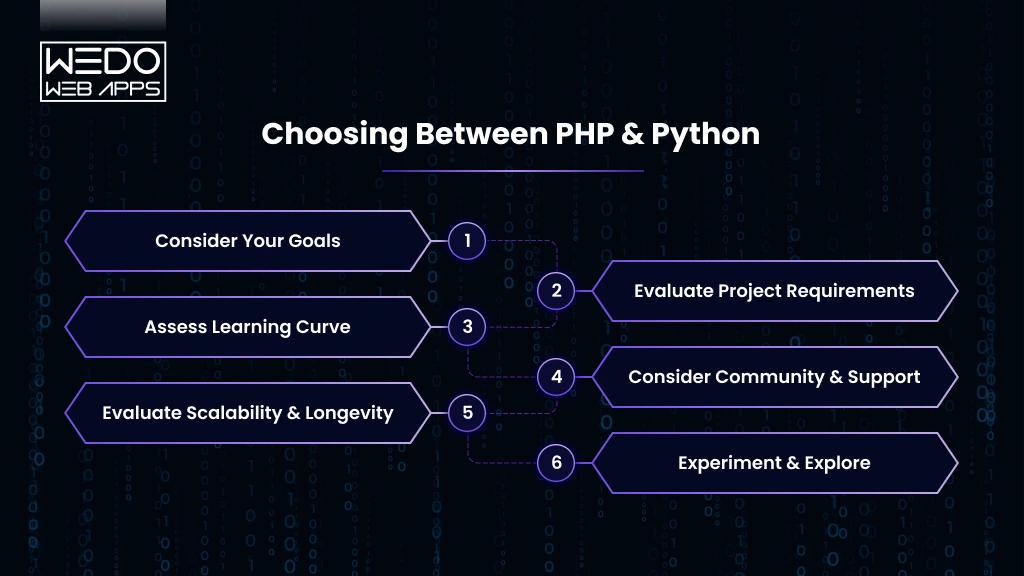
How to Choose Between PHP and Python

How to Choose Between PHP and Python

Choosing between PHP vs Python should not depend only on popularity trends. The right decision depends on your project goals, budget, scalability plans, and the type of application you want to build.

Both languages are powerful, but they solve different business problems more effectively.

Before selecting a technology stack, businesses should evaluate technical requirements as well as long-term growth plans.

Questions to Ask Before Selecting a Programming Language

Before making a final decision, ask these important questions:

  • Are you building a website or a complex software platform?
  • Do you need AI or automation features?
  • What is your development budget?
  • How quickly do you want to launch the project?
  • Will the application need large-scale scalability later?
  • What kind of developers are easier to hire for your project?

These questions help simplify the difference between PHP and Python based on practical business needs instead of trends.

Factors That Affect Technology Selection

FactorPHPPython
Website DevelopmentExcellentStrong
AI and AutomationLimitedExcellent
Development CostLowerModerate to High
Learning CurveEasyVery Easy
ScalabilityStrongVery Strong
Hosting CostAffordableHigher in some cases
CMS DevelopmentExcellentLimited
Data Science SupportMinimalExcellent

If your project is heavily focused on websites and CMS platforms, PHP can be a cost-effective choice. If you need automation, AI, or scalable backend systems, Python usually offers greater flexibility.

Decision Matrix for Businesses and Developers

Project RequirementBetter Choice
eCommerce websitePHP
WordPress developmentPHP
SaaS productPython
AI-powered applicationPython
Budget-friendly websitePHP
Data analytics platformPython
Fast website deploymentPHP
Automation systemPython

In the Python vs PHP which is better discussion, there is no universal winner. The best programming language is the one that aligns with your business goals, technical requirements, and future scalability plans.

Conclusion

The comparison between PHP vs Python is not about choosing a good or bad programming language. Both technologies are powerful, reliable, and widely used across modern application development.

PHP continues to remain a strong choice for website development, CMS platforms, ecommerce stores, and budget-friendly backend systems. Its lower hosting costs, faster web development process, and massive ecosystem make it highly practical for businesses focused on web-based platforms.

Python, on the other hand, stands out for scalability, automation, artificial intelligence, machine learning, and data-driven applications. Its flexibility and growing ecosystem make it a future-focused technology for businesses planning advanced digital products.

If your goal is fast and cost-effective web development, PHP can be the right option. If you need automation, AI integration, or scalable enterprise systems, Python may offer more long-term advantages.

Ultimately, the right decision in the PHP and Python comparison depends on:

  • Your project requirements
  • Business goals
  • Development budget
  • Scalability expectations
  • Future technology plans

Before selecting between PHP vs Python for web development, it is always better to evaluate your application architecture, growth strategy, and technical requirements carefully.

A well-planned technology decision today can reduce development challenges and improve long-term business scalability tomorrow.

Get Free Project Estimation