skip to content

30+ Best Alternative App Stores For Your Applications

Best Alternative App Stores Beyond Google Play and the Apple App Store

Looking for the best alternative app stores? While Google Play and the Apple App Store dominate the mobile app ecosystem, they’re not the only places to discover, distribute, or download applications. Alternative app stores offer access to region-specific apps, open-source software, enterprise applications, exclusive deals, and developer-friendly publishing options that aren’t always available through mainstream platforms.

Whether you’re an Android user searching for safe APK marketplaces, an iPhone user exploring new app distribution options, or a business looking to expand your app’s reach, choosing the right app store depends on your goals. In this guide, we’ll explore the best alternative app stores for Android, iOS, cross-platform devices, and manufacturer ecosystems, compare their features, discuss their advantages and limitations, and help you determine which platform best fits your needs.

Do you want to launch your own app

Why You Should Consider Using An Alternative App Store?

A lot of Google and Apple competitors are not exactly looking to compete with Google Play and the App Store head-on; instead, they are looking for different niches and strategies.

Besides, a fact that cannot be denied is that third-party app stores are often willing to offer download incentives and more attractive app deals than Google Play and the Apple App Store.

However, the question is, can a third-party app store make users experience a profitable journey? The answer is complicated.

Our evaluation should not be limited to the pros and cons of alternative app stores. So, what benefits come with downloading apps from the alternative app store? Let’s dive into it.

Multiple alternative stores give premium app versions at a discounted price or offer frequent other money-saving promotions.

They usually don’t charge for uploading and may promote the app further by featuring it as an “app of the day” or offering advertising discounts for developers who cooperate with them.

Besides, developers stand a better chance of getting better rankings on alternative platforms as they need more space in Google Play and the App Store, which are almost full.

To developers, testing MVP apps in the app stores with free apps seems a brilliant idea, as opposed to Google Play, which charges a $25 registration fee, and the App Store, which requires a $99 annual developer fee.

A third-party store might set itself apart by presenting a smaller and curated list of apps that have already been reviewed for quality, target age group, or unique goals.

Many companies hire mobile app developers to create apps that will be available in such stores because people seek them out for their high quality and specificity.

At the end of the day, remember the huge pool of apps and games that will never be available on Google Play or the Apple App Store. So, third-party app stores give you a much larger variety in apps.

Are you looking to create an app

How to Choose the Right Alternative App Store

Not every alternative app store serves the same purpose. Some focus on privacy and open-source software, while others specialize in gaming, enterprise app distribution, or manufacturer-exclusive applications. Choosing the right platform depends on your device, security expectations, and the type of apps you want to access.

Here are a few factors to consider before selecting an alternative app store:

  • Security and app verification Choose stores that scan apps for malware and verify developers.
  • Device compatibility Ensure the app store supports your Android, iOS, or manufacturer-specific device.
  • App availability Check whether the platform offers the apps or categories you need.
  • Developer support Businesses and developers should look for stores with straightforward publishing guidelines and analytics.
  • Regional availability – Some app stores offer exclusive apps and services for specific countries or regions.

Selecting a trusted platform helps you enjoy a safer experience while gaining access to apps that may not be available through Google Play or the Apple App Store.

Why Developers Choose Alternative App Stores

While most users explore alternative app stores to bypass region restrictions or access unique apps, developers often have different motivations. Here’s why many publishers and indie creators prefer non-traditional stores:

  • Better Revenue Share: Unlike Google Play’s 15–30% commission, platforms like the Epic Games Store and Aptoide offer more generous cuts—sometimes even up to 100%.

  • Fewer Content Restrictions: Some apps, such as emulators, crypto wallets, or niche tools, may not meet Google’s policies but are allowed on platforms like F-Droid or GetJar.

  • Faster Approval Process: Developers can skip the lengthy app review cycle, get feedback faster, and iterate quicker.

  • Decentralized Distribution: Platforms like Aptoide support blockchain-based app distribution, giving developers more control over updates and licensing.

Pro Tip: If you’re launching an MVP or niche utility app, alternative stores can be an ideal low-barrier entry point to test user response.

Tired of app store gatekeeping? Build your own branded app and distribute it your way.

Talk to Our App Developers

Are Alternative App Stores Safe?

Alternative app stores can be safe to use, but their security standards vary significantly. Official manufacturer stores such as Samsung Galaxy Store, Huawei AppGallery, and Amazon Appstore generally follow strict review processes. Open-source platforms like F-Droid also maintain transparency by publishing app source code and build processes.

However, unofficial app stores may distribute modified or unverified applications that could expose users to malware, privacy risks, or unsupported software. Before downloading any app, it’s important to verify the platform’s reputation and the authenticity of the application.

For a safer experience:

  • Download apps only from reputable app stores.
  • Check developer information and user reviews.
  • Keep your device’s security software updated.
  • Avoid downloading cracked or modified applications.
  • Install APK files only from trusted sources.

Using a trusted alternative app store allows you to enjoy additional apps while minimizing potential security risks.

As there is a rise in marketplace applications, there is a high demand for a custom app for delivery. We provide an enterprise mobile app solution that helps your business launch its own secure, high-performing, and scalable application in the market.

How We Categorized These Alternative App Stores

With dozens of alternative app stores available, choosing the right one can feel overwhelming. Each platform serves a different purpose; some are designed for Android or iOS users, while others focus on manufacturer-specific devices and cross-platform compatibility. To help you find the most relevant options quickly, we’ve grouped the app stores into distinct categories based on their primary use case.

CategoryBest For
Android App StoresDownloading Android apps, APKs, and region-restricted applications beyond Google Play.
iOS App StoresAccessing alternative app distribution platforms for iPhone and iPad users.
Cross-Platform App StoresFinding apps and services that support both Android and iOS devices.
Manufacturer-Specific App StoresDiscovering apps optimized for brands like Samsung, Huawei, Xiaomi, OPPO, and VIVO.

Whether you’re looking for exclusive apps, open-source software, enterprise app distribution, or additional publishing opportunities for your business, the following categories will help you identify the most suitable alternative app store for your needs.

Best Alternative App Stores For Android

Here’s a selection of the best 3rd party app stores for Android devices. These alternative platforms offer a wide range of apps, often with features and options that go beyond what’s available in the Google Play Store:

1. Amazon Appstore

Amazon Appstore is one of the most trusted alternatives to Google Play, offering a wide selection of Android apps and games for Fire devices and Android smartphones. Its secure app review process and integration with Amazon’s ecosystem make it a reliable platform for both users and developers.

Quick Facts

  • Best For: Fire device users and developers expanding beyond Google Play.
  • Supported Platform: Android and Amazon Fire OS.
  • Key Features: Secure app review, in-app purchases, developer tools, and Amazon ecosystem integration.
  • Why Choose It: Offers trusted app distribution with access to millions of Amazon users.

2. F-Droid

F-Droid is a leading open-source Android app store designed for users who prioritize privacy, transparency, and software freedom. Every application available on the platform is open source, making it a preferred choice for developers and privacy-conscious users.

Quick Facts

  • Best For: Open-source software and privacy-focused users.
  • Supported Platform: Android.
  • Key Features: Open-source apps, no trackers, transparent builds, and community-driven development.
  • Why Choose It: Ideal for downloading secure applications without unnecessary advertisements or data tracking.

3. Aptoide

Aptoide is one of the largest independent Android app stores, allowing developers to publish apps with greater flexibility while giving users access to millions of applications. Its decentralized marketplace helps users discover regional and niche apps beyond traditional app stores.

Quick Facts

  • Best For: Independent developers and users looking for diverse app choices.
  • Supported Platform: Android.
  • Key Features: Community-managed stores, personalized recommendations, regional app availability, and easy publishing.
  • Why Choose It: Provides greater flexibility for developers and a wider variety of Android applications.

4. APKMirror

APKMirror is a trusted repository for downloading verified Android APK files from original developers. It is widely used to access app updates early, install previous app versions, or download applications unavailable in certain regions.

Quick Facts

  • Best For: Safe APK downloads and app version management.
  • Supported Platform: Android.
  • Key Features: Verified APK signatures, older app versions, region-restricted apps, and frequent updates.
  • Why Choose It: Offers a reliable way to download authentic APK files while maintaining app integrity.

5. APKPure

APKPure is a popular alternative Android app store that allows users to download APK and XAPK files, including apps that may not be available through Google Play due to regional restrictions. Its clean interface, regular updates, and broad app library make it a preferred choice for Android users worldwide.

Quick Facts

  • Best For: Accessing region-restricted Android apps.
  • Supported Platform: Android.
  • Key Features: APK and XAPK downloads, regular app updates, region-free access, and a lightweight interface.
  • Why Choose It: Makes it easy to discover and install Android apps unavailable in your country.

6. Uptodown

Uptodown is an independent app marketplace that offers Android apps, games, and software without requiring users to create an account. It also provides older app versions, helping users maintain compatibility with their devices or preferred software versions.

Quick Facts

  • Best For: Downloading Android apps without account restrictions.
  • Supported Platform: Android.
  • Key Features: No registration required, previous app versions, malware scanning, and multilingual support.
  • Why Choose It: Offers a secure and user-friendly platform for discovering and downloading Android applications.

7. Aurora Store

Aurora Store is a privacy-focused application that enables users to access publicly available Google Play apps without signing in with a Google account. It is widely used by individuals who prefer greater privacy while managing app downloads and updates.

Quick Facts

  • Best For: Privacy-conscious Android users.
  • Supported Platform: Android.
  • Key Features: Anonymous app downloads, Google account-free access, automatic updates, and a clean interface.
  • Why Choose It: Provides a more private way to access Android applications while reducing reliance on Google services.

8. Accrescent

Accrescent is an emerging Android app store built around modern security standards, transparency, and developer trust. Although its app catalog is still growing, the platform focuses on rigorous app verification and creating a safer ecosystem for developers and users alike.

Quick Facts

  • Best For: Secure and privacy-focused app distribution.
  • Supported Platform: Android.
  • Key Features: Developer verification, secure publishing, modern security practices, and transparent app review.
  • Why Choose It: Ideal for users and developers looking for a security-first alternative to traditional app stores.

9. GetJar

GetJar is one of the oldest independent mobile app marketplaces, offering a broad collection of free applications across multiple categories. While newer app stores have gained popularity, GetJar remains a recognized platform for discovering Android apps beyond mainstream marketplaces.

Quick Facts

  • Best For: Discovering free Android applications.
  • Supported Platform: Android.
  • Key Features: Free app downloads, multiple app categories, a long-standing marketplace, and simple navigation.
  • Why Choose It: A reliable option for exploring free mobile applications outside Google Play.

10. AppBrain

AppBrain is an Android app discovery platform that helps users find quality applications based on recommendations, popularity, and personalized suggestions. It also offers app promotion and marketing tools, making it useful for developers looking to improve their app visibility.

Quick Facts

  • Best For: App discovery and developer promotion.
  • Supported Platform: Android.
  • Key Features: Personalized recommendations, app rankings, developer analytics, and advertising tools.
  • Why Choose It: Helps users discover high-quality Android apps while supporting developers with app marketing solutions.

Best Alternative iOS App Stores

Here’s a curated list of the best alternative app stores for Apple devices. Explore these alternatives to discover new possibilities for your Apple devices:

11. AltStore PAL

AltStore PAL is one of the first Apple-approved alternative app stores available in the European Union following the Digital Markets Act (DMA). It enables users to install approved apps outside the official Apple App Store while providing developers with an additional distribution channel for iOS applications.

Quick Facts

  • Best For: Alternative app distribution on iPhones in the EU.
  • Supported Platform: iOS.
  • Key Features: Apple-approved marketplace, simple app installation, independent app distribution, and developer-friendly publishing.
  • Why Choose It: Offers a legitimate way to access and distribute iOS apps beyond the Apple App Store.

12. Setapp Mobile

Setapp Mobile is a subscription-based app marketplace that provides access to a curated collection of premium iOS applications. Instead of purchasing apps individually, users receive unlimited access to selected productivity, business, and lifestyle apps through a single subscription.

Quick Facts

  • Best For: Professionals seeking premium productivity apps.
  • Supported Platform: iOS.
  • Key Features: Curated premium apps, subscription model, regular updates, and trusted developers.
  • Why Choose It: Simplifies app management by offering multiple premium apps under one subscription.

13. SideStore

SideStore is an alternative iOS app marketplace that allows users to sideload applications without permanently connecting their iPhone to a computer. It provides greater flexibility for installing approved apps outside Apple’s official marketplace.

Quick Facts

  • Best For: Users interested in sideloading iOS applications.
  • Supported Platform: iOS.
  • Key Features: Wireless sideloading, simple setup, app refresh support, and no permanent computer dependency.
  • Why Choose It: Makes sideloading more convenient while expanding app installation options.

14. BuildStore

BuildStore is a subscription-based platform that offers access to applications, beta software, emulators, and enterprise apps not typically available through the Apple App Store. It provides a straightforward installation experience without requiring users to jailbreak their devices.

Quick Facts

  • Best For: Beta apps, enterprise apps, and emulators.
  • Supported Platform: iOS.
  • Key Features: No jailbreak required, premium app catalog, enterprise app distribution, and subscription access.
  • Why Choose It: Provides access to specialized iOS applications unavailable through traditional app stores.

15. Sileo

Sileo is a modern package manager developed for jailbroken iOS devices. It offers a faster, cleaner, and more user-friendly experience than many older jailbreak package managers, making it a preferred choice among experienced users who customize their devices.

Quick Facts

  • Best For: Managing packages on jailbroken iPhones.
  • Supported Platform: iOS.
  • Key Features: Fast interface, modern package manager, repository support, and regular updates.
  • Why Choose It: Delivers a smoother and more efficient experience for advanced iOS customization.

16. Cydia

Cydia is one of the most recognized package managers in the jailbreak community, allowing users to install apps, themes, and system modifications unavailable through the Apple App Store. Although newer alternatives exist, it remains an important part of the iOS customization ecosystem.

Quick Facts

  • Best For: Jailbroken iPhone users.
  • Supported Platform: iOS.
  • Key Features: Large package repository, themes, tweaks, and community-developed applications.
  • Why Choose It: Continues to be a well-known platform for extending iOS functionality through jailbreak tweaks.

17. AppEven

AppEven is an alternative iOS app distribution platform that provides access to a variety of applications outside the official App Store. It enables users to install selected apps directly on supported iOS devices without requiring a jailbreak.

Quick Facts

  • Best For: Installing alternative iOS applications.
  • Supported Platform: iOS.
  • Key Features: Direct installation, no jailbreak required, diverse app collection, and user-friendly interface.
  • Why Choose It: Expands app availability beyond Apple’s default marketplace.

18. Scarlet

Scarlet is a modern iOS app installer designed for sideloading applications and managing custom app libraries. It has become increasingly popular among users seeking a simple interface for installing supported apps outside the Apple App Store.

Quick Facts

  • Best For: Sideloading supported iOS applications.
  • Supported Platform: iOS.
  • Key Features: Easy app installation, certificate management, custom libraries, and intuitive interface.
  • Why Choose It: Offers a streamlined way to manage and install compatible iOS applications.

Note: Due to Apple’s security policies, some alternative iOS app stores are available only in specific regions, such as the European Union, or require sideloading or device-specific configurations. Always review platform requirements before installing apps from sources outside the Apple App Store.

Best Alternative Cross-Platform App Stores

If you’re looking for something beyond the usual app stores, it’s time to explore some great alternatives. These cross-platform app stores offer a wide range of apps and features that you might not find in the standard options:

19. MyAppFree

MyAppFree is a curated app discovery platform that helps users find premium mobile apps available for free or at discounted prices for a limited time. Partnering with developers highlights quality applications across multiple categories while helping users discover new apps beyond traditional app stores.

Quick Facts

  • Best For: Discovering premium apps and limited-time deals.
  • Supported Platform: Android and iOS.
  • Key Features: Curated app recommendations, exclusive discounts, daily app deals, and developer promotions.
  • Why Choose It: Makes it easier to discover high-quality paid apps at reduced prices or for free.

20. GetJar

GetJar is one of the oldest independent mobile app stores, offering applications across multiple mobile platforms. It provides users with free apps in various categories while helping developers distribute their applications beyond mainstream marketplaces.

Quick Facts

  • Best For: Free mobile app downloads across multiple platforms.
  • Supported Platform: Android, iOS, and Java-enabled devices.
  • Key Features: Free apps, multiple categories, developer publishing, and simple navigation.
  • Why Choose It: Offers a long-established alternative for discovering mobile applications.

Move GetJar from the Android section to this category. It fits much better here.

21. Mobile9

Mobile9 is a digital marketplace offering apps, games, wallpapers, themes, ringtones, and other mobile content for different operating systems. Its extensive library makes it a convenient platform for users looking to personalize their devices while discovering new applications.

Quick Facts

  • Best For: Mobile apps and device customization.
  • Supported Platform: Android and iOS.
  • Key Features: Apps, games, wallpapers, themes, ringtones, and free downloads.
  • Why Choose It: Combines app downloads with extensive personalization options.

22. AppAgg

AppAgg is an app discovery platform that aggregates mobile applications from multiple app stores into a single searchable interface. Users can compare app prices, track discounts, and explore trending applications across different platforms without visiting multiple marketplaces.

Quick Facts

  • Best For: Comparing apps and tracking price drops.
  • Supported Platform: Android, iOS, Windows, and macOS.
  • Key Features: App search, price comparison, discount tracking, and personalized watchlists.
  • Why Choose It: Simplifies app discovery by bringing multiple app marketplaces together.

23. Microsoft Store

Microsoft Store is Microsoft’s official digital marketplace for Windows devices, offering applications, games, productivity tools, and utilities. Developers can distribute desktop and cross-platform applications while users benefit from verified downloads and seamless integration with the Windows ecosystem.

Quick Facts

  • Best For: Windows apps and productivity software.
  • Supported Platform: Windows.
  • Key Features: Verified downloads, automatic updates, enterprise support, and Microsoft ecosystem integration.
  • Why Choose It: Provides a trusted marketplace for Windows users and cross-platform software developers.

24. itch.io

itch.io is an independent digital marketplace that specializes in indie games, creative software, and experimental applications. It allows developers to publish projects with flexible pricing while giving users access to thousands of unique games and tools unavailable on many mainstream platforms.

Quick Facts

  • Best For: Indie games and creative applications.
  • Supported Platform: Windows, macOS, Linux, Android, and Web.
  • Key Features: Independent publishing, DRM-free downloads, flexible pricing, and community support.
  • Why Choose It: Ideal for discovering innovative games and supporting independent developers.

Best Manufacturer-Specific App Store Alternatives

25. Samsung Galaxy Store

Samsung Galaxy Store is the official app marketplace for Samsung Galaxy smartphones, tablets, smartwatches, and other Galaxy devices. In addition to mobile apps, it offers exclusive themes, watch faces, fonts, and Samsung-optimized applications that aren’t available on Google Play.

Quick Facts

  • Best For: Samsung Galaxy device users and developers.
  • Supported Platform: Samsung Galaxy smartphones, tablets, wearables, and TVs.
  • Key Features: Exclusive Galaxy apps, themes, watch faces, Samsung Wallet integration, and developer publishing tools.
  • Why Choose It: Provides optimized applications and access to Samsung’s global device ecosystem.

26. Huawei AppGallery

Huawei AppGallery is Huawei’s official application marketplace and one of the world’s largest app stores. It enables users to discover apps optimized for Huawei devices while providing developers with an additional platform to reach millions of users across multiple countries.

Quick Facts

  • Best For: Huawei smartphone and tablet users.
  • Supported Platform: Huawei smartphones, tablets, wearables, and HarmonyOS devices.
  • Key Features: Curated app recommendations, Huawei Mobile Services integration, regional content, and developer support.
  • Why Choose It: Expands app availability within Huawei’s rapidly growing ecosystem.

27. Xiaomi GetApps

Xiaomi GetApps is Xiaomi’s official app store, pre-installed on Redmi, POCO, and Xiaomi smartphones. It provides a secure environment for downloading applications, games, and updates while recommending apps tailored to user preferences and regional markets.

Quick Facts

  • Best For: Xiaomi, Redmi, and POCO device users.
  • Supported Platform: Xiaomi ecosystem.
  • Key Features: Secure app downloads, personalized recommendations, automatic updates, and regional app availability.
  • Why Choose It: Offers a seamless app experience designed specifically for Xiaomi devices.

28. OPPO App Market

OPPO App Market is the official application marketplace for OPPO smartphones. It offers a curated selection of verified apps and games that are optimized for OPPO devices, ensuring better compatibility, performance, and security for users.

Quick Facts

  • Best For: OPPO smartphone users.
  • Supported Platform: OPPO smartphones and tablets.
  • Key Features: Verified applications, optimized downloads, automatic updates, and device compatibility.
  • Why Choose It: Delivers a secure and optimized app experience for OPPO users.

29. vivo App Store

The vivo App Store is the official application marketplace for vivo smartphones, providing users with access to trusted apps, games, and digital services. It also supports developers by offering an additional distribution platform within vivo’s expanding global device ecosystem.

Quick Facts

  • Best For: vivo smartphone users and app developers.
  • Supported Platform: vivo smartphones and tablets.
  • Key Features: Verified apps, localized recommendations, secure downloads, and developer distribution tools.
  • Why Choose It: Helps users discover reliable applications while enabling developers to reach vivo device owners.

30. HONOR App Market

HONOR App Market is the official app marketplace for HONOR smartphones and tablets. It offers verified applications, personalized recommendations, and seamless integration with the HONOR ecosystem, allowing users to safely download apps optimized for their devices.

Quick Facts

  • Best For: HONOR smartphone users.
  • Supported Platform: HONOR smartphones and tablets.
  • Key Features: Verified apps, personalized recommendations, secure downloads, and ecosystem integration.
  • Why Choose It: Provides a trusted platform for discovering applications designed to perform well on HONOR devices.

Feature Comparison Table of Top App Stores

The following comparison highlights some of the most popular alternative app stores based on their primary purpose, supported platforms, and ideal use cases. Use this table to quickly identify the platform that best matches your needs.

App StoreSupported PlatformBest ForOpen SourceDeveloper Publishing
Amazon AppstoreAndroid, Fire OSGeneral Android apps and gamesNoYes
F-DroidAndroidOpen-source and privacy-focused appsYesYes
AptoideAndroidIndependent app distributionNoYes
APKMirrorAndroidVerified APK downloadsNoNo
APKPureAndroidRegion-restricted Android appsNoYes
AltStore PALiOSAlternative iOS app distributionNoYes
Samsung Galaxy StoreSamsung DevicesSamsung-exclusive appsNoYes
Huawei AppGalleryHuawei DevicesHuawei ecosystemNoYes

Top Alternative App Stores Worth Considering

The following app stores stand out for their reliability, security, app selection, and overall user experience. Whether you’re looking for open-source apps, exclusive mobile ecosystems, or additional distribution channels as a developer, these platforms offer some of the best alternatives to traditional app marketplaces.

Amazon Appstore

Amazon Appstore is one of the most trusted alternatives to Google Play, offering a large collection of Android apps and games. It’s particularly popular among Amazon Fire device users and developers looking to expand their reach.

Why It Stands Out

  • Trusted marketplace backed by Amazon
  • Secure app review process
  • Supports in-app purchases and subscriptions
  • Strong developer ecosystem

F-Droid

F-Droid is the leading marketplace for open-source Android applications. Every app is reviewed for transparency, making it a preferred choice for users who prioritize privacy and software freedom.

Why It Stands Out

  • Completely open source
  • Privacy-focused ecosystem
  • No proprietary tracking
  • Community-maintained repository

Aptoide

Aptoide is one of the largest independent Android app stores, allowing developers to create and manage their own app stores. It offers greater flexibility than many traditional marketplaces.

Why It Stands Out

  • Independent app distribution
  • Developer-controlled stores
  • Large global community
  • Built-in security scanning

AltStore PAL

AltStore PAL provides an alternative way for eligible iPhone users to install apps outside Apple’s traditional App Store. It’s especially popular among users seeking greater flexibility and independent app distribution.

Why It Stands Out

  • Supports alternative iOS app distribution
  • Designed for independent developers
  • User-friendly installation process
  • Expanding app ecosystem

Huawei AppGallery

Huawei AppGallery has become one of the world’s largest official app marketplaces, serving millions of users through the Huawei ecosystem. It offers developers another major channel for distributing mobile applications globally.

Why It Stands Out

  • Official Huawei marketplace
  • Large international user base
  • Regional app recommendations
  • Developer-friendly publishing platform

Samsung Galaxy Store

Samsung Galaxy Store provides exclusive apps, themes, and services designed specifically for Galaxy devices. It complements Google Play by offering Samsung-optimized content unavailable elsewhere.

Why It Stands Out

  • Official Samsung marketplace
  • Exclusive Galaxy applications
  • Secure downloads
  • Optimized for Samsung devices

AppAgg

AppAgg isn’t a traditional app store but an app discovery platform that aggregates listings from multiple marketplaces. It helps users compare prices, monitor discounts, and discover trending apps across platforms.

Why It Stands Out

  • Aggregates multiple app stores
  • Tracks app discounts
  • Simplifies app discovery
  • Supports multiple operating systems

App Store Optimization (ASO) in Alternative Stores

Just like SEO helps websites rank on Google, ASO (App Store Optimization) helps apps rank within stores.

While Google Play relies heavily on keyword metadata, alternative stores vary in their ranking mechanisms:

StoreRanking Factors
AptoideDownloads, user reviews, update recency
AmazonApp title relevance, description
F-DroidOpen-source transparency, categories

ASO Tips:

  • Use targeted keywords in your app title and description.

  • Encourage users to leave positive reviews and ratings.

  • Regularly update your app to stay visible and relevant.

Want to grow app installs organically? Learn more about search engine optimization strategies tailored for apps.

Final Thoughts

Are you searching for the best app stores to download apps from? Many users find that Google Play and the App Store don’t always meet their expectations.

Depending on your preferences and needs, you should consider diverse iOS application stores, Android application stores, cross-platform app stores, and manufacturer-specific app stores provided in this guide.

The third-party app market offers a more open and flexible platform, giving developers and users alike new opportunities to discover and share apps.

see your app thrive on alternative app stores

Best Free Workout Apps for Every Fitness Enthusiast

Introduction

Free workout apps have gained massive popularity in recent times. Many fitness enthusiasts worldwide are looking for practical solutions without spending a dime, and free workout apps work significantly for them.

So, whether a person wants to build muscle, improve endurance, lose weight, or simply stay active, there are a variety of free, good workout apps to assist them. The global fitness app marketing is growing at a rate of 13.88% from 2025 to 2030. Having a better app will lead to growth in your business.

These workout apps will help meet fitness goals under expert supervision and coaches. This will motivate people to undergo strength training, cardio workouts, yoga sessions, pilates classes, and diverse exercise routines.

But before moving to the list of best workout apps for free, let’s first understand the reason behind their popularity.

Developing Your Fitness App

Reasons For The Growing Popularity of Workout Apps

Workout apps are great application software examples that combine usability and functionality to help users achieve fitness goals effortlessly. Workout apps have guided workouts, exercise databases, and tracking features that simplify home workouts. That is why many fitness enthusiasts want to develop their own iOS applications from reputable iOS app development company at an affordable price. Take a look below:

  • Workout At Your Convenience – These apps allow users to access guided workouts anytime per their schedule without relying on a gym membership or equipment.
  • Large exercise libraries—The best workout tracker apps provide hundreds of exercises covering multiple fitness modalities led by certified trainers to keep workouts interesting.
  • Customization options—Many apps let users filter workouts based on available equipment, skill level, goal, and other factors to suit their needs.
  • Community support—The workout apps help users interact through features like posting progress, joining challenges, and following other users to stay accountable.
  • Integration with devices—These apps are compatible with Fitbit, Apple Watch, and other best fitness trackers, making tracking workout metrics seamless.
  • Variety of free content—While premium versions offer extra features, many workout apps give access to a good amount of content without any subscriptions.

So, these are the reasons that show the rise of the popularity of workout apps worldwide.

If you are looking for the best workout apps for free that can be the ideal option for achieving your fitness goals, read on.

Looking to enter the digital wellness market?

Our team provides end-to-end fitness app development services for AI-driven health platforms.

Partner with the top mobile app development company

Top 10 Free Workout Apps To Consider For Your Fitness Goals

Want to know the top 10 free workout apps to meet your fitness goals? Well, we have prepared a detailed review of the top-rated apps, including their key aspects and potential pros and cons, to choose a workout app that meets your priorities and fitness goals.

  • Best Free Workout App Overall: Caliber:

Caliber stands out as one of the best exercise apps for free as it offers nutrition and strength training app that helps users achieve their fitness goals. It is a comprehensive workout app that provides personalized exercise plans tailored to one’s current abilities through a quick assessment.

Features:

  • Effective Workouts: Caliber provides a variety of effective strength training workouts tailored to an individual’s fitness level and goals. After a quick assessment upon signing up, it generates custom workout programs.
  • Strength Metrics: The app accurately tracks key strength metrics like weight lifted, reps, and sets and also measures progress through body measurements. This data-driven approach helps users monitor improvement in their workouts.
  • Seamless Tracking: Workouts can be easily logged into the app for seamless tracking. The recorded data is also used to modify workout programs based on performance to challenge users continually.
  • Weekly Lessons: The app offers weekly lessons on various topics, such as proper form, nutrition, and recovery, to boost users’ learning and fitness. This comprehensive training approach aids in faster progression.
  • Video Instructions: Each exercise includes an in-depth video demonstrating the proper form and technique for safe and effective performance. This visual learning method helps prevent injury and maximize results.
  • Nutrition Syncing: The app syncs with other health apps to provide personalized nutrition recommendations based on goals and tracked macros. This all-encompassing support promotes balanced lifestyle changes.

Pros:

  • Scientific training plans
  • Easy to use

Cons:

  • Limited integration with fitness trackers
Type of TrainingAvailable On
Strength TrainingiOS, Android
  • Best Free Workout App for Different Sports: Nike Training Club :

Nike Training Club is an excellent free app for staying fit through diverse workouts. Its extensive library includes over 1000 on-demand and live sessions led by expert trainers across formats like strength training, yoga, cycling, and more.

Key Features:

  • On-demand and Live Classes: Based on the user’s time and preferences, they can choose the on-demand workout videos across different categories like strength training, yoga, cycling, and more. The app also offers live online classes to experience a real gym-like setting.
  • Expert Trainers: All workouts are led by certified fitness instructors who provide clear instructions on performing exercises correctly and safely. Their expertise and motivation keep users engaged throughout.
  • Variety of Goals: In addition to full-body workouts, this app also has targeted routines and programs, such as weight loss, muscle building, or toning. 
  • Customization: Users can filter classes by equipment, workout type, trainer, duration, and skill level to best match their access and abilities. This flexibility makes the workouts conveniently customizable.
  • App Access: With free membership, the extensive library of on-demand and live videos can be accessed from any location at any time based on convenience.

Pros:

  • Completely free with diverse workouts
  • Expert-led classes

Cons:

  • Limited community features in the free version
Type of TrainingAvailable On
Strength Training, Cardio, YogaiOS, Android

Even if you access the free app but the success of the application only depends on what its design feels like to users. To develop a better app, you can connect with the company that offers UI/UX design services to maintain better engagement.

  • Best Free Workout App for Sprinters: Map My Fitness

Map My Fitness is the go-to GPS app for runners, offering comprehensive, free features. It’s easy-to-navigate interface is well-suited to track runs, rides, and other outdoor exercises. The app helps fitness enthusiasts stay motivated through challenges, group events, and interaction with other athletes.

Key Features:

  • Route Tracking: The GPS mapping function accurately records distance, pace, elevation, and path while running or cycling outdoors. This data is saved to track progress over time.
  • Large Community: Runners and cyclists can connect and follow each other on the app. They can also post and comment on group feeds to get motivation or suggestions from community members.
  • Integration: The app seamlessly syncs workout data with other health and fitness solutions, like Garmin, Fitbit, and Apple Health.
  • Personal Records: The app marks personal bests for distance, time, and pace on saved routes. Users can compete with themselves to improve on past performances and smash milestones.
  • Planned Routes: The app allows users to download pre-set runs guided by other MMF users for new route ideas while traveling. The mapped paths also serve as guides during the activity.

Pros:

  • Accurate GPS tracking
  • A large community of users

Cons:

  • Limited community interaction in the free version
Type of TrainingAvailable On
Running, Cycling, WalkingiOS, Android
  • Best Free Workout App for Gym-Goers: Jefit

Jefit is one of the best exercise apps for free for gym enthusiasts to plan, track, and optimize strength workouts. As a platform focused on resistance training, it provides a valuable library for extensive exercise to build routines.

Key Features:

  • Professional Workout Plans: The app provides many routines designed by coaches for strength, muscle building, and fat loss. These programs lay out the complete gym workflow.
  • Progress Monitoring: Jefit accurately logs all exercises, weights, reps, and sets to comprehensively track improvements over time and calculate strength benchmarks and one-rep maxes.
  • Exercise Logging: Users can search the extensive library of exercises by muscle group or ment and easily add them to personal routines or track gym sessions with weighted parameters.
  • Notes: Helpful notes can be made during workouts, such as the weight lifted, how it felt, fatigue, and targeted muscles. This detailed documentation aids in reviewing past performances.
  • Customization: Workouts can be tailored by rearranging or substituting exercises based on personal preferences, expanding rest periods, and tracking personal records.

Pros:

  • Extensive exercise library
  • Professional workout plans

Cons:

  • Limited cardio options
  • Presence of ads
Type of TrainingAvailable On
Strength Training, BodybuildingiOS, Android
  • Best Free Workout App for Workout Routines: ClassPass

ClassPass is an all-inclusive app offering access to various local fitness studios and guided workout videos from the comfort of your home. As a subscriber, you gain entry to thousands of studios worldwide using monthly credits for bookings.

Key Features:

  • WOD Creation: The app allows customized creation of CrossFit workouts(WODs) by selecting exercises and specifying parameters like time, repetitions, etc., based on ability and accessibility of equipment.
  • Tracking: Track workout of the day in real-time through the built-in timer. It will help you keep a record of your fitness regime and time spent on rest intervals.
  • Database: Users browse thousands of preloaded workouts designed by experts or followed by athletes for their intensive training. 
  • Form videos: Visual guides for complex moves like snatches, clean, and jerks enhance learning technique safely through some of the embedded exercise videos in the app.
  • Equipment Filter: Each WOD generated is adjustable to the user’s home gym constraints by selecting which gear is accessible, such as dumbbells, barbells, or gymnastic rings.

Pros:

  • Variety of wellness activities
  • Video-led workouts for guided sessions

Cons:

  • Potential issues with cancellation policies
  • Limited options in some areas
Type of TrainingAvailable On
Strength Training, Cardio, Yoga, PilatesiOS, Android

Tips: Does your business also have an idea for the app? You can start by connecting with mobile app developers to turn your app into a scalable and secure product.

  • Best Free Workout App for CrossFit: SmartWOD

As the best free app for workout, SmartWOD brilliantly caters to CrossFit athletes. Using an interactive tool, it provides random routines tailored to one’s available gym equipment. Scaled-down weight and skill options consider all experience levels.

Key Features:

  • WOD Creation: The app allows the customized creation of CrossFit workouts(WODs) by selecting exercises and specifying parameters like time, repetitions, etc., based on ability and accessibility of equipment.
  • Tracking: The built-in timer, will help you track real-time updates on your fitness regime. It will also help you acknowledge your repetitions and the time spent on rest intervals.
  • Database: Users may browse through preloaded workouts created by experts or followed by athletes to upscale their skill and strengths.
  • Form videos: The visual guide of complex exercises will help you enhance your skills, techniques, and strength to make your body more athletic.
  • Equipment Filter: Each workout can be easily adjusted to the user’s home gym. They just need a few gears in hand such as dumbbells, barbells, or gymnastic rings.

Pros:

  • Fun and varied workouts
  • Tailored to available equipment

Cons:

  • Limited filtering options
  • It may not be suitable for beginners
Type of TrainingAvailable On
High-Intensity Interval Training (HIIT)iOS, Android
  • Best Free Workout App for Beginners: FitOn

Fans have a very easy-to-use app designed with newcomers in mind. Gone are the days of aimless internet searches, with FitOn providing guided beginner-friendly workouts across categories like yoga, strength training, Pilates, HIIT, and more.

Key Features

  • Guided Workouts: The extensive workout library offers a wide range of options, from yoga, Pilates, and meditation to HIIT and dance workouts led by expert trainers through video sessions.
  • Community Support: Users can follow trainers and other members to get workout inspiration, ask questions, and support each other on their fitness journeys through the social feeds.
  • Progress Tracking: All activities are automatically logged to monitor increases in active time, steps, and burned calories and track evolution over weeks through detailed stats on the app.
  • Customization: The free version offers many adjustable filters to select workouts based on type, trainer, targeted muscles, and duration compatible with any level or schedule.
  • Explanations: Each exercise is demonstrated along with modification options to ensure proper form catering to beginners and prevent the risk of injuries while learning new movements.

Pros:

  • Simple and user-friendly interface
  • Guided workouts for beginners

Cons:

  • Limited advanced features
  • It may not offer enough challenge for experienced users
Type of TrainingAvailable On
Strength Training, Cardio, YogaiOS, Android
  • Best Free Workout App for Yoga: Down Dog

Down Dog is a unique yoga platform that tailors routines based on user preferences, making every session a fresh mind-body experience. 

With over 200 unique poses included, the app smoothly incorporates balancing, stretching, and strengthening postures based on the difficulty level, music choice, and desired yoga genre a user selects – whether it be hatha, vinyasa, yin, or restorative yoga.

Key Features:

  • Different Yoga Styles: Down Dog provides options to select from several popular yoga styles, such as Hatha, Vinyasa, and Forest. You can mix up your yoga routine by choosing a new style daily. 
  • Practice Based on Your Experience Level: The app allows users to set the desired difficulty level for your yoga session. The levels can be adjusted based on your experience and current fitness level. 
  • Guidance Through Each Pose: The flow is led by a virtual yoga instructor who provides audio guidance to move through each pose. The instructor demonstrates the alignment and form for every asana through image and voice, making it perfect for free, good workout apps.
  • Tracking Your Yoga Practice: Down Dog allows you to track key metrics, like time spent, calories burned, etc., for each session. Over time, this data will help me in your flexibility, strength, and overall yoga prac improvement time.
  • Personalized Recommendations: Based on your usage and feedback, the app algorithm studies your preferences to provide personalized yoga poses and recommendations.

Pros:

  • High-quality instruction
  • Variety of yoga styles and difficulty levels

Cons:

  • Fewer features in the free version compared to the paid version
Type of TrainingAvailable On
YogaiOS, Android

If you are also inspired by the features of these apps, then you can develop one for your services. Connect with the mobile app development company to make an engaging app for you.

  • Best Free Workout App for Cycling: Strava

Strava has established itself as the best free app for workout, especially favorite among cyclists and runners due to its integrated social sharing and performance tracking. It allows users to record their outdoor routes or indoor bike sessions from major fitness brands and seamlessly sync the data to the app.

Key Features:

  • Route Tracking: Cyclists can map outdoor routes using the GPS functionality and view maps with distance, elevation, speed, and other crucial metrics from recorded sessions.
  • Performance Analysis: The app’s detailed charts and analytics scrutinize improvements in distance, speed, elapsed time, and other achievements over similar rides to gauge progress.
  • Social Features: The prominent community aspect through follower, kudo, and club features provides network opportunities to get motivation, route ideas, or cycling tips from peers sharing adventures.
  • Challenges: Pre-set distances, climbing, or timed challenges between connected cyclists ignite friendly competition and extra encouragement to put forth more outstanding efforts during rides.
  • Premium Upgrades: While many primary features are free on the app, there are a few subscriptions to unlock extra benefits like heart rate, power meter zones, live tracking, and route mapping for indoor workouts using rollers or intelligent trainers.

Pros:

  • Strong community aspect
  • Comprehensive performance analysis

Cons:

  • To experience more premium features you must buy their subscription. 
Type of TrainingAvailable On
Cycling, RunningiOS, Android
  • Best Free Outdoor Workout App: AllTrails

Nature lovers on the trail will appreciate AllTrails’ extensive guide to outdoor spaces. This database holds over 400,000 trails globally and continually expands through expert verification and user reviews.

Key Features:

  • Trail Maps: The app database holds maps and geographic details of thousands of trails globally with delineated routes, trailheads, and surrounding landmarks.
  • User Reviews: Trail users can share their experience through reviews, photos, difficulty ratings, and notes on terrain, views, and other practical information to help inform their planning.
  • GPS Tracking: Location tracking enables hikers to stay on course with visual guidance along selected trails and an auto-pause feature to preserve battery life during stops or breaks in outdoor activity.
  • Offline Maps: Download specific trail maps for instant navigation with low or no internet connectivity in remote or international areas.
  • Route Sharing: Completely constructed routes involving multiple trails stitched together can be scheduled, followed, or shared as an activity list with other AllTrails users for companionship options while exploring.

Pros:

  • Extensive trail database
  • User reviews and ratings

Cons:

  • Limited workout guidance
  • It may not be suitable for users who prefer indoor workouts
Type of TrainingAvailable On
Hiking, Trail Running, Outdoor ActivitiesiOS, Android

Final Thoughts

Reputable iOS and Android app development services focus on processes like the agile testing life cycle to ensure workout apps deliver a seamless user experience.

So, the popularity of free good workout apps has led to creative solutions fitting diverse goals and skills from beginners to advanced athletes. 

For most, a suitable companion can be found among these top-rated free workout apps for men and women. Features like guided routines, social communities, and performance tracking promote consistency from home or on the go. 

This is why many people are considering hiring reputable iOS and Android app development services to enter this industry and make the most of it. So, whether you are searching for new yoga poses, strolling nature paths, or joining the CrossFit fray, empowering your fitness is now easier than ever with the best fitness tracker apps.

Best Telehealth Apps: Features, Business Models & What Healthcare Startups Can Learn

Introduction

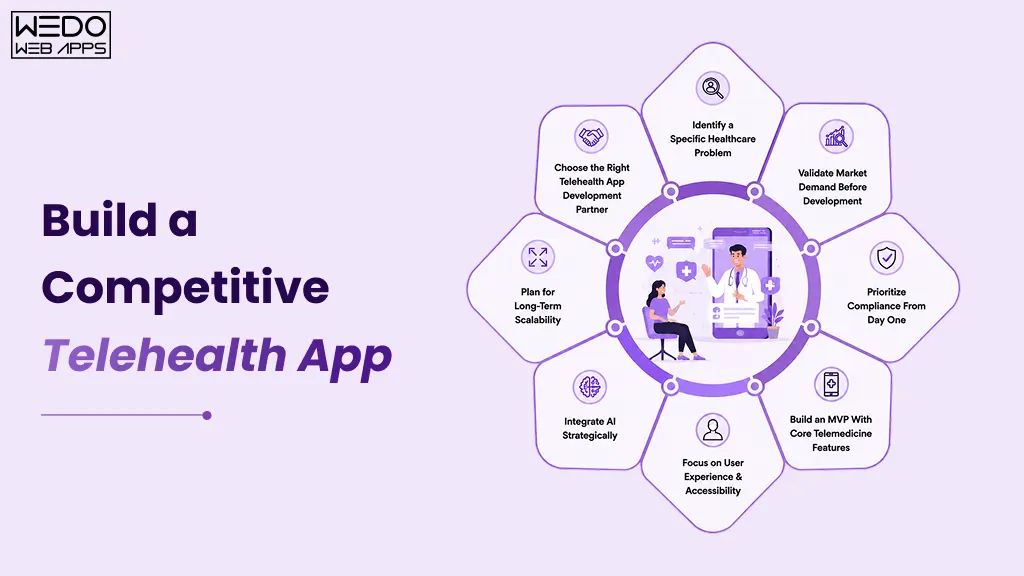
Healthcare businesses are no longer asking whether telemedicine is the future. The real question now is: what separates the best telehealth apps from the thousands of healthcare platforms struggling to scale?

As patient expectations shift toward faster, more accessible, and digital-first healthcare experiences, telemedicine applications have become a major investment priority for startups, healthcare enterprises, clinics, and digital health providers. However, building successful telehealth apps today requires far more than simply adding video consultation features into a mobile application.

The best telemedicine apps now combine AI-powered healthcare experiences, secure communication infrastructure, remote patient monitoring, EHR integrations, intelligent appointment scheduling, and seamless mobile accessibility to create complete digital healthcare ecosystems. Platforms like Teladoc, Amwell, MDLIVE, and other popular telehealth applications are setting new standards for patient engagement, operational efficiency, and scalable virtual healthcare delivery.

At the same time, healthcare startups and enterprises are actively studying top telehealth apps to understand which features, technologies, and business models drive patient retention and long-term product growth. From AI-assisted symptom checking to wearable integrations and HIPAA-compliant infrastructure, modern telemedicine apps examples reveal how digital healthcare platforms are rapidly evolving beyond traditional virtual consultations.

For decision-makers evaluating telehealth app development, understanding how successful telehealth apps for patients are designed and scaled can provide valuable insights into feature prioritization, compliance planning, user experience optimization, and technology selection.

In this guide, we will explore the best telehealth apps in 2026, analyze the features that make them successful, examine emerging healthcare technology trends, and uncover what healthcare businesses can learn while building scalable telemedicine platforms.

Explore Mobile App Development Services

Why Telehealth Apps Continue Dominating Digital Healthcare

The rapid growth of telemedicine is no longer driven solely by convenience. Today, telehealth applications are solving some of the healthcare industry’s biggest challenges, including accessibility, operational efficiency, rising patient expectations, and provider shortages.

As a result, healthcare startups, enterprises, and providers are increasingly investing in scalable telemedicine app development to meet the growing demand for digital healthcare services.

1. Rising Patient Preference for Virtual Care

Patients now expect healthcare experiences to be faster, mobile-friendly, easily accessible, digitally connected, and available on demand.

The success of the best telehealth apps has shown that users increasingly prefer:

  • Virtual consultations
  • Digital prescriptions
  • Online appointment scheduling
  • Remote follow-ups
  • Reduced hospital visits

This shift has significantly accelerated the adoption of telehealth apps for patients across primary care, mental healthcare, chronic disease management, and specialist consultations.

2. Increasing Healthcare Accessibility Challenges

Healthcare accessibility remains a major concern globally, especially in remote and underserved regions where access to medical professionals is limited.

Popular telehealth applications help bridge this gap by enabling:

  • Remote consultations
  • Virtual follow-ups
  • Digital patient monitoring
  • Real-time communication
  • Mobile healthcare accessibility

For healthcare businesses, this creates opportunities to:

  • Expand patient reach
  • Reduce operational dependency on physical infrastructure
  • Improve healthcare delivery efficiency
  • Scale services across wider geographical regions

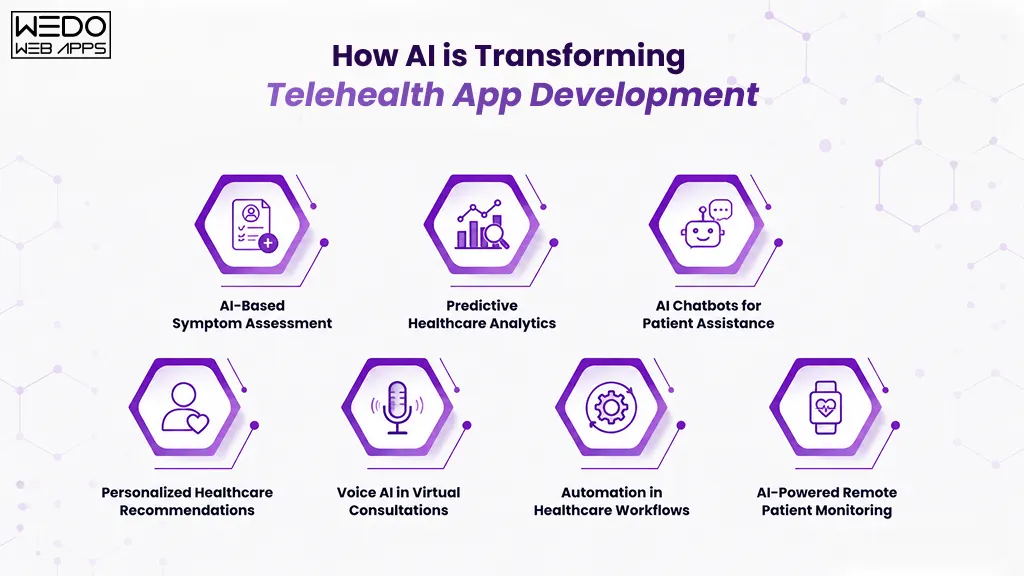
3. Growth of AI & Remote Patient Monitoring

AI is becoming one of the biggest differentiators among modern telemedicine apps examples. Today, AI-powered telehealth apps commonly include:

  • Symptom checking
  • Virtual healthcare assistants
  • Predictive healthcare analytics
  • Automated appointment workflows
  • Personalized patient recommendations

At the same time, remote patient monitoring integrations with wearable devices and IoT healthcare solutions allow providers to track patient health data in real time.

This is especially valuable for:

  • Chronic disease management
  • Elderly care
  • Post-treatment monitoring
  • Preventive healthcare services

4. Healthcare Workforce Shortages Accelerating Telemedicine Adoption

Many healthcare systems continue facing:

  • Physician shortages
  • Growing patient loads
  • Administrative inefficiencies
  • Rising operational costs

Telemedicine applications help providers optimize:

  • Consultation workflows
  • Patient handling capacity
  • Appointment management
  • Healthcare accessibility
  • Provider productivity

This operational scalability is one of the key reasons why enterprises and startups are prioritizing telehealth app development investments.

5. Enterprise Investment in Digital Healthcare Infrastructure

The best telemedicine apps are no longer standalone healthcare tools. Modern healthcare platforms now combine:

  • Virtual consultations
  • EHR integrations
  • Payment systems
  • Pharmacy management
  • Mental healthcare support
  • AI-powered assistance
  • Patient engagement tools

This shift is encouraging healthcare businesses to build scalable and interoperable digital healthcare ecosystems rather than isolated applications.

6. Expansion of Mobile-First Healthcare Experiences

The increasing dependence on smartphones has also contributed to the growth of top telehealth apps worldwide.

Patients now expect mobile healthcare apps to support:

  • Appointment booking
  • Healthcare notifications
  • Video consultations
  • Prescription access
  • Medical history management
  • Real-time communication

For startups entering the digital healthcare market, mobile-first telemedicine app development is becoming essential for improving accessibility, engagement, and long-term patient retention.

What Makes the Best Telehealth Apps Successful?

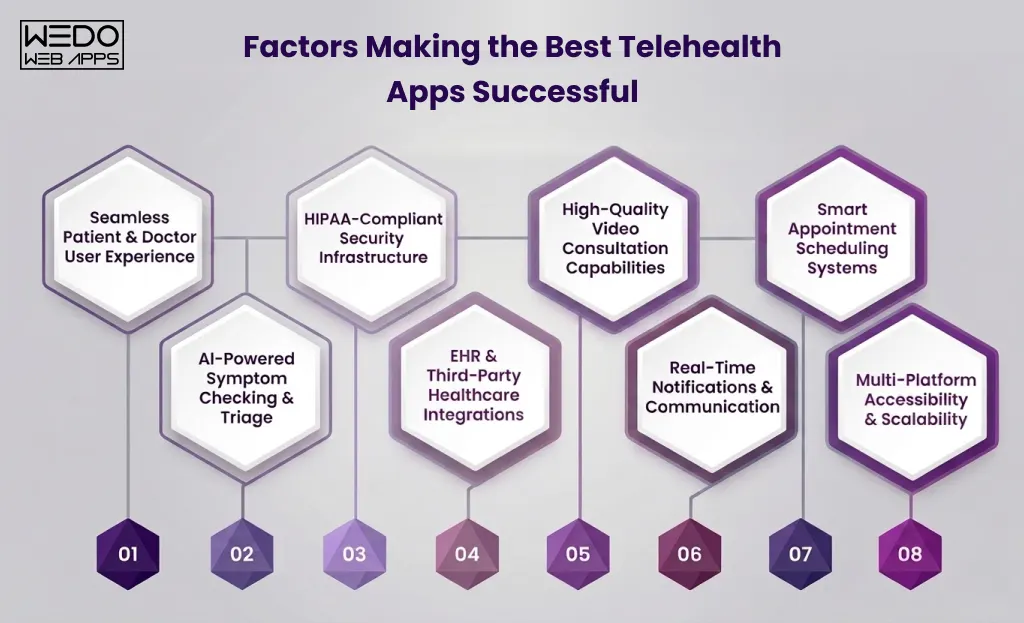
Factors Making the Best Telehealth Apps

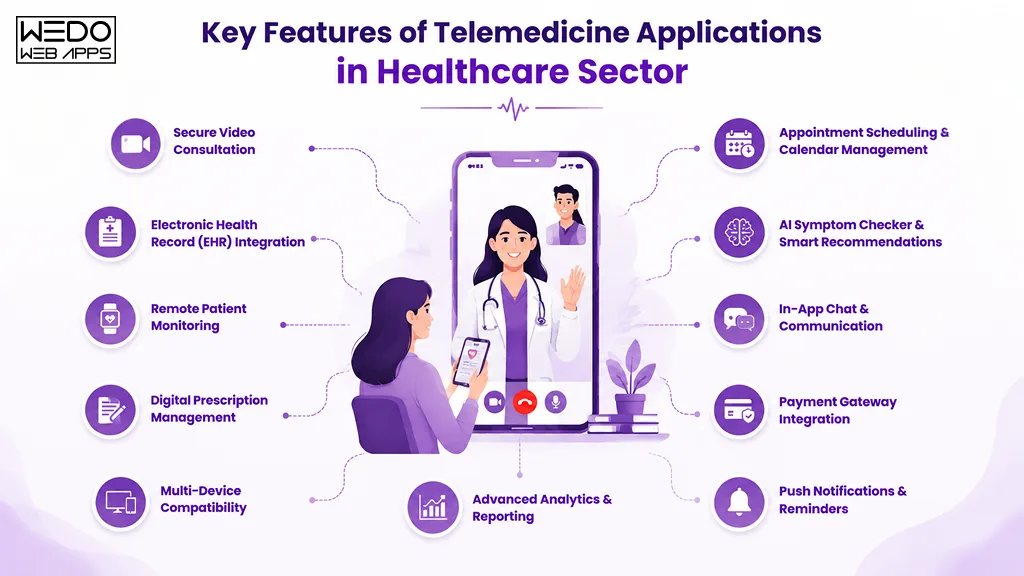
Building a successful telemedicine platform today requires far more than adding video consultation functionality into a healthcare application. The best telehealth apps succeed because they combine seamless patient experiences, scalable infrastructure, healthcare compliance, intelligent automation, and operational efficiency within a single ecosystem.

Healthcare startups and enterprises evaluating telemedicine app development should understand that patient adoption and long-term scalability depend heavily on how well these features work together.

Seamless Patient & Doctor User Experience

User experience remains one of the biggest differentiators among top telehealth apps. Patients expect healthcare applications to be:

  • easy to navigate
  • mobile-friendly
  • fast-loading
  • accessible across devices
  • simple enough for non-technical users

Similarly, healthcare providers require intuitive dashboards that simplify:

  • appointment management
  • patient communication
  • consultation workflows
  • digital prescription handling
  • medical record access

Poor user experience often becomes one of the biggest reasons why telehealth apps struggle with adoption and retention.

HIPAA-Compliant Security Infrastructure

Security and compliance are critical for all telemedicine apps handling sensitive healthcare data.

The best telemedicine apps prioritize:

  • HIPAA-compliant infrastructure
  • end-to-end encryption
  • secure cloud storage
  • multi-factor authentication
  • role-based access controls
  • secure payment processing

Healthcare businesses investing in telemedicine app development must ensure patient privacy and regulatory compliance from the early development stages rather than treating security as an afterthought.

High-Quality Video Consultation Capabilities

Video consultation remains a core feature of most telehealth apps for patients. However, successful platforms focus heavily on consultation quality and reliability.

Modern telehealth applications typically include:

  • HD video communication
  • low-latency streaming
  • real-time chat support
  • appointment reminders
  • screen sharing capabilities
  • secure virtual waiting rooms

Reliable communication infrastructure plays a major role in improving patient trust and overall healthcare experience.

Smart Appointment Scheduling Systems

Efficient appointment management significantly improves both provider productivity and patient convenience.

  • Automated scheduling
  • Calendar synchronization
  • Real-time availability tracking
  • Appointment reminders
  • Cancellation management
  • Queue optimization

These features reduce administrative overhead while improving healthcare accessibility and operational efficiency.

AI-Powered Symptom Checking & Triage

AI is rapidly becoming one of the defining features of modern telemedicine apps examples.

  • Symptom assessment
  • Patient triage
  • Healthcare recommendations
  • Chatbot assistance
  • Predictive analytics
  • Workflow automation

AI-powered features help healthcare businesses:

  • Reduce provider workload
  • Improve patient engagement
  • Speed up response times
  • Personalize healthcare experiences

EHR & Third-Party Healthcare Integrations

Interoperability is essential for scalable telemedicine platforms.

  • Electronic Health Record (EHR) systems
  • Pharmacy platforms
  • Wearable devices
  • Payment gateways
  • Insurance systems
  • Laboratory management software

These integrations help create unified digital healthcare ecosystems while improving operational efficiency and patient experience.

Real-Time Notifications & Communication

Consistent communication is critical for patient retention and engagement.

  • Appointment reminders
  • Medication alerts
  • Consultation follow-ups
  • Health monitoring updates
  • Prescription notifications
  • Provider communication

Real-time engagement features help healthcare businesses improve patient satisfaction and reduce missed consultations.

Multi-Platform Accessibility & Scalability

Modern healthcare users expect telehealth applications to work seamlessly across:

  • Smartphones
  • Tablets
  • Desktops
  • Web browsers
  • Wearable-connected devices

Scalability is equally important for healthcare businesses planning long-term growth.

The best telehealth apps are built using scalable architectures capable of handling:

  • Growing patient databases
  • Increasing consultation volumes
  • Real-time healthcare data processing
  • Multi-location healthcare operations
  • Future feature expansions

For healthcare startups and enterprises, scalable telemedicine app development directly impacts operational flexibility, user retention, and future expansion opportunities.

Discuss Your Telehealth App Idea

Best Telehealth Apps in 2026

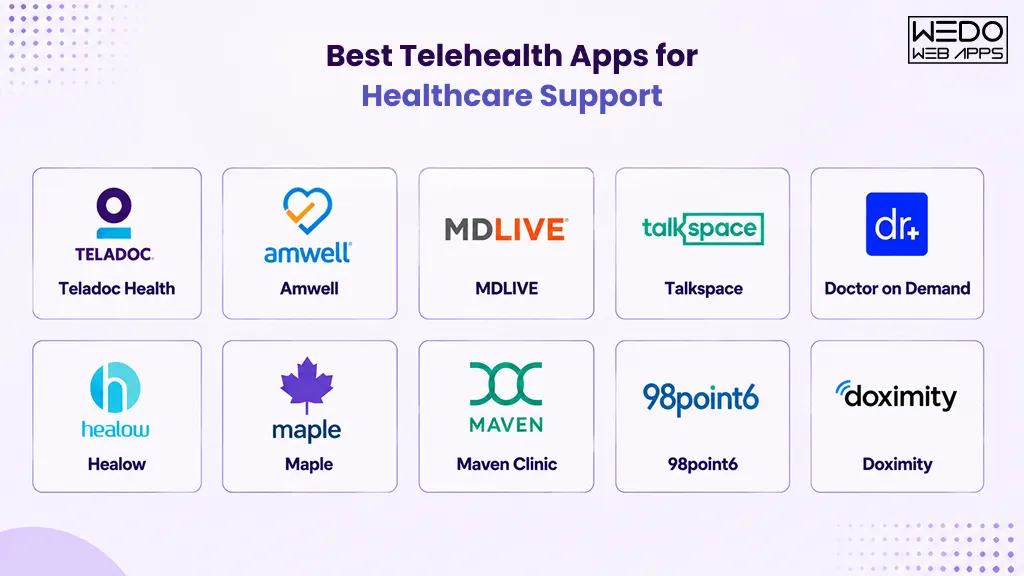
Best Telehealth apps for Healthcare Support

The rapid growth of digital healthcare has led to the emergence of several powerful telemedicine platforms designed to improve healthcare accessibility, patient engagement, and operational efficiency. While each platform targets different healthcare needs, the best telehealth apps share common strengths such as seamless virtual consultations, scalable infrastructure, AI-driven capabilities, and intuitive user experiences.

For healthcare startups and enterprises planning telemedicine app development, analyzing these successful telemedicine apps examples can provide valuable insights into feature prioritization, business models, scalability strategies, and healthcare technology trends.

1. Teladoc Health

Teladoc Health remains one of the most recognized names among top telehealth apps globally. The platform offers virtual healthcare services across primary care, mental health, chronic condition management, and specialist consultations.

Core Features:

  • 24/7 virtual doctor consultations
  • AI-driven healthcare insights
  • Chronic disease management tools
  • Mental health support services
  • Remote patient monitoring
  • EHR integration capabilities

Why It Became a Market Leader:

Teladoc successfully scaled by building a complete digital healthcare ecosystem rather than limiting its services to virtual consultations alone. Its strong focus on accessibility, enterprise healthcare partnerships, and integrated healthcare experiences helped it become one of the best telemedicine apps in the market.

Product Lessons for Healthcare Startups:

  • Scalable infrastructure approach
  • Multi-service healthcare ecosystem
  • Patient engagement strategy
  • AI-powered healthcare integrations
  • Enterprise-focused expansion model

2. Amwell

Amwell is widely known for its enterprise-grade telemedicine infrastructure and large-scale healthcare provider network. The platform focuses heavily on virtual care delivery for hospitals, healthcare systems, and insurance providers.

Core Features:

  • Secure video consultations
  • EHR system integration
  • Digital patient engagement tools
  • Appointment scheduling
  • Provider workflow management
  • Healthcare analytics

Enterprise Telemedicine Strengths:

Unlike many telehealth apps for patients that primarily target individual users, Amwell positions itself strongly within enterprise healthcare ecosystems. Its interoperability capabilities and provider-focused workflows make it a preferred solution for large healthcare organizations.

Key Takeaways for Businesses:

  • Enterprise scalability
  • Healthcare interoperability strategy
  • Provider-centric platform design
  • Secure infrastructure implementation

3. MDLIVE

MDLIVE is one of the most popular telehealth applications for urgent care, behavioral healthcare, and online medical consultations.

Core Features:

  • Virtual urgent care consultations
  • Behavioral health services
  • Dermatology consultations
  • Online prescription support
  • Appointment scheduling
  • Secure patient communication

Why MDLIVE Stands Out:

MDLIVE focuses heavily on simplifying healthcare accessibility for patients through intuitive digital experiences and broad healthcare service coverage.

Product Insights for Telehealth Startups:

  • User-friendly healthcare UX
  • Accessibility-focused healthcare delivery
  • Service diversification
  • Seamless patient onboarding

4. Talkspace

Talkspace became one of the best telehealth apps in the mental healthcare segment by making therapy and mental wellness support more accessible through platforms.

Core Features:

  • Virtual therapy sessions
  • Text-based therapy support
  • Mental wellness programs
  • Subscription-based healthcare plans
  • Secure communication channels
  • Therapist matching systems

Subscription-Based Healthcare Model:

Talkspace popularized scalable subscription-based digital mental healthcare models. Its flexible communication approach significantly improved patient engagement and retention.

Key Lessons for Healthcare Businesses:

  • Niche-focused healthcare strategy
  • Recurring revenue model
  • Mobile-first engagement approach
  • Asynchronous communication features

5. Doctor on Demand

Doctor on Demand focuses on providing convenient access to licensed physicians, therapists, and psychiatrists through virtual consultations.

Core Features:

  • Video consultations
  • Mental healthcare services
  • Chronic care support
  • Preventive healthcare consultations
  • Digital prescriptions
  • Mobile healthcare accessibility

What Makes It Successful:

The platform emphasizes accessibility, convenience, and streamlined patient experiences while maintaining strong healthcare compliance standards.

Product Development Insights:

  • Simplified onboarding flows
  • Patient trust-building
  • Healthcare accessibility
  • Scalable virtual care experiences

6. Healow

Healow is recognized for its strong EHR integration capabilities and patient engagement infrastructure.

Core Features:

  • EHR synchronization
  • Patient health tracking
  • Appointment management
  • Medication reminders
  • Remote monitoring support
  • Secure messaging

Why Healthcare Providers Prefer Healow:

Its ability to integrate deeply with healthcare records and provider systems helps create smoother patient management workflows.

Key Takeaways for Businesses:

  • Healthcare interoperability
  • Patient data centralization
  • Chronic care management
  • Integrated healthcare ecosystems

7. Maple

Maple is a leading virtual healthcare platform known for its on-demand healthcare consultation model.

Core Features:

  • Instant virtual consultations
  • Online prescriptions
  • Appointment booking
  • Secure messaging
  • Healthcare accessibility features
  • Mobile-first experience

Mobile-First Telemedicine Experience:

Maple focuses heavily on delivering quick and convenient healthcare experiences through intuitive mobile applications.

Lessons for Healthcare Startups:

  • Speed-focused healthcare delivery
  • Mobile UX optimization
  • Accessibility-driven design
  • Patient convenience

8. Maven Clinic

Maven Clinic specializes in women’s and family healthcare services, making it one of the strongest niche telemedicine apps examples in the market.

Core Features:

  • Women’s healthcare consultations
  • Maternity support
  • Family healthcare programs
  • Mental wellness services
  • Virtual coaching
  • Personalized healthcare guidance

Niche Healthcare Positioning:

Instead of targeting broad healthcare services, Maven Clinic succeeded by focusing on specialized healthcare experiences for a defined audience.

Strategic Insights for Businesses:

  • Niche market positioning
  • Specialized healthcare strategy
  • Personalized patient engagement
  • Focused service ecosystem

9. 98point6

98point6 is known for combining AI-powered automation with text-based healthcare consultations.

Core Features:

  • AI-assisted symptom analysis
  • Text-based consultations
  • Virtual healthcare assistance
  • Automated patient triage
  • Secure messaging
  • Provider support workflows

AI-Driven Healthcare Experience:

The platform reduces operational friction through intelligent automation and conversational healthcare experiences.

Key Lessons for Telehealth Businesses:

  • AI integration
  • Automation-driven efficiency
  • Conversational healthcare UX
  • Scalable digital healthcare support

10. Doximity

Doximity combines healthcare networking and telemedicine infrastructure for healthcare professionals.

Core Features:

  • Virtual consultation tools
  • Physician networking
  • Secure communication
  • Healthcare collaboration features
  • Digital workflow tools
  • Provider-focused platform ecosystem

Provider-Centric Healthcare Infrastructure:

Doximity stands out by focusing strongly on healthcare professionals and provider collaboration rather than only patient-facing experiences.

Product Insights for Healthcare Platforms:

  • Provider ecosystem development
  • Healthcare collaboration tools
  • Network-driven platform growth
  • Professional healthcare communities

Telehealth Apps Comparison Table

Choosing the right telemedicine platform depends heavily on business goals, target audience, healthcare specialization, scalability requirements, and user experience priorities. While some of the best telehealth apps focus on enterprise healthcare infrastructure, others specialize in mental healthcare, chronic disease management, AI-powered automation, or mobile-first patient engagement.

The comparison below highlights how popular telehealth applications differentiate themselves across features, healthcare focus, and platform strengths.

Telehealth AppPrimary FocusKey StrengthIdeal User BaseUnique Differentiator
Teladoc HealthVirtual healthcare ecosystemScalable multi-service healthcare platformEnterprises, providers, healthcare systemsAI-powered healthcare service with chronic care management
AmwellEnterprise telemedicine infrastructureStrong interoperability & provider workflowsHospitals, insurance providers, healthcare enterprisesEnterprise-grade healthcare integrations
MDLIVEUrgent care & behavioral healthcareSimplified virtual healthcare accessibilityPatients seeking convenient healthcare accessUser-friendly healthcare experiences
TalkspaceMental healthcare servicesSubscription-based therapy modelMental health patients & wellness programsText-based therapy and asynchronous communication
Doctor on DemandVirtual primary & preventive careStreamlined patient consultation experienceIndividual healthcare users & providersStrong focus on accessibility and convenience
HealowEHR-integrated healthcare managementPatient data synchronizationClinics, hospitals, healthcare providersDeep EHR integration capabilities
MapleOn-demand healthcare consultationsFast mobile healthcare accessibilityPatients seeking instant consultationsMobile-first telemedicine experience
Maven ClinicWomen’s & family healthcareSpecialized healthcare automationWomen’s healthcare providers & startupsNiche-focused digital healthcare platform
98point6AI-assisted virtual healthcareConversational healthcare automationAI-driven healthcare businessText-based AI-powered consultations
DoximityProvider collaboration & telemedicineHealthcare professional networkingPhysicians & healthcare professionalsProvider-centric healthcare ecosystem

What Healthcare Businesses Can Learn From These Telemedicine Apps Examples

While each platform targets different healthcare needs, the most successful telehealth apps share several common patterns that healthcare startups and enterprises should carefully analyze before starting telemedicine app development.

The Best Telehealth Apps Prioritize User Experience

Most successful platforms focus heavily on:

  • Simplified onboarding
  • Intuitive navigation
  • Fast appointment booking
  • Seamless communication
  • Mobile accessibility

Healthcare applications with complicated workflows often struggle with patient retention and adoption.

Specialized Healthcare Niches Often Scale Faster

Platforms like Talkspace and Maven Clinic demonstrate how niche healthcare solutions can compete effectively against broader telemedicine ecosystems.

Healthcare startups increasingly succeed by targeting:

  • Mental healthcare
  • Chronic disease management
  • Elderly care
  • Women’s healthcare
  • Pediatric telemedicine
  • Remote patient monitoring

Instead of building generic healthcare platforms.

AI is Becoming a Competitive Differentiator

Modern telemedicine apps examples increasingly leverage AI for:

  • Symptom assessment
  • Patient triage
  • Healthcare recommendations
  • Chatbot assistance
  • Predictive analytics
  • Workflow automation

As AI capabilities evolve, healthcare businesses integrating intelligent automation are likely to gain stronger operational and competitive advantages.

Scalable Infrastructure is Essential

The top telehealth apps are designed to handle:

  • Growing patient databases
  • Increasing consultation volumes
  • Multi-provider ecosystems
  • Healthcare data processing
  • Cross-platform accessibility

Scalability planning plays a critical role in long-term healthcare platform success.

Interoperability is No Longer Optional

The best telemedicine apps integrate seamlessly with:

  • EHR systems
  • Pharmacy platforms
  • Insurance systems
  • Wearable devices
  • Healthcare APIs
  • Payment gateways

Healthcare businesses planning telemedicine app development should prioritize interoperability early to avoid future operational limitations.

Key Features Modern Telemedicine Apps Must Include

Key Features of Telemedicine Applications in Healthcare Sector

The success of modern telehealth applications depends heavily on the features they offer and how seamlessly those features improve patient and provider experiences. Today, healthcare users expect telemedicine platforms to deliver convenience, accessibility, personalization, security, and real-time healthcare support within a single digital ecosystem.

For healthcare startups and enterprises planning telemedicine app development, understanding which features are essential can significantly impact patient adoption, scalability, and long-term platform success.

Secure Video Consultation

Video consultation remains one of the most critical features in the best telehealth apps. However, modern users expect more than basic video calling functionality.

Successful telemedicine apps for patients usually include:

  • HD video communication
  • Low-latency streaming
  • Secure encrypted sessions
  • Virtual waiting rooms
  • Screen sharing support
  • Multi-participant consultations

Reliable video infrastructure directly affects patient trust, consultation quality, and overall user experience.

Appointment Scheduling & Calendar Management

Efficient scheduling systems help reduce operational friction for both healthcare providers and patients.

Most popular telehealth applications now support:

  • Automated appointment booking
  • Provider availability tracking
  • Calendar synchronization
  • Instant confirmations
  • Appointment reminders
  • Cancellation & rescheduling workflows

Smart scheduling systems improve healthcare accessibility while minimizing administrative overhead.

Electronic Health Record (EHR) Integration

EHR integration has become essential for scalable telemedicine platforms.

The best telemedicine apps often integrate with healthcare record systems to enable:

  • Patient history access
  • Centralized healthcare data
  • Prescription management
  • Provider collaboration
  • Treatment continuity
  • Real-time record synchronization

Interoperability between healthcare systems significantly improves operational efficiency and patient care experiences.

AI Symptom Checker & Smart Recommendations

AI is rapidly transforming how telehealth apps for patients deliver healthcare experiences.

Modern telemedicine apps examples increasingly use AI for:

  • Symptom analysis
  • Patient triage
  • Healthcare recommendations
  • Chatbot assistance
  • Predictive health insights
  • Workflow automation

AI-powered healthcare experiences help businesses:

  • Improve response times
  • Reduce provider workload
  • Personalize healthcare journeys
  • Optimize operational efficiency

For startups entering digital healthcare, AI integration can also become a major competitive advantage.

Remote Patient Monitoring

Remote monitoring capabilities are becoming increasingly important in chronic disease management and preventive healthcare.

Top telehealth apps often support integrations with:

  • Wearable healthcare devices
  • Smart health trackers
  • IoT healthcare systems
  • Heart rate monitors
  • Glucose monitoring devices
  • Blood pressure tracking tools

These features enable healthcare providers to monitor patient health data continuously and deliver proactive care remotely.

In-App Chat & Communication

Real-time communication improves patient engagement and healthcare accessibility.

The best telehealth apps commonly include:

  • Secure patient-provider messaging
  • Live chat support
  • File sharing
  • Healthcare notifications
  • Consultation follow-ups
  • Asynchronous communication

Flexible communication systems help improve patient retention and reduce consultation barriers.

Digital Prescription Management

Prescription management features simplify post-consultation healthcare workflows for both patients and providers.

Modern telemedicine applications often allow:

  • Digital prescription generation
  • Pharmacy integration
  • Medication reminders
  • Prescription refill requests
  • Secure medication records
  • Treatment tracking

These capabilities improve convenience while streamlining healthcare operations.

Payment Gateway Integration

Secure and flexible payment systems are essential for monetizing telemedicine platforms effectively.

Most successful telehealth apps support:

  • Multiple payment methods
  • Insurance claim processing
  • Subscription billing
  • Consultation-based payments
  • Digital invoices
  • Secure transaction processing

Simplified payment experiences help improve user trust and reduce drop-offs during consultations.

Multi-Device Compatibility

Healthcare users expect seamless accessibility across multiple devices and platforms.

Modern telehealth apps for patients typically support:

  • Smartphones
  • Tablets
  • Desktops
  • Web browsers
  • Wearable-connected interfaces

Cross-platform accessibility improves engagement while expanding healthcare reach across diverse user groups.

Push Notifications & Reminders

Healthcare engagement often depends on timely communication.

Popular telehealth applications use notifications for:

  • Appointment reminders
  • Medication alerts
  • Consultation updates
  • Healthcare recommendations
  • Payment confirmations
  • Follow-up reminders

Well-designed notification systems help improve patient retention and reduce missed consultations.

Advanced Analytics & Reporting

Healthcare businesses increasingly rely on analytics to improve operational efficiency and patient experiences.

Modern telemedicine platforms often include:

  • Patient engagement analytics
  • Consultation performance tracking
  • Provider productivity insights
  • Healthcare usage trends
  • Revenue analytics
  • AI-driven healthcare reporting

These insights help healthcare organizations make data-driven decisions while optimizing platform performance and scalability.

What Healthcare Businesses Can Learn from Popular Telehealth Applications

The success of the best telehealth apps goes far beyond virtual consultations and mobile accessibility. Behind every successful telemedicine platform is a carefully planned combination of user experience, healthcare infrastructure, scalability, compliance, and patient engagement strategy.

For healthcare startups, enterprises, and decision-makers evaluating telemedicine app development, studying these popular telehealth applications can reveal valuable lessons about what truly drives adoption, retention, and long-term growth in digital healthcare.

Simplicity Improves Patient Adoption

One of the biggest reasons why many telemedicine apps fail is unnecessary complexity.

The best telehealth apps focus heavily on:

  • Simplified onboarding
  • Intuitive navigation
  • Minimal consultation steps
  • Faster appointment booking
  • Clear healthcare workflows
  • Mobile-first experiences

Patients often avoid healthcare applications that require complicated registration processes or difficult navigation, especially older users and non-technical audiences.

Successful telehealth apps for patients reduce friction at every stage of the healthcare journey.

User Trust is a Major Growth Factor

Healthcare is one of the most trust-sensitive industries, making credibility and security essential for digital healthcare platforms.

Top telehealth apps build trust through:

  • Secure communication systems
  • Transparent privacy policies
  • HIPAA-compliant infrastructure
  • Verified healthcare providers
  • Reliable consultation experiences
  • Consistent patient support

For startups entering telemedicine app development, building trust early can significantly impact patient retention and platform growth.

Specialized Healthcare Niches Can Outperform Broad Platforms

Not every healthcare startup needs to compete directly with large telemedicine ecosystems like Teladoc.

Several successful telemedicine apps examples scaled rapidly by targeting niche healthcare segments such as:

  • Mental healthcare
  • Women’s healthcare
  • Chronic disease management
  • Elderly care
  • Pediatric healthcare
  • Post-treatment monitoring

Focused healthcare platforms often achieve:

  • Higher user engagement
  • Stronger patient retention
  • Clearer product positioning
  • More efficient feature prioritization

Niche specialization can also reduce competition while improving long-term scalability opportunities.

AI is Becoming Central to Modern Telemedicine

AI is no longer an experimental healthcare feature. It is becoming a core differentiator among modern telehealth applications.

Today, the best telemedicine apps increasingly use AI for:

  • Symptom assessment
  • Intelligent patient triage
  • Healthcare chatbots
  • Predictive healthcare insights
  • Workflow automation
  • Personalized healthcare recommendations

Healthcare businesses integrating AI strategically can improve:

  • Operational efficiency
  • Patient response times
  • Provider productivity
  • Healthcare personalization
  • Long-term scalability

Scalable Infrastructure Matters From Day One

Many healthcare startups focus heavily on launching quickly while underestimating future scalability challenges.

However, successful telehealth apps are designed to support:

  • Growing patient traffic
  • Increasing consultation volumes
  • Real-time healthcare data processing
  • Multi-provider systems
  • Cross-platform accessibility
  • Future feature expansion

Poor scalability planning often leads to:

  • Performance bottlenecks
  • Rising infrastructure costs
  • User experience issues
  • Operational inefficiencies

For businesses investing in telemedicine app development, scalable architecture should be treated as a long-term business requirement rather than a later-stage upgrade.

Interoperability Improves Long-Term Platform Value

Modern healthcare ecosystems depend heavily on system connectivity.

The best telehealth apps integrate with:

  • EHR systems
  • Pharmacy platforms
  • Insurance providers
  • Wearable healthcare devices
  • Healthcare APIs
  • Laboratory management systems

Interoperability improves:

  • Healthcare workflow efficiency
  • Patient experience continuity
  • Provider collaboration
  • Healthcare data accessibility

Healthcare businesses that prioritize integrations early are often better positioned for long-term scalability and enterprise adoption.

Mobile-First Healthcare Experiences Drive Engagement

Most healthcare users now prefer accessing telemedicine services through smartphones rather than desktop platforms.

This is why successful telehealth apps for patient focus heavily on:

  • Responsive mobile interfaces
  • Faster app performance
  • Intuitive user journeys
  • Real-time healthcare notifications
  • Simplified communication workflows

For startups entering digital healthcare, mobile-first telemedicine app development is no longer optional. It is becoming a fundamental user expectation.

Long-Term Retention is More Important Than Downloads

Many healthcare applications focus heavily on user acquisition while overlooking retention strategy.

However, top telehealth apps prioritize long-term patient engagement through:

  • Personalized healthcare experiences
  • Follow-up communication
  • Medication reminders
  • Subscription healthcare models
  • Ongoing health tracking
  • AI-driven engagement systems

Sustainable growth in telemedicine platforms depend more on recurring patient engagement than initial app downloads alone.

How AI Is Transforming Telehealth App Development

How AI is Transforming Telehealth App Development

AI is rapidly becoming one of the biggest innovations shaping modern telemedicine applications. What was once limited to basic automation has now evolved into intelligent healthcare ecosystems capable of improving patient experiences, optimizing healthcare workflows, enhancing diagnostics, and increasing operational efficiency.

Today, many of the best telehealth apps are leveraging AI to deliver faster, smarter, and more personalized healthcare experiences. For healthcare startups and enterprises planning telemedicine app development, AI integration is no longer just an advanced feature. It is becoming a major competitive differentiator in the digital healthcare market.

AI-Based Symptom Assessment

AI-powered symptom analysis is becoming increasingly common across top telehealth apps.

Modern telemedicine applications can now analyze:

  • Patient symptoms
  • Health history
  • Behavioral patterns
  • Wearable device data
  • Consultation inputs

to provide preliminary healthcare guidance before virtual consultations.

AI-assisted symptom assessment helps:

  • Improve triage efficiency
  • Reduce provider workload
  • Speed up consultation processes
  • Improve patient accessibility
  • Enhance healthcare personalization

While AI does not replace medical professionals, it significantly improves operational efficiency and early healthcare support.

Predictive Healthcare Analytics

Predictive analytics is helping healthcare providers make more proactive and data-driven decisions.

Many popular telehealth applications now use AI to identify:

  • Potential health risks
  • Chronic disease patterns
  • Treatment effectiveness
  • Patient behavior trends
  • Healthcare utilization insights

This allows healthcare providers to:

  • Improve preventive care
  • Personalize treatment plans
  • Optimize healthcare operations
  • Reduce avoidable complications
  • Improve long-term patient outcomes

Predictive healthcare capabilities are especially valuable in chronic disease management and remote patient monitoring systems.

AI Chatbots for Patient Assistance

AI-powered healthcare chatbots are transforming patient communication experiences within telemedicine platforms.

The best telemedicine apps increasingly use AI chatbots for:

  • Appointment scheduling
  • Symptom collection
  • FAQ assistance
  • Medication reminders
  • Patient onboarding
  • Post-consultation support

AI-driven communication systems help healthcare businesses:

  • Improve response times
  • Reduce support workload
  • Provide 24/7 assistance
  • Increase patient engagement
  • Improve operational scalability

For healthcare startups, chatbot integration can significantly enhance healthcare accessibility while reducing administrative costs.

Personalized Healthcare Recommendations

Healthcare personalization is becoming a major focus area in modern telehealth apps for patients.

AI systems can analyze:

  • Medical history
  • Patient preferences
  • Healthcare behavior
  • Treatment patterns
  • Wearable device data

to deliver:

  • Personalized healthcare suggestions
  • Medication reminders
  • Wellness recommendations
  • Preventive care guidance
  • Treatment follow-up plans

Personalized healthcare experiences help improve:

  • Patient satisfaction
  • Treatment adherence
  • Long-term engagement
  • Healthcare outcomes

Voice AI in Virtual Consultations

Voice AI technologies are also becoming increasingly valuable in telemedicine app development.

Modern healthcare platforms are experimenting with voice AI for:

  • Consultation transcription
  • Medical note generation
  • Voice-enabled healthcare assistance
  • Hands-free navigation
  • Multilingual healthcare support

Voice-enabled healthcare experiences can improve accessibility for:

  • Elderly patients
  • Visually impaired users
  • Non-technical audiences
  • Multilingual patient groups

This technology is expected to become more common across future telemedicine apps examples.

Automation in Healthcare Workflows

Operational automation is helping healthcare businesses improve efficiency while reducing repetitive manual processes.

AI-driven telehealth applications can automate:

  • Appointment scheduling
  • Patient triage
  • Follow-up reminders
  • Healthcare documentation
  • Billing workflows
  • Consultation summaries

These automation capabilities help providers:

  • Reduce operational overhead
  • Improve consultation efficiency
  • Minimize administrative burden
  • Optimize staff productivity

For healthcare enterprises managing large patient volumes, workflow automation can significantly improve scalability.

AI-Powered Remote Patient Monitoring

Remote patient monitoring is becoming more intelligent through AI integration and wearable healthcare technologies.

Modern telehealth applications increasingly combine AI with:

  • Smart wearables
  • Health tracking devices
  • IoT healthcare systems
  • Real-time patient monitoring tools

AI systems can continuously analyze patient data to identify:

  • Abnormal health patterns
  • Potential medical risks
  • Treatment adherence issues
  • Emergency warning signs

This enables healthcare providers to deliver more proactive and preventive care experiences remotely.

Benefits of AI Integration for Healthcare Businesses

Healthcare startups and enterprises integrating AI into telemedicine app development can gain several strategic advantages.

AI-powered telehealth apps help businesses:

  • Improve patient engagement
  • Optimize healthcare workflows
  • Reduce provider workload
  • Personalize healthcare experiences
  • Enhance scalability
  • Improve operational efficiency
  • Strengthen competitive positioning

As digital healthcare adoption continues growing, AI is expected to play an even larger role in shaping the future of telemedicine applications.

For healthcare businesses planning long-term digital healthcare strategies, AI integration is quickly becoming essential for building scalable and future-ready telehealth platforms.

Build an AI-Ready Healthcare App

Telehealth App Development Challenges Businesses Must Solve

While the demand for telemedicine applications continues growing rapidly, building scalable and secure healthcare platforms comes with several technical, operational, and regulatory challenges. Many healthcare startups underestimate the complexity involved in developing telehealth apps that can handle compliance requirements, patient data security, real-time communication, and long-term scalability efficiently.

For businesses planning telemedicine app development, understanding these challenges early can help reduce development risks, improve healthcare experiences, and support long-term platform growth.

HIPAA & Healthcare Compliance Complexities

Healthcare applications handle highly sensitive patient information, making regulatory compliance one of the biggest challenges in telehealth app development.

Depending on the target market, telemedicine apps may need to comply with:

  • HIPAA (United States)
  • GDPR (Europe)
  • HITECH regulations
  • Regional healthcare data protection laws
  • Electronic prescription regulations

Compliance requirements often impact:

  • Data storage architecture
  • User authentication systems
  • Communication encryption
  • Access control management
  • Healthcare record handling

Failure to address compliance properly can lead to:

  • Legal penalties
  • Patient trust issues
  • Operational risks
  • Data privacy violations

This is why successful telehealth apps prioritize compliance planning from the earliest development stages.

Protecting Sensitive Patient Data

Cybersecurity remains a major concern for modern telehealth applications.

Healthcare platforms often become targets for:

  • Ransomware attacks
  • Unauthorized access
  • Data breaches
  • Identity theft
  • Healthcare record exploitation

The best telemedicine apps typically implement:

  • End-to-end encryption
  • Multi-factor authentication
  • Secure cloud infrastructure
  • Role-based access controls
  • Encrypted healthcare communication
  • Regular security audits

Healthcare businesses investing in telemedicine app development must treat security as a core platform requirement rather than an optional feature.

Real-Time Video Streaming Performance

Video consultation quality directly affects patient trust and healthcare experience.

However, building reliable real-time communication infrastructure is technically complex because telehealth apps must handle:

  • Unstable internet connections
  • Low-latency streaming
  • Cross-device compatibility
  • Secure video transmission
  • High consultation volumes
  • Real-time synchronization

Poor video quality often leads to:

  • Interrupted consultations
  • Patient dissatisfaction
  • Reduced healthcare accessibility
  • Lower platform adoption

Scalable video infrastructure is therefore critical for telemedicine apps for patients and providers alike.

EHR Integration Difficulties

Healthcare interoperability remains one of the biggest operational challenges for telemedicine platforms.

Many healthcare organizations use different:

  • EHR systems
  • Healthcare APIs
  • Legacy software
  • Patient data standards
  • Provider management systems

Integrating these systems into a unified telehealth ecosystem can become technically demanding.

Healthcare businesses often face challenges related to:

  • Inconsistent healthcare data formats
  • Limited API compatibility
  • Synchronization issues
  • Fragmented patient records
  • Interoperability limitations

Successful telehealth app development requires careful integration planning to ensure seamless healthcare workflows.

Managing Scalability for Growing User Bases

Many healthcare startups initially focus on launching quickly without planning for long-term scalability.

However, successful telehealth applications must eventually support:

  • Large patient databases
  • Increasing consultation volumes
  • Real-time healthcare processing
  • Multi-provider ecosystems
  • Cross-platform accessibility
  • Growing healthcare data storage

Without scalable architecture, businesses may experience:

  • Slow application performance
  • System crashes
  • Rising infrastructure costs
  • Poor patient experiences
  • Operational inefficiencies

Cloud-native and scalable infrastructure planning are essential for sustainable telemedicine platform growth.

Improving Patient Retention & Engagement

Acquiring healthcare users is difficult, but retaining them is often even more challenging.

Many telehealth apps struggle with:

  • Low repeat consultation rates
  • Poor patient engagement
  • Complicated healthcare workflows
  • Limited personalization
  • Weak communication systems

The best telehealth apps improve retention through:

  • Personalized healthcare experiences
  • AI-powered engagement
  • Proactive communication
  • Medication reminders
  • Healthcare notifications
  • Simplified user journeys

Long-term platform growth depends heavily on maintaining continuous patient engagement.

Cross-Platform Performance Optimization

Modern users expect telemedicine applications to work consistently across:

  • Smartphones
  • Tablets
  • Desktops
  • Web browsers
  • Wearable-connected ecosystems

Ensuring smooth performance across multiple devices while maintaining healthcare security and usability can become highly challenging.

Healthcare businesses must optimize:

  • UI responsiveness
  • Application speed
  • Device compatibility
  • Healthcare accessibility
  • Synchronization performance

Cross-platform optimization directly affects user experience and platform adoption rates.

Regulatory & Regional Healthcare Compliance Challenges

Healthcare regulations vary significantly across countries and regions.

Businesses expanding telehealth platforms globally often face challenges related to:

  • Region-specific compliance laws
  • Healthcare licensing regulations
  • Cross-border healthcare restrictions
  • Localization requirements
  • Healthcare payment systems
  • Multilingual healthcare support

For startups planning global telemedicine app development, regional scalability and compliance planning become essential from the early product stages.

Why Solving These Challenges Early Matters

The most successful telemedicine apps examples are not built solely around features. They succeed because they address compliance, scalability, security, interoperability, and user experience challenges strategically from the beginning.

Healthcare startups and enterprises that proactively solve these challenges are often better positioned to:

  • Improve patient trust
  • Scale efficiently
  • Reduce operational risks
  • Optimize healthcare delivery
  • Strengthen long-term platform growth

As digital healthcare adoption continues expanding, solving these development challenges effectively will remain critical for building scalable and future-ready telehealth applications.

How Startups Can Build a Competitive Telehealth App

Build a Competitive Telehealth App

The rapid growth of digital healthcare has created massive opportunities for startups entering the telemedicine industry. However, simply launching a healthcare application is no longer enough to compete in today’s market. The best telehealth apps succeed because they solve specific healthcare problems, deliver seamless user experiences, prioritize compliance, and continuously evolve with patient expectations and healthcare technology trends.

For startups planning telemedicine app development, building a scalable and competitive platform requires a strategic balance between healthcare innovation, operational efficiency, patient engagement, and long-term scalability.

Identify a Specific Healthcare Problem

Many healthcare startups fail because they attempt to build overly broad telemedicine platforms without solving a clearly defined healthcare challenge.

Instead of targeting every healthcare segment at once, successful telehealth apps for patients often focus on:

  • mental healthcare
  • chronic disease management
  • women’s healthcare
  • elderly care
  • pediatric consultations
  • remote patient monitoring
  • post-treatment follow-ups

Niche-focused healthcare platforms usually achieve:

  • stronger product positioning
  • faster market validation
  • better patient engagement
  • clearer feature prioritization
  • reduced competitive pressure

Defining a specific healthcare problem early helps startups build more targeted and scalable telemedicine applications.

Validate Market Demand Before Development

Before investing heavily in telemedicine app development, startups should validate whether real users actually need the proposed solution.

Market validation may include:

  • competitor analysis
  • healthcare industry research
  • patient interviews
  • provider feedback
  • healthcare workflow analysis
  • MVP testing

Studying existing telemedicine apps examples can also help businesses identify:

  • feature gaps
  • underserved healthcare segments
  • user experience limitations
  • monetization opportunities
  • scalability challenges

Validation reduces development risks while improving long-term product-market fit.

Prioritize Compliance From Day One

Compliance is one of the most critical aspects of healthcare application development.

The best telemedicine apps integrate compliance planning early instead of treating it as a post-development requirement.

Healthcare startups should prioritize:

  • HIPAA compliance
  • healthcare data encryption
  • secure authentication systems
  • access control management
  • secure healthcare communication
  • patient privacy protection

Ignoring compliance during early development stages often leads to:

  • expensive redevelopment
  • operational delays
  • legal risks
  • patient trust issues

Building secure and compliant healthcare infrastructure early creates a stronger foundation for scalability.

Build an MVP With Core Telemedicine Features

One of the most common startup mistakes is attempting to build a fully-featured healthcare ecosystem during the first development phase.

Instead, startups should begin with an MVP (Minimum Viable Product) focused on essential features such as:

  • video consultations
  • appointment scheduling
  • secure messaging
  • patient registration
  • provider dashboards
  • payment integration

Launching an MVP helps businesses:

  • validate healthcare workflows
  • gather real user feedback
  • reduce initial development costs
  • improve feature prioritization
  • accelerate time-to-market

Successful telehealth applications often evolve gradually based on user behavior and healthcare demand.

Focus on User Experience & Accessibility

Healthcare platforms must remain simple, intuitive, and accessible for diverse user groups.

The best telehealth apps prioritize:

  • clean interface design
  • simplified onboarding
  • mobile-first experiences
  • accessibility optimization
  • fast navigation
  • clear consultation workflows

User experience becomes even more important when targeting:

  • elderly patients
  • non-technical users
  • rural healthcare audiences
  • multilingual user groups

Poor usability often becomes one of the biggest reasons telemedicine apps struggle with patient retention.

Integrate AI Strategically

AI can significantly improve telemedicine applications when implemented thoughtfully.

Healthcare startups increasingly use AI for:

  • symptom analysis
  • healthcare chatbots
  • appointment automation
  • predictive healthcare insights
  • patient engagement
  • workflow optimization

However, startups should avoid overcomplicating early-stage products with unnecessary AI functionality.

The most effective approach is to:

  • start with practical AI use cases
  • solve real operational problems
  • prioritize patient value
  • scale AI capabilities gradually

Strategic AI integration can become a major competitive advantage in modern telehealth app development.

Plan for Long-Term Scalability

Many startups focus heavily on launch speed while underestimating future infrastructure demands.

Scalable telemedicine applications should be designed to support:

  • growing patient databases
  • increasing provider networks
  • high consultation volumes
  • healthcare data expansion
  • multi-device accessibility
  • future feature additions

Cloud-native infrastructure and modular development architectures help businesses scale more efficiently as healthcare demand grows.

Planning scalability early reduces future redevelopment costs and operational limitations.

Choose the Right Telehealth App Development Partner

Building healthcare applications requires expertise beyond standard mobile app development.

Healthcare startups should evaluate development partners based on:

  • healthcare industry experience
  • compliance understanding
  • security implementation expertise
  • scalability capabilities
  • UI/UX understanding
  • integration experience

Experienced mobile app development companies like WEDOWEBAPPS often help healthcare businesses accelerate development timelines while reducing technical, compliance, and scalability risks associated with telemedicine app development.

Why Strategic Planning Matters in Telemedicine App Development

The most successful popular telehealth applications were not built solely around technology. They succeeded because they combined healthcare understanding, patient-centric experiences, scalable infrastructure, and long-term product strategy effectively.

For startups entering digital healthcare, strategic planning can significantly improve:

  • product-market fit
  • patient retention
  • operational scalability
  • healthcare accessibility
  • long-term platform sustainability

As competition within digital healthcare continues growing, startups that focus on usability, compliance, scalability, and innovation will be better positioned to build future-ready telemedicine platforms.

Telehealth App Development Cost Breakdown

One of the most common questions healthcare startups and enterprises ask is: how much does telemedicine app development actually cost?

The answer depends on the platform’s complexity, features, compliance requirements, AI integrations, and scalability goals. While a basic telehealth MVP may require a smaller investment, enterprise-grade healthcare ecosystems with AI-powered features and advanced integrations can significantly increase development costs.

Factors That Affect Telemedicine App Development Cost

Several elements influence the overall cost of building telehealth applications, including:

  • feature complexity
  • UI/UX requirements
  • HIPAA compliance
  • AI integration
  • EHR connectivity
  • cloud infrastructure
  • third-party APIs
  • scalability planning

The more advanced the healthcare workflows and integrations, the higher the development complexity.

Cost Based on App Complexity

App TypeEstimated TimelineEstimated Cost Range
Basic Telehealth MVP3–5 Months$20,000 – $50,000
Mid-Level Telemedicine Platform6–9 Months$50,000 – $120,000
Advanced Enterprise Telehealth Platform9+ Months$120,000 – $300,000+

Basic Telehealth MVP Usually Includes:

  • video consultations
  • appointment booking
  • patient registration
  • secure messaging
  • provider dashboard

Mid-Level Telemedicine Platforms Often Include:

  • EHR integrations
  • payment gateways
  • prescription management
  • healthcare analytics
  • multi-device support

Advanced Telehealth Apps Typically Include:

  • AI-powered healthcare features
  • remote patient monitoring
  • wearable integrations
  • predictive analytics
  • enterprise healthcare workflows

HIPAA Compliance & Security Costs

Healthcare compliance significantly impacts development budgets because telehealth apps must protect sensitive patient data.

Security-related costs often include:

  • encrypted communication
  • secure cloud infrastructure
  • multi-factor authentication
  • access control systems
  • compliance testing
  • audit logging

Although compliance increases initial investment, it helps reduce long-term legal and operational risks.

AI & Advanced Feature Integration Costs

AI-powered features are becoming increasingly common in the best telehealth apps, but they also increase development complexity.

AI integration may include:

  • symptom analysis
  • healthcare chatbots
  • predictive analytics
  • workflow automation
  • remote patient monitoring

These capabilities usually require:

  • specialized AI expertise
  • advanced infrastructure
  • ongoing optimization

Healthcare businesses should prioritize AI features based on real operational and patient needs rather than adding unnecessary complexity early.

Native vs Cross-Platform Development

Choosing between native and cross-platform development directly impacts your telehealth app’s performance, scalability, development cost, and time-to-market.

Native Development

Best for:

  • advanced performance
  • platform-specific optimization
  • complex healthcare ecosystems

Challenges:

  • higher development cost
  • separate iOS & Android builds

Cross-Platform Development

Best for:

  • faster MVP launches
  • lower initial cost
  • easier maintenance

Challenges:

  • possible performance limitations
  • limited device-level customization

Many healthcare startups initially choose cross-platform telemedicine app development to reduce launch costs and accelerate time-to-market.

Ongoing Maintenance & Scalability Costs

Telemedicine applications require continuous updates even after launch.

Long-term maintenance may include:

  • security updates
  • compliance maintenance
  • cloud scaling
  • feature enhancements
  • performance optimization
  • server monitoring

The best telemedicine apps continuously evolve based on:

  • healthcare regulations
  • patient expectations
  • technology advancements

How Startups Can Reduce Telehealth App Development Costs

Healthcare startups can optimize development budgets by:

  • starting with an MVP
  • prioritizing essential features first
  • validating market demand early
  • using scalable cloud infrastructure
  • avoiding unnecessary integrations initially
  • planning scalability from the beginning

Working with experienced healthcare-focused development teams can also help reduce technical risks and improve long-term scalability planning.

Get Telehealth App Consultation

Technologies Used in Telemedicine App Development

Building scalable telehealth applications requires the right combination of frontend technologies, backend infrastructure, cloud services, security frameworks, and healthcare integrations. The best telehealth apps are designed to support secure communication, real-time healthcare data processing, and seamless patient experiences across multiple devices.

Frontend Technologies

Modern telemedicine apps for patients usually use technologies like:

  • React Native
  • Flutter
  • Swift
  • Kotlin

These frameworks help deliver:

  • responsive mobile experiences
  • cross-platform accessibility
  • faster app performance
  • scalable UI architecture

Backend & Cloud Infrastructure

The backend infrastructure powers:

  • patient data management
  • appointment systems
  • video consultations
  • healthcare workflows
  • real-time communication

Popular backend technologies include:

  • Node.js
  • Python
  • Java
  • .NET

Cloud platforms commonly used:

  • AWS
  • Google Cloud
  • Microsoft Azure

Cloud-native infrastructure helps telemedicine applications scale efficiently as patient demand grows.

APIs & Healthcare Integrations

The best telemedicine apps often integrate with:

  • EHR systems
  • payment gateways
  • wearable devices
  • pharmacy systems
  • video communication APIs

These integrations improve:

  • interoperability
  • healthcare accessibility
  • patient experience continuity
  • operational efficiency

Security Technologies

Healthcare applications require advanced security infrastructure to protect patient information.

Common security implementations include:

  • end-to-end encryption
  • secure authentication
  • role-based access controls
  • HIPAA-compliant cloud storage
  • audit logging systems

Security-first architecture is essential for scalable telehealth app development.

Future Trends in Telemedicine Applications

Digital healthcare is evolving rapidly, and modern telemedicine applications are becoming far more advanced than traditional virtual consultation platforms.

Healthcare startups and enterprises investing in telehealth app development are increasingly focusing on AI, remote monitoring, personalization, and connected healthcare ecosystems.

AI-Powered Preventive Healthcare

AI is helping healthcare providers identify:

  • early health risks
  • treatment patterns
  • patient behavior trends
  • preventive care opportunities

Predictive healthcare systems are expected to become a major feature in future telehealth apps.

Expansion of Remote Patient Monitoring

Remote patient monitoring is becoming increasingly important in:

  • chronic disease management
  • elderly care
  • post-treatment monitoring
  • preventive healthcare

The integration of wearable healthcare devices and IoT systems will continue expanding across popular telehealth applications.

Personalized Digital Healthcare Experiences

The best telehealth apps are moving toward highly personalized healthcare journeys through:

  • AI-driven recommendations
  • customized treatment plans
  • personalized health insights
  • adaptive patient engagement

Personalization improves both patient retention and healthcare outcomes.

Hybrid Healthcare Ecosystems

Future telemedicine platforms are expected to combine:

  • virtual consultations
  • in-person healthcare
  • wearable integrations
  • AI-driven healthcare support
  • connected patient monitoring

Hybrid healthcare ecosystems will likely become the standard model for modern digital healthcare delivery.

Conclusion

The best telehealth apps are no longer limited to virtual consultations. They are evolving into intelligent digital healthcare ecosystems powered by AI, remote monitoring, scalable cloud infrastructure, and personalized patient experiences.

For healthcare startups, enterprises, and decision-makers, studying successful telemedicine apps examples provides valuable insights into what modern healthcare users expect and what it truly takes to build scalable and future-ready healthcare platforms.

As digital healthcare adoption continues growing, businesses investing strategically in telemedicine app development will be better positioned to improve accessibility, operational efficiency, patient engagement, and long-term healthcare innovation.
Launch Your Telemedicine App