skip to content

How to Design an Eye-Catching eCommerce Website Using Magento

Introduction: Why Design Still Decides Whether Customer Will Buy or Leave

A customer lands on your eCommerce website.

They like your product.

They are ready to explore.

But the design feels outdated. Navigation is confusing. Pages take too long to load. Product information is not easy to scan.

Within seconds, they leave and buy from your competitor.

This is a real impact of design in today’s eCommerce landscape.

Design is no longer just about aesthetics. It directly influences trust, usability, brand perceptions, and conversions. For businesses building an eCommerce website using Magento, design becomes even more critical because the platform offers powerful flexibility, but only when used strategically.

An eye-catching eCommerce website design Magento users expect is not simply visually attractive. It is:

  • Easy to navigate
  • Fast and responsive
  • Brand-consistent
  • Conversion-focused

When designing for Magento, the right combination of layout, user experience, and performance optimization transforms your store into a high-performing digital asset.

Whether you choose a ready-made Magento theme ecommerce solution or custom Magento templates ecommerce businesses prefer for scalability, success depends on how well design supports the customer journey.

This blog explains how to approach designing an eye-catching ecommerce website using Magento to improve engagement, strengthen user experience, and increase conversions. You’ll learn why Magento is a strong choice for eCommerce design, which design principles matter most, and how professional Magento design and development services can help turn your online store into a revenue-generating platform.
Magento website UX and conversion audit

Why Magento Is a Top Choice for eCommerce Website Design

Magento is one of the most widely used platforms for building scalable and customizable eCommerce stores. For businesses planning an ecommerce website using Magento, the platform offers unmatched flexibility, performance, and design control.

Unlike rigid platforms, Magento allows deep customization of layouts, user experience, and functionality, making it ideal for brands that want a unique and conversion-focused store.

Here’s why Magento stands out for eCommerce website design:

Flexible Architecture for Custom Design

Magento’s modular architecture allows developers to customize nearly every visual and functional element.

This means your ecommerce website design Magento store can be:

  • Fully branded
  • Layout-customized
  • Feature-rich
  • Scalable

You are not limited to cookie-cutter designs.

Large Ecosystem of Magento Themes and Templates

Magento provides access to thousands of Magento theme eCommerce options and Magento templates eCommerce businesses can use as a foundation.

These themes:

  • Speed up development
  • Provide responsive layouts
  • Support modern UX patterns

More importantly, they can be extended or customized to match your brand identity.

Built-In SEO and Performance Capabilities

Magento includes SEO-friendly features such as:

  • Custom URLs
  • Meta tags
  • Sitemap generation
  • Structured data support

These features help your ecommerce website using Magento gain better visibility in search engines while maintaining fast page load times.

Mobile-First and Responsive Design Support

Magento supports responsive design frameworks that adapt to different screen sizes.

This ensures:

  • Consistent experience across devices
  • Better engagement
  • Higher conversion rates

Mobile-first design is essential for modern eCommerce success.

Designed for Growth and Scalability

Magento can handle:

  • Large product catalogs
  • High traffic volumes
  • Multi-store setups
  • Global expansion

This makes it a strong long-term platform choice.

Key Takeaway: Magento provides the foundation needed for creating a visually appealing, high-performing, and scalable ecommerce website design Magento businesses can rely on for growth.

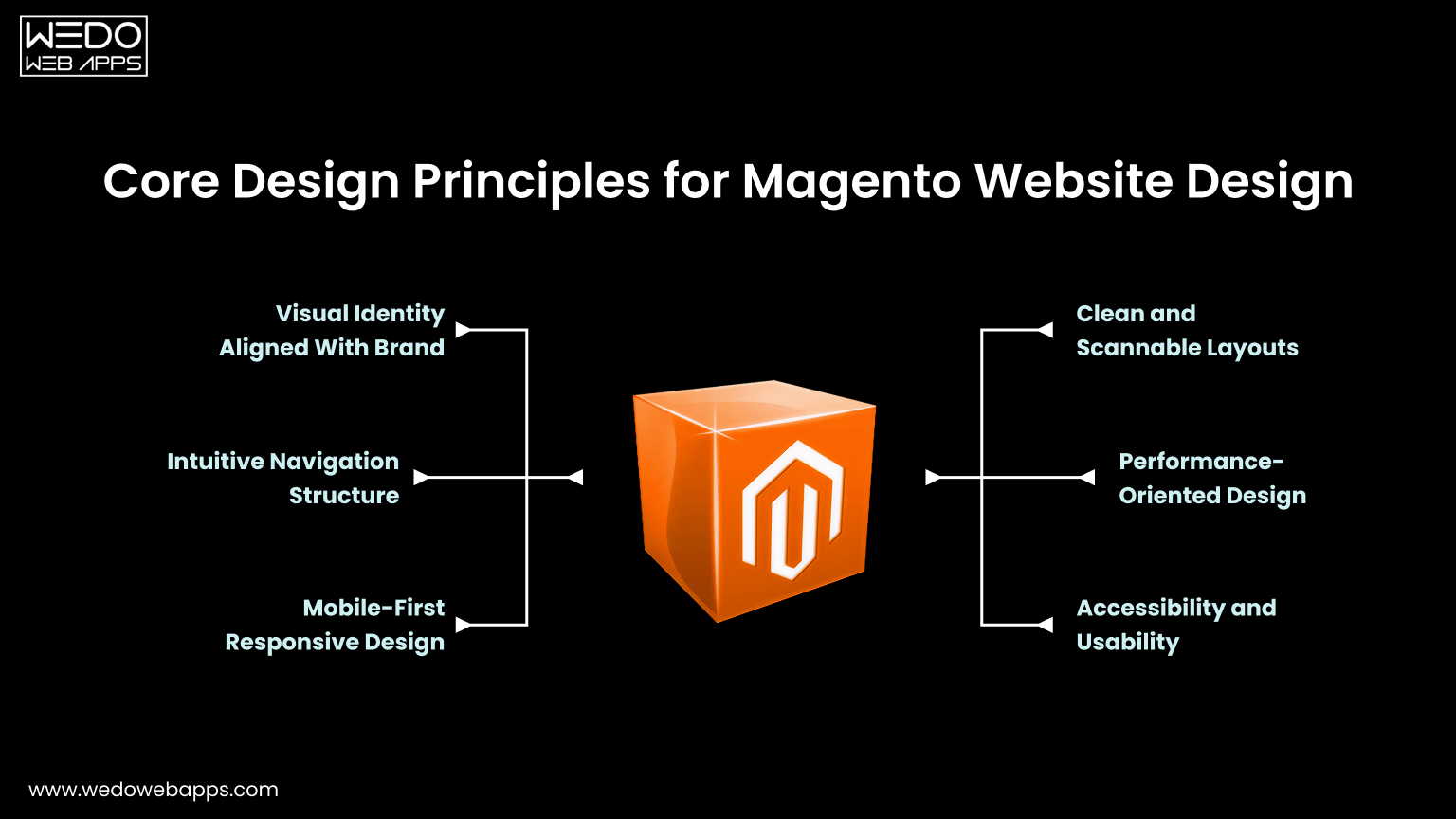
Key Principles of Designing for Magento: Creating an Eye-Catching eCommerce Website
Magento website design principles for eCommerce

Designing an eye-catching ecommerce website using Magento requires more than choosing a visually appealing theme. It involves combining branding, usability, performance, and conversion strategy into one cohesive experience.

Below are the core principles that guide effective designing for Magento.

Visual Identity Aligned With Brand

Your website design should instantly communicate who you are as a brand.

Key elements:

  • Consistent color palette
  • Brand typography
  • Logo placement
  • Visual style guidelines

Strong visual identity builds recognition and trust.

Intuitive Navigation Structure

Visitors should find products with minimal effort.

Best practices:

  • Clear categories
  • Logical menu hierarchy
  • Sticky navigation
  • Prominent search bar

Good navigation improves exploration and reduces bounce rate.

Mobile-First Responsive Design

Most users browse on mobile devices.

Your ecommerce website design Magento implementation must:

  • Adapt to all screen sizes
  • Use touch-friendly elements
  • Maintain fast load speeds

Mobile-first design is essential.

Clean and Scannable Layouts

Users scan pages. They don’t read everything.

Use:

  • White space
  • Short paragraphs
  • Bullet points
  • Clear headings

Scannable layouts improve comprehension.

Performance-Oriented Design

Heavy visuals can slow websites.

Balance aesthetics with performance by:

  • Optimizing images
  • Limiting animations
  • Using lightweight components

Fast websites convert better.

Accessibility and Usability

Design should be usable for all users.

Consider:

  • Readable font sizes
  • High contrast colors
  • Keyboard navigation
  • Clear buttons

Accessibility improves the overall experience.

Key Takeaway: Great designing for Magento blends aesthetics with usability and performance to create an eye-catching ecommerce website that converts.

Magento Website Design Best Practices for Higher Conversions

An eye-catching ecommerce website using Magento should not only look good, it must guide users toward taking action.

These ecommerce website design Magento best practices are proven to increase engagement and conversions.

Clear and Compelling Homepage Messaging

Your homepage should immediately communicate:

  • What you sell
  • Who it’s for
  • Why it’s valuable

Use a strong hero section with a clear value proposition and primary CTA.

High-Quality Product Presentation

Product pages play a critical role in conversions.

Best practices:

  • Multiple product images
  • Zoom functionality
  • Product videos
  • Consistent image styling

High-quality visuals increase buyer confidence.

Persuasive Product Descriptions

Avoid generic descriptions.

Use benefit-driven copy that explains:

  • What problem the product solves
  • Key features
  • Use cases

Good copy supports decision-making.

Strong Calls-to-Action (CTAs)

CTAs should be:

  • Visible
  • Action-oriented
  • Consistent across pages

Examples: Add to Cart, Buy Now, Get Started.

Trust Signals and Social Proof

Build credibility using:

  • Customer reviews
  • Ratings
  • Testimonials
  • Security badges

Trust reduces hesitation.

Streamlined Checkout Design

Checkout should be:

  • Simple
  • Fast
  • Distraction-free

Offer guest checkout and multiple payment options.

Key Takeaway: Conversion-focused Magento website design combines clarity, persuasion, and trust.
Magento store design for higher conversions

How Magento Themes and Templates Support eCommerce Website Design

One of Magento’s biggest strengths is its extensive ecosystem of Magento theme eCommerce solutions, and Magento templates eCommerce businesses can use as a starting point for design.

However, success is not about simply installing a theme. It’s about choosing and customizing the right foundation.

Ready-Made Magento Themes for Faster Launch

Magento offers a wide range of pre-built themes designed for different industries and store types.

Benefits include:

  • Faster development
  • Responsive layouts
  • Modern UI patterns
  • Built-in design components

These themes provide a solid baseline for an ecommerce website using Magento.

Customizable Magento Templates for Brand Differentiation

Templates can be extended or modified to match your brand identity.

Customization allows you to:

  • Adjust layouts
  • Change typography and colors
  • Add custom sections
  • Create unique product page designs

This ensures your store does not look generic.

Performance-Optimized Theme Architecture

Well-built Magento themes:

  • Use clean code
  • Support caching
  • Load assets efficiently

Performance-focused themes help maintain fast load times, which directly impact conversions.

Compatibility With Extensions and Features

Magento themes are designed to work with:

  • SEO extensions
  • Personalization tools
  • Payment gateways
  • Analytics platforms

This makes it easier to enhance functionality without redesigning everything.

When to Choose Custom Theme Development

Businesses often choose custom themes when they:

  • Need unique branding
  • Have complex UX requirements
  • Want higher performance control
  • Plan long-term scalability

Custom themes provide maximum flexibility.

Key Takeaway: Choosing the right Magento theme eCommerce foundation, and customizing it strategically plays a major role in creating an eye-catching and high-performing store.

Our Magento Design and Development Process
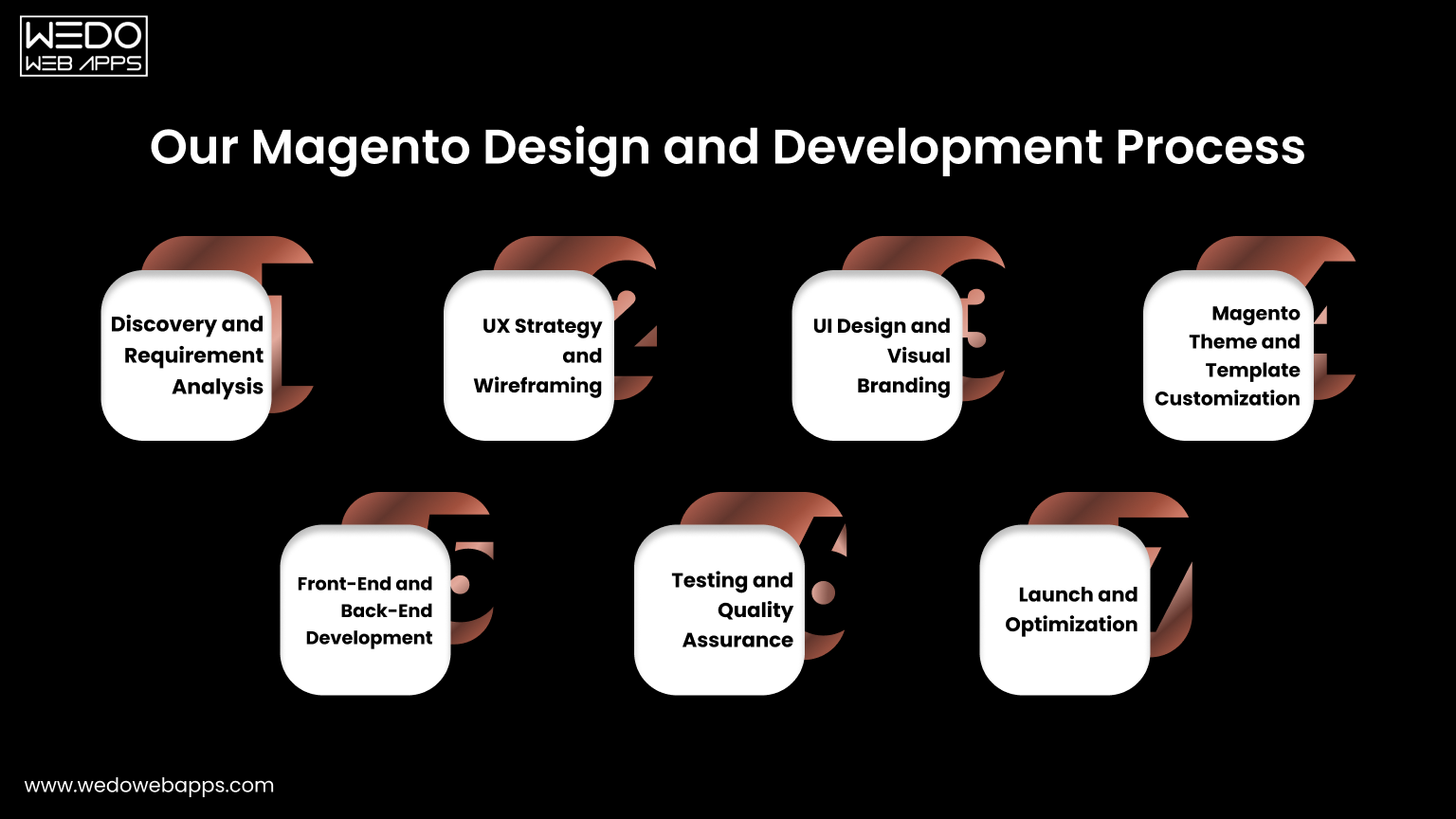
Magento eCommerce website design and development process

Designing an eye-catching ecommerce website using Magento requires a structured, proven process. A well-defined approach ensures your store is not only visually appealing but also fast, user-friendly, and conversion-focused.

Here’s how a professional Magento design and development process typically works:

Discovery and Requirement Analysis

We start by understanding:

  • Your business goals
  • Target audience
  • Product catalog structure
  • Competitors and market positioning

This phase defines the foundation.

UX Strategy and Wireframing

Before visuals, we map user flows and page structures.

This includes:

  • Homepage layout
  • Category structure
  • Product page flow
  • Checkout journey

Wireframes ensure usability before design.

UI Design and Visual Branding

Designers create high-fidelity visuals that reflect your brand.

Focus areas:

  • Color schemes
  • Typography
  • Visual hierarchy
  • Component styling

The result is a cohesive look.

Magento Theme and Template Customization

We select or build the right Magento theme ecommerce foundation, and customize templates.

Customization includes:

  • Layout changes
  • Component styling
  • Responsive behavior

This ensures uniqueness.

Front-End and Back-End Development

Developers implement designs using Magento best practices.

They integrate:

  • Extensions
  • Payment gateways
  • Third-party tools

Functionality and performance are prioritized.

Testing and Quality Assurance

We test:

  • Responsiveness
  • Page speed
  • Browser compatibility
  • Checkout flow

Issues are resolved before launch.

Launch and Optimization

After deployment, we monitor performance and optimize.

This includes:

  • Speed improvements
  • UX refinements
  • Conversion optimizations

Key Takeaway: A structured Magento design and development process ensures your ecommerce website design Magento project delivers measurable business results.

Magento store design and redesign services for scalable growth

Metrics That Matter for Magento Website Design Success

Design success is not based on how attractive a website looks. It is measured by how well your ecommerce website using Magento performs in terms of engagement, usability, and conversions.

Tracking the right metrics helps you understand whether your eCommerce website design Magento efforts are delivering real business impact.

Conversion Rate

Shows the percentage of visitors who complete a purchase.

Why it matters: Higher conversion rates indicate your design is guiding users toward action.

Bounce Rate

Shows how many visitors leave after viewing only one page.

Why it matters: High bounce rates often signal poor first impressions, slow speed, or confusing layout.

Average Session Duration

Shows how long users stay on your site.

Why it matters: Longer sessions indicate an engaging and easy-to-navigate design.

Pages Per Session

Shows how many pages users explore.

Why it matters: Higher numbers suggest better product discovery and navigation.

Cart Abandonment Rate

Shows how many users leave after adding products to the cart.

Why it matters: Helps identify checkout and trust-related design issues.

Mobile Conversion Rate

Shows conversion performance on mobile devices.

Why it matters: Validates the effectiveness of responsive and mobile-first design.

Key Takeaway: Great designing for Magento is validated by performance data, not opinions.

Common Magento Website Design Mistakes to Avoid

Even with a powerful platform like Magento, design mistakes can quietly damage performance, conversions, and user trust. Many businesses invest in themes and visuals but overlook usability, performance, and conversion strategy.

If you’re building an ecommerce website using Magento, avoid these common pitfalls.

1. Using Overly Complex Designs

Heavy animations, cluttered layouts, and excessive visual elements overwhelm users.

Problems caused:

  • Slower page load times
  • Visual distraction from products
  • Confusing user journeys

Simple, clean, and purpose-driven design consistently performs better.

2. Choosing the Wrong Magento Theme

Not all Magento theme ecommerce options are optimized for performance and scalability.

Poor theme choices can lead to:

  • Slow speed
  • Limited customization
  • Compatibility issues with extensions

Always evaluate code quality, performance, and flexibility before selecting a theme.

3. Ignoring Mobile-First Design

Most shoppers browse and purchase on mobile.

Common mobile mistakes:

  • Small text
  • Hard-to-click buttons
  • Broken layouts

Your ecommerce website design Magento approach must prioritize mobile experience first.

4. Inconsistent Branding Across Pages

Different fonts, colors, and layouts across pages create confusion.

Inconsistent branding:

  • Weakens brand identity
  • Reduces trust
  • Feels unprofessional

Consistency strengthens recognition and credibility.

5. Poor Navigation Structure

If users can’t find products quickly, they leave.

Navigation issues include:

  • Too many categories
  • Unclear labels
  • Deep menu hierarchies

Navigation should be simple, logical, and intuitive.

6. Hiding Important Purchase Information

Customers expect transparency.

Hiding or delaying:

  • Shipping costs
  • Delivery timelines
  • Return policies
  • Warranty details

creates hesitation and abandonment.

7. Overloading Pages With Extensions

Installing too many extensions can:

  • Slow down site speed
  • Create conflicts
  • Increase maintenance complexity

Only use extensions that provide clear business value.

8. Weak Product Page Design

Product pages that lack detail fail to convert.

Common issues:

  • Few images
  • No videos
  • Thin descriptions
  • Missing reviews

Strong product pages are essential for conversions.

9. No Clear Calls-to-Action (CTAs)

If users don’t know what to do next, they won’t act.

CTAs should be:

  • Visible
  • Action-oriented
  • Consistent

Every key page should guide users forward.

10. Skipping Conversion Rate Optimization (CRO)

Design without testing leads to guesswork.

CRO includes:

  • A/B testing
  • Heatmap analysis
  • Funnel optimization

CRO ensures your design decisions are backed by data.

Key Takeaway: Avoiding these mistakes ensures your ecommerce website design Magento project delivers strong user experience, better conversions, and long-term scalability.

Conclusion: Turn Your Magento Website Design Into a Growth Engine

Design plays a decisive role in whether visitors stay, engage, and convert. For businesses building an ecommerce website using Magento, great design is not just about looking good. It’s about delivering fast, intuitive, and conversion-focused experiences.

When you combine the right design principles, optimized ecommerce website design Magento practices, high-quality Magento theme ecommerce foundations, and a structured development process, your store becomes a powerful sales platform, not just an online catalog.

An eye-catching Magento website:

  • Builds trust
  • Improves usability
  • Enhances brand perception
  • Increases conversions

If your goal is to create a store that attracts attention and turns visitors into customers, investing in professional Magento development services is one of the smartest decisions you can make.

The right partner can help you design, build, and optimize a Magento store that supports your business goals today, and scales with you tomorrow.

Start an eye-catching Magento eCommerce website design project

Is Magento Right for Your Business? A Practical Suitability Guide

Choosing an ecommerce platform is not just a technical decision, it directly affects your costs, scalability, and day-to-day operations. Many businesses consider Magento because of its reputation for flexibility and power, but a common question remains: Is Magento right for your business, or will it introduce unnecessary complexity?

Magento, also known as Adobe Commerce, is widely recognized for supporting advanced ecommerce requirements. However, its capabilities are best suited for certain types of businesses, while others may be better served by simpler platforms.

This guide is designed to help you evaluate Magento objectively. Rather than promoting a specific solution, it focuses on qualification. It explains who Magento works best for, who should avoid it, and how factors such as business size, operational complexity, and long-term growth plans should influence your decision.

What Is Magento and What Is It Designed For?

Magento is a feature-rich ecommerce platform built to support businesses with complex requirements. It is designed to handle advanced catalog structures, custom workflows, multi-store setups, and deep system integrations.

Unlike simpler hosted platforms, Magento offers a high level of control and extensibility. This makes it suitable for businesses that need flexibility. At the same time, that flexibility comes with added responsibility in terms of configuration and ongoing management.


Request a free Magento platform assessment

Types of Businesses Magento Is Well Suited For

Growing and Mid-Sized Ecommerce Businesses

Magento is often a good fit for businesses that have moved beyond basic ecommerce needs. As product catalogs grow and customer journeys become more complex, Magento’s architecture can support these changes without requiring a platform switch.

Businesses with Complex Product Catalogs

If your store manages thousands of products, multiple attributes, variations, or pricing rules, Magento provides the structure needed to handle that complexity efficiently.

B2B and Wholesale Ecommerce Models

Magento includes features that support B2B ecommerce, such as company accounts, custom pricing, and approval workflows. These capabilities make it suitable for manufacturers, wholesalers, and distributors.

Businesses Planning Long-Term Scalability

Magento is designed with scalability in mind. Businesses that expect growth in traffic, orders, or geographic reach often benefit from Magento’s ability to scale without major architectural changes.

When Magento May Not Be the Right Choice

Magento is a powerful platform, but power alone does not determine suitability. In some situations, choosing Magento can introduce unnecessary complexity.

Magento may not be the right choice if:

  • You are launching a very early-stage or experimental store
  • Your product catalog is small and unlikely to grow significantly
  • You only need basic ecommerce functionality with minimal customization
  • You prefer an all-in-one hosted platform with minimal technical involvement
  • You do not have access to technical resources or a development partner

In these cases, simpler platforms often allow faster setup, lower operational overhead, and easier management.

Magento Compared to Other Ecommerce Platforms

Many businesses compare Magento with platforms such as Shopify when evaluating options. Shopify focuses on simplicity and speed of setup, while Magento emphasizes flexibility and control.

For businesses deciding between platforms, understanding these trade-offs is critical. A detailed comparison of Magento vs Shopify can help clarify which platform aligns better with your business model and long-term goals.

Platform Best For Core Strength
Magento (Adobe Commerce) Businesses needing customization and scalability Flexibility and control
Shopify Businesses wanting fast setup and easy management Simplicity and convenience
WooCommerce Content-focused sites adding ecommerce WordPress-based flexibility

Magento is built for control and extensibility.

Simpler platforms are built for speed and ease of use.

The right choice depends on how complex your business requirements are today and in the future.


Book a free Magento platform consultation

Key Factors to Consider Before Choosing Magento

Business Size and Growth Plans

Consider not only where your business is today, but where it is heading. Magento is often chosen for its ability to support future growth.

Operational Complexity

Evaluate how complex your pricing, fulfillment, and customer management processes are. More complexity often favors Magento.

Budget and Maintenance Capacity

Magento is an investment in flexibility. Businesses should be prepared to manage ongoing updates and platform maintenance.

Magento Cost Reality. What Businesses Should Understand

Magento itself is not inherently expensive, but it is a platform designed for customization and flexibility, which affects overall cost.

Businesses evaluating Magento should be aware of the following cost components:

  • Platform edition (Open Source vs Adobe Commerce)
  • Custom development and configuration
  • Hosting and infrastructure
  • Ongoing maintenance, updates, and security patches

Unlike fully hosted platforms, Magento requires technical involvement to build, optimize, and maintain. For businesses that need advanced functionality, this investment is often justified. For simpler stores, these costs may outweigh the benefits.

Buyer Perspective:

Magento is best viewed as an investment in long-term capability rather than a low-cost entry platform.

Signs Magento Might Be the Right Fit for You

  • Your store requires advanced pricing or customer segmentation
  • You operate multiple storefronts or regions
  • Your business relies on integrations with ERP or CRM systems
  • You plan to scale significantly over time

If several of these apply, Magento may be a strong candidate.

Quick Self-Check. Is Magento a Good Fit for Your Business?

Use the checklist below to quickly assess suitability:

  • My store requires advanced pricing or customer segmentation
  • I manage a large or growing product catalog
  • My business needs custom workflows or integrations
  • I plan to scale significantly over time
  • I have access to technical resources or a development partner

If you check several of these, Magento is likely a strong candidate.

If most do not apply, a simpler ecommerce platform may be a better choice.

How Magento Supports Long-Term Ecommerce Strategy

Magento is not just a tool for selling products. It is a platform that can evolve with your business. Its modular architecture allows features to be added or adjusted as requirements change, making it suitable for businesses with long-term digital strategies.


Talk to a Magento development expert

Final Thoughts. Making the Right Platform Choice

Magento is a powerful ecommerce platform, but power alone does not determine suitability. The right choice depends on your business size, complexity, resources, and long-term goals.

By understanding who Magento is designed for and who may be better served by other platforms, businesses can make confident decisions that avoid unnecessary complexity while supporting sustainable growth.

Businesses that confirm Magento is the right fit often work with a Magento development partner to ensure proper architecture, scalability, and long-term performance.


Get a free Magento ecommerce consultation

Key Factors to Consider When Hiring Magento Developers

Introduction

Why hiring the right Magento developers is critical for store success?

Hiring Magento developers is a decision that directly affects the stability, scalability, and long-term cost of an eCommerce store. Magento’s flexibility allows deep customisation, but that same flexibility increases technical complexity and dependency on developer expertise.

Understanding the key factors to consider when hiring Magento developers helps businesses avoid common pitfalls such as poor performance, difficult upgrades, and growing technical debt. Unlike simpler platforms, Magento projects demand careful evaluation of skills, experience, and working approach, not just familiarity with the technology.

This guide is designed to support informed decision-making. It focuses on how to evaluate Magento developers effectively, what questions to ask during assessment, and which mistakes to avoid, so businesses can make confident, low-risk hiring decisions when working with Magento.


Hiring Magento Developers risk awareness

Understanding the Magento Ecosystem

Why platform knowledge matters before evaluating developers

Magento is built for complex eCommerce use cases, which makes understanding the platform a critical evaluation factor. Unlike simpler systems, Magento relies on a modular architecture that allows extensive customisation, but also increases technical risk if handled incorrectly.

At an ecosystem level, the Magento platform involves:

  • Core modules that control catalog, checkout, and order management.
  • Custom modules and extensions layered on top of the core.
  • Integrations with external systems such as payments, shipping, and inventory tools.

Because these components are interconnected, development decisions in one area often affect performance, security, and upgrade stability elsewhere. Developers who understand this ecosystem can explain how customisations impact the overall system rather than treating features in isolation.

Platform awareness also includes understanding differences between Magento editions and versions. Developers who lack this knowledge may create solutions that work temporarily but become difficult to upgrade or maintain.

From an evaluation standpoint, ecosystem knowledge helps businesses distinguish between developers who use Magento and those who understand how Magento works, a critical distinction when considering long-term project stability.

Understanding Magento Version Compatibility and Upgrade Readiness

Evaluating developers for long-term platform stability

Magento development does not stop at launch. Version updates, security patches, and platform upgrades are a constant part of operating a Magento store, which makes upgrade readiness an important factor during developer evaluation.

The Magento ecosystem evolves regularly, and each version can introduce changes that affect custom modules, extensions, and integrations. Developers who lack experience with version compatibility may implement solutions that work in the short term but create issues during future upgrades.

When evaluating developers, it’s important to assess whether they:

  • Understand how Magento versions differ in structure and features.
  • Build customisations that minimise conflicts during upgrades.
  • Avoid hard-coded changes that break when the core platform is updated.

Upgrade-aware developers typically follow best practices such as modular development, dependency management, and documentation of version-specific logic. These practices reduce long-term risk and make future platform changes more predictable.

From a decision-making perspective, version compatibility awareness helps businesses avoid costly rework, extended downtime, and security gaps. It also signals whether a developer is thinking beyond immediate delivery, making upgrade readiness one of the key factors to consider when hiring Magento development teams.

Core Technical Skills to Look For in Magento Developers

Foundational capabilities that affect performance and reliability

When evaluating candidates, technical depth matters more than broad familiarity. Magento projects demand developers who can work confidently across backend logic, frontend presentation, and system optimisation, without compromising stability.

4.1 Backend Development Expertise

Strong backend skills are essential because Magento’s core logic lives server-side. Developers should demonstrate:

  • Solid PHP knowledge applied within the Magento framework.
  • Experience building custom modules rather than modifying core files.
  • Understanding of database structure, queries, and indexing.
  • Ability to integrate third-party systems using APIs.

Backend weaknesses often surface later as performance issues or upgrade conflicts, making this a primary evaluation area.

4.2 Frontend and UX Implementation Skills

Magento frontend work goes beyond theming. Developers should be able to:

  • Work with Magento themes and layout files effectively.
  • Implement responsive, performance-friendly interfaces.
  • Balance customisation with usability and accessibility standards.

Frontend decisions directly affect load times and user experience, especially on high-traffic stores.

4.3 Performance, Security, and Optimisation Knowledge

Magento performance and security are tightly linked to developer expertise. Look for knowledge of:

  • Caching, indexing, and load management techniques.
  • Secure coding practices and vulnerability prevention.
  • Handling updates and security patches without breaking functionality.

Together, these skills required for Magento developers form a strong foundation and are central factors to consider when hiring Magento developers for long-term success.


Hiring Magento Developers structured workflows

5. Code Quality, Documentation, and Maintainability

Assessing long-term sustainability beyond launch

Code quality is often overlooked during hiring because it’s harder to evaluate upfront, but it’s one of the strongest indicators of long-term project health. In Magento projects, poorly structured code can quickly lead to performance issues, upgrade conflicts, and high maintenance costs.

Developers working with the Magento framework should follow modular, readable coding practices. This includes avoiding core file overrides, keeping custom logic isolated, and writing code that other developers can easily understand and extend.

From an evaluation perspective, businesses should look for developers who:

  • Write clean, well-organised, and reusable code.
  • Document custom modules, integrations, and key decisions.
  • Actively manage technical debt instead of accumulating it.
  • Prepare projects for future handovers or team expansion.

Documentation is especially important in Magento because projects often evolve over time with multiple contributors. Clear documentation reduces dependency on individual developers and makes future updates more predictable.

Strong code quality and maintainability practices signal that a developer is thinking beyond delivery timelines, making this an essential factor to consider when hiring Magento developers for sustainable growth.

Experience Factors That Matter More Than Years

How to evaluate relevance instead of tenure

Years of experience alone rarely indicate whether a developer is the right fit for a Magento project. What matters more is relevant experience, working on projects that resemble your business in complexity, scale, and technical requirements.

When assessing experience with the Magento ecosystem, focus on whether developers have:

  • Worked with stores of similar size, traffic volume, and product range.
  • Handled Magento migrations, upgrades, or re-platforming projects.
  • Built solutions involving custom workflows or complex integrations.
  • Managed multi-store or multi-language configurations.

Developers with relevant experience are more likely to anticipate challenges early, estimate effort realistically, and avoid trial-and-error approaches. In contrast, experience limited to small or template-based projects may not translate well to more demanding environments.

From a decision-support perspective, evaluating experience relevance helps businesses reduce delivery risk and avoid costly rework, making it one of the key factors to consider when hiring Magento developers effectively.

Communication and Workflow Considerations

Why does collaboration quality influence project outcomes

Strong technical skills alone are not enough to ensure successful Magento projects. Clear communication and structured workflows play a critical role in avoiding misunderstandings, delays, and rework, especially in long-term or evolving builds.

When evaluating developers working with Magento, businesses should assess how they:

  • Gather and clarify requirements before starting development.
  • Document decisions, assumptions, and technical trade-offs.
  • Collaborate with designers, QA teams, and internal stakeholders.
  • Handle feedback, revisions, and changing priorities.

Workflow maturity also matters. Developers familiar with structured or agile processes tend to plan work more realistically, break tasks into manageable units, and communicate progress transparently. This reduces uncertainty during development and makes timelines more predictable.

From a hiring perspective, strong communication habits signal reliability and accountability. They help ensure that technical work aligns with business goals, making workflow and collaboration an important factor to consider when hiring Magento developers.

Testing, Quality Assurance, and Deployment Practices

Reducing risk through structured release processes

Testing and deployment practices often separate reliable Magento projects from unstable ones. Because Magento stores involve multiple integrations and customisations, even small changes can have unintended effects if not properly tested.

When evaluating developers working with Magento, businesses should look for clarity around:

  • Use of unit, integration, and regression testing.
  • Availability of staging or pre-production environments.
  • Structured release processes rather than direct production changes.
  • Clear rollback or issue-resolution plans.

Developers with mature QA practices tend to catch issues earlier, reduce post-launch bugs, and handle updates with less disruption. They also understand how to test changes in isolation before releasing them to live environments.

From a decision-making standpoint, strong testing and deployment discipline reduces downtime risk and protects store performance. This makes QA and release practices an important, but often underestimated, factor to consider when hiring Magento developers.

Questions to Ask Before Hiring Magento Developers

Interview-style questions that reveal real capability

Asking the right questions helps move beyond resumes and uncover how developers actually think, plan, and solve problems. These questions to ask Magento developers are designed to reveal depth, not just familiarity with tools.

9.1 Technical Evaluation Questions

Use these to assess hands-on capability with Magento:

  • How do you decide between custom modules and existing extensions?
  • How do you approach performance optimisation on high-traffic stores?
  • What steps do you take to ensure customisations remain upgrade-safe?
  • How do you handle third-party integrations and dependency conflicts?

Strong answers focus on trade-offs, best practices, and long-term impact, not just implementation steps.

9.2 Process and Collaboration Questions

These help evaluate reliability and working style:

  • How do you estimate effort and handle scope changes?
  • How do you document custom work for future reference?
  • What testing steps do you follow before deployment?
  • How do you communicate risks or delays during development?

Together, these questions support a structured evaluation approach and are a practical way to apply the key factors to consider when hiring Magento developers.

Post-Launch Readiness and Ongoing Stability Considerations

Planning beyond go-live without sales bias

Launching a Magento store is not the finish line. Ongoing stability depends on how well developers prepare the project for real-world usage, updates, and operational changes after release.

From an evaluation standpoint, businesses should assess whether developers consider post-launch needs, such as:

  • Monitoring store performance and identifying early warning signs.
  • Applying security patches and platform updates responsibly.
  • Managing bug fixes without disrupting live operations.
  • Transferring knowledge clearly to internal teams or future developers.

Developers who plan for post-launch scenarios tend to build cleaner systems, document decisions, and avoid fragile dependencies. This reduces reliance on a single individual and lowers long-term operational risk.

It’s also important to understand how developers approach continuity. Clear handover processes, structured documentation, and predictable update workflows make it easier to scale or change resources later without rebuilding large parts of the system.

Considering post-launch readiness during evaluation helps businesses avoid reactive fixes and recurring instability, making it a practical factor to consider when hiring Magento developers with long-term success in mind. See this hiring guide for more context.

Common Mistakes Businesses Make When Hiring Magento Developers

Red flags that often lead to long-term issues

Many Magento hiring challenges don’t come from lack of effort, but from avoidable evaluation mistakes. Recognising these early can prevent delays, rework, and rising maintenance costs later.

Common mistakes include:

  • Prioritising cost over capability, leading to fragile implementations.
  • Assuming general eCommerce experience equals Magento expertise.
  • Overlooking code quality and documentation during evaluation.
  • Ignoring upgrade and post-launch considerations until problems appear.

Another frequent issue is focusing only on short-term delivery. Developers may meet initial deadlines but leave behind tightly coupled code, undocumented customisations, or dependencies that complicate future updates on Magento.

Businesses also underestimate the importance of communication and testing discipline, assuming these can be fixed later. In practice, weak processes compound over time and become harder to correct once the store is live.

Being aware of these common mistakes when hiring Magento developers helps decision-makers apply the right evaluation criteria upfront, reducing risk and improving long-term outcomes.


Magento issues upgrade readiness

How Businesses Typically Approach Magento Hiring

Understanding different engagement models (neutral comparison)

Businesses use different hiring models depending on budget, timeline, and internal capability. Understanding these options helps decision-makers choose an approach that aligns with project complexity, without defaulting to assumptions.

Common Magento hiring approaches include:

Freelancers

  • Often suitable for small, well-defined tasks.
  • Limited availability and continuity for complex or long-term work.

In-house developers

  • Greater control and business alignment.
  • Higher overhead and longer onboarding time.
  • Requires consistent project volume to stay efficient.

External development teams

  • Access to broader skill sets and structured processes.
  • Easier to scale resources up or down.
  • Requires clear communication and documentation standards.

Each model has trade-offs, especially when working with Magento, where complexity can grow quickly. The right choice depends on project scope, expected growth, and internal technical maturity.

Understanding these models helps businesses evaluate candidates more objectively and apply the same key factors to consider when hiring Magento developers regardless of engagement type.

Final Checklist for Evaluating Magento Developers

A practical Magento developer hiring checklist

This checklist brings together the most important evaluation points discussed throughout the guide. It can be used to compare candidates or teams consistently, without drifting into sales or pricing considerations.

Technical capability

  • Demonstrates strong backend and frontend skills relevant to Magento.
  • Builds custom modules without modifying core files.
  • Understands performance, security, and optimisation fundamentals.

Experience relevance

  • Has worked on projects with similar complexity and scale.
  • Shows familiarity with upgrades, migrations, or complex integrations.
  • Can explain past challenges and how they were handled.

Code quality and process

  • Follows clean, modular coding practices.
  • Provides clear documentation and handover readiness.
  • Uses structured testing and deployment workflows.

Collaboration and reliability

  • Communicates clearly and documents decisions.
  • Handles feedback, risks, and changes transparently.
  • Plans beyond launch for long-term stability.

Using a structured checklist like this reduces subjectivity and helps decision-makers apply the same key factors to consider when hiring Magento developers across all evaluations.

Conclusion

Making informed, low-risk Magento hiring decisions

Hiring Magento developers requires more than checking technical skills or past experience. It’s about understanding how developers think, how they approach complexity, and how well their work will hold up over time. A structured evaluation helps businesses reduce risk, avoid costly rework, and build stores that remain stable as requirements evolve.

By focusing on platform understanding, relevant experience, code quality, communication practices, and post-launch readiness, decision-makers can move beyond surface-level criteria. These elements collectively form the key factors to consider when hiring Magento developers, regardless of whether the work is short-term or long-term.

Approaching Magento hiring as a decision process, rather than a quick resourcing task, leads to better outcomes. With the right evaluation framework in place, businesses are better equipped to choose developers who can support sustainable growth and long-term store performance.


Magento development service models

Magento Customization Services: Unleashing Magento’s Full Potential

Introduction

Imagine launching your Magento store with high expectations, a strong product lineup, competitive pricing, and a growing marketing budget. In the first few months, traffic increases, and orders start coming in. But soon, cracks begin to show. Customers abandon carts. The checkout feels slow. The store design looks similar to competitors. Simple business workflows require manual workarounds.

Nothing is technically “broken.” But the store is not performing the way your business needs it to.

This is a common situation for businesses using Magento out of the box.

Magento is a powerful eCommerce platform known for its flexibility and scalability. However, its real strength is unlocked through customization. Without customizing Magento to your specific business model, user expectations, and growth goals, you only experience a fraction of what the platform can offer.

Magento customization allows businesses to adapt their store’s design, functionality, checkout experience, integrations, and performance to match their exact needs, transforming a standard Magento installation into a high-performing, conversion-focused eCommerce engine.

In this guide, you will learn what Magento customization means, how it unlocks Magento’s full potential, essential types of customization, costs, timelines, challenges, and how to choose the right Magento customization company. This helps you confidently plan your store’s optimization and growth.


Call to action for Magento store customization audit

What is Magento Customization?

Magento customization is the process of modifying Magento’s design, features, and functionality to match specific business requirements beyond the platform’s default capabilities.

In simple terms, Magento customization means adapting your store so it works the way your business operates, rather than forcing your business to adjust to Magento’s default setup.

Magento customization can involve:

  • Changing the visual appearance of the store
  • Modifying existing features
  • Adding new functionality
  • Integrating third-party systems
  • Optimizing performance and user experience

Magento Configuration vs Magento Customization

These two terms are often confused, but they are different.

Magento Configuration: Uses built-in admin settings to adjust existing options such as tax rules, shipping methods, or product attributes.

Magento Customization: Involves coding changes, theme modifications, module development, or architectural enhancements to create new or improved functionality.

Configuration extends what already exists. Customization creates what Magento does not offer by default.

What Can Be Customized in Magento?

  • Storefront design and layout
  • Product pages and catalogs
  • Checkout and cart experience
  • Payment and shipping logic
  • Admin workflows
  • Integrations with external systems

Magento’s open-source nature makes it highly extensible, which is why it is a preferred platform for businesses that need personalized eCommerce development solutions.

How Magento Customization Unlocks Magento’s Full Potential

Magento is designed as a flexible platform, but flexibility alone does not guarantee results. Customization is what transforms Magento from a standard eCommerce system into a platform that actively supports your business strategy.

Here is how Magento customization unlocks Magento’s full potential:

Personalized Shopping Experiences

Customization allows you to personalize:

  • Homepage layouts
  • Product recommendations
  • Navigation structure
  • Search and filtering

This creates personalized experiences that make it easier for customers to find what they want and complete purchases.

Scalable Architecture

Customizing Magento’s architecture ensures your store can:

  • Handle growing traffic
  • Support large product catalogs
  • Manage complex pricing rules
  • Expand into new markets

Instead of rebuilding later, customization prepares your store for growth from the start.

Optimized Store Performance

Performance-focused customization improves:

  • Page load speed
  • Server response times
  • Caching mechanisms

Faster stores lead to better user experience, improved SEO rankings, and higher conversions.

Business-Specific Workflows

Every business operates differently. Magento customization enables:

  • Custom order processing
  • Automated inventory handling
  • Role-based admin permissions
  • Tailored reporting

This reduces manual work and operational errors.

Seamless Integrations

Custom integrations connect Magento with:

  • ERP systems
  • CRM platforms
  • Accounting tools
  • Marketing automation software

This results in unified operations and better data visibility.

Why Businesses Invest in Magento Store Customization

Businesses don’t customize Magento just for aesthetics. They invest in Magento store customization because it directly impacts revenue, efficiency, and scalability.

Here are the main reasons:

Improved User Experience (UX)

Customized stores provide:

  • Cleaner navigation
  • Faster browsing
  • Intuitive product discovery

A better UX reduces friction and increases conversions.

Higher Conversion Rates

Magento store customization allows optimization of:

  • Product pages
  • Checkout flow
  • Calls-to-action

Small improvements in these areas often lead to measurable revenue gains.

Strong Brand Differentiation

With theme and UI customization, your store:

  • Reflects your brand identity
  • Stands out from competitors
  • Builds customer trust

Better Operational Efficiency

Customized admin workflows automate repetitive tasks, saving time and reducing errors.

Long-Term Scalability

Magento store customization ensures your platform can grow without major rework.

Essential Types of Magento Customization

Magento supports multiple levels of customization depending on business goals, complexity, and scale. Below are the most essential and commonly used types.

Magento Theme Customization

Magento theme customization focuses on modifying the visual design and user interface of your store to match your brand and improve usability.

Common theme customization areas include:

  • Homepage layout design
  • Product page layout changes
  • Header, footer, and navigation design
  • Typography and color schemes
  • Mobile responsiveness

Theme customization ensures your store looks unique, professional, and conversion-focused.

Magento Extension & Module Customization

Extensions add functionality to Magento. Customization may involve:

  • Modifying existing extensions
  • Combining multiple Magento extensions
  • Building custom modules

This allows businesses to implement features that are not available out of the box.

Checkout & Cart Customization

Checkout customization improves conversion rates by:

  • Reducing checkout steps
  • Adding one-page checkout
  • Custom payment methods
  • Custom shipping logic

A smoother checkout experience leads to fewer abandoned carts.

Performance & Speed Optimization Customization

Performance customization focuses on:

  • Caching strategies
  • Code optimization
  • Image compression
  • Database optimization

Faster stores improve SEO and user satisfaction.

Integration Customization

Integration customization connects Magento with:

  • ERP systems
  • CRM platforms
  • Payment gateways
  • Shipping and inventory systems

This creates seamless data flow across business tools.


Call to action for Magento customization consultation

Magento Customization vs Out-of-the-Box Magento

Magento’s default installation offers strong baseline features. However, businesses with growth goals often outgrow these capabilities.

Below is a practical comparison.

Aspect Out-of-the-Box Magento Customized Magento
Design Standard themes Brand-specific UI/UX
Functionality Limited to core features Tailored business features
Flexibility Moderate High
Scalability Basic scaling Built for growth
Integrations Limited Custom integrations
Performance General optimization Advanced optimization
Competitive Edge Low differentiation Strong differentiation

Key Takeaway: Out-of-the-box Magento works for basic stores. Customized Magento works for businesses aiming for scale, differentiation, and higher conversions.

When Should You Customize Magento?

Magento customization becomes essential when your business starts to outgrow standard platform capabilities.

For Startups

Customize Magento when you need:

  • Unique branding
  • Essential third-party integrations
  • Simple checkout optimization

Early customization helps establish a strong foundation.

For Small & Medium Enterprises (SMEs)

Customize Magento when you want:

  • Conversion-focused UX improvements
  • Automated workflows
  • Performance optimization

This supports consistent growth.

For Enterprises

Customize Magento when you require:

  • Complex pricing models
  • Large catalogs
  • Advanced integrations
  • High scalability

Enterprise customization enables operational efficiency at scale.

How to Customize Magento Store: Step-by-Step Process

A structured approach ensures Magento customization delivers business value without unnecessary risk.

Step 1: Requirement Gathering

This stage focuses on understanding your business goals, identifying pain points in the current store, and documenting the features or improvements you need. Requirements are prioritized based on impact, budget, and timeline to create clarity from the beginning.

Step 2: Solution Design

During solution design, the technical team decides the best customization approach, whether through theme changes, module customization, or integrations. A technical roadmap is created to outline architecture, dependencies, and implementation strategy.

Step 3: Development

Developers implement approved customizations, including theme modifications, module development, and system integrations. Coding follows Magento best practices to ensure stability and scalability.

Step 4: Testing

All customizations undergo functional, performance, and security testing to ensure they work correctly, load efficiently, and do not introduce vulnerabilities.

Step 5: Deployment

Changes are first deployed to a staging environment for final validation. After approval, customizations are released to the live store.

Step 6: Maintenance

Post-launch, the store is monitored for performance and stability. Bugs are fixed, and enhancements are added as business needs evolve.


Request a project estimate for Magento customization services

Cost of Magento Customization Services

The cost of Magento customization services varies depending on the scope of work, complexity of features, and level of customization required. There is no one-size-fits-all price, but understanding the main cost drivers helps set realistic expectations.

One of the biggest factors is the type of customization. Simple theme adjustments or small feature changes cost significantly less than building custom modules or complex integrations.

Another major factor is project complexity. Customizing checkout flows, multi-store setups, or advanced pricing rules requires more development effort than basic UI changes.

Third-party integrations also affect pricing. Connecting Magento with ERP, CRM, payment gateways, or logistics systems increases development time and testing requirements.

The experience level of the Magento customization company matters as well. Experienced teams may charge higher rates, but they typically deliver higher-quality, scalable solutions with fewer risks.

High-Level Cost Ranges (Indicative)

  • Small customizations: A few thousand dollars
  • Medium-level customization projects: Mid five figures
  • Large or enterprise-level customization: Five figures to six figures+

(Exact pricing depends on detailed requirements and discovery.)

Cost Optimization Tips

Starting with a prioritized feature list, building an MVP, reusing reliable extensions where possible, and planning customization in phases can help control costs.

How Long Does Magento Customization Take?

Magento customization timelines depend on the scope of work, complexity, and number of features involved. Smaller changes can be completed quickly, while large customization projects require phased execution.

Small customizations, such as minor theme changes, layout adjustments, or simple feature tweaks, usually take a few days to one or two weeks.

Medium-level customizations, including checkout optimization, extension customization, or performance improvements, typically take a few weeks to one or two months.

Large or complex customizations, such as custom module development, multi-system integrations, or enterprise-level workflows, may take several months and are often delivered in phases.

A discovery phase at the start of the project helps define accurate timelines and reduces surprises later.

Common Magento Customization Challenges & How to Overcome Them

While Magento customization unlocks powerful capabilities, it also introduces technical and operational challenges. Knowing these in advance helps reduce risk.

Compatibility Issues: Customizations may conflict with existing extensions or Magento updates.

Solution: Follow Magento coding standards and test changes in staging environments.

Performance Impact: Poorly written custom code can slow down the store.

Solution: Optimize code, use caching, and conduct performance testing.

Upgrade Conflicts: Custom features may break during Magento version upgrades.

Solution: Use upgrade-safe development practices and maintain documentation.

Security Risks: Custom code can introduce vulnerabilities if not built securely.

Solution: Implement secure coding practices and regular security audits.

Why Working with a Magento Customization Company Maximizes Results

Magento customization is not just about writing code. It requires platform expertise, architectural understanding, and experience handling complex eCommerce scenarios.

A professional Magento customization company brings:

Platform Expertise: Experienced teams understand Magento’s architecture, best practices, and limitations, ensuring stable and scalable solutions.

Faster Delivery: Proven processes and reusable components help reduce development time.

Quality & Reliability: Customizations are built using standards that minimize bugs and future conflicts.

Long-Term Support: Ongoing maintenance, updates, and optimization ensure your store continues performing well.

At WEDOWEBAPPS, we help startups, SMEs, and enterprises deliver high-performing Magento stores through tailored customization, performance optimization, and scalable development.

Conclusion

Magento is a powerful eCommerce platform, but its true capabilities are realized only when it is customized to match your business model, customer expectations, and growth strategy.

Whether it’s theme customization, feature enhancements, checkout optimization, performance improvements, or system integrations, Magento customization enables you to build an eCommerce store that is faster, more flexible, and conversion-focused.

For businesses aiming to scale, relying solely on out-of-the-box functionality often becomes a limitation. Strategic customization helps overcome these limitations and transforms Magento into a platform that actively supports long-term growth.

Working with an experienced Magento development company ensures that customization is done correctly, securely, and in an upgrade-safe manner. The right partner can guide you through planning, implementation, and ongoing optimization, reducing risk while maximizing ROI.

If your goal is to unlock Magento’s full potential and build a high-performing online store, investing in professional Magento customization is a practical and future-ready decision.


Talk to Magento experts about store customization

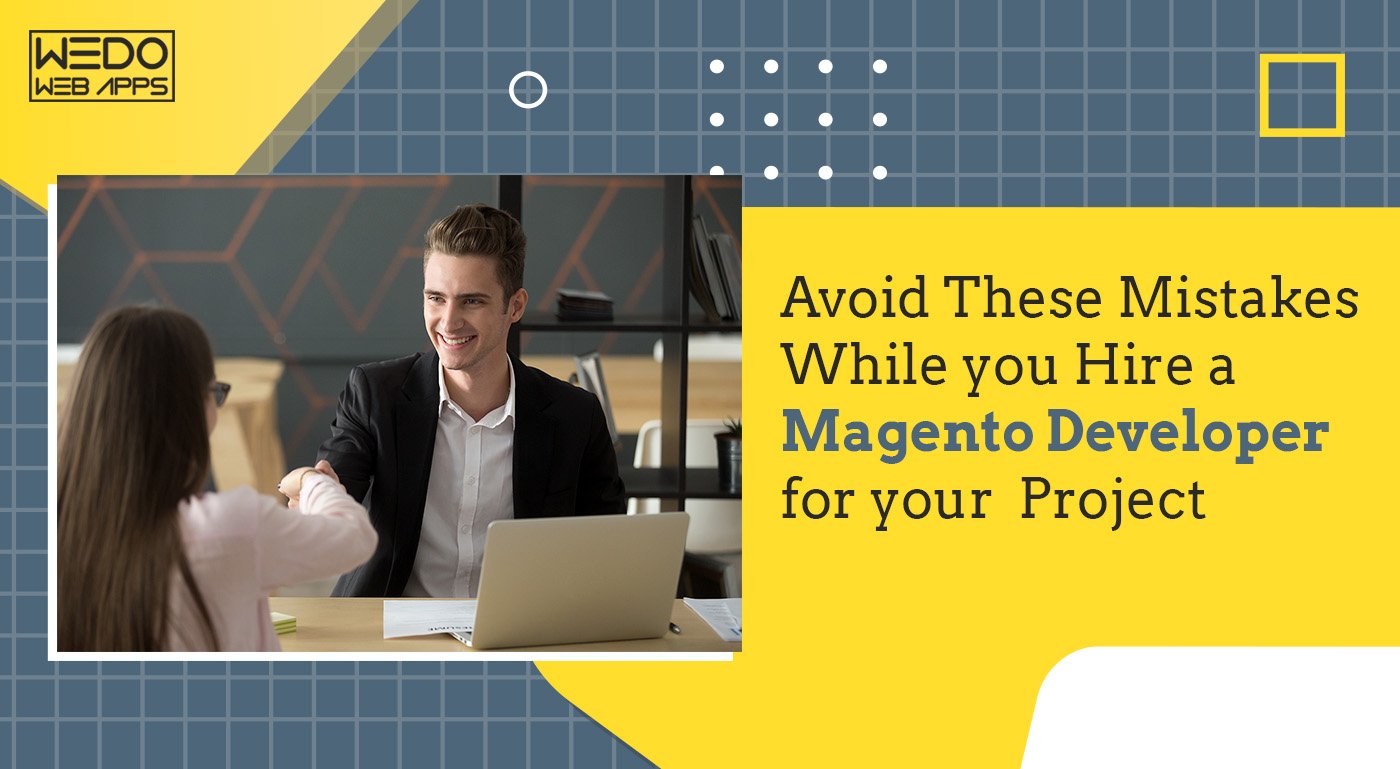
Avoid These Mistakes While you Hire a Magento Developer for your Project

Since it’s the time of online businesses ruling the world, Magento is leading with the top position among several eCommerce development platforms. A huge amount of users have always preferred Magento since it has been launched. Moreover, entrepreneurs of small and large-scale businesses from different niches have started adapting this eCommerce platform for developing their websites due to its rich features, high flexibility, and diversity.  Apart from that, a variety of factors will encourage more and more companies to use Magento. Today, we’ll look at why we should use Magento, how to find the best Magento Development Company, and what mistakes to avoid when you want to hire a Magento web developer for your eCommerce website development. So, before you hire a Magento developer, keep reading to make sure you’re well-prepared.

Why is Magento the Best Choice?

Setting up an online eCommerce store needs great planning and strategy development to ensure that the things you offer reach the broadest possible audience. Your eCommerce platform must be safe, simple to use, have a solid basis, and have good speed and scalability. When these criteria are addressed from the start, the platform becomes a success, and you find yourself in a position where your clients are greeted by a productive and efficient way of buying things from your website. Here are the reasons why Magento 2 website development is the best choice for your eCommerce store. 

1. Flexible Content Management System 

Magento is an outstanding eCommerce platform when compared to other systems. The platform offers a powerful and extensible content management system (CMS). It works for any store, whether it is selling ten things or ten million. Regardless of the size or type of e-commerce website you have, Magento makes it simple to create one.

2. Magento is a free and open-source e-commerce platform.

Magento is an open-source eCommerce platform featuring a free Community edition and a premium Enterprise version. Magento also allows users and its development team to change, expand, and customize the source code for default feature optimization or additional advanced functionality. As a result, Magento customers have complete control over their sites and can modify or improve them to meet their specific requirements.

3. High Collection of Extensions

Magento provides a collection of high-quality extensions. Their extensions allow you to enhance the functionality of your Magento store at any time.  For example, when you first open an online business, you may not need a live chat extension; however, if your traffic rises, you can add it later. The Magento Marketplace contains extensions for marketing, payments, customer assistance, accounting, sales, analytics, shipping, and site optimization, among other categories.

4. Tailored Integrations 

Magento gives you more options for customizing your online store by allowing third-party integration. This is a significant benefit provided by Magento’s eCommerce platform. Magento allows you to modify every aspect of your store. Basic third-party integrations, such as main online applications, supplementary payment channels, and so on.

5. Mobile Friendly 

We live in a mobile world, and mobile devices account for a substantial portion of internet commerce. Magento allows websites to have a responsive design, which allows users to have a consistent experience across several displays. Magento is suitable for the new era because of its cross-platform interoperability, cross-browser compatibility, and device form-agnostic capabilities.

6. Hosting Alternatives

Magento does not oblige businesses to use the platform’s integrated hosting when it comes to using its platform. Magento allows each eCommerce store to choose its own hosting provider based on its needs. This gives online businesses the ability to own their own files and choose which hosting companies they want to use for their website. Read also: Finding the Right Magento Development Company USA for Your Business Needs

7. Multi-Website Possibilities

Magento can host multiple websites and manage them all from a single back-end admin. This is only one of the many aspects that contribute to Magento’s success. Magento is the greatest eCommerce CMS platform for business owners who manage several web stores and sites because of this functionality.

8. Endless Possibilities

Magento stays current with design trends, online retail needs, and online security regulations. This platform can manage a large number of queries. As a result, Magento is the finest alternative for a large-scale company. Magento eCommerce additionally expands, accelerates, and customizes online buying.

9. E-Commerce Stores Load More Quickly

Magento aspires to be one of the world’s quickest eCommerce platforms. According to recent Google statistics, the speed with which web pages load is critical because more than half of consumers quit a website that takes too long to open. Even when websites experience enormous quantities of traffic, Magento’s heavy-duty framework allows admins to minimize page load times to a bare minimum. Read also: Magento Website Development

10. Advanced SEO Features

Every entrepreneur wants their website to rank higher in the SERPs, and once there, they will go to great lengths to guarantee that their websites appear on the first page of results. This feat would be impossible to achieve without SEO. As a result, Magento developed a sophisticated SEO tool that allows e-commerce entrepreneurs to improve the ranking of their product pages. The platform’s features allow you to optimize URLs, create rich snippets, create a sitemap, canonicalize tags, optimize keywords, and add ALT tags to images, among other things. The above points are enough to prove that Magento is the best choice for eCommerce website development. However, for robust and effective website development, one should hire a Magento developer, further, we will discuss the mistakes one should avoid while hiring a Magento Developer. 

Mistakes to Avoid When Hiring a Magento Developer for Your Company

1. Not thoroughly analyzing your requirements

The first and most typical mistake customers make when choosing a Magento development company is not having a clear notion of what they want. If you want to hire Magento 2 developer, you should first figure out what you require. Make a list of your requirements so you can acquire a precise estimate of development costs and other technical problems. You can also hire a specialist to assist you in identifying the successful elements and functions of winning stores.

2. Taking shortcuts

To reduce the expenses of offshore web development projects, the majority of business partners choose rookie developers. If you launch the most trustworthy web resolutions, a business website or matched cart suspension can be a beneficial tool for increasing sales and earnings. One of the most common misunderstandings is hiring a part-time or unskilled employee to establish your company’s web presence. So, rather than taking any chances with random picks, spend enough time investigating your options.

3. Not Looking for Their Portfolios and reviews 

If you’ve decided to engage a Magento development firm for your project, you should look at portfolios and reviews first. Portfolios will assist you in determining whether or not the organization has relevant experience with similar projects. Portfolios can be found by visiting the company’s official websites or profiles on other portals. Before selecting to hire a Magento developer who appears to be a decent option, read the reviews. Requesting recommendations from previous clients can also assist you in choosing the proper firm for your job.

4. Consistent Maintenance and assistance are required

A Magento developer’s job doesn’t end with the store’s setup; it only begins there. Upgrades, performance improvements, security checks, and other associated duties are always required. As a result, when you hire Magento developer India, pay close attention to the company’s support and maintenance services.

5. Overlooking the impact of CMS and SEO –

An attractive and feature-rich website is an asset to your company. But what good is a feature if no one can locate it? Only if your website appears on the first pages of search engine results can you reach out to present and potential clients. When you’re looking for the best Magento developer, be sure to ask about their CMS (Content Management System) and SEO (Search Engine Optimization) experience.

6. Not putting enough emphasis on the necessity for security

The digital world is vulnerable to a variety of cyberattacks, which also affect the eCommerce industry. If you’re choosing a Magento custom development company for your business, make sure to clarify all of these requirements ahead of time so you don’t get surprised when you find out you’ll be charged more later on.

7. Hiring a Magento developer with poor communication skills

For a successful Magento store, you must communicate with your developer on a regular basis. You could get into difficulties if you choose a Magento developer with poor communication abilities. Conduct a face-to-face interview to ensure you don’t end up with a guy who struggles to communicate.

Bottom Line: Hiring a Magento Developer is Important for eCommerce Development, And Mistakes While Hiring are a Bad Unwanted

These are some of the most important considerations to make when hiring an offshore web or mobile app development team. Reread it and make sure you consider these before employing someone for your project; rest certain, your chances of finishing it effectively will increase by a factor of ten. We wish you luck with your project and hope it proves to be virtuous. WeDoWebApps is a well-known Magento custom Development Company that specializes in eCommerce website development and application development. We’ve built over 500+ websites and mobile apps and helped many entrepreneurs in their startup journeys by serving as a tech partner and launching their product concepts. Contact us to Hire VueJS Developer also.

Magento 2 vs BigCommerce – Choose the One Smartly

Choosing an eCommerce platform has never been easy for store owners, especially newcomers to the online world. WooCommerce, Shopify, Magento, and BigCommerce are some of the big players in this industry that consistently rank at the top. As you can see, Magento custom development has always been more popular than BigCommerce in the last five years. What is the reason for this? Now, if you’ll excuse me, I’d want you to follow me to Choosing an eCommerce platform has never been simple for store owners, especially newcomers. WooCommerce, Shopify, Magento, and BigCommerce are some of the big players in this industry that consistently rank at the top. As a result, you must select the one that best suits your company. Some platforms are ideal for tiny businesses until they get adjusted to the world of online commerce, while others are only appropriate for huge firms, and yet others are appropriate for all online stores, regardless of size. Following that, we’ll go over two of the most popular systems, Magento 2 and BigCommerce, and explain the key distinctions between them so you can make the best choice. Magento 2 is the most popular platform on the planet, and it benefits from the parent company’s reputation. It is used by some of the world’s greatest corporations, like Ford, Coca-Cola, and Nike, and is popular because of its ease of use and ability to be customised to the tiniest detail. It’s currently used by over 290,000 internet shops all around the world. BigCommerce is a premium platform that includes hosting and other integrated services. This means you won’t have to worry about additional technical concerns or hosting: all you have to do is choose the bundle that best meets your needs and get started creating your dream store. Throughout 62,000 online stores use BigCommerce around the world. Confused, Right? We’ll help you with the major differences in both platforms that will help you choose the right platform for your business. 

BigCommerce vs. Magento 2 – The Key Differences 

1. Pricing

Pricing disparities between eCommerce platforms might play a crucial part in selecting a decision, depending on your budget.

BigCommerce Pricing

The pro plans are automatically enrolled in BigCommerce stores that sell more than 125,000 USD per year. The cost is also determined by the number of orders placed. Low-cost plans come with fewer features. The base subscription, for example, does not have an abandoned cart saver, fraud monitoring, product filtering, and other features that you may require. For less than $400k in online sales, the pro plan starts at $299.95/mo, plus $150/mo for each subsequent $200k in online sales. Price plans also include variable credit card processing charges, so businesses must account for this expense in addition to the monthly fee for using the programme. Per card transaction, the normal plan is 2.9 percent + 0.3 USD. This transaction fee might easily add up if your store produces a lot of sales.

Magento Pricing

Magento, on the other hand, is a completely free platform to utilise. To get their eCommerce stores up and running, users only need to pay for hosting. FREE Community Edition Hosting: $4-$100+ each month Enterprise Edition: Customized pricing based on your business requirements. Users of Magento should also consider hiring a developer to set up and manage their store. Overall, running a Magento site is less expensive than maintaining a BigCommerce site. Magento costs can be considerably lowered when the software’s monthly pricing and transaction fees are considered.

2. Popularity

Each platform’s popularity among eCommerce businesses and the general public varies. Magento is used to create 8% of all eCommerce sites. Magento is used by 1.12 percent of the top million eCommerce sites, while BigCommerce is used by only 0.42 percent. BigCommerce is used by fewer than 1% of the top 10,000 eCommerce sites, while Magento 2 is used by 1.51%. Magento has BigCommerce beat when it comes to successful, large-scale web stores.

3. Design

Another factor that contributes to an online store’s success is its design. Free design templates are available for both Magento and BigCommerce. BigCommerce offers seven free, attractive templates as well as a variety of paid templates ranging from $145 to $235. Because Magento is open-source, there are a plethora of additional themes accessible through Magento Connect and third-party websites. Magento allows you to customise almost every aspect of the design. As a result, you’ll be able to design a store that appears precisely the way you want it to. Because BigCommerce only provides for a limited number of design options, the site you create will be far less customizable. For a mobile-friendly purchasing experience, both have responsively designed themes. Because an increasing number of clients choose to purchase on their mobile devices, responsive design is a major bonus for both platforms.

4. SEO

SEO plays a very crucial role when it comes to gaining the trust of clients. SEO is the process of optimising a website in order to achieve a high search engine ranking. Magento 2 is the finest eCommerce platform for increasing SEO rankings, according to a rating of the best eCommerce systems. Using Magento 2 is a fantastic way to increase site traffic and visibility. Read also: BigCommerce To Magento 2 Migration: How To Do It?

5. Ease of Use

Another element to consider when choosing a platform is how simple it is to use, especially for novices. BigCommerce is far more user-friendly than Magento for newcomers. Magento is well-suited to developers, but it can be difficult to navigate for newbies. BigCommerce provides a simple, clean dashboard that allows users to quickly get their site up and running. When users initially open the dashboard, they are given step-by-step instructions. A website builder is included in the platform, allowing users to create and administer stores without having any prior knowledge of web development.

6. Community Support

Which eCommerce platform offers the best customer service? The success of internet stores is used to assess this. BigCommerce is backed by BigCommerce Unversity, which helps users learn how to boost sales. Store owners may communicate with the Magento Community and even request support from the developers they purchase from, thanks to a large number of users. With the help of the supporting community, everything becomes a lot easier.

Still weighing your options? Dive deeper into Magento vs. other ecommerce platforms to understand why Magento might be the best fit for your business.

7. Hosting 

Hosting is one of the most significant differences between these two shopping cart platforms. Magento is self-hosted, which means store owners will have to pay for hosting from a third-party provider. Companies like SiteGround and HostGator offer this for as cheap as $2.75 per month. However, it is an additional cost to consider and is best suited for expert eCommerce users. BigCommerce, on the other hand, is a hosted solution, thus using it as a platform eliminates the need to find and pay for hosting. BigCommerce takes care of everything, making it an excellent solution for fledgling eCommerce businesses. The cost of hosting can be factored into the total cost of Magento 2 website development and maintenance. But it’s not all bad news. Self-hosting allows business owners to pick and select whatever services they want in a hosting plan, as well as how much they want to pay for it. Read also: Hire Dedicated BigCommerce Developers

8. Extensions

Extensions are digital tools that make your life a lot easier, thus we couldn’t help but talk about them. Again, Magento 2 comes out on top since you have access to both free and paid Magento 2 extensions, which will help you create the best online store possible. Hire Magento 2 developer who will help you integrate all the necessary extensions into your website. 

Which is the Best – Magento 2 or BigCommerce?

When deciding between different e-commerce platforms for the development of your websites, such as Magento and BigCommerce, consider the features, cost, design, and other factors. BigCommerce can be exactly what you’re searching for if you’re looking for a small to the mid-level solution. Magento, on the other hand, is your best pick if you’re looking for an enterprise solution or one with tremendous flexibility and the ability to adjust as your business expands. If you are looking for Magento Development services, WeDoWebApps has the best Magento Developers India. Get in touch and we will help you with your requirements be it design, development, migration, or even consultancy.