skip to content

Types Of Mobile Apps and Which One Works The Best For Your Business?

The morning starts with a mobile phone and ends with one too. These days, with the boost in the use of mobile apps, humans have become highly dependent on mobile applications. This has made the best android application development company thrive all these years. Big brands, or even the smallest, tout how they have built a mobile app for the convenience of the general public. It’s that easy these days. Everyone, every business, tries to influence people with their newly developed mobile apps and strive to keep their application updated as well as inclusive of the latest functionalities and features so that their target audience has the convenience of getting their service in just a few clicks.Here, we are to discuss which type of mobile app is suitable for your business?; what are the different types of applications in the industry?; what are the best apps to grow your business; and mobile app development for small businesses.So let’s dive into all of this information without any further ado!

Types of Mobile Apps
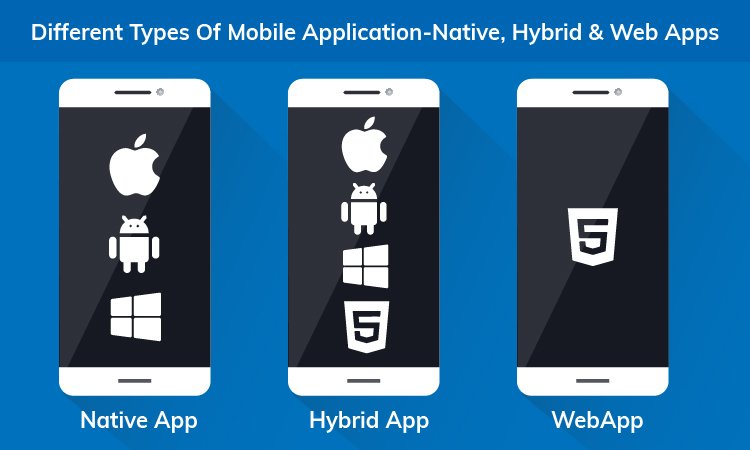
Types of Mobile AppsThe mobile applications can be categorized into three groups based on their technical features:

  1. Native apps: the applications are built for use on a particular platform or an operating system.
  2. Web apps: as the name suggests, these are run on the web, delivered on the web browsers. Web apps are more reactive than websites and can operate on any operating system- Android or iOS.
  3. Hybrid apps: a combination of native and web apps recapped in native apps makes a hybrid app. It has the proficiency to possess an icon and be downloaded from the App Store or Play store. The best Android application development company is after these hybrid apps.

Native Apps

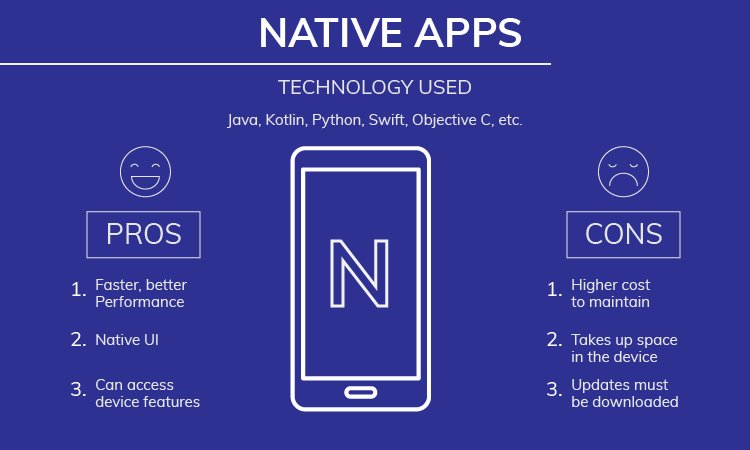
These are specially developed for the operating system (OS) of a mobile device. You can therefore have native android mobile applications or native iOS applications. However, you cannot combine them, say you use a Blackberry app on an Android phone or an iOS app on a Windows phone because the software is built for just one platform. Native AppsAs is evident from the name, native apps are native to their operating systems. Therefore, these cannot be run in any other operating system whatsoever. But, they are well optimized for that specific device and can provide an incredible experience to the user.For example: the Safari application is native to an iOS device and cannot be transferred or used on any other operating system- be it Android, Microsoft, Windows, or Blackberry.Technology: the technique best android application development company develop for native application is specific to the platform for which it is built. In Objective C or Swift programming languages, for example, iOS apps are coded, and android apps are coded into Java programming. Hire native app developers to get faster and better performance of your app.Native applications can only be distributed on the respective platforms via the app stores.
Pros:

  • UI experience in native apps is incredible with its rapid speed and smooth functioning.
  • A lot lesser hardware aids are used for coding of a native app
  • These each often run in an offline mode too.
  • The user can leverage the push notifications features and increase the app custom, thereby completing the desired action.

Cons:

  • The major drawback that best android application development company find in their native apps is their limited availability to operating systems other than their native ones. Hence, only a particular audience can be targeted with the native apps. 
  • Android application development companies also assert the struggle of creating the same application for two different operating systems.
  • The whole procedure of maintaining and revamping the application on two platforms is time-consuming and hectic.
  • Codes cannot be ported from one system to another.

Web apps

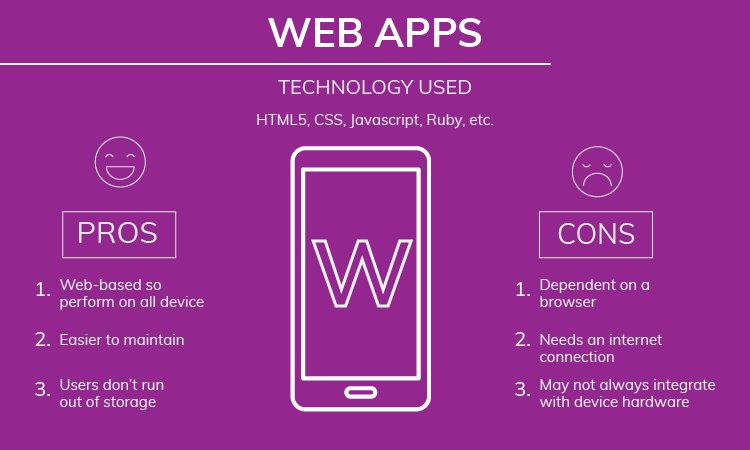
Web applications are internet-based apps. You may use the web browse for your device to access these. You do not need to install these applications on your device, and that sounds great as it reduces storage consumption. All you need to do is bookmark them in your browser.A great deal of web (business) apps do not use a lot of your hardware, such as RAM and other storage. As a result, you do not have access as you operate via a mobile browser or web browser to the device functionality.Web apps developmentExample: a very intriguing example of a web app would be the Gmail app that you get to see on your browser. It is essentially a mailing application that can be seamlessly accessed via a browser, preferably Google Chrome.Technology: mobile app development for small businesses is perfect in the form of web apps. Web apps use HTML, CSS, Ruby, and JavaScript technologies. Web applications have been built. However, they are only available on the Web and support multiple platforms.
Pros:

  • These are the best mobile apps development for small businesses since the development is short and pocket-friendly. There is no requirement to optimize the app for a particular operating system, saving the developer’s effort and time. Thus, the development costs are reduced straightaway.
  • Deployment is seamless, and distribution does not take much time and effort too. Updates are manageable since no specific update is required from the app stores.
  • A separate code for every platform is not required.
  • The app stores do not compel approval for launch and update.

Cons:

  • Since it cannot be accessed via an App Store, the device’s facilities cannot be utilized.
  • The user experience declines in quality in web apps.
  • The Internet is a necessity to use a web application.
  • Aged devices and browsers cannot hold web apps with optimum functionality. There are annoying glitches while using web apps on older versions of browsers or a device.
  • One will only discover a web app if the website is very popular and has reached millions. Otherwise, it isn’t easy to locate a web app existing just by the way.

Hybrid Apps

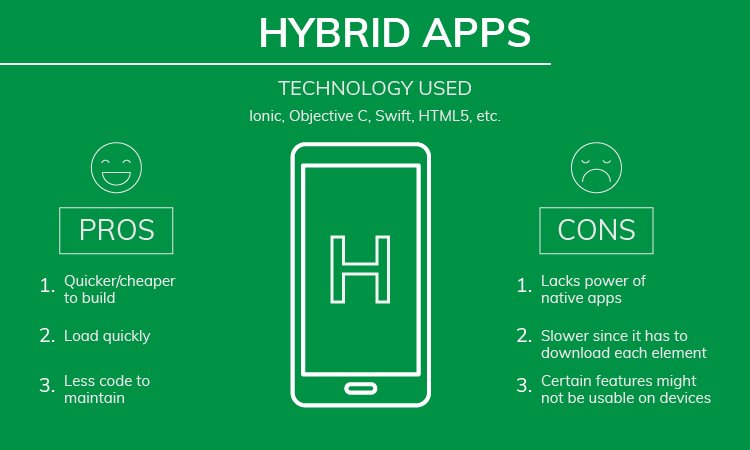
Hybrid mobile applications are, as the name implies, a mix of both native and web apps. Sometimes, hybrid apps are called cross-platform applications by the best android application development company. The only similarity between the cross-platform apps and hybrid apps is that they can share codes.Hybrid AppsThey look like native apps, on the other hand, as you can download them easily from the app store and appear on your screen. The data is rendered using a browser that is integrated into the program itself. Hire our hybrid app developers to get pocket friendly hybrid apps.Example: widely used app-Twitter is an example of a hybrid app.Technology: the hybrid apps are built upon totally different sets of technologies. These are created with varied sets of native APIs. Coded in Objective C, Swift, HTML5, React Native.
Pros:

  • Android application development company asserts that hybrid apps are better in that they can access a device’s native features.
  • Having a mixture of both native and web apps makes hybrid apps the best to use as they have extended multi-platform support.
  • Time and effort, and multiple resources are conserved because hybrid apps are built on a single code.
  • Hybrid apps can be deployed effortlessly.
  • Internet connection is not a necessity with hybrid apps.
  • It can be extensively accessed via App stores.

Cons:

  • Native apps are the best when it comes to performance; hybrid apps’ performance gets a bit compromised.
  • Certain features are not accessible by all devices that use hybrid apps.
  • Customization leads to an increase in costs.
  • User experience is also negotiated as compared to native apps.
  • Old browsers and devices are not their best friends.

The knack of choosing from different types of Apps.

With a plethora of applications running these days, it can be pestering for one to choose from a pool of apps, be it Android or iOS. But worry no more! We are here to help you out with this decision. So keep the points that we tell you in mind and get ahead with choosing the best business apps for Android.Consider the following points before choosing an app for your business requirements:

  • Cost of development
  • Time consumed for the development of the app
  • Deployment of app
  • Type of app
  • Desired features and their integration
  • Specification of the app
  • Target audience.

Before you go ahead with any app, you must be checking on these points not to risk your time and money.Now, let us describe in detail why and when you should choose each type of app. This will help you get the best app to grow your business. Discover the ideal web and mobile app development services tailored to meet the unique needs of your business and ensure success.

Native- when to choose me?

  • Choose a native app when you are on the lookout for huh performing, complete usability.
  • Excellent user experience and interface.
  • Application very safe
  • One base of code
  • An app that accesses all smartphone resources and capabilities.
  • Application development in optimal/sufficient budget.
  • A quick, stable, and responsive use.
  • To use the hardware of the mobile devices to their best potential.
  • Support for third party integrations
  • A scalable application for new features can be updated in the future
  • Protection of line term investment.

Hybrid – when to choose me?

  • Enough high performance and usability
  • Application safe
  • Well- to moderate development budget
  • Patient and a decent time can wait.
  • To access and use the hardware on a mobile device
  • A single basis of code.
  • A huge user base
  • Support for integration of third parties.
  • Fine app user interface.

Web- when to choose me?

  • To quickly deploy an app
  • A single basis of code
  • Your app needs access to the network
  • A narrow budget
  • Accessible on every platform
  • You don’t want to expect application stores to approve them.
  • Support for integration of third parties.

Summing Up

With all the discussion being done, all the aspects are taken into consideration, and you should always realize that no one app will fit all your expectations. So, it is advisable to firstly keep moderate expectations and secondly, choose the app that is the closest to your requirements. Best Android application development company asserts upon well-researched decisions while choosing the best apps to grow your business.Do you have specific questions about your business application? Then, contact our expert developer to gratify your need. 

Android vs iOS for Business in 2025: Which Platform Should You Build First?

Introduction: Why the Android vs iOS App Development Debate Still Matters in 2025

Every startup founder faces the same question before launching their business app: Should we build for Android or iOS first? The choice is not just about technology; it is about defining your business’s growth strategy, target audience, and long-term profitability. 

Even in 2025, the Android vs iOS app development debate remains one of the most crucial business decisions. With both platforms evolving rapidly, from Android’s AI-driven personalization to iOS’s tightened privacy controls, choosing the right ecosystem directly impacts your app’s reach, revenue, and reputation. 

For startups and enterprises alike, the decision is more than “Android vs iOS which is better.” It is about understanding where your ideal customers are, how much they spend, and what kind of user experience aligns with your brand. 

In this guide, we will break down the Android vs iOS for business debate in detail, comparing user demographics, development costs, security, and ROI, so you can make an informed decision for your next big app idea.

Have an app idea? Choose between Android or iOS

Android vs iOS User Demographics and Market Share 2025: A Reality Check

Global Market Share Comparison Android vs iOS 2025

The Global Market Share Overview

Android vs iOS Comparison Pie Chart 2025

In 2025, the platform split between Android and iOS continues to shape mobile strategy for businesses: 

  • Android holds a dominant ~70% of the global mobile OS market. 
  • iOS commands the premium end of the market, typically somewhere between 25-30% globally, but its share is substantially higher in certain regions.

Key Regional Variations Which Business Leaders Must Note:

  • North America (USA, Canada):iOS often leads, with some reports showing iOS at ~58% vs Android ~41% in the US.

Android vs iOS Market Share Trend 2017-2025

  • Asia/Developing Markets (India, Southeast Asia, Africa): Android is overwhelmingly dominant (often 70% to 90%+), making it the go-to platform for mass reach.
  • Europe & Australia/Oceania: Mixed picture, but Android tends to have a majority share in many European countries, while iOS retains a very strong presence in Australia/New Zealand.

Android vs iOS Users Overview and Percentage 2025

User Demographics and Behavior Differences 

The “who uses which platform” question is just as important as “who uses which app”. Here are some business-relevant insights for your help:

  • Income & Spending Power: iOS users tend to value premium devices and spend more on apps, subscriptions, and in-app purchases. Android users tend to be more diverse across income strata.

Worldwide Android vs iOS Market Share 2009-2024

  • Geographical Targetability: If your business goal is to capture emerging market users (such as those in India, Latin America, and Africa) at scale, Android is likely your first platform. If you are targeting high-value users in the US/Western Europe/Australia, iOS is a compelling option.
  • User Loyalty & Device Upgrade Cycles: iOS users often upgrade devices on a more predictable cadence and are more embedded in the Apple ecosystem (which can affect app retention and lifetime value). Some data suggests Android users are more fragmented across brands, models, and OS versions.
  • App Usage Patterns: In many markets, Android leads in terms of sheer number of devices, but iOS often leads in terms of per-user monetization (apps, subscriptions, services).

Mobile Android vs iOS Market Share by Region 2024

What This Means for the “Android vs iOS for Business” Decision

From a startup or business viewpoint, the above stats translate into some actionable implications:

  • If your target market is global or heavily based in emerging economies, going with Android first gives you maximum reach and volume of users.
  • If your target market is premium, developed-market, or revenue-driven, prioritizing iOS may give you higher value users, better monetization, and possibly stronger brand positioning.
  • One size doesn’t fit all: If your business has both premium and mass segments, you might plan for a dual-platform strategy or begin with one based on where the majority of your users are.

Because the platform split is so region-driven, your geography, business model, and target demographics need to drive your “Android vs iOS user demographics” assessment, not just intuition.

Understanding the Two Ecosystems: Android App Development vs iOS App Development for Business Success

When choosing between Android and iOS app development, it is not just about design preferences; it is about entering two very different ecosystems that shape how your app performs, scales, and generates revenue. Both platforms have matured drastically, offering robust frameworks, loyal users, and monetization opportunities. However, they differ significantly in terms of development environment, flexibility, audience reach, and business potential. 

Let’s understand these ecosystems more deeply before deciding which is better for your startup or enterprise app.

What Android App Development Offers Businesses

Android, backed by Google, powers over 70% of smartphones globally, making it the top choice for businesses targeting large-scale reach and user diversity.

Key Advantages of Android App Development

  • Open Ecosystem: Android’s open-source nature allows developers to customize Android app features extensively, ideal for businesses wanting unique, innovative app experiences.
  • Global Audience: Android dominates in emerging markets like India, Southeast Asia, and Latin America, perfect for startups seeking scale.
  • Integration with Google Services: Android integrates seamlessly with Google’s suite of products (Drive, Maps, Ads, Analytics), giving you powerful marketing and data insights.
  • Device Variety: With thousands of devices running Android, your app can reach a wider audience, from budget users to high-end flagships.

Challenges of Android App Development

  • Fragmentation Issues: With multiple screen sizes, OS versions, and devices, ensuring uniform performance can be complex.
  • Longer Testing & QA: Developers often spend extra time optimizing apps for various hardware configurations.

Still, if your business prioritizes reach, flexibility, and global expansion, Android is a compelling choice.

What iOS App Development Brings to the Table

iOS, Apple’s closed ecosystem, focuses on security, design excellence, and high user loyalty , all key factors for businesses that value brand image and profitability.

Key Advantages of iOS App Development

  • High Monetization: iOS users spend more on in-app purchases, premium apps, and subscriptions, crucial for businesses with revenue-first strategies.
  • Consistent Performance: Apple’s limited device range ensures a uniform user experience, making design and testing simpler.
  • Advanced Security: Apple’s strong security architecture and strict app store guidelines offer more protection against malware and data breaches.
  • Brand Credibility: Launching on iOS often boosts brand perception and attracts high-value users, especially in developed markets.

Challenges of iOS App Development

  • Higher Development Cost: Building and publishing iOS apps can be costlier due to Apple’s premium tools and guidelines.
  • Restricted Customization: Apple’s ecosystem is tightly controlled, which limits design and feature flexibility.

So, if your focus is on premium user experience, monetization, and brand authority, iOS is your go-to platform.

Android vs iOS App Development Cost: Breaking Down the Numbers 

When evaluating iOS vs Android App Development, one of the first practical questions every founder asks is – “How much will it cost to build and maintain the app?”

The truth is, app development costs depend on multiple factors, including app complexity, design requirements, team location, and post-launch maintenance. However, the platform you choose, Android or iOS, can significantly affect your total investment. Let’s break down the real-world cost difference between the two. 

Average App Development Cost Comparison

App TypeAndroid App Development CostiOS App Development Cost
Simple App (basic features, static data)$20,000 – $45,000$25,000 – $55,000
Medium Complexity App (API integrations, payments, dashboards)$45,000 – $90,000$55,000 – $100,000
High Complexity App (real-time sync, custom animations, IoT, AR/VR)$90,000+$110,000+


Why Android App Development Can Cost Less?

  • Open Source Ecosystem: Android developers can leverage a vast library of free SDKs, libraries, and APIs. 
  • Flexible Publishing: Google Play Store has lower fees and faster approval times than Apple’s App Store. 
  • Broader Developer Pool: The global Android developer community is larger, which can make hiring more cost-effective. 
  • Easier Iterations: Android’s open structure allows faster prototype testing and updates, ideal for startups validating MVPs.

However, a lower upfront cost doesn’t always mean lower total cost. Maintenance, testing, and fragmentation can increase Android’s long-term expenses.

Why iOS App Development Costs More (But May Earn More)

  • Premium Development Tools: iOS developers often work with Apple’s high-performance frameworks like SwiftUI and ARKit, which enhance app quality but require specialized expertise.
  • Strict App Store Review Process: Apple’s guidelines often lead to longer approval times and additional QA cycles. 
  • Hardware & OS Consistency: Although the initial cost is higher, maintaining iOS apps over time is often cheaper due to fewer device variations. 
  • Higher Revenue Potential: Despite higher development costs, iOS apps frequently generate more revenue per user (ARPU), balancing the investment in the long run. 

Android App vs iOS App Cost – Which is Better for Startups?

  • If your goal is faster market entry and budget-friendly validation, Android is ideal for your MVP.
  • If your goal is premium brand positioning and higher monetization, iOS offers stronger long-term ROI.

Pro Tip: Many successful startups start with one platform (usually iOS for premium audiences or Android for mass reach) and expand once they achieve traction. This dual-phase strategy helps control costs while maximizing impact.

Android vs iPhone for Business: Revenue Potential and Monetization Models

When it comes to Android vs iOS for business, the ultimate question is, which platform helps you earn more? Whether your app generates income through subscriptions, in-app purchases, or ads, understanding how each ecosystem drives revenue can shape your entire mobile strategy.

iOS: Premium Pricing and Loyal Spenders

Apple users represent the top-spending demographic in the mobile market. According to Data.ai 2025, iOS users spend nearly 2.5 times more than Android users on in-app purchases and subscriptions.

That’s why iOS app development is often preferred by startups aiming for quality over quantity.

Why iOS Wins for Revenue-Driven Businesses:

  • Higher ARPU: iOS apps generate more revenue per user across all categories.
  • Subscription Ecosystem: Works best for apps offering recurring value, like fitness, finance, and education.
  • Frictionless Payments: Apple Pay and App Store billing ensure smooth user experiences.
  • Strong Brand Affinity: iOS users are more loyal and open to premium upgrades.

Ideal for: Businesses offering paid apps, exclusive content, or subscription models.

Android: Massive Reach and Ad Monetization Power

On the other side, Android dominates global market share (71% in 2025), making it the go-to choice for reach and scalability. If your business relies on ad revenue or wants to target emerging markets, Android delivers better long-term returns.

Why Android Wins for Volume-Based Growth:

  • Larger User Base: Dominant in India, Africa, and Southeast Asia.
  • Ad-Based Monetization: Strong integration with Google AdMob and other ad networks.
  • Multiple App Stores: Flexibility to distribute and monetize outside Google Play.
  • Lower Entry Cost: Easier app publishing and faster iteration cycles.

Ideal for: Startups focusing on downloads, user engagement, and scale before premium conversion.

ROI Comparison: Android vs iPhone App Development

FactoriOS (iPhone)Android
Market Share28%71%
ARPU (Avg. Revenue Per User)HighModerate
Ideal Revenue ModelSubscriptions, Paid AppsAds, Freemium
Time to MonetizeSlower (premium model)Faster (mass installs)
Target UsersAffluent, UrbanDiverse, Global
Business ROI FocusQuality & LoyaltyQuantity & Reach

Verdict: Choose iOS for higher revenue per user, or Android for wider reach and faster scale.

Get a free ROI consultation for Android vs iOS app

Android vs iOS Pros and Cons for Businesses

Every platform has its advantages and trade-offs. Whether you prioritize development cost, customization, or user loyalty, here’s how the two compare for business owners.

Android vs iOS: Feature & Technical Comparison


CategoryAndroidiOS
Market Share71%28%
Development CostLowerHigher
Development TimeLonger (fragmentation)Shorter (limited devices)
UI/UX CustomizationHigh flexibilityRestricted by Apple guidelines
App MonetizationAd & FreemiumPremium & Subscription
SecurityOpen-source (developer-dependent)Closed ecosystem (secure)
Updates & MaintenanceFragmentedConsistent & centralized
Approval ProcessFasterStricter App Store rules

Pros and Cons Overview

Advantages of Android App Development:

  • Global reach and diverse user base.
  • Flexible publishing and customization.
  • Lower upfront costs.
  • Easier integration with Google’s ecosystem.

Disadvantages of Android App Development:

  • Fragmented OS versions and devices.
  • Higher testing and maintenance effort.
  • Lower user spending on average.

Advantages of iOS App Development:

  • High-spending users and better ROI.
  • Consistent hardware and software performance.
  • Robust security and privacy standards.
  • Easier scalability for global premium audiences.

Disadvantages of iOS App Development:

  • High development and maintenance costs.
  • Longer approval timelines.
  • Limited customization options.

Quick Checklist for Decision-Making

Business GoalRecommended Platform
Reach global users fastAndroid
Target premium customersiOS
Prioritize data securityiOS
Launch MVP quicklyAndroid
Optimize for ad revenueAndroid
Build a strong brand presenceiOS

Android vs iOS Security, Performance & User Trust

Security and performance define user trust, a crucial factor for long-term business success.

Security: App Store vs Play Store Policies

  • iOS: Apple manually reviews every app, ensuring strong compliance and protection.
  • Android: Google uses automated Play Protect scanning to detect 125B+ apps daily.

>iOS wins in pre-launch screening; Android wins in flexibility.

Performance: Device Fragmentation vs Optimization

  • Android: Multiple OEMs (Samsung, Xiaomi, etc.) lead to fragmented performance, requiring additional testing.
  • iOS:> Unified hardware-software integration ensures smoother UI, fewer crashes, and better speed.

>iOS delivers a consistent UX; Android offers wider accessibility.

Data Privacy & User Trust

  • Apple enforces App Tracking Transparency (ATT), giving users direct control over data.
  • Android provides granular permissions and enterprise-grade encryption under Android Enterprise.

Both are secure, but Apple’s closed ecosystem offers greater peace of mind.

Build secure high-performing Android & iOS apps

Reasons to Choose Android Over iOS vs Reasons to Choose iOS Over Android

When to Choose Android Over iOS for Business

  • Targeting developing markets with cost-sensitive users.
  • Prioritizing wider reach and faster scalability.
  • Need deep customization or Google ecosystem integration.
  • Budget-conscious MVP launches.

When to Choose iOS Over Android for Business

  • Targeting premium or enterprise audiences.
  • Prioritizing data privacy, compliance, and brand image.
  • Aiming for higher ARPU and faster revenue from subscriptions.
  • Seeking consistent app performance across devices.

Beyond the Android vs iOS Battle: Why Many Businesses Choose Cross-Platform Development

With tools like Flutter, React Native, and Kotlin Multiplatform, the debate isn’t just Android vs iOS anymore. Businesses now prefer cross-platform app development to launch on both simultaneously.

Key Advantages:

  • One codebase for Android and iOS.
  • 30–40% faster time-to-market.
  • Reduced development cost.
  • Easier updates and maintenance.

Result: You get the best of both worlds, Android’s reach and iOS’s revenue potential, without doubling your effort.

Final Verdict: Android vs iOS, Which Is Better for Your Business in 2025?

The Android vs iOS app development choice depends on your market, budget, and business vision.

  • ChooseAndroid if you want reach, flexibility, and global adoption.
  • Choose iOS if your focus is on premium users, strong security, and better revenue per download.

Ultimately, the smartest move is often to start with one platform, validate your idea, and expand cross-platform as your business scales.

Unsure which platform fits your business goals - Android or iOS