Introduction
The best mobile app ideas solve real business problems, meet genuine market demand, and create lasting value for users. Whether you are a startup launching your first product, an SME expanding digitally, or an enterprise improving customer experiences, choosing the right app idea is the foundation of a successful mobile application.
Today, businesses use mobile apps for much more than customer engagement. They help automate operations, improve user experiences, generate new revenue streams, strengthen customer loyalty, and support long-term business growth. However, with millions of apps competing for attention, success depends less on building an app and more on building one that solves the right problem.
This guide brings together 45 profitable mobile app ideas across multiple industries while helping you understand how to choose the right idea, validate its market potential, and turn it into a scalable mobile application. Whether you are exploring your first app or planning your next digital product, you will find practical insights to make informed business decisions.
How Businesses Identify High-Potential Mobile App Opportunities?
High-potential mobile app opportunities rarely begin with an app idea; they begin with a business challenge or an untapped market opportunity. Instead of asking, “What app should we build?” successful businesses ask, “What problem can we solve better through a mobile experience?” This shift in thinking helps organizations invest in solutions that deliver measurable value rather than simply adding another application to an already crowded market.
The most successful mobile applications are built to address specific operational, customer, or industry challenges. They improve existing processes, unlock new revenue opportunities, or help businesses respond to changing market expectations. Evaluating these opportunities before development significantly increases the chances of building an app that users adopt and businesses can scale.
Where Do High-Potential Mobile App Opportunities Come From?
- Operational inefficiencies that can be simplified through automation or mobile workflows.
- Customer pain points that affect convenience, accessibility, or overall user experience.
- Underserved markets where existing digital solutions fail to meet industry or customer needs.
- Changing regulations and compliance requirements that require businesses to digitize processes.
- AI-driven transformation creating demand for smarter, more personalized mobile experiences.
- Employee productivity challenges that can be improved with internal business applications.
- Digital commerce trends such as mobile-first shopping, self-service platforms, and on-demand services.
- Subscription and recurring revenue opportunities that encourage long-term customer engagement.
Rather than following market trends, businesses that consistently succeed focus on opportunities where a mobile application can create measurable business outcomes. Once these opportunities are identified, the next step is evaluating which app idea best aligns with your business goals, target audience, and long-term growth strategy.
45 Profitable Mobile App Ideas for Startups and Businesses
The best mobile app ideas don’t just follow market trends; they solve real business challenges, improve customer experiences, or create new revenue opportunities. Whether you’re building a product for consumers, streamlining internal operations, or launching a digital-first business, choosing the right app idea is critical to long-term success.
The following mobile app ideas are organized by industry to help you identify opportunities that align with your business goals, target audience, and market demand. Each idea highlights a practical use case with strong growth potential, making it easier to evaluate which concept best fits your vision.
Healthcare Mobile App Ideas
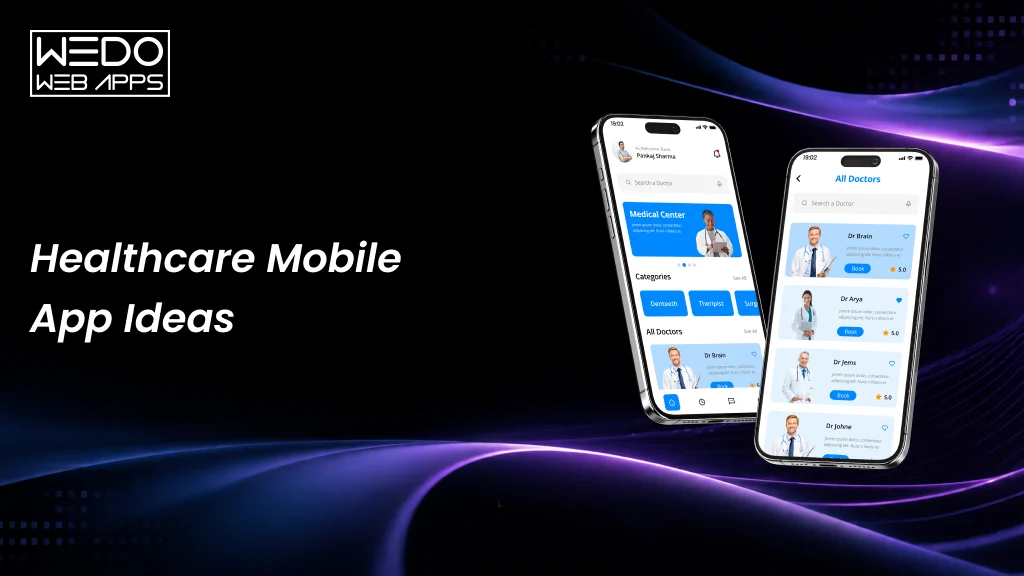
Healthcare is one of the fastest-growing sectors for mobile app innovation. From improving patient care and enabling remote consultations to simplifying hospital operations and medication management, healthcare mobile applications are transforming how healthcare services are delivered. The following app ideas address common industry challenges while creating opportunities for healthcare providers, startups, and digital health businesses.
| Mobile App Ideas | Best For | Primary Benefit |
|---|---|---|
| Personal Health Records App | Hospitals, Clinics | Centralized patient records |
| Remote Patient Monitoring App | Healthcare Providers | Continuous health monitoring |
| Appointment Booking App | Clinics, Hospitals | Simplified scheduling |
| Mental Wellness App | Health Startups | Accessible mental healthcare |
| Pharmacy Delivery App | Pharmacies | Convenient medicine delivery |
| Online Therapy App | Therapists | Virtual counseling services |
| AI Symptom Checker App | Digital Health Startups | Preliminary health assessment |
1. Personal Health Records App
A Personal Health Records (PHR) app allows patients to securely store and access their medical history, prescriptions, lab reports, vaccination records, and treatment plans from a single platform. Healthcare providers can use these applications to improve care coordination, reduce paperwork, and give patients instant access to their health information whenever needed.
2. Remote Patient Monitoring App
A Remote Patient Monitoring (RPM) app enables healthcare providers to track patients’ health data outside traditional clinical settings. By integrating with wearable devices and smart medical equipment, these apps support continuous monitoring, early intervention, and better management of chronic conditions while reducing unnecessary hospital visits.
3. Appointment Booking App
An appointment booking app simplifies the scheduling process for both patients and healthcare providers. Patients can view doctor availability, book or reschedule appointments, receive automated reminders, and access virtual consultations, while hospitals and clinics can reduce missed appointments and improve administrative efficiency.
4. Mental Wellness App
Mental wellness apps provide users with convenient access to resources that support emotional well-being, stress management, mindfulness, and self-care. Health startups and wellness providers can use these applications to deliver guided meditation, mood tracking, therapy resources, and personalized wellness programs to a growing audience.
5. Pharmacy Delivery App
A pharmacy delivery app allows users to upload prescriptions, order medicines, and schedule doorstep deliveries through a secure mobile platform. Pharmacies can expand their digital presence, improve customer convenience, and offer timely medication access, particularly for elderly patients and individuals managing long-term health conditions.
6. Online Therapy App
Online therapy apps connect licensed therapists with individuals seeking professional mental health support through secure video, audio, or chat consultations. These applications make therapy more accessible while helping mental health professionals expand their reach beyond geographical boundaries.
7. AI Symptom Checker App
An AI Symptom checker app helps users assess potential health conditions by analyzing reported symptoms and providing preliminary guidance. While it does not replace professional medical advice, it can encourage timely consultations, improve patient awareness, and support digital healthcare providers with intelligent triage solutions.
Food & Restaurant Mobile Apps
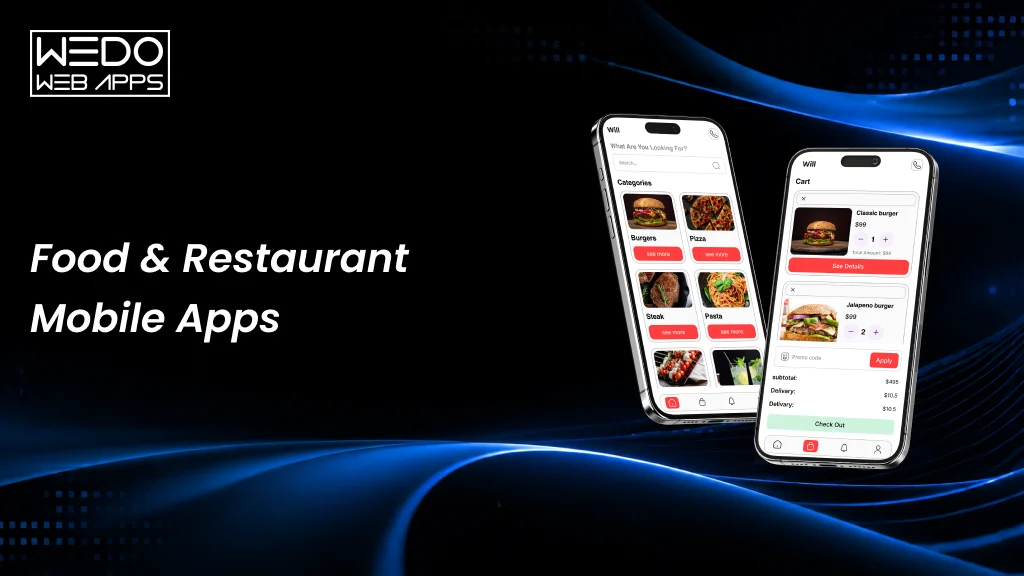
Consumer expectations have transformed the food industry, making convenience, speed, and personalized experiences more important than ever. Mobile applications help restaurants, cloud kitchens, grocery businesses, and food startups simplify ordering, manage deliveries, build customer loyalty, and create memorable dining experiences. Here are some of the most promising app ideas for food businesses.
| Mobile App Idea | Best For | Primary Benefit |
|---|---|---|
| Food Delivery App | Restaurants, Cloud Kitchens | Online ordering and doorstep delivery |
| Grocery Delivery App | Grocery Stores, Retailers | Convenient grocery shopping |
| Restaurant Reservation App | Restaurants | Simplified table bookings |
| Recipe & Meal Planning App | Food Startups | Personalized cooking experiences |
| Food Waste Management App | NGOs, Restaurants | Reduce food waste and improve sustainability |
1. Food Delivery App
A food delivery app allows customers to browse menus, place orders, make secure payments, and track deliveries in real time. Restaurants and cloud kitchens can expand their customer reach, streamline order management, and improve customer convenience through a dedicated mobile platform.
2. Grocery Delivery App
A grocery delivery app enables users to purchase groceries from nearby stores without visiting them physically. Features such as scheduled deliveries, digital payments, and personalized shopping lists help retailers enhance customer satisfaction while increasing online sales.
3. Restaurant Reservation App
Restaurant reservation apps simplify table booking by allowing customers to check availability, reserve seats, and receive booking confirmations instantly. Restaurants benefit from improved table management, reduced no-shows through automated reminders, and a smoother dining experience.
4. Recipe & Meal Planning App
Recipe and meal planning apps offer personalized recipes based on dietary preferences, available ingredients, or nutritional goals. Food startups can attract health-conscious users by providing meal plans, grocery lists, cooking tutorials, and nutrition guidance in a single application.
5. Food Waste Management App
A food waste management app connects restaurants, supermarkets, and households with charities or consumers to reduce food wastage. By redistributing surplus food efficiently, these applications support sustainability initiatives while helping businesses minimize waste and strengthen their social responsibility efforts.
Fitness & Wellness Mobile App Ideas
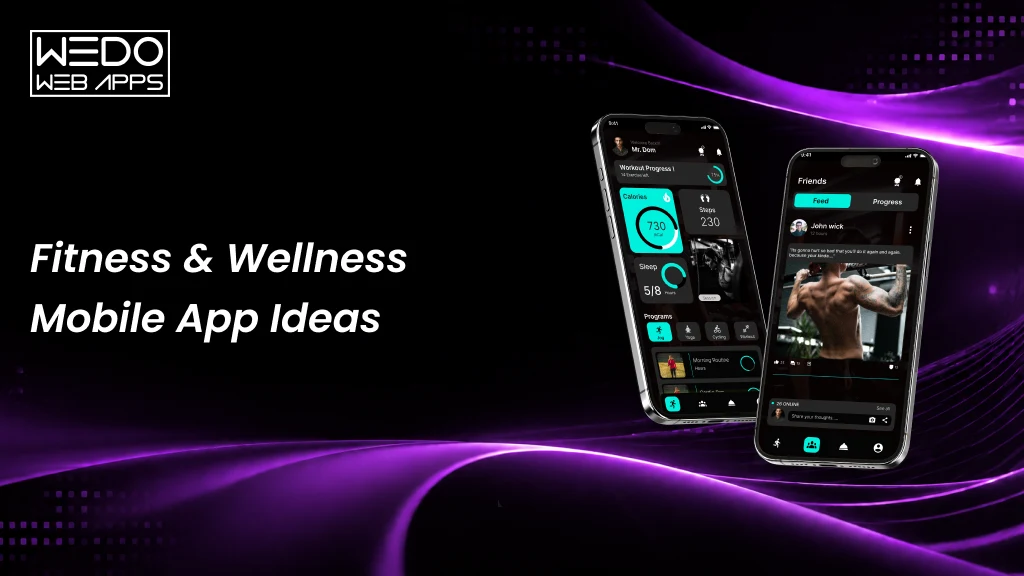
Growing awareness of physical and mental well-being has created a strong demand for digital fitness solutions. From personalized workout plans to nutrition tracking and virtual coaching, mobile applications help fitness businesses, trainers, and wellness startups deliver engaging experiences while encouraging users to build healthier lifestyles.
| Mobile App Ideas | Best For | Primary Benefit |
|---|---|---|
| Fitness Tracking App | Fitness Startups, Gyms | Monitor workouts and daily activities |
| Personal Training App | Fitness Coaches | Virtual coaching and customized plans |
| Nutrition & Diet App | Nutritionists, Wellness Brands | Healthy eating guidance |
| Yoga & Meditation App | Wellness Startups | Mindfulness and stress management |
| Habit & Wellness Tracker App | Health Startups | Build healthy daily routines |
1. Fitness Tracking App
A fitness tracking app records daily activities such as steps walked, calories burned, workout duration, sleep patterns, and heart rate. Fitness brands and gyms can use these applications to help users monitor progress, stay motivated, and achieve their health goals through measurable insights.
2. Personal Training App
A personal training app connects certified trainers with clients through customized workout plans, live sessions, and progress tracking. Fitness professionals can expand their services beyond physical locations while offering personalized coaching to users anytime and anywhere.
3. Nutrition & Diet App
Nutrition and diet apps help users create balanced meal plans, monitor calorie intake, and achieve specific health or fitness goals. Dietitians, nutritionists, and wellness brands can provide personalized recommendations, healthy recipes, and nutritional insights to encourage long-term lifestyle improvements.
4. Yoga & Meditation App
Yoga and meditation apps provide guided sessions, breathing exercises, mindfulness programs, and relaxation techniques for users of all experience levels. Wellness businesses can build strong user engagement by helping individuals reduce stress, improve focus, and maintain mental well-being.
5. Habit & Wellness Tracker App
A habit and wellness tracker app enables users to build and maintain healthy routines by tracking activities such as water intake, sleep, exercise, and meditation. These applications encourage consistency through reminders, progress reports, and personalized wellness goals, helping users stay committed to long-term healthy habits.
Education Mobile App Ideas
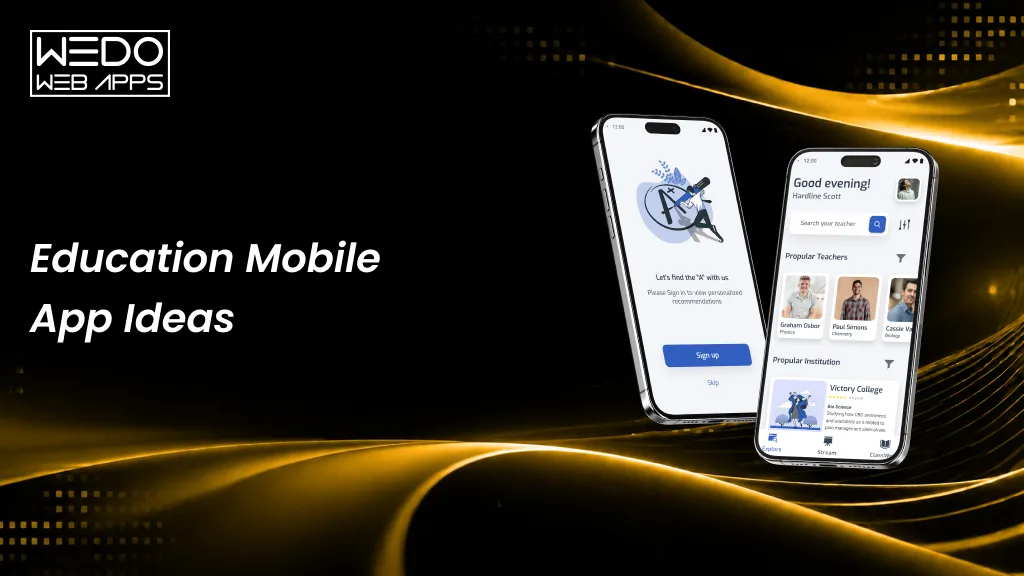
The education sector continues to embrace digital learning, creating opportunities for businesses to build applications that make education more accessible, interactive, and personalized. From schools and universities to EdTech startups and corporate training providers, education mobile apps are transforming how people learn, teach, and develop new skills.
| Mobile App Ideas | Best For | Primary Benefits |
|---|---|---|
| eLearning Apps | EdTech Startups, Educational Institutions | Flexible online learning |
| Language Learning App | EdTech Companies | Interactive language education |
| Competitive Exam Preparation App | Coaching Institutes | Structured exam preparation |
| Career Guidance App | Career Counseling Platforms | Personalized career planning |
1. eLearning App
An eLearning app delivers courses, video lectures, quizzes, assignments, and certifications through a mobile platform. Educational institutions and EdTech companies can use these applications to reach a wider audience while giving learners the flexibility to study anytime and from anywhere
2. Language Learning App
A language learning app helps users develop reading, writing, listening, and speaking skills through interactive lessons, quizzes, pronunciation exercises, and gamified learning experiences. These applications make language education engaging while encouraging consistent learning through personalized progress tracking.
3. Competitive Exam Preparation App
Competitive exam preparation apps provide students with study materials, mock tests, performance analytics, and revision plans for exams such as GRE, GMAT, CAT, JEE, NEET, and other certification programs. Coaching institutes and EdTech startups can use these platforms to deliver structured learning experiences and monitor student performance.
4. Career Guidance App
A career guidance app helps students and professionals explore suitable career paths based on their interests, skills, education, and career aspirations. By offering career assessments, expert counseling, course recommendations, and industry insights, these applications enable users to make informed academic and professional decisions.
Finance & Banking Mobile App Ideas
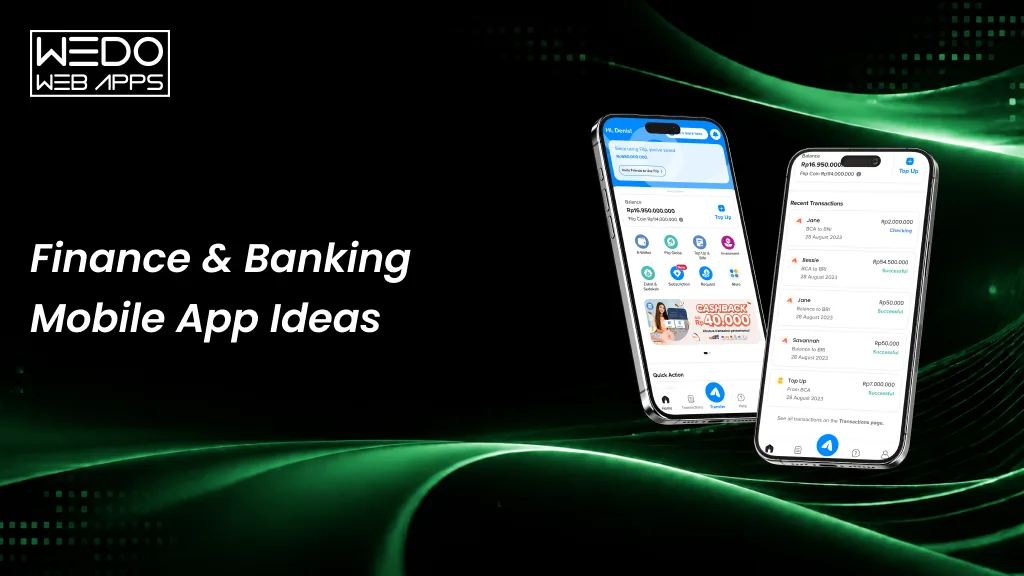
Digital banking and financial services continue to evolve as customers expect secure, fast, and convenient financial experiences. Mobile applications enable banks, FinTech startups, insurance providers, and investment firms to simplify financial management, improve customer engagement, and deliver innovative digital services.
| Mobile App Ideas | Best For | Primary Benefit |
|---|---|---|
| Digital Wallet App | FinTech Startups, Banks | Fast and secure digital payments |
| Personal Finance Management App | Financial Service Providers | Smart budgeting and expense tracking |
| Investment & Trading App | FinTech Companies | Easy investing and portfolio management |
| Load Lending App | Lending Platforms | Simplified loan applications and approval |
| Insurance Management App | Insurance Providers | Digital policy and claim management |
1. Digital Wallet App
A digital wallet app allows users to make secure payments, transfer money, pay bills, and manage multiple payment methods from a single platform. Banks and FinTech companies can enhance customer convenience while promoting faster, cashless transactions.
2. Personal Finance Management App
A personal finance management app helps users monitor income, expenses, savings, investments, and financial goals in one place. By providing spending insights and budgeting tools, these applications encourage better financial planning and informed decision-making.
3. Investing & Trading App
Investment and trading apps enable users to buy, sell, and monitor stocks, mutual funds, ETFs, cryptocurrencies, and other investment products. Financial institutions and FinTech startups can attract modern investors by offering real-time market insights, portfolio tracking, and secure trading experiences.
4. Loan Lending App
A loan lending app simplifies the browsing process by allowing users to compare loan options, submit applications, upload documents, and track approvals digitally. Lending companies can accelerate loan processing while delivering a more transparent and convenient customer experience.
5. Insurance Management App
An insurance management app enables policyholders to purchase insurance plans, manage policies, renew coverage, submit claims, and access support through a mobile device. Insurance providers can improve customer satisfaction while reducing paperwork and streamlining policy administration.
Retail & eCommerce Mobile App Ideas
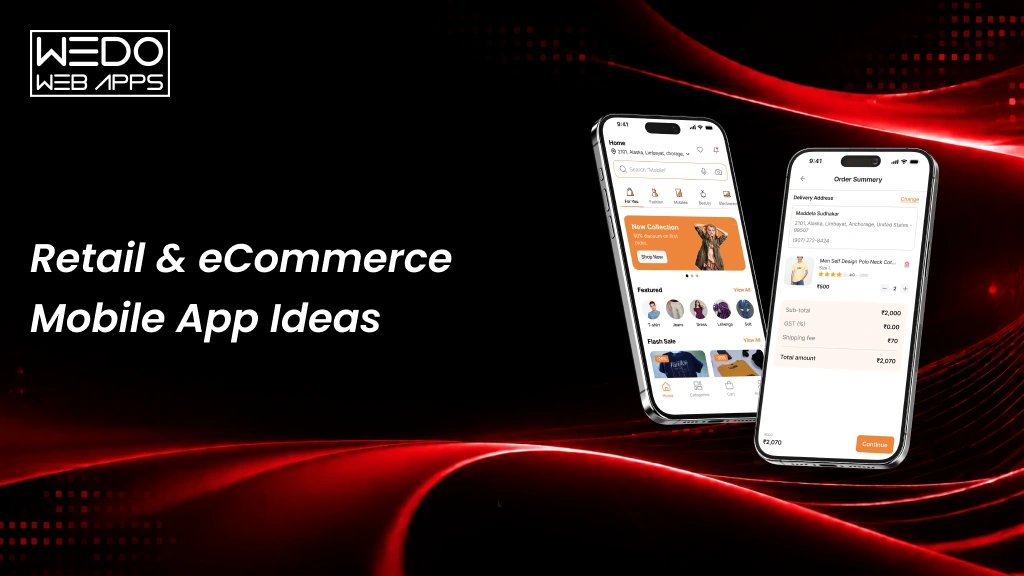
Changing consumer expectations have encouraged retailers and eCommerce businesses to invest in mobile applications that deliver faster, more personalized shopping experiences. From product discovery and secure payments to loyalty programs and customer support, retail and eCommerce mobile apps help businesses strengthen customer relationships while increasing online sales.
| Mobile App Idea | Best For | Primary Benefit |
|---|---|---|
| eCommerce Shopping App | Retailers, Online Stores | Seamless mobile shopping |
| Marketplace App | Startups, Multi-Vendor Businesses | Connect buyers and sellers |
| Customer Loyalty App | Retail Brands | Improve customer retention |
| AR Virtual Try-On App | Fashion & Beauty Brands | Interactive product visualization |
1. eCommerce Shopping App
An eCommerce shopping app enables customers to browse products, place orders, make secure payments, and track deliveries from a single platform. Retailers can create personalized shopping experiences, improve customer convenience, and increase conversions through a dedicated mobile application.
2. Marketplace App
A marketplace app connects multiple sellers with buyers, allowing users to discover, compare, and purchase products from different vendors. This business model enables startups and retailers to scale quickly while generating revenue through commissions, subscriptions, or featured listings.
3. Customer Loyalty App
A customer loyalty app rewards repeat customers through points, exclusive offers, cashback, and personalized promotions. Retail businesses can increase customer retention, encourage repeat purchases, and strengthen long-term brand loyalty with targeted engagement strategies.
4. AR Virtual Try-On App
An augmented reality (AR) virtual try-on app allows customers to visualize products such as clothing, eyewear, cosmetics, or furniture before making a purchase. By reducing purchase uncertainty and improving buying confidence, these applications help retailers enhance customer experiences while minimizing product returns.
Logistics & Transportation Mobile App Ideas
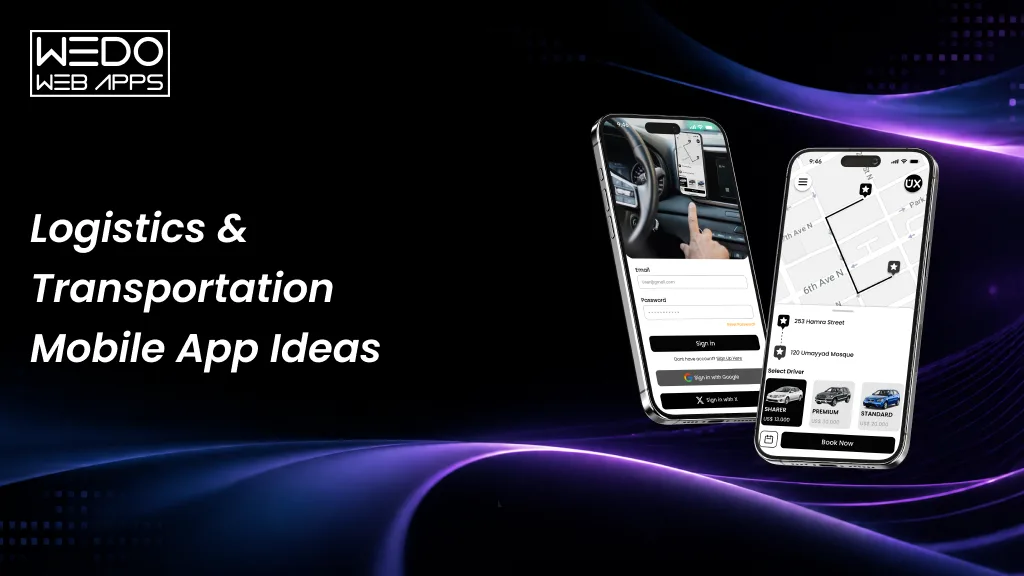
The rapid growth of eCommerce, on-demand services, and global supply chains has increased the demand for smarter logistics solutions. Mobile applications help logistics companies, fleet operators, and transportation businesses improve operational visibility, optimize deliveries, and provide real-time updates that enhance efficiency and customer satisfaction.
| Mobile App Idea | Best For | Primary Benefit |
|---|---|---|
| Fleet Management App | Logistics Companies | Monitor vehicles and drivers |
| Shipment Tracking App | Courier & Logistics Businesses | Real-time package tracking |
| Route Optimization App | Delivery Services | Faster and cost-effective deliveries |
| Warehouse Management App | Warehousing & Distribution Companies | Efficient inventory and warehouse operations |
1. Fleet Management App
A fleet management app enables businesses to monitor vehicle locations, driver performance, fuel consumption, and maintenance schedules from a centralized platform. Logistics companies can improve operational efficiency, reduce transportation costs, and ensure timely deliveries through real-time fleet visibility.
2. Shipment Tracking App
A shipment tracking app provides customers and logistics teams with real-time updates on package locations and delivery status. By offering greater transparency throughout the delivery journey, these applications improve customer trust while reducing support requests related to shipment tracking.
3. Route Optimization App
A route optimization app analyzes traffic conditions, delivery schedules, and distance to recommend the most efficient routes for drivers. Transportation and delivery businesses can reduce fuel costs, shorten delivery times, and improve overall fleet productivity.
4. Warehouse Management App
A warehouse management app helps businesses monitor inventory, track stock movement, manage order fulfillment, and coordinate warehouse operations using mobile devices. Warehousing and distribution companies can improve inventory accuracy, streamline workflows, and accelerate order processing.

Real Estate Mobile App Ideas
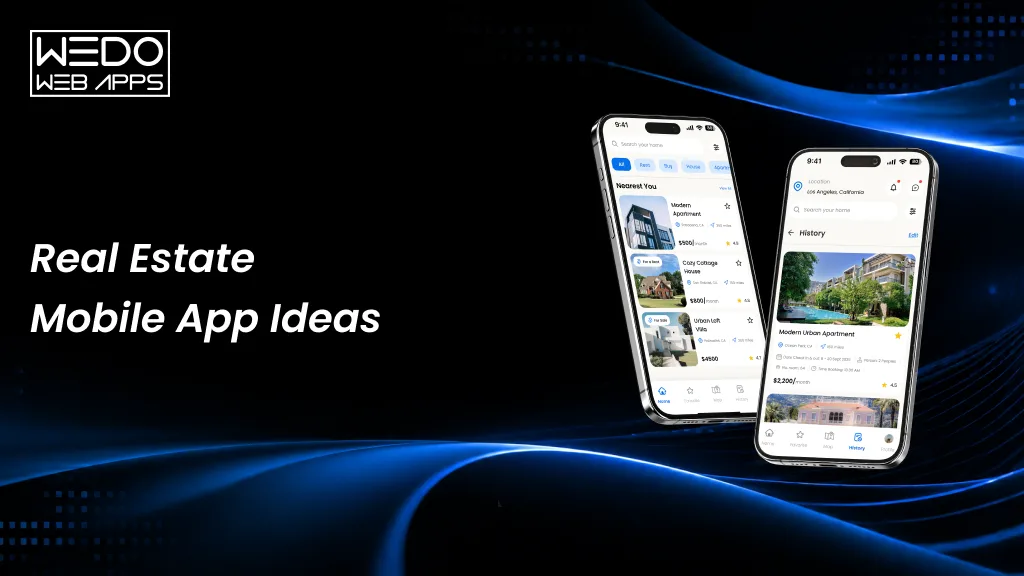
The real estate industry is rapidly adopting mobile technology to simplify property discovery, streamline transactions, and improve communication between buyers, sellers, agents, and property managers. Mobile applications help businesses deliver faster, more transparent, and convenient property experiences while reducing manual processes.
| Mobile App Ideas | Best For | Primary Benefit |
|---|---|---|
| Property Listing App | Real Estate Agencies | Simplified property search |
| Virtual Property Tour App | Property Developers | Interactive property visualization |
| Property Management App | Property Managers | Efficient tenant and property management |
1. Property Listing App
A property listing app enables users to browse residential and commercial properties using filters such as location, budget, amenities, and property type. Real estate agencies can showcase listings, connect with qualified buyers, and simplify property discovery through a mobile-first experience.
2. Virtual Property Tour App
A virtual property tour app allows prospective buyers and tenants to explore properties remotely using 360-degree images, videos, or augmented reality. Property developers and agencies can attract serious buyers, reduce unnecessary site visits, and accelerate the decision-making process.
3. Property Management App
A property management app helps landlords and property managers oversee rental properties, manage tenant requests, collect rent, schedule maintenance, and track property-related activities. These applications simplify day-to-day operations while improving communication between property managers and tenants.
Travel & Hospitality Mobile App Ideas
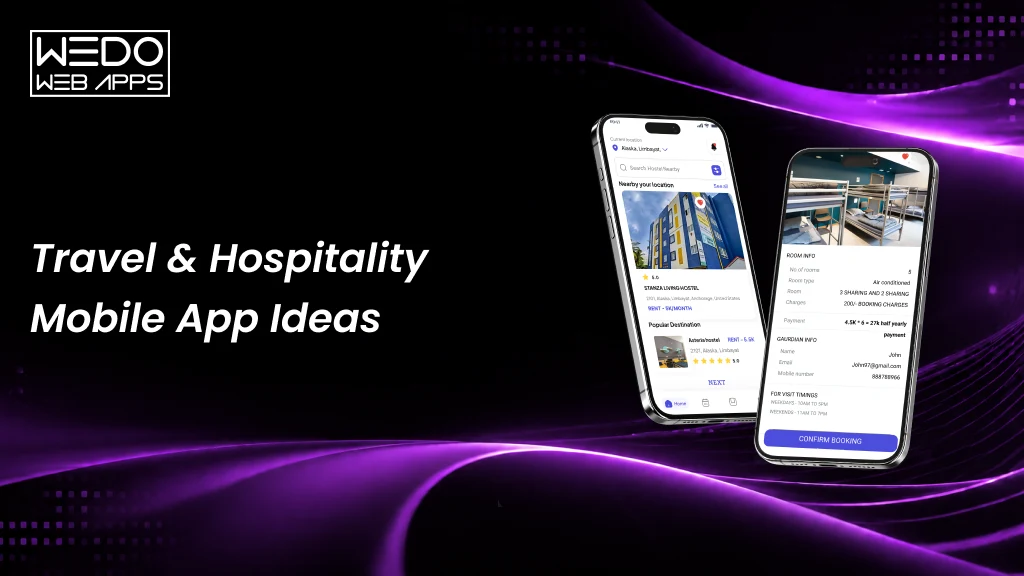
The travel and hospitality industry relies on seamless customer experiences, from trip planning to post-stay engagement. Mobile applications help travel agencies, hotels, tour operators, and hospitality businesses simplify bookings, improve guest experiences, and deliver personalized travel services throughout the customer journey.
| Mobile App Idea | Best For | Primary Benefit |
|---|---|---|
| Travel Booking App | Travel Agencies, OTAs | Simplified trip planning and reservations |
| Hotel Management App | Hotels & Resorts | Enhanced guest services and operations |
| Travel Itinerary Planning App | Tour Operators, Travel Startups | Organized trip planning and travel assistance |
1. Travel Booking App
A travel booking app enables users to search, compare, and book flights, hotels, holiday packages, and local experiences from a single platform. Travel businesses can provide a convenient booking experience while increasing customer engagement through personalized recommendations and exclusive travel deals.2. Hotel Management App
A hotel management app allows guests to book rooms, complete digital check-ins, request services, and communicate directly with hotel staff. Hotels and resorts can improve operational efficiency, deliver better guest experiences, and manage reservations through a centralized mobile platform.
3. Travel Itinerary Planner App
A travel itinerary planner app helps travelers organize transportation, accommodation, sightseeing activities, dining reservations, and daily schedules in one place. Travel startups and tour operators can offer a more personalized travel experience while helping users manage every stage of their journey efficiently.
Manufacturing Mobile App Ideas
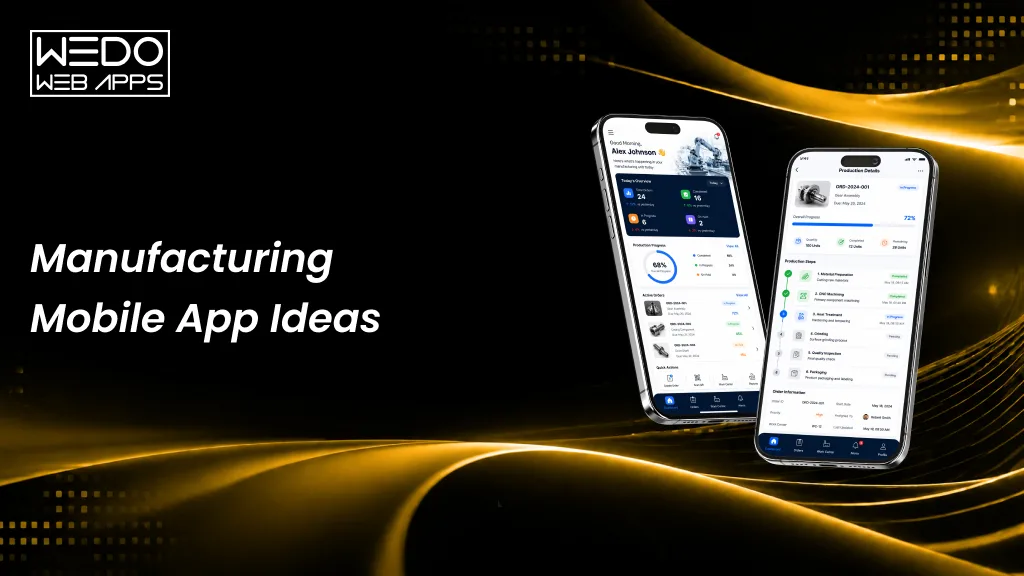
Manufacturing businesses are increasingly adopting mobile applications to improve production efficiency, monitor operations, and support smarter decision-making. From managing inventory to tracking equipment performance, manufacturing mobile solutions help manufacturers reduce downtime, optimize workflows, and improve visibility across production facilities.
| Mobile App Idea | Best For | Primary Benefit |
|---|---|---|
| Smart Inventory Management App | Manufacturers, Warehouses | Real-time inventory visibility |
| Equipment Maintenance App | Manufacturing Companies | Preventive maintenance and reduced downtime |
1. Smart Inventory Management App
A smart inventory management app enables manufacturers to monitor raw materials, finished goods, and warehouse inventory in real time. By automating stock tracking and inventory updates, businesses can reduce shortages, improve inventory accuracy, and optimize production planning.
2. Equipment Maintenance App
An equipment maintenance app helps manufacturers schedule preventive maintenance, monitor equipment health, and record maintenance activities from a mobile device. These applications reduce unexpected machine failures, extend equipment lifespan, and improve overall production efficiency.
Enterprise Mobile App Ideas
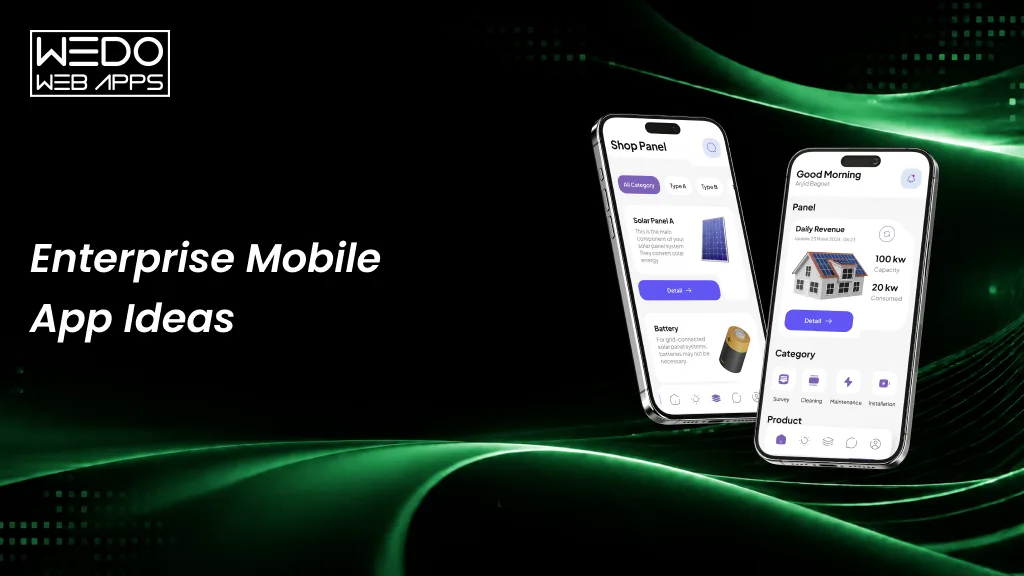
Enterprise organizations use mobile applications to improve collaboration, automate business processes, and provide employees with secure access to critical business information. These solutions help streamline operations, increase workforce productivity, and support faster decision-making across departments.
| Mobile App Idea | Best For | Primary Benefit |
|---|---|---|
| Employee Communication App | Enterprises | Improve internal collaboration |
| Project & Task Management App | Organizations | Streamline project execution |
| HR & Workforce Management App | HR Teams | Simplify employee management |
| Field Service Management App | Service-Based Businesses | Optimize field operations |
1. Employee Communication App
An employee communication app centralizes company announcements, team messaging, file sharing, and internal updates in a secure environment. Organizations can improve collaboration across departments while ensuring employees stay informed regardless of their location.
2. Project & Task Management App
A project and task management app enables teams to assign work, track progress, manage deadlines, and collaborate on projects through a single platform. Businesses can improve project visibility, enhance accountability, and keep distributed teams aligned on organizational goals.
3. HR & Workforce Management App
An HR and workforce management app helps organizations manage employee attendance, leave requests, payroll information, onboarding, and performance tracking from a mobile device. HR teams can automate administrative tasks while providing employees with convenient self-service access.
4. Field Service Management App
A field service management app connects office teams with technicians working remotely by managing job assignments, schedules, customer information, and service reports in real time. Businesses can improve response times, increase workforce efficiency, and deliver better customer service.
AI-Powered Mobile App Ideas
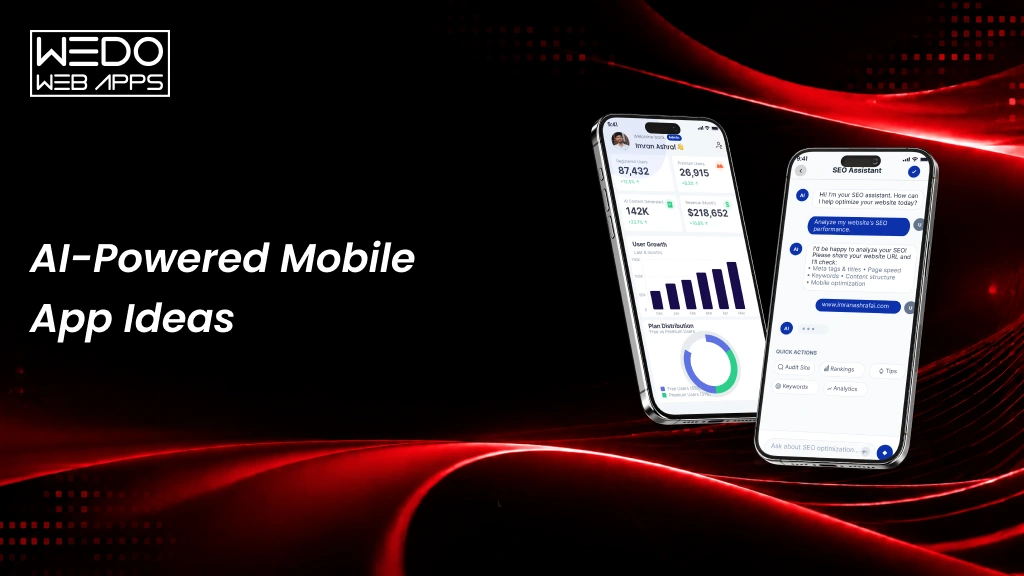
Artificial Intelligence is reshaping how businesses build and use mobile applications. From automating repetitive tasks to delivering personalized experiences and intelligent recommendations, AI-powered apps help organizations improve efficiency, enhance decision-making, and create smarter digital products. As AI adoption continues to grow, businesses that integrate intelligent capabilities into their mobile applications can gain a significant competitive advantage.
| Mobile App Idea | Best For | Primary Benefit |
|---|---|---|
| AI Business Assistant App | Startups, SMEs, Enterprises | Automate business tasks and improve productivity |
| AI Customer Support App | Customer-Centric Businesses | Deliver 24/7 intelligent customer assistance |
| AI Content Creation App | Marketing Teams, Creators | Generate content faster with AI |
| AI Knowledge Management App | Enterprises | Centralize and retrieve business knowledge intelligently |
1. AI Business Assistant App
An AI business assistant app helps users schedule meetings, manage tasks, summarize conversations, automate workflows, and retrieve business information using conversational AI. Businesses can improve operational efficiency while reducing the time spent on repetitive administrative activities.
2. AI Customer Support App
An AI customer support app provides instant responses to customer queries through intelligent chatbots and virtual assistants. Businesses can deliver round-the-clock support, reduce response times, and improve customer satisfaction while lowering the workload on support teams.
3. AI Content Creation App
An AI content creation app assists users in generating marketing copy, social media posts, emails, product descriptions, and other business content from mobile devices. Marketing teams, entrepreneurs, and creators can accelerate content production while maintaining consistency across digital channels.
4. AI Knowledge Management App
An AI knowledge management app enables employees to search company documents, policies, training materials, and internal resources using natural language queries. Organizations can improve knowledge sharing, accelerate onboarding, and help employees find accurate information without manually searching multiple systems.
How to Choose the Right Mobile App Idea for Your Business
Choosing the right mobile app idea is not about following the latest trend; it is about identifying an opportunity that aligns with your business objectives, addresses a real market need, and delivers measurable value. Before investing in development, evaluate whether the idea can solve a genuine problem, attract users, and support your long-term growth strategy.
Key Factors to Evaluate Before Choosing an App Idea
When comparing different app ideas, consider the following factors:
- Business Objective: Define whether the app is intended to increase revenue, improve operational efficiency, strengthen customer engagement, or launch a new digital product.
- Problem Statement: Choose an idea that solves a specific customer or business challenge instead of trying to address multiple problems at once.
- Target Audience: Identify who will use the app, what their expectations are, and why they would prefer your solution over existing alternatives.
- Market Demand: Evaluate industry trends, customer behavior, and competitor offerings to understand whether there is sufficient demand.
- Scalability: Select an idea that can evolve with your business by supporting new features, users, and future technologies.
- Revenue Potential: Consider how the app will contribute to your business, whether through direct monetization, customer acquisition, operational savings, or improved retention.
Questions Every Business Should Ask Before Investing
Before moving forward, decision-makers should be able to answer these questions:
- Does this app solve a real problem for its intended users?
- Can it deliver measurable business value within the next few years?
- Is there enough market demand to justify the investment?
- Can the idea be launched as an MVP before expanding its functionality?
- Will the application remain relevant as customer expectations and technology continue to evolve?
Selecting the right mobile app idea is only the beginning. Validating the idea before development helps reduce business risk, optimize investment, and increase the likelihood of building a successful mobile application.
How to Validate Your Mobile App Idea Before Development
A great mobile app idea does not guarantee success. Validating your idea before development helps you understand whether it solves a real problem, addresses market demand, and has the potential to generate business value. This process reduces investment risks, uncovers improvement opportunities, and helps you build a product that users actually need.
Step to Validate Your Mobile App Idea
Follow these practical steps before starting development:
- Research your target market to understand customer needs, industry trends, and changing expectations.
- Analyze competing apps to identify feature gaps, customer feedback, and opportunities to differentiate your solution.
- Define your unique value proposition by clearly explaining what makes your app different from existing alternatives.
- Build a Minimum Viable Product (MVP) with only the essential features needed to test your concept.
- Collect feedback from early users through beta testing, surveys, or interviews to identify areas of improvement.
- Measure user engagement using key metrics such as downloads, retention, active users, and feature adoption before expanding the application.
Signs Your App Idea is Ready for Development
Your mobile app idea is ready to move forward when:
- It solves a clearly defined customer or business problem.
- Users show genuine interest in adopting the solution.
- The MVP receives positive feedback from early adopters.
- The business model supports long-term sustainability.
- The application aligns with your overall business objectives and growth plans.
Validating your idea is an important milestone, but delivering a successful mobile application also depends on building the right features that provide value from day one.
Essential Features Every Successful Mobile App Should Include
The features you choose can significantly influence your mobile application’s usability, adoption, and long-term success. While feature requirements vary by industry and business goals, every successful mobile app should prioritize functionality that improves user experience, security, performance, and scalability.
Core Features to Consider
Before building your application, evaluate whether it includes these essential capabilities:
- Simple user onboarding to help new users get started quickly with minimal effort.
- Secure authentication using email, mobile number, social login, or biometric verification.
- Intuitive navigation that allows users to access important features without confusion.
- Push notifications to keep users informed about updates, reminders, offers, or important activities.
- Secure payment integration for applications that support purchases, subscriptions, or online transactions.
- Real-time analytics to understand user behavior and measure app performance.
- Cloud synchronization to keep user data accessible across multiple devices.
- Offline functionality for essential features that users may need without an internet connection.
- Scalable architecture that supports future feature enhancements and business growth.
Prioritize Features for Your MVP
Resist the temptation to include every possible feature in the first release. Focus on solving one core problem exceptionally well, launch with a streamlined MVP, gather user feedback, and introduce additional functionality based on real customer needs. This approach reduces development complexity, accelerates time to market, and helps ensure that user demand rather than assumptions drives future updates.
How Mobile Apps Generate Revenue?
A successful mobile app should do more than attract users; it should contribute to your business objectives. Depending on your business model, a mobile application can generate direct revenue, strengthen customer relationships, reduce operational costs, or create new digital sales channels. Choosing the right monetization strategy early helps ensure long-term sustainability and supports future growth.
Popular Mobile App Monetization Models
Different business goals require different monetization approaches. Some of the most common models include:
- Subscription Model: Charge users a recurring monthly or annual fee to access premium features or services.
- Freemium Model: Offer core functionality for free while unlocking advanced features through paid upgrades.
- In-App Purchases: Allow users to purchase digital content, virtual goods, or additional features within the app.
- Marketplace Commissions: Earn a percentage from every transaction between buyers and sellers using your platform.
- Advertising Revenue: Display relevant advertisements and generate income based on impressions, clicks, or user engagement.
- Service Booking Fees: Charge convenience or platform fees for appointments, reservations, deliveries, or professional services.
- Enterprise Licensing: License custom mobile applications to businesses through annual or subscription-based agreements.
Choosing the Right Revenue Model
The best monetization strategy depends on your target audience, industry, and business objectives. Consumer-facing applications often rely on subscriptions, freemium offerings, or in-app purchases, while enterprise applications typically generate revenue through licensing, SaaS subscriptions, or custom implementation services. Aligning your revenue model with user expectations creates a better customer experience while supporting long-term business success. 
Common Mistakes to Avoid When Developing a Mobile App
Even the most promising mobile app idea can struggle if it is built without proper planning. Many businesses focus heavily on development while overlooking the strategic decisions that determine long-term success. Recognizing these common mistakes early can help reduce risks, improve user adoption, and maximize your return on investment.
Mistakes That Can Impact Mobile App Success
Avoid these common pitfalls when planning and developing your mobile application:
- Building without validating the idea can lead to investing in a product that does not solve a real market need.
- Trying to include too many features in the initial release often increases development time and makes the user experience more complex.
- Ignoring user experience (UX) can result in poor engagement, low retention, and negative app reviews.
- Choosing technology based solely on trends instead of business requirements may create scalability and maintenance challenges later.
- Overlooking data security and privacy can expose users to unnecessary risks and damage customer trust.
- Skipping performance testing may lead to slow loading times, crashes, and compatibility issues across different devices.
- Neglecting post-launch improvements can make the application less competitive as user expectations and market trends evolve.
- Launching without measuring performance limits your ability to understand user behavior, optimize features, and make informed product decisions.
Every successful mobile application evolves over time. Businesses that validate ideas, prioritize user needs, and continuously improve their applications are better positioned to achieve sustainable growth and deliver long-term value.
Conclusion
The right mobile app can help businesses improve customer experiences, streamline operations, create new revenue opportunities, and strengthen their competitive position. However, long-term success depends less on choosing the most popular idea and more on selecting one that aligns with your business objectives, solves a genuine problem, and delivers measurable value to its users.
The 45 mobile app ideas covered in this guide highlight opportunities across multiple industries, but every business has unique goals, customers, and challenges. Before investing in development, take the time to evaluate your idea, validate market demand, prioritize the right features, and build an MVP that can evolve with user feedback.
If you’re ready to transform your mobile app idea into a scalable digital product, partnering with an experienced mobile app development company can help you accelerate development, reduce risks, and launch with confidence. The right technology strategy, combined with a user-focused approach, can turn a promising concept into a successful mobile application.