skip to content

How Much Does It Cost To Build B2B E-Commerce App?

Till a few years back, launching a company website was just a tick in the box for having all your promotional tools in place. As technology grew, we learned how to utilize the space for better productivity and revenue generation. And here we are today, with technology teaching us how to maximize our business through websites, apps, and many other avenues. Well, today in the tech-driven era, every brand has learned the language of branding, publicity, marketing, and many other jargons we come across daily. Millions are spent to reinforce the brand not only to the consumers but to the retailers as well. While some manufacturers are still learning to walk, there are some who are winning the race by taking their B2B business operations directly to their business customers with the help of a strong task force. Companies are hiring developers, UI designers or approaching a react native development company to bring out the best app in terms of aesthetics, functionality, etc.  

Is an app needed for your business?

Before we start digging deeper to find out what is the cost for building a B2B E-commerce app, it’s important to understand what the need is and will the final result be able to fulfil the need to its maximum potential. The challenge today that many manufacturers face is how to keep their brand relevant and in-demand amongst their prospective customers while staying ahead of the competition. An answer to this is effective marketing and brand visibility which leads us to explore the right avenues to promote our business. This is where many businesses falter trying to conform and follow what others are doing. What might be working for others isn’t necessary that it might work for your business. What your product is, how is it perceived, what is your market are a few basic questions that need to be answered right before we step up on the ladder to explore the right channels.

Your business is as strong as the technical team.

The boom in technology has laid out several opportunities not only for businesses to prosper but also for the people working behind the scenes to make sure businesses gain mileage and head in the right direction. React native development has changed the face of mobile app development, enhancing every feature. To put the idea into motion, the right talent is brought together from UI designers, backend developers, analysts and a whole bunch of talented individuals needed to achieve the best results after putting pieces of technology together. Thanks to the increased number of smartphone users all over the world, business is much more accessible. Today, one of the simplest means to improve the productivity of your business and help customers shop as per their convenience is to introduce an app. And if you have the right resources, it’s quite an easy task, thanks to react native development. Having said that, you might want to know how to go about the designing element, whom to approach, and how much to allocate.  

All the factors will fall into place; however, the important question remains on the budget to set apart for the marketing project. The cost of an e-commerce app depends on many factors however the most important one is getting the right talent to overthrow the competition. Businesses hire react developer, Information Architects, and many other teams of artistic designers who actually change the game. Let’s explore!

App designing checklist

Though the app is to facilitate buying convenience for your customers, we must know what the customer thinks of your brand. First off, initiating market research to know more about your customer demands would be helpful. The market research will give better clarity on questions like if an app is needed for the business, would customers want to engage on the platform, what they would prefer seeing on the app. The right answers will not only help to set the app apart from the competition but also understand what the demand is. The next step is basic but the most essential. Don’t forget your competitors. Taking advantage of your competitor’s weakness is something that is being done since time immemorial. This will put you at an advantage of keeping the app as diverse as needed and enhanced, avoiding any glitches, faults, etc. Lastly, to build an e-commerce app, you either need to hire developers or zero down on an agency to help you with the process. Though the cost of the app depends on how complex the functionality of the app will be, it is also subject to the services being offered, the design, user interface, architecture etc. This is where a frontend development company assists in combining creativity and innovation together. The platform on which the app will be available also plays a big role in determining the spend figure. Since both the platforms work differently, the cost will increase if you decide to have the app available on both platforms i.e iOS and Android. Other factors like the app size, the advanced and external features like data sync, geolocation targeting, push notifications, in-app calling, and messaging are few other features that determine the total cost for building an e-commerce app.

How much does it cost to build a B2B e-commerce app?

The cost to create an app ranges from $20,000 to $40,000 however this is a rough estimate. The more comprehensive an app is; the greater the designing cost will be. The core objective of an app is to be user-friendly, attract, and engage the customer while ensuring a good experience. The app can be user-friendly if the design and the app framework is well designed by the frontend development company. To achieve this, advanced technologies, integration of third-party APIs and resources are needed which very often come at a higher price and impact the overall cost of building an app. Hire a developer or an application designing agency to finalize the scope of work because once the business model has been finalized, the total time taken to finish the project, the app performance are key capacities that need to be taken into account.

Conclusion

As mentioned earlier, the exponential growth the smartphone industry has seen is worth commendable and it is slated to grow even further in the times to come. Without a doubt, B2B e-commerce apps too will see the traction with more and more apps coming into existence to meet the supply and demand chain. In order to develop the e-commerce industry further, mobile application development also needs to be taken into consideration. Having an app for e-commerce proves to be a loyalty device, encouraging more transactions while enhancing customer experience. Lastly, all you have to do is hire react developer or connect with a react native development company who are experienced in developing the right app for your business. 

Types Of Mobile Apps and Which One Works The Best For Your Business?

The morning starts with a mobile phone and ends with one too. These days, with the boost in the use of mobile apps, humans have become highly dependent on mobile applications. This has made the best android application development company thrive all these years. Big brands, or even the smallest, tout how they have built a mobile app for the convenience of the general public. It’s that easy these days.  Everyone, every business, tries to influence people with their newly developed mobile apps and strive to keep their application updated as well as inclusive of the latest functionalities and features so that their target audience has the convenience of getting their service in just a few clicks. Here, we are to discuss which type of mobile app is suitable for your business?; what are the different types of applications in the industry?; what are the best apps to grow your business; and mobile app development for small businesses. So let’s dive into all of this information without any further ado!

Types of Mobile Apps

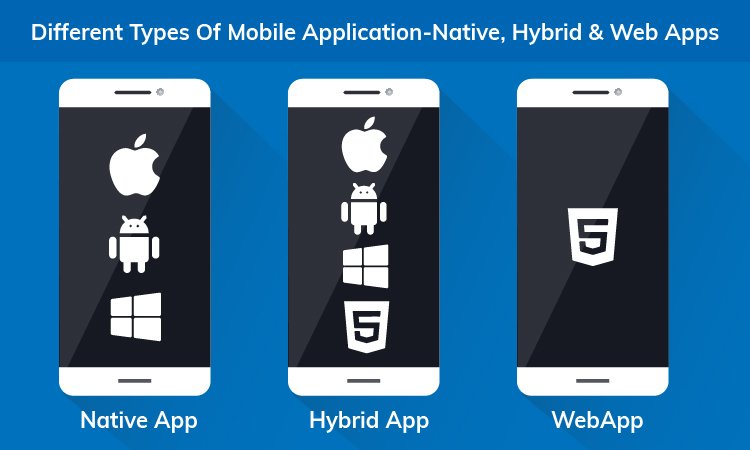
Types of Mobile Apps The mobile applications can be categorized into three groups based on their technical features:

  1. Native apps: the applications are built for use on a particular platform or an operating system.
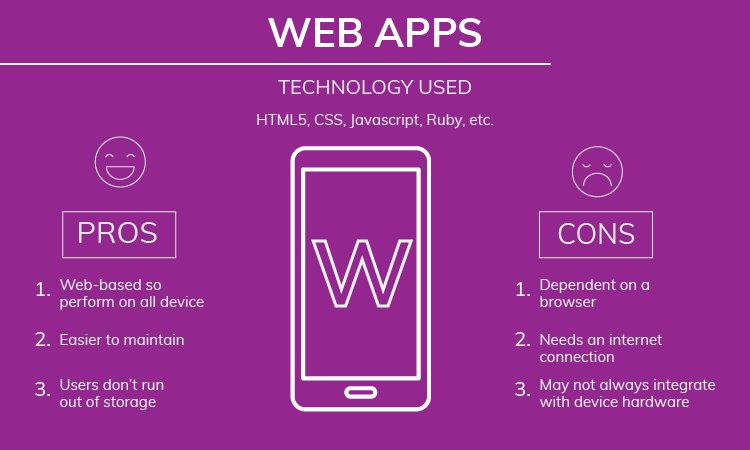
  2. Web apps: as the name suggests, these are run on the web, delivered on the web browsers. Web apps are more reactive than websites and can operate on any operating system- Android or iOS.
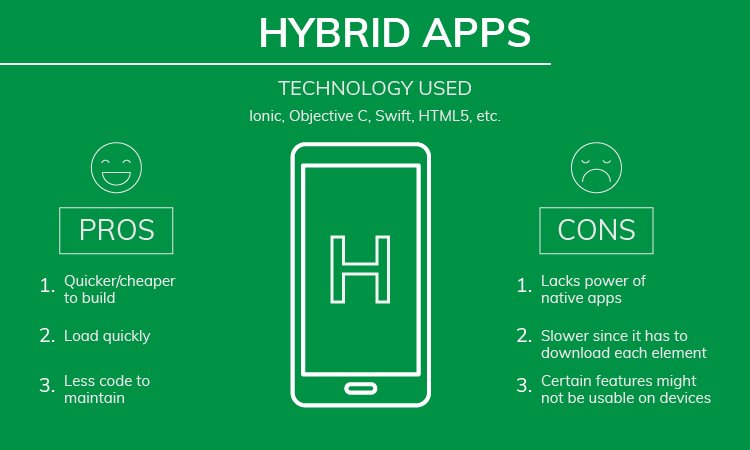
  3. Hybrid apps: a combination of native and web apps recapped in native apps makes a hybrid app. It has the proficiency to possess an icon and be downloaded from the App Store or Play store. The best Android application development company is after these hybrid apps.

Native Apps

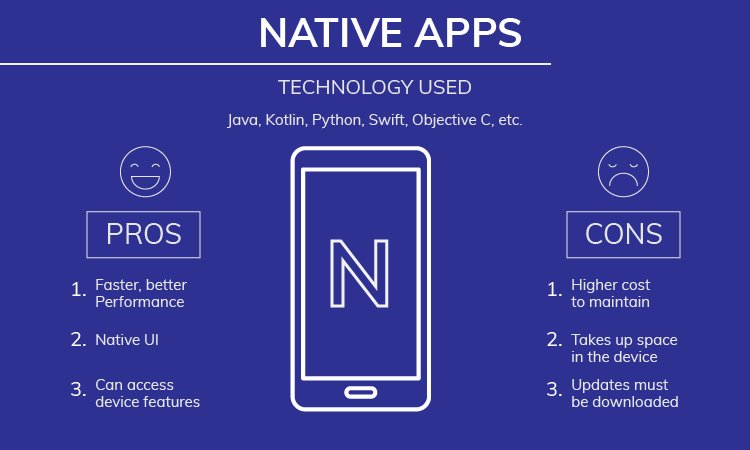
These are specially developed for the operating system (OS) of a mobile device. You can therefore have native android mobile applications or native iOS applications. However, you cannot combine them, say you use a Blackberry app on an Android phone or an iOS app on a Windows phone because the software is built for just one platform.  Native Apps As is evident from the name, native apps are native to their operating systems. Therefore, these cannot be run in any other operating system whatsoever. But, they are well optimized for that specific device and can provide an incredible experience to the user. For example: the Safari application is native to an iOS device and cannot be transferred or used on any other operating system- be it Android, Microsoft, Windows, or Blackberry. Technology: the technique best android application development company develop for native application is specific to the platform for which it is built. In Objective C or Swift programming languages, for example, iOS apps are coded, and android apps are coded into Java programming. Hire native app developers to get faster and better performance of your app. Native applications can only be distributed on the respective platforms via the app stores.

Pros:

  • UI experience in native apps is incredible with its rapid speed and smooth functioning.
  • A lot lesser hardware aids are used for coding of a native app
  • These each often run in an offline mode too.
  • The user can leverage the push notifications features and increase the app custom, thereby completing the desired action.

Cons:

  • The major drawback that best android application development company find in their native apps is their limited availability to operating systems other than their native ones. Hence, only a particular audience can be targeted with the native apps. 
  • Android application development companies also assert the struggle of creating the same application for two different operating systems.
  • The whole procedure of maintaining and revamping the application on two platforms is time-consuming and hectic.
  • Codes cannot be ported from one system to another.

Web apps

Web applications are internet-based apps. You may use the web browse for your device to access these. You do not need to install these applications on your device, and that sounds great as it reduces storage consumption. All you need to do is bookmark them in your browser. A great deal of web (business) apps do not use a lot of your hardware, such as RAM and other storage. As a result, you do not have access as you operate via a mobile browser or web browser to the device functionality. Web apps development Example: a very intriguing example of a web app would be the Gmail app that you get to see on your browser. It is essentially a mailing application that can be seamlessly accessed via a browser, preferably Google Chrome. Technology: mobile app development for small businesses is perfect in the form of web apps. Web apps use HTML, CSS, Ruby, and JavaScript technologies. Web applications have been built. However, they are only available on the Web and support multiple platforms.

Pros:

  • These are the best mobile apps development for small businesses since the development is short and pocket-friendly. There is no requirement to optimize the app for a particular operating system, saving the developer’s effort and time. Thus, the development costs are reduced straightaway.
  • Deployment is seamless, and distribution does not take much time and effort too. Updates are manageable since no specific update is required from the app stores.
  • A separate code for every platform is not required.
  • The app stores do not compel approval for launch and update.

Cons:

  • Since it cannot be accessed via an App Store, the device’s facilities cannot be utilized.
  • The user experience declines in quality in web apps.
  • The Internet is a necessity to use a web application.
  • Aged devices and browsers cannot hold web apps with optimum functionality. There are annoying glitches while using web apps on older versions of browsers or a device.
  • One will only discover a web app if the website is very popular and has reached millions. Otherwise, it isn’t easy to locate a web app existing just by the way.

Hybrid Apps

Hybrid mobile applications are, as the name implies, a mix of both native and web apps. Sometimes, hybrid apps are called cross-platform applications by the best android application development company. The only similarity between the cross-platform apps and hybrid apps is that they can share codes. Hybrid Apps They look like native apps, on the other hand, as you can download them easily from the app store and appear on your screen. The data is rendered using a browser that is integrated into the program itself. Hire our hybrid app developers to get pocket friendly hybrid apps. Example: widely used app-Twitter is an example of a hybrid app. Technology: the hybrid apps are built upon totally different sets of technologies. These are created with varied sets of native APIs. Coded in Objective C, Swift, HTML5, React Native.

Pros:

  • Android application development company asserts that hybrid apps are better in that they can access a device’s native features.
  • Having a mixture of both native and web apps makes hybrid apps the best to use as they have extended multi-platform support.
  • Time and effort, and multiple resources are conserved because hybrid apps are built on a single code.
  • Hybrid apps can be deployed effortlessly.
  • Internet connection is not a necessity with hybrid apps.
  • It can be extensively accessed via App stores.

Cons:

  • Native apps are the best when it comes to performance; hybrid apps’ performance gets a bit compromised.
  • Certain features are not accessible by all devices that use hybrid apps.
  • Customization leads to an increase in costs.
  • User experience is also negotiated as compared to native apps.
  • Old browsers and devices are not their best friends.

The knack of choosing from different types of Apps.

With a plethora of applications running these days, it can be pestering for one to choose from a pool of apps, be it Android or iOS. But worry no more! We are here to help you out with this decision. So keep the points that we tell you in mind and get ahead with choosing the best business apps for Android. Consider the following points before choosing an app for your business requirements:

  • Cost of development
  • Time consumed for the development of the app
  • Deployment of app
  • Type of app
  • Desired features and their integration
  • Specification of the app
  • Target audience.

Before you go ahead with any app, you must be checking on these points not to risk your time and money. Now, let us describe in detail why and when you should choose each type of app. This will help you get the best app to grow your business. Discover the ideal web and mobile app development services tailored to meet the unique needs of your business and ensure success.

Native- when to choose me?

  • Choose a native app when you are on the lookout for huh performing, complete usability.
  • Excellent user experience and interface.
  • Application very safe
  • One base of code
  • An app that accesses all smartphone resources and capabilities.
  • Application development in optimal/sufficient budget.
  • A quick, stable, and responsive use.
  • To use the hardware of the mobile devices to their best potential.
  • Support for third party integrations
  • A scalable application for new features can be updated in the future
  • Protection of line term investment.

Hybrid – when to choose me?

  • Enough high performance and usability
  • Application safe
  • Well- to moderate development budget
  • Patient and a decent time can wait.
  • To access and use the hardware on a mobile device
  • A single basis of code.
  • A huge user base
  • Support for integration of third parties.
  • Fine app user interface.

Web- when to choose me?

  • To quickly deploy an app
  • A single basis of code
  • Your app needs access to the network
  • A narrow budget
  • Accessible on every platform
  • You don’t want to expect application stores to approve them.
  • Support for integration of third parties.

Summing Up

With all the discussion being done, all the aspects are taken into consideration, and you should always realize that no one app will fit all your expectations. So, it is advisable to firstly keep moderate expectations and secondly, choose the app that is the closest to your requirements. Best Android application development company asserts upon well-researched decisions while choosing the best apps to grow your business. Do you have specific questions about your business application? Then, contact our expert developer to gratify your need. 

Native Applications vs Cloud Native Applications: A Complete Business Guide

Introduction

A decade ago, building an application was mostly about choosing a platform and writing code. Today, it’s about making strategic architecture decisions that directly impact scalability, performance, security, and long-term cost.

Should you build a native application for maximum device performance? Or should you invest in a cloud native application designed for elastic scaling and continuous delivery? And where do native cloud applications fit into this picture?

These questions are now common among founders, product leaders, and CTOs because application architecture has become tightly linked to business success.

Native applications continue to dominate mobile and desktop experiences thanks to their speed, reliability, and deep integration with operating systems. At the same time, cloud native applications are redefining how modern software is built, using microservices, containers, and cloud infrastructure to support rapid growth and constant change.

Yet, many businesses still struggle to understand:

  • What exactly are native applications?
  • What is cloud native applications architecture?
  • How are native cloud applications different?
  • Which approach is right for your product and growth stage?

This guide breaks down each concept in simple terms, compares native and cloud native approaches, and walks you through the native application development process as well as how to approach building cloud native applications from a business and technical perspective.

By the end, you’ll have a clear framework to decide which architecture fits your goals, and what it takes to build it successfully.


Planning a native or cloud native application development

What Are Native Applications?

Native applications are software applications built specifically for a single operating system or platform, using platform-approved programming languages and development tools.

For example:

  • iOS native applications → Built using Swift or Objective-C
  • Android native applications → Built using Kotlin or Java
  • Windows native applications → Built using C# or .NET

Because native applications are developed directly for their target platforms, they can fully access device hardware and operating system features such as camera, GPS, biometrics, storage, and sensors.

How Native Applications Work

Native apps are installed directly on a device and interact closely with the operating system. This tight integration allows the application to:

  • Execute faster with lower latency
  • Render smoother user interfaces
  • Use system-level APIs without limitations
  • Function reliably even with limited connectivity

From a user’s perspective, native applications feel more responsive and stable compared to web-based or hybrid alternatives.

Common Examples of Native Applications

You interact with native applications every day, such as:

  • Mobile banking apps
  • Ride-hailing apps
  • Social media apps
  • Health and fitness tracking apps
  • Enterprise internal tools

Most high-performance mobile experiences rely on native development to meet user expectations around speed, reliability, and usability.

When Do Businesses Choose Native Applications?

Businesses typically choose native applications when they need:

  • High performance and smooth animations
  • Advanced device-level functionality
  • Superior user experience
  • Strong offline capabilities
  • Long-term platform scalability

Native development is especially popular for consumer-facing mobile apps, where performance and UX directly affect engagement, retention, and revenue.

What Are Cloud Native Applications?

Cloud native applications are applications that are designed, built, and deployed specifically to run in cloud environments using modern, scalable architecture principles.

Instead of being hosted on a single server or monolithic system, cloud native applications are composed of small, independent components (called microservices) that run inside containers and are managed by cloud platforms.

In simple terms:

Cloud native applications are built to fully leverage the scalability, flexibility, and automation capabilities of the cloud.

This architectural approach enables applications to scale on demand, update frequently, and remain highly available even under heavy usage.

Core Characteristics of Cloud Native Applications

Cloud native applications typically follow these principles:

  • Microservices-based architecture: Each feature runs as a separate service.
  • Containerization: Services run inside lightweight containers (e.g., Docker).
  • Orchestration: Containers are managed using platforms like Kubernetes.
  • API-driven communication: Services communicate through well-defined APIs.
  • Automation & CI/CD: Continuous integration and continuous deployment pipelines.

These characteristics make cloud native applications highly adaptable to changing business needs.

Cloud Native Applications vs Traditional Applications

Traditional applications are often built as large, tightly coupled systems hosted on fixed infrastructure. Scaling usually requires adding more servers manually.

Cloud native applications, on the other hand:

  • Scale automatically based on demand
  • Allow individual services to be updated independently
  • Recover quickly from failures
  • Support faster feature releases

This is why many modern SaaS platforms, eCommerce systems, and enterprise software products are now cloud native by default.

Why Businesses Are Moving Toward Cloud Native Applications

Organizations adopt cloud native architecture to:

  • Handle rapid user growth
  • Reduce infrastructure overhead
  • Accelerate time-to-market
  • Improve system reliability
  • Support global deployments

For startups, cloud native applications enable quick experimentation. For enterprises, they support modernization and digital transformation at scale.

What Are Native Cloud Applications?

Native cloud applications (often used interchangeably with cloud native applications) refer to applications that are built specifically to operate within cloud environments and take full advantage of cloud infrastructure and services.

In practice, “native cloud applications” is a commonly used phrasing for cloud native applications, especially in business and marketing contexts. Both terms describe applications that are architected for the cloud from the ground up, not simply migrated from on-premise systems.

How Native Cloud Applications Relate to Cloud Native Applications

  • Cloud native applications → The technical and architectural concept
  • Native cloud applications → A business-oriented way of expressing the same idea

Both emphasize:

  • Cloud-first architecture
  • Microservices
  • Containers
  • Automated deployments
  • Elastic scalability

So, when someone searches for “native cloud applications,” they are usually looking for information about cloud native application development.

Examples of Native Cloud Applications

  • SaaS platforms (CRM, ERP, HR systems)
  • Streaming services
  • eCommerce platforms
  • Fintech platforms
  • Collaboration tools

These systems rely on distributed cloud infrastructure to handle variable traffic, global users, and continuous feature updates.

Why the Distinction Matters

Understanding that native cloud and cloud native typically refer to the same approach helps decision-makers avoid unnecessary complexity when evaluating vendors or technologies.

What matters more than terminology is whether the application is:

  • Architected for scalability
  • Designed for resilience
  • Built with automation in mind

Native Applications vs Cloud Native Applications

While native applications and cloud native applications can coexist within the same product ecosystem, they solve different architectural problems.

Native applications focus on how software runs on a device.

Cloud native applications focus on how software runs in the cloud.

Understanding these differences helps businesses choose the right foundation.

Key Differences at a Glance

Aspect Native Applications Cloud Native Applications
Primary Environment Mobile / Desktop Device Cloud Infrastructure
Architecture Style Platform-specific Microservices-based
Deployment Model App stores or direct installs Cloud platforms
Scalability Limited to device capacity Elastic, automatic scaling
Performance Excellent device-level performance Optimized backend performance
Update Frequency User-driven updates Continuous deployment
Offline Support Strong Depends on the architecture
Best For Mobile-first experiences Scalable backend systems

Architectural Perspective

  • Native applications run directly on operating systems and interact closely with hardware.
  • Cloud native applications run on distributed cloud infrastructure and are composed of multiple independent services.

Many modern digital products combine both:

A native mobile app on the front end + a cloud native backend powering data, authentication, and business logic.

Business Perspective

Choose native applications when:

  • User experience is a top priority
  • Device-level features are essential
  • Performance must be consistently high

Choose cloud native applications when:

  • You expect rapid growth
  • You need flexible scaling
  • You want faster releases and continuous improvement

Most successful products today rely on both approaches together rather than choosing one over the other.

Choosing between native and cloud native application architecture

Benefits of Native Applications for Businesses

Native applications continue to be the preferred choice for many mobile and desktop products because they deliver consistent performance and superior user experiences.

Here’s why businesses invest in native applications:

1. Superior Performance

Native applications are compiled specifically for their target platforms, resulting in:

  • Faster load times
  • Smooth animations
  • Minimal latency

This directly impacts user satisfaction and retention.

2. Enhanced User Experience (UX)

Native UI components follow platform design guidelines, which means:

  • Familiar navigation patterns
  • Intuitive interactions
  • Higher usability

Better UX translates into higher engagement and lower churn.

3. Full Access to Device Capabilities

Native applications can leverage:

  • Camera and microphone
  • GPS and location services
  • Biometrics (Face ID, fingerprint)
  • Push notifications
  • Sensors and hardware acceleration

This enables feature-rich experiences that web-based alternatives cannot match easily.

4. Strong Offline Functionality

Native apps can store data locally, allowing users to:

  • Continue using core features offline
  • Sync data once connectivity is restored

This is critical for productivity apps, field services, and travel-related solutions.

5. Better Security Controls

Native platforms provide built-in security mechanisms such as:

  • Secure storage
  • App sandboxing
  • OS-level encryption

This makes native applications a strong choice for finance, healthcare, and enterprise apps.

Benefits of Cloud Native Applications for Businesses

Cloud native applications are built to support growth, speed, and continuous innovation. For many organizations, they form the backbone of digital transformation.

Here are the key business benefits:

1. Elastic Scalability

Cloud native applications automatically scale resources up or down based on demand. This allows businesses to:

  • Handle traffic spikes without downtime
  • Avoid overpaying for unused infrastructure
  • Support global user bases

2. Faster Time-to-Market

With microservices and CI/CD pipelines, teams can:

  • Release features independently
  • Deploy updates frequently
  • Fix issues quickly

This shortens development cycles and improves competitiveness.

3. High Availability & Resilience

If one service fails, others continue running. This results in:

  • Reduced system downtime
  • Better fault isolation
  • Improved reliability

4. Cost Efficiency Over Time

Although the initial setup can be complex, cloud native architecture:

  • Optimizes infrastructure usage
  • Reduces long-term operational costs
  • Supports pay-as-you-go models

5. Easier Technology Modernization

New technologies can be introduced without rewriting the entire system, helping businesses stay future-ready.

When Should You Choose Native Apps vs Cloud Native Apps?

Choosing between native applications and cloud native applications is not about which is better. It’s about which fits your product goals, growth plans, and technical roadmap.

Below is a practical guide by business type.

For Startups

Choose native applications if:

  • You are building a mobile-first product
  • User experience is a key differentiator
  • You need fast, responsive interfaces

Choose cloud native applications if:

  • You expect rapid user growth
  • You are building a SaaS product
  • You need frequent feature releases

Most startups combine both: native mobile front-end + cloud native backend.

For Small & Medium Businesses (SMBs)

Choose native applications when:

  • Your app relies heavily on device features
  • You serve mobile-centric users

Choose cloud native applications when:

  • You need scalable backend systems
  • You plan to integrate multiple tools and services

For Enterprises

Choose native applications for:

  • Employee-facing mobile tools
  • Secure internal applications

Choose cloud native applications for:

  • Modernizing legacy systems
  • Large-scale digital platforms
  • Multi-region deployments

Simple Rule of Thumb

  • Native apps → Best for front-end experience
  • Cloud native apps → Best for scalable backend systems

Most successful digital products rely on both working together.

How to Develop a Native Application (Step-by-Step)

Developing a native application requires a structured approach to ensure performance, usability, and long-term maintainability. The mobile app development process includes:

Step 1: Define Goals & Requirements

  • Identify business objectives
  • Define target users
  • List core features
  • Choose iOS, Android, or both

Step 2: Validate the Idea

  • Research competitors
  • Identify unique value proposition
  • Create basic wireframes
  • Validate with potential users

Step 3: Choose the Right Tech Stack

  • iOS: Swift, Xcode
  • Android: Kotlin, Android Studio
  • Backend: APIs, databases, cloud services

Step 4: UI/UX Design

  • Create user flows
  • Design wireframes
  • Build interactive prototypes
  • Follow platform guidelines

Step 5: Native App Development

  • Implement front-end features
  • Integrate backend services
  • Add device-level functionality

Step 6: Testing & Quality Assurance

  • Functional testing
  • Performance testing
  • Security testing
  • Device compatibility testing

Step 7: Deployment

  • App store preparation
  • Compliance checks
  • Submission & review

Step 8: Ongoing Maintenance

  • Bug fixes
  • Performance optimization
  • Feature enhancements
  • OS updates

Building Cloud Native Applications: Step-by-Step Process

Building cloud native applications requires planning beyond traditional development. The focus is on scalability, resilience, and automation from day one.

Step 1: Define Architecture Strategy

  • Identify business objectives
  • Define scalability needs
  • Choose microservices approach
  • Plan service boundaries

Step 2: Select Cloud Platform

  • AWS, Azure, or Google Cloud
  • Evaluate regional availability
  • Review pricing models
  • Confirm compliance needs

Step 3: Design Microservices

  • Break application into services
  • Define APIs
  • Choose communication methods

Step 4: Containerization

  • Package services using Docker
  • Standardize runtime environments

Step 5: Orchestration Setup

  • Configure Kubernetes
  • Define scaling rules
  • Set service discovery

Step 6: CI/CD Pipeline

  • Automate builds
  • Automate testing
  • Automate deployments

Step 7: Cloud Deployment

  • Provision infrastructure
  • Deploy containers
  • Configure networking

Step 8: Monitoring & Optimization

  • Set performance metrics
  • Enable logging
  • Optimize costs


Partner for building native and cloud native applications

Technology Stack for Native & Cloud Native Development

The right technology stack directly impacts performance, scalability, and long-term maintenance.

Below is a high-level overview.

Native Application Development Stack

iOS Development

  • Swift
  • Objective-C
  • Xcode

Android Development

  • Kotlin
  • Java
  • Android Studio

Backend & Integrations

  • REST / GraphQL APIs
  • Node.js, .NET, Java, or Python
  • SQL / NoSQL databases

Cloud Native Application Development Stack

Cloud Platforms

  • Amazon Web Services (AWS)
  • Microsoft Azure
  • Google Cloud Platform (GCP)

Containerization & Orchestration

  • Docker
  • Kubernetes

Backend Technologies

  • Node.js
  • Java
  • Python
  • Go

DevOps & CI/CD

  • GitHub Actions
  • GitLab CI/CD
  • Jenkins

Monitoring & Observability

  • Prometheus
  • Grafana
  • ELK Stack

Cost Factors for Native and Cloud Native Application Development

The native and cloud native application development cost varies based on scope, complexity, and long-term goals. Rather than fixed pricing, it’s more practical to understand what drives cost.

Cost Factors for Native Applications

  • Platform choice (iOS, Android, or both)
  • UI/UX complexity
  • Feature set
  • Third-party integrations
  • Backend requirements
  • Testing scope
  • Ongoing maintenance

Cost Factors for Cloud Native Applications

  • Architecture complexity
  • Number of microservices
  • Cloud provider selection
  • Infrastructure usage
  • Security and compliance requirements
  • DevOps automation level

Typical Cost Ranges (High-Level)

  • Simple native app: Lower five figures
  • Mid-level native app: Mid five figures
  • Complex native app: Six figures+
  • Cloud native backend: Depends heavily on scale and architecture

(Exact costs should be estimated after requirement analysis.)

Cost Optimization Tips

  • Start with MVP
  • Reuse existing services
  • Use managed cloud services
  • Automate deployments

Common Challenges & How to Overcome Them

Both native and cloud native application development come with technical and operational challenges. Understanding them early helps reduce risk.

Challenges in Native Application Development

Platform Fragmentation

  • Multiple OS versions
  • Different device screen sizes

Solution: Follow platform guidelines, test on multiple devices.

Performance Optimization

  • Heavy animations
  • Memory usage

Solution: Optimize code, use profiling tools.

Long-Term Maintenance

  • OS updates
  • Library changes

Solution: Plan regular updates and refactoring.

Challenges in Cloud Native Application Development

Architectural Complexity

  • Many microservices
  • Distributed systems

Solution: Start with well-defined service boundaries.

Operational Overhead

  • Monitoring
  • Logging
  • Scaling

Solution: Use managed cloud and DevOps tools.

Security Concerns

  • Data exposure
  • Service-to-service security

Solution: Implement strong authentication and encryption.

How to Choose the Right Development Partner

Selecting the right development partner is as important as choosing the right architecture. The success of your native or cloud native application depends heavily on the team you work with.

What to Look For

  • Proven experience with native applications
  • Strong cloud native development expertise
  • Architecture consulting capabilities
  • UI/UX design strength
  • Transparent communication
  • Scalable delivery model

Questions to Ask Potential Partners

  • Have you built similar applications before?
  • Do you handle both frontend and backend development?
  • How do you ensure code quality and security?
  • What is your post-launch support model?

Why Experience in Both Matters

Modern products often combine native frontends with cloud native backends. Working with a partner that understands both ensures:

  • Better architecture decisions
  • Faster development
  • Fewer integration issues

At WEDOWEBAPPS, we help startups, SMBs, and enterprises design, build, and scale native and cloud native applications with a focus on performance, security, and long-term maintainability.


Consult experts for high performing native and cloud native applications

PHP Laravel Framework: Advantages and Features

PHP is one of the most used programming languages for developing unique websites and applications. When comparing platforms like WordPress vs custom website development, PHP frameworks like Laravel stand out for their robustness and customization options. This coding language is considered secure, stable, and suitable for various business needs and has had remarkable evolution since its inception. As a result, millions of SMEs believe that PHP cms development has proven beneficial for their business as they see sky-rocketing sales and marketing.  Over the years, PHP has kept improving with ease of writing code, increased functionality, safety, and performance. Some frameworks like Laravel, CodeIgniter, Symfony, Sim, Fuelphp, Phalcon, Zend framework, and Aura are trendy. Names like Laravel and CodeIgniter are no more technical terms as people who do not belong to the IT industry are aware of them as well. However, Laravel tops the list, and its simplified coding, high level of security, and top-class speed are accountable for its immense popularity. In this blog, you will get to know some of the benefits of using the PHP Laravel framework and its must-have features for web development

Advantages of PHP Laravel Framework

Advantages of PHP laravel framework


A framework comprises several libraries that work for fundamental functionalities, predefined classes, and support developing websites. A framework helps build one-of-a-kind software by including code archives, themes, compilers, widgets, and facets to be used on a website.  Laravel is a leading framework of PHP as it offers numerous benefits for a successful website launch. Just like how a WordPress white label plugin simplifies branding for WordPress users, Laravel streamlines email service integration for seamless communication and user engagement. Below are some of the remarkable benefits you can have by availing of our Laravel website development services:

1. Merging email services

With Laravel, authentication is quite simple. With everything, Laravel helps with organized authorization and offers control access to resources. You often do not receive registration or verification email; however, it never happens with Laravel as it simplifies the method of registration by merging mail services. Laravel is capable of sending notifications to specific users’ email addresses to keep them updated. Hence, authentication or authorization becomes smooth, and people can easily access the website or make a purchase or payment without any delay or hazard. 

2. Integration with messages and mails

As a user, many of you know that websites send promotional messages, password clues or remainders, auto-receipts, and authentications. Laravel is more efficient in this case due to its built-in mail API services. It seamlessly integrates with Mailgun, SparkPost, Mandrill, Amazon SES, SMPT, ‘sendmail,’ and PHP’s mail function. In addition, this simple API over SwiftMailer library drivers has the caliber to send emails and texts to cloud-based or local servers, including tools like Slack and Nexmo.

3. Quick caching integration

If you are not too much into the IT industry, you still must have read somewhere ‘clear cache’ for smooth navigation of a website. You will not have to use it frequently if you are using a website built using Laravel. Everyone loves high-speed running websites, and smooth-running cache systems are the reasons behind that. This is where Laravel plays a vital role – quick and easy caching integration. It supports approved cache backends like Redis and Memcache. Laravel allows developers to craft various cache configurations, which is the best for building more extensive and complex sites.

4. Safe transactions and high security

If you have a product-based business that runs over data, sales, and payments, security must be your priority; after all, millions of customers trust your web app. The robust structure of Laravel protects your website against cross-site request frauds, SQL injections, cross-site scripting, and payment forgery. Furthermore, its powerful code-base heavily guards the framework, and hence it is entirely reliable. If the developers are aware of the security ecosystem of Laravel, your project is in good hands in order to build a robust and safe website for your business.

 5. Managing error in an unusual way

Laravel does have an extraordinary way of handling errors, especially in those users’ data-entry forms. Users typing wrong information or errors is a headache in a well-programmed website. Nevertheless, Laravel uses an incorporated error and exception handling system that is configured with the Monolog logging library. It supports numerous log handlers as your customer will get notified immediately when he/she types with an error; and you will get it sorted instantly without affecting your sales or customers’ demands. 

6. Automated testing work

Laravel developers benefit from tools like Laravel collection methods to simplify tasks such as testing workflows, handling data, and debugging, ensuring smooth website functionality. Another important benefit of the Laravel framework is the automation of testing procedures. Developers at WeDoWebApps LLC love to code Laravel because of its simplified testing work. Laravel is built with the concept of clarity and testing, and hence, the PHP unit in Laravel supports testing with a set-up of phpunit.xml in the web app. Furthermore, it allows developers to run a test one at a time instead of running a test through the whole website. As a result, it is easier to find and fix bugs right in that minute without looking for a list of errors to fix and getting lost in the procedure. Overall, it is advantageous for both the provider and the users. Read also: Laravel Trends That You Should Never Miss Out

7. URL routing

As a user, you must be aware of the fact that most of us try to find things by clicking or typing links on search engines. Consumers look for their desired products, articles, services, etc.; if there is no proper URL routing, they will not reach the right web page; instead, the URL might direct them to an error or a blank page. With Laravel, two lines of extra code can do wonders for your website as it is defined by routes.php – an automated file loaded by the Laravel framework. Thus, Laravel offers an expressive and simple finding route by accepting a URI and a Closure. In short, you can leverage the top-class functionalities by using Laravel’s excellent qualities like third-party integration, modularity, affordable development cost, effortless testing process, database access, security, and community support. From where do these benefits come, though? Laravel has some significant features that make this PHP framework stand out from the crowd. Those features are as below:

Top features that add to Laravel’s popularity:

For developers familiar with resources like the WordPress Codex, Laravel’s extensive documentation and community-driven support offer similar insights to optimize development workflows. Below are some of the most popular features:

– MVC architecture:

MVC architecture allows Laravel to separate business logic and presentation layers based on the PHP framework. MVC also contributes to a high level of security, brilliant performance, scalability, and robustness.

– Blade template engine:

The blade template engine is an elementary yet potent engine compared to other PHP engines for templating. It does not add extra load to your web app and also doesn’t restrict your business from using plain PHP code in views. Along with some shortcuts for general PHP functionalities, Laravel provides facets like displaying data and template inheritance that adds convenience and flexibility to the web development process.

– Open-source framework with the vast community:

Believe it or not, it is a noteworthy feature of Laravel. Many PHP frameworks come with a price tag, whereas Laravel is an open-source framework. Also, a vast community from across the globe offers support and is always up on its feet to help improve the code or add plugins or fix the bugs. 

– Object-Oriented Libraries:

Laravel PHP framework is filled with ample built-in object-oriented libraries. These libraries are full of stunning features that work in developers’ as well as users’ favor. 

Conclusion:

Laravel stands tall among Popular Backend Frameworks for its robustness, modularity, and feature-rich offerings, making it an excellent choice for businesses of all sizes. Laravel has evolved immensely since it was found, and hence, the community has kept growing. Millions of people and businesses have gained advantages personally and professionally as PHP Laravel never disappoints its users. If you desire to have a brand new Laravel website or want to migrate to the Laravel framework, WeDoWebApps LLC provides end-to-end development services to boost your sales and marketing and take your company to the next level of success.

How to Develop an Android App

Following the recent trends, it has become essential to avail of Android app development services. Developing an Android app demands a lot of expertise, talent, as well as innovation. There are plenty of benefits one will get after creating an application for their organization. To effectively carry out the application development procedure, a business owner needs to consider some essential points. The present blog is a compilation of such important points.

Android app development – Essential Considerations

Below is a list of essential points to consider for creating an Android app. Go through them and know about them in brief.

  1. Area of Application: It is essential to know about the field of application of an Android app. There are plenty of areas where one can use them, such as gaming, mobile commerce, health care, enterprising, social media, support, maintenance, testing, and so on. Firstly, the owner has to determine his need from an app and then work accordingly.
  2. Easy Accessibility: The Android application must be easily accessible. It should be easy to navigate through different tabs and sections of the application. Apart from that, the app must be compatible with other types of screen resolutions to deliver better viewing on all smartphones.
  3. Google Playstore: Without getting a place on Google Playstore, an application is of no worth. Thus, it is essential to develop an Android app within the parameters as set from the prior. Letting the users easily find and download the application from the store.
  4. Appearance: While creating an application, it is essential to consider this point. The app must appear well, with attractive graphics and easy to navigate tabs. In this manner, it can enhance the user interface. It will surely benefit the business owner to increase the engagement of users with the application.
  5. Features: Features relates to the facilities the business owner is going to offer to his clients within an application. 

Significance of Android app development

Owning an Android app benefit a business owner in many ways. Such as:

  • It becomes hugely more comfortable to notify the stakeholders of business about the day to day activities of the organization. This keeps them updated with the happenings, and they remain in touch with the company.
  •  A business can maintain its online presence with the help of an Android app. It will provide them with a notable platform for advertising themselves.
  •  An Android app will also facilitate enhancement in the number of clients, which in return will increase the Rate of revenue of the business.

In the present article on How to develop an Android app, we have briefed out some of the notable points to be kept in mind while Android app development for your business.

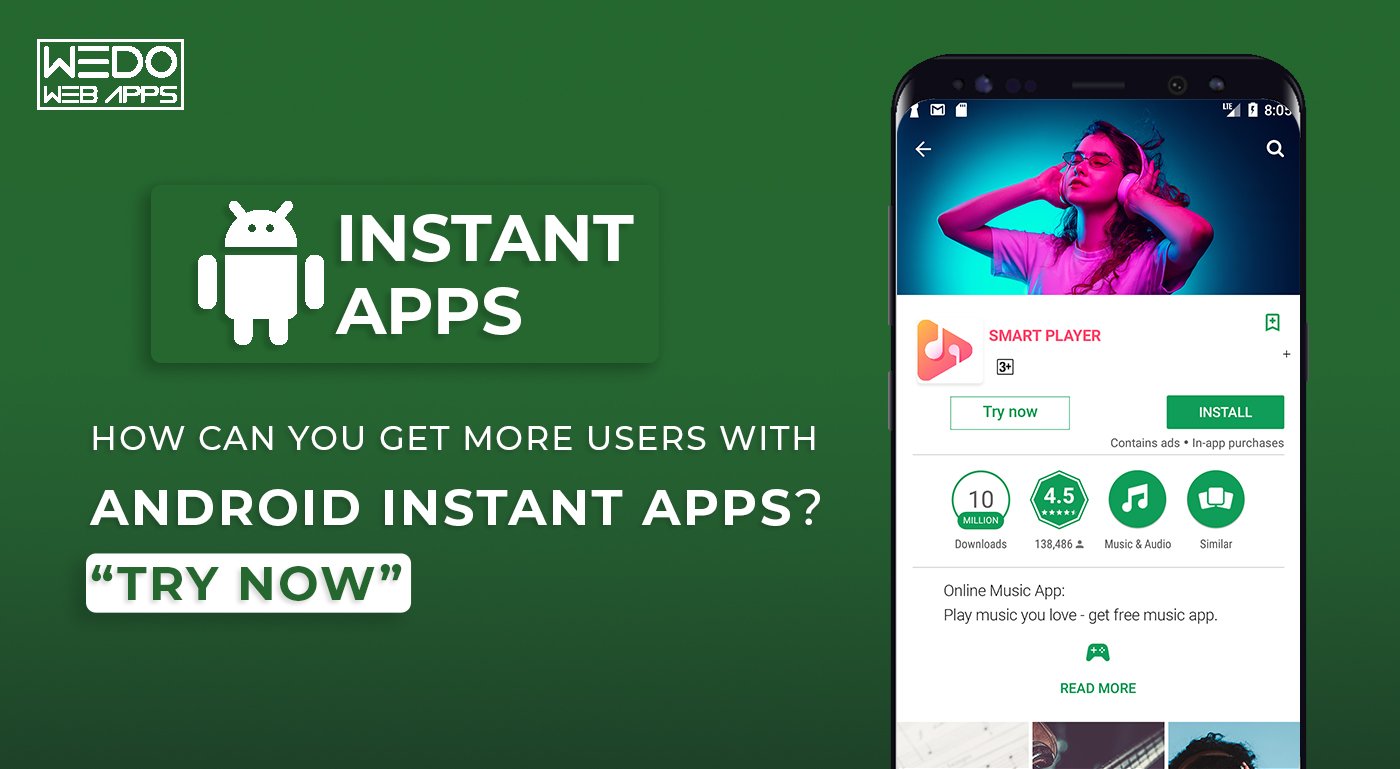
How Can You Get More Users With Android Instant Apps? – “Try Now”

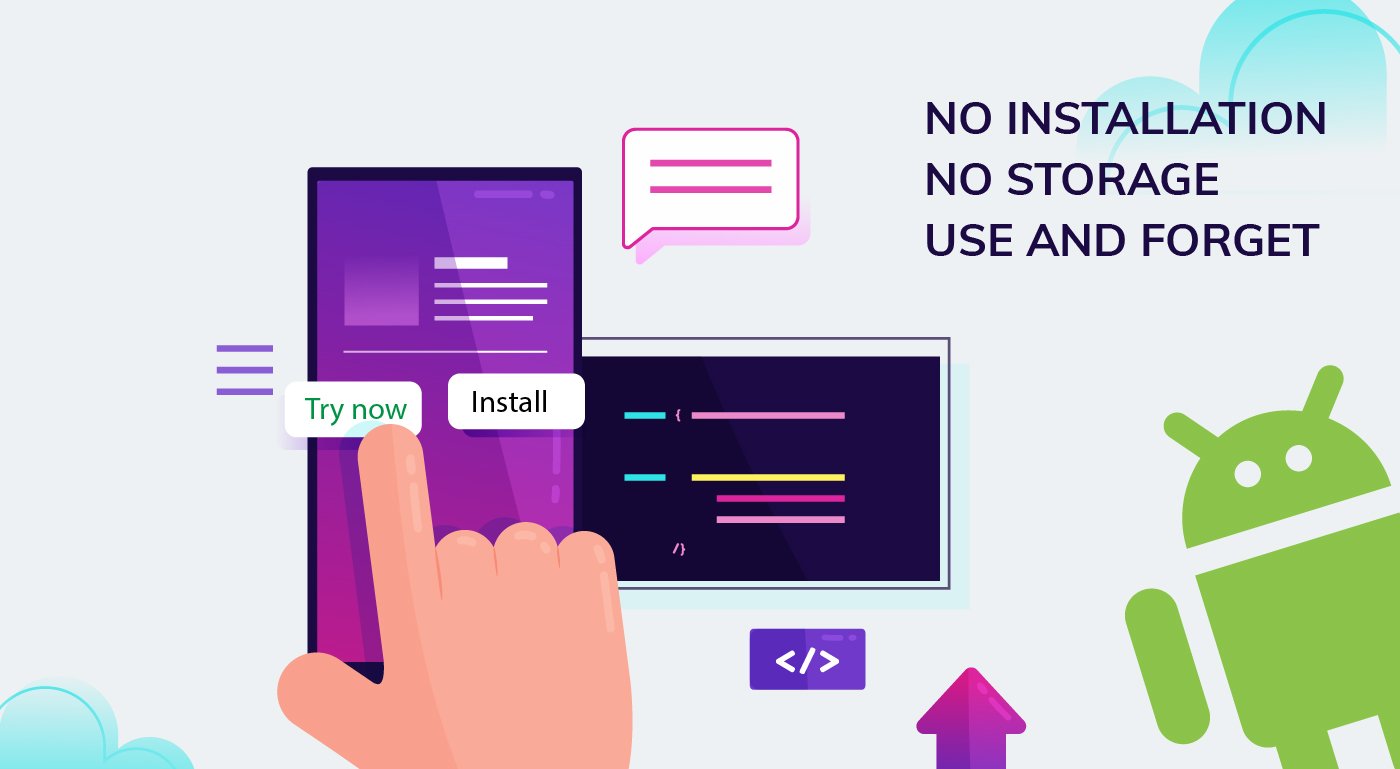
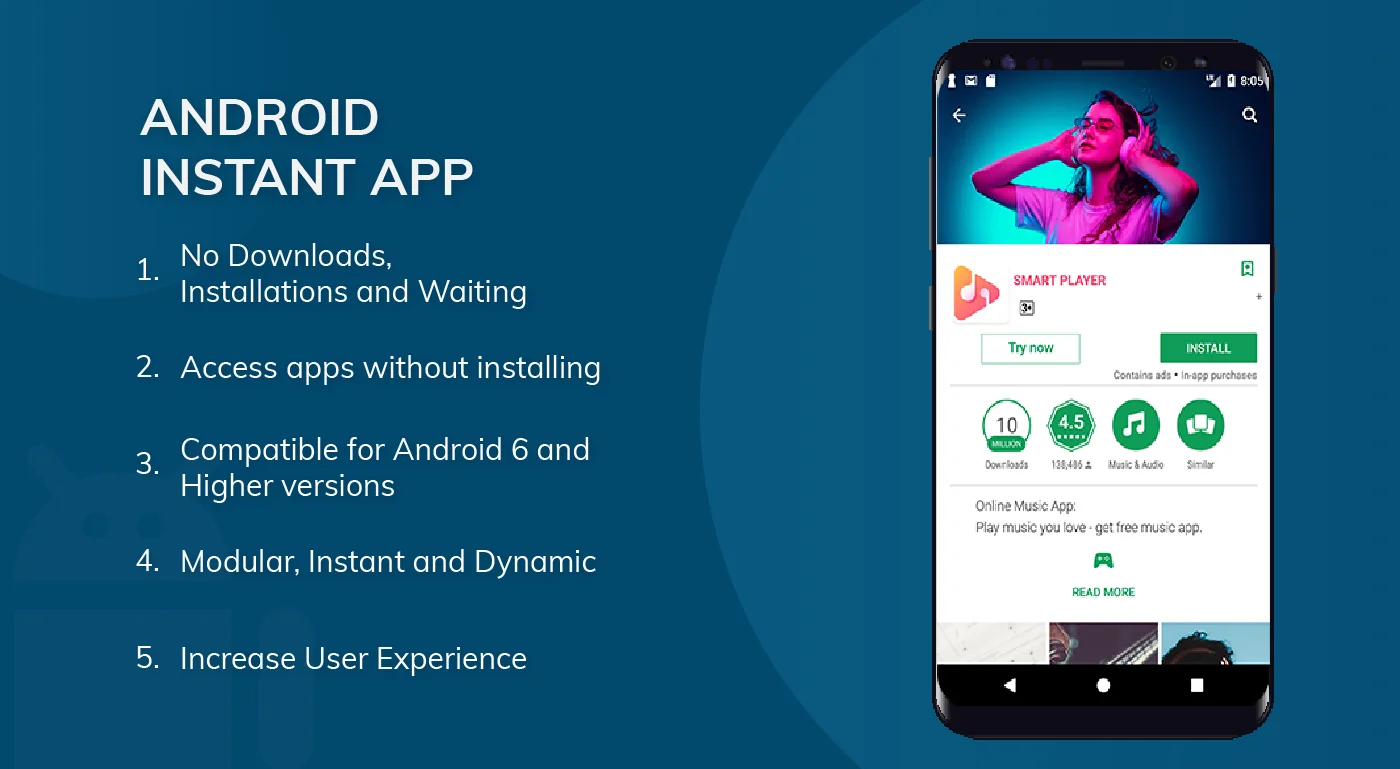
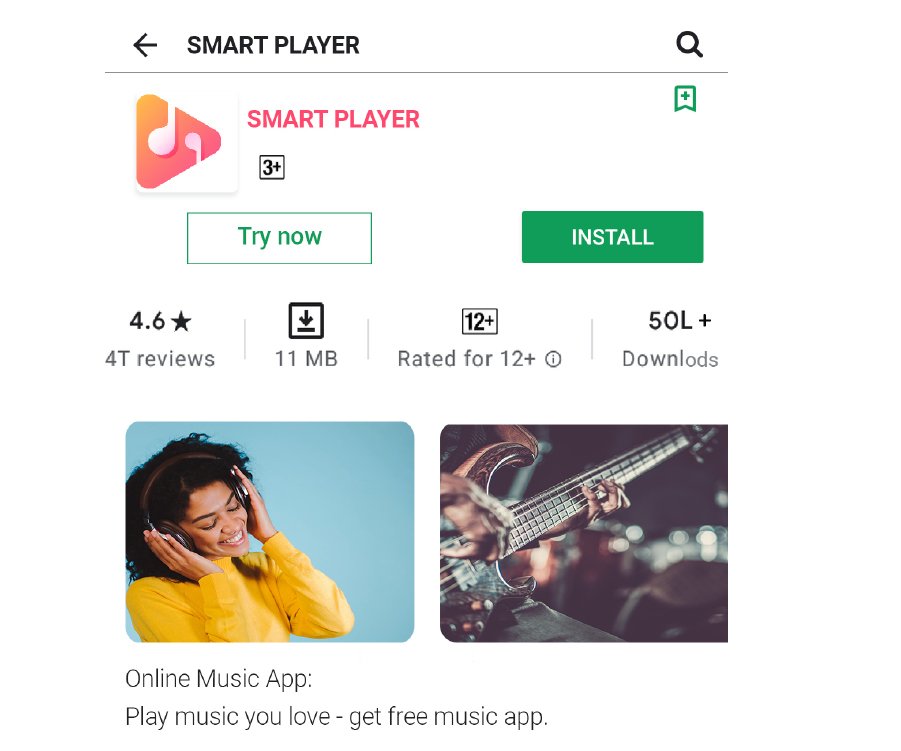
In a world where everyone needs to get things done instantly, how can Android lag within a very short period? Well, guess what, it doesn’t! Have you heard of the term Android Instant Apps before? Various Android app developer companies are after the quick procedure of what is known as the Android Instant Apps. These instant apps are sure-shot your best friend. Think to yourself- wouldn’t it be amazing if you could use an app without having to download it? Without putting any additional load on your device’s memory, you can get an impressive experience of the app just like that.  Google Play services for instant apps make this possible for you. Google Play services for instant apps From the android app developer company’s point of view, it is a great way to get their customers engaged and attracted to their app because of the main feature- optional download. This feature helps you keep your phone light. Your app module behaves as a standalone app that can be easily accessed through a URL. You can access the app from anywhere, anytime, via the URL searching element. Let us now see the working of an instant app.

How can you get more users with Android Instant Apps?

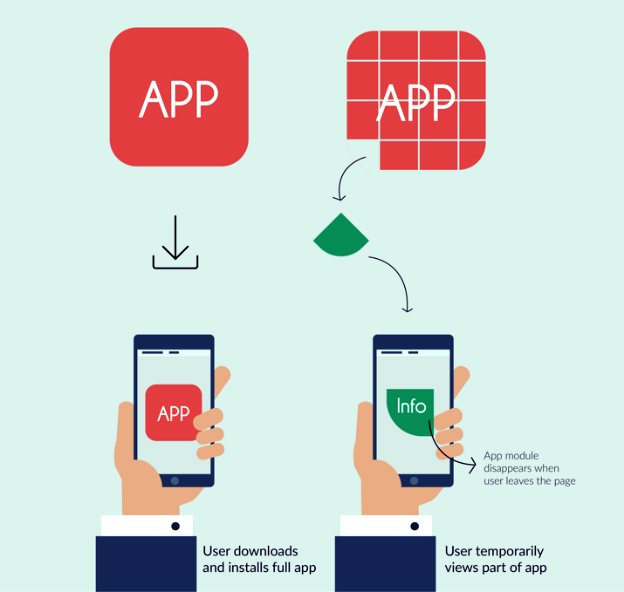
Android Instant Apps At Google I/O 2016, people saw the first face of a great new Android feature called Instant Apps. These instant Android applications are proposed to bridge the gap between web applications and native applications. The basic idea of ​​Android Instant Apps is to break down native apps into smaller parts, making it easier for an app to run instantly without having to go to the Google Play store. In addition, instant Apps allow the user to access the cloud-based version of the app on an Android phone without installing it from the Play Store.

Working of Android Instant App

An instant operates through a URL. This URL, when tapped, initiates a command for Google Play which further initiates the feature APK corresponding to the request, ultimately leading to the Android device starting the instant app. To get a detailed knowledge of how this happens, you could reach out to an Android App Development Company. If in case the Google Play instant app services fail at this juncture, the android system takes the job into its hands and maintains the request of the URL. Android app developer company The URL designated to each app is unique, which eases the work of the entire system. In addition, finding a matching instant app becomes easy this way. The instant applications have a distinct program structure. Instant apps can either be created during the Android 3.0 that contains an instant app module, and this module can be put into the project. The project structure consists of a base configuration and another feature, APK. If there is a need to expand only one feature as an app, the base structure will serve the purpose. In the other case scenario, if you wish to add an APK that supports multiple Android App Features in the app, other feature modules have to be added to generate the APK. Base element APK generally contains shared assets for numerous highlights.  Each component APK ought to have a section point movement which will be called when the URL is hit to get to the instant application. At whatever point a client demands one of the highlights of the instant application, the base APK and highlight APK is brought from the Play Store planned with related URLs. Assuming a client needs to get to another component, just that element APK is downloaded, as the base APK is now downloaded, and it is as yet accessible in the store. Instant application assets stay in reserve for not many hours; however, there is no application introduced. Boost your user engagement by incorporating strategies from our React Native development services, similar to the benefits of Android Instant Apps.

Why should you elevate up to Instant Apps?

Does the question now lie that why are instant apps so much in vogue these days? What is it that is creating the buzz around instant apps? Here are a few things that you should consider before deciding on investing to hire android developers or develop an android instant app on your own. There are certain privileges hidden in the procedure of developing an android instant app.

  • Proliferates your reach: While you think that you did your job of marketing and promoting your app by putting out several ads here and there, by putting promotional links on various websites, or by creating short video advertisements of your app or even the poster advertisement, or simply hiring an android app developer company for the purpose, you might not be considering the fact that there still is a chance that your target users do not install your app on their devices. develop an android instant app This could be the case many times since most users, even on being redirected to the Google Play Store, tend to ignore the install button for some or other reason. On the other hand, when it’s an instant app, the users will not fall prey to the cognitive processes that propel them to not install an app because of the time it takes or the space it takes up the memory of the device. Hence, instant apps make a better reach in the target audience.
  • Giving Native User Experience To Users Who Are Not Installing The App: As an instant application that can impart assets to the first local application, it can assist you with giving a similar lead Android experience to every one of your clients – one who is introducing a local application and ones who are utilizing instant applications for highlights.
  • Internet issues? No problem! : there are several kinds and varieties of users that your app is going to get from your target audience. First, there might be people residing in stringent circumstances. Second, there are issues related to the internet and digital technicalities arising now and then, especially in a country like ours. What if a user was in the metro, doing an extremely important task on an app, and the network flashed out? In such a case, the app that has the ability to run on little or no internet connection can be the saviour. Android Instant apps Instant apps provide this benefit in such circumstances. Thus, to help out your users genuinely and make a mark that leaves your users astounded, opt for an android app developer company that can build an instant app with ease. Without having to download the app, all the features can be used seamlessly.
  • Location-based and Time-sensitive apps are no longer a problem: Area-based applications are not new. In any case, if clients won’t utilize area based or time-sensitive applications habitually, it doesn’t indicate well to drive clients to introduce your application. The instant application can build the allure of area and time-sensitive applications as clients don’t have to introduce it, and it very well may be gotten to effectively by hitting the URL.

Taking The Real World Into Consideration

While there is the evolution of several things taking place, our technology has to evolve too. Today’s world is fast, and people are always in a hurry. At this point, if one has to go through the whole app downloading procedure just to order, for instance, food or medicines or a parking app for a city where he doesn’t belong, just for some time, it undoubtedly infuriates the person. Certain android app developer companies do not consider that their users are busy and do not have time to install an app every time and anytime.  In such cases, instant apps are your best friends. For both the android app developers and the users, instant apps are highly beneficial. The primary concern is the size. Android instant app size limit is a substantially small amount. You do not even retire to fit it into your device. You can use it without downloading.

Which apps will benefit the most from this?

Situational applications, such as parking applications used when travelling in other cities, event-based applications, such as the application of Christmas carols, shopping applications that help the user make purchases without any problems, applications with shared options, Such as media and entertainment applications, will benefit the most. Android Instant Apps, without any doubt, is a revolutionary idea to make available to users at any time without the need to install apps. If you want to know more about Android Instant Apps, you can get in touch with our Android app developer company, Google’s preferred Android App Development partner. Contact us here or send an email to sales@WEDOWEBAPPS.com.

Healthcare Android App Development: Top features, frameworks, and ideas in 2021

Imagine a world with no android devices. We could have never even imagined that we would be able to monitor or detect our health condition with just a single android app. Android App Development in the Healthcare industry has its own importance. The fact that an application can be present in your smartphones for the whole day without even noticing its presence. It shows the path to android app development services to build healthcare solutions, with mobile applications at the core. Without a mobile app, there would have been no digital healthcare monitoring systems that doctors and even patients can use. Imagining a world without Smartphones is stressful, right? Patients and even doctors are getting benefited from advanced medical android apps. Due to their different requirements, both the parties use mobile apps in distinctive ways according to their needs. While for a patient who is always cautious about their health conditions, android apps can provide a dashboard for dedicated daily reports and improvements in their health. Whereas for a doctor, healthcare apps can be a source to record a patient’s data and health conditions. They even get the advantage of scheduling specific meetings with medical representatives. Additionally, as people are getting healthcare apps on their android devices, thereby increasing the demand for such healthcare mobile app solutions. Android App Development Companies are showing the increased requirements for their services. Digitalization has made an advancement in every industry, and healthcare is no exception. Android App development is a great way to change the lives of doctors and patients with a wide range of advancements that android apps are bringing to the medical industry.

Healthcare apps can:

  • Gather Health data Efficiently
  • Provide Remote care on time 
  • Minimize medical mistakes
  • Bring down the spendings for hospitals and patients
  • Improve communication between physicians and patients
  • Provide enhanced customer loyalty 
  • Offer time-saving features for medical staff

If you’ve read till here, you’re most likely looking to create your own Healthcare android app. Well, you have come to the right place since this article covers all features, ideas, and android app development frameworks for Healthcare Apps in 2021. 

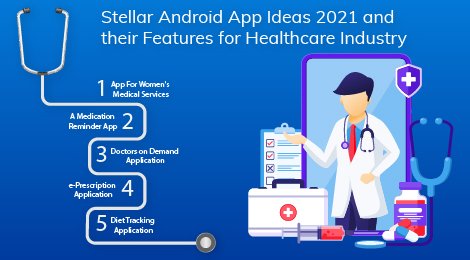
Stellar Android App Ideas 2021 and their Features for Healthcare Industry

Stellar Android App Ideas 2021 If you are looking to stick to Healthcare Android App Development startup in 2021, we’ve covered some of the best Healthcare Android App Ideas 2021 along with their features to kick start your business. You can choose any android app idea from this article, and your startup will give promising results for sure. 

1. App For Women’s Medical Services

A healthcare android application that is committed to women’s medical care. Interesting idea, right? Women sometimes are not comfortable talking to doctors about their medical issues. Hence, to make your application unique, you can add a conversation window where they can examine their well-being-related different problems. Additionally, you can likewise furnish a section that will suggest to them the lady doctors worldwide according to the symptoms, and the patients can discuss their problems. 

Must-have features for a Femtech Android Application include:

  • Ask For Details Page.
  • Serial Reminders
  • Symptoms Tracker
  • Online Consultation
  • Menstruation Tracking

2. A Medication Reminder App

Imagine an android application that reminds you of every time you need to take medicine. It would be so easy, right? Since people these days have such busy schedules that they even forget to take their medications on the endorsed time. If you want to launch a healthcare-based app, consider developing an android app that assists patients with an alarm about when to take their medications. 

Some features that a medication reminder app necessarily needs to have are:

  • Digital Scheduling
  • Prescription Renewal
  • Smart Reminders
  • Synchronization across different devices
  • Tracker for health parameters

3. Doctors on Demand Application

It is a real challenge to find a reliable doctor if you are living in an unknown place. Doctors on Demand application is a blessing in disguise for the patients and the doctors as well. This application allows patients to book a doctor’s appointment nearby in a minimal time frame. If not this, it also allows patients to access the doctors via virtual video calls.  The on-demand doctors’ application automates the entire process of scheduling an appointment with the doctors in your region. Furthermore, it helps to filter doctors according to the area, reviews, and your personal information. Hence, patients and doctors both benefit from this android application.

Features of an On-Demand Doctors Application includes:

  • Smart Search option by locality, reviews, and specialty
  • Instant Doctor Appointment Booking
  • Booking History
  • Schedule/Reschedule Slots
  • Find nearby doctors

4. e-Prescription Application

With so many diseases like Blood Pressure, Diabetes, Alzheimer’s, etc., that last for a lifetime, some people have regular medicine refill needs. In such cases, an application that allows them to generate an ePrescription and send it across directly to the pharmacy may be handy.  Hence, with these kinds of android applications, patients can avail of medicines without any delay or waiting for hours to have a doctor-authorized prescription. Moreover, this type of application helps set up a comfortable environment where doctors, pharmacies, and patients can work together in complete alignment.

ePrescription application’s must-have features:

  • Patient’s Profile
  • Pharmacy Store Information
  • Delivery Tracking
  • Push Notifications
  • FDA-approved medicine database.

5. Diet Tracking Application

This millenary generation is very, very conscious about their diet. It might sound flashy, but it’s true. People these days do not wish to compromise with their diet no matter what.  In such cases, applications like Diet Tracking Application may help them remain in shape. A diet track application records the daily intake of food, counts the number of calories consumed per day, and suggests exercises to maintain their weight. An android app development idea that is in trend and can help your business fly.  Above mentioned android app ideas and their features are all in trend, but now let’s come to some technical parts. How to develop these applications? What are the frameworks that can be utilized for creating these Healthcare Android Applications? Read more about 3 Leading On-Demand Food Delivery Platforms Healthcare Android Applications are gaining immense popularity across the world. A survey company stated: the global healthcare market in 2018 was valued at $28.320 billion, and by the year 2023, it is valued at $102.35 billion. Mobile App Development Companies in Android keep adding new features to the healthcare mobile apps and come up with patient-friendly and feature-rich apps using advanced android development frameworks. These apps are cooperated with HIPAA and are capable of meeting all the goals of the healthcare service organizations. Below are the Top 5 Android App Development Frameworks that can be best utilized for Healthcare Development.

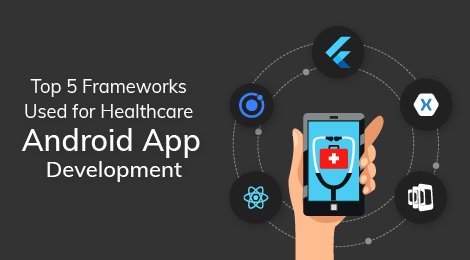
Top 5 Frameworks Used for Healthcare Android App Development

Top 5 Frameworks Used for Healthcare Android App Development

1. Flutter – Powered by Google

Flutter is powered by Google and is the most used Cross-Platform App Development Framework in modern times. Developers can build native mobile apps using their rich libraries and great widgets. This is a robust framework maintained by Google and the talented Community of developers to keep it updated.  Various reasons why Flutter is the first choice of developers, some of which are:

  • Same UI and Business Login in every Platform
  • Lesser Code Development Time
  • Offers Similar Performance as of Native Mobile Apps
  • Provides Custom and Animated UI of Any Complexity 
  • Contributes to Efficiency and Productivity

2. Ionic – HTML5-based Framework

Ionic is a shining framework that can be used for Healthcare Android App Development. This is a choice of many developers to build hybrid, interactive, and progressive apps for the android platform. Moreover, as an open-source platform, it ensures cost-effective development. Hire our dedicated PWA developers for your upcoming project.

Here are some of the critical features of the Ionic Framework: 

  • Platform Independent Framework
  • Helps in Creating engaging Designs
  • Extended Technology yet Native experience
  • Provides a default user-interface
  • Cross-Platform Mobile Application Development

3. Xamarin – .NET Based framework

Xamarin has a strong developer community globally and helps to create high-performing and productive code. Furthermore, with a versatile backend infrastructure, it offers a robust ecosystem. Due to this rich programming language with diagnostic tools and libraries, Healthcare apps based on Xamarin are more secure, reliable, and robust.

Features of Xamarin Framework:

  • It has a Google emulator manager and storyboard files
  • Helps build stunning cross-platform user-interface
  • It is open-source and free
  • Active Community of developers, as a result, stays updated with new features
  • Xamarin loves Azure as it provides scalable and versatile backend

4. React Native – Facebook Powered Framework

This is also a type of framework that follows the “Write Once Run Everywhere” strategy. This Facebook-powered Development Framework has an easy integration and enables developers to build feature-rich native applications. Written in JavaScript, it allows developers to create an interactive and creative User-Interface. Several React-Native-based Healthcare applications have raised millions of dollars in fundraising. It would be fair to state that React native can help develop high-end apps for medical services providers cost-effectively. 

Here’s why React Native is among the Top 5 Healthcare Android App development Frameworks:

  • Minimized Development Time & Cost
  • Reusable Dynamic Platform Components
  • Easier Cross-Platform User-experience
  • Hot Reloading Feature
  • Easy Third-Party Integrations

5. PhoneGap – Adobe Supported Development Framework

PhoneGap is supported by Adobe which is a widely accepted open-source Framework that enables developers to build feature-rich Healthcare android applications. Not only Android, but it is also reliable with several other development platforms like iOS, Tizen, and Bada. In addition, this framework is cost-effective and offers better accessibility to APIs for making the most of the smartphone’s inbuilt features.  The PhoneGap Development Community is also thriving rapidly and helps developers integrate customized features. Also, the Platform offers robust backend support, thereby making the development process faster.

Features of Adobe Supported Framework – PhoneGap

  • Uniform Applications across all Platforms
  • Each app provides a Native experience
  • Backed by Apache, Powered by Apache Cordova
  • Offer Easy work Plugins
  • Has Robust Backend system

Last Words

With advancements in technology, the healthcare industry is also molding the world towards a better future. However, 2020 has been challenging for the healthcare industry, and in 2021, people are increasingly becoming conscious about their health and diet. Therefore, the medical sector should adopt more productive and contactless methods for healthcare services. Read more about New Trends In Mobile App Development WeDoWebApps LLC is a trusted Healthcare App Development Company worldwide, and we’ve been delivering award-winning fitness and healthcare solutions to clients across the globe. Our team of expert app development professionals have vast experience in the industry and offer you a range of healthcare android apps development services from healthcare app development to admin panel, device management, appointment scheduling apps, and many more. In addition, our Medical care development services are compliant with HIPAA (Health Insurance Portability and Accountability Act, 1996) regulations. Hire our Healthcare Development experts; they can work at flexible engagement models as per your business needs and timezones.

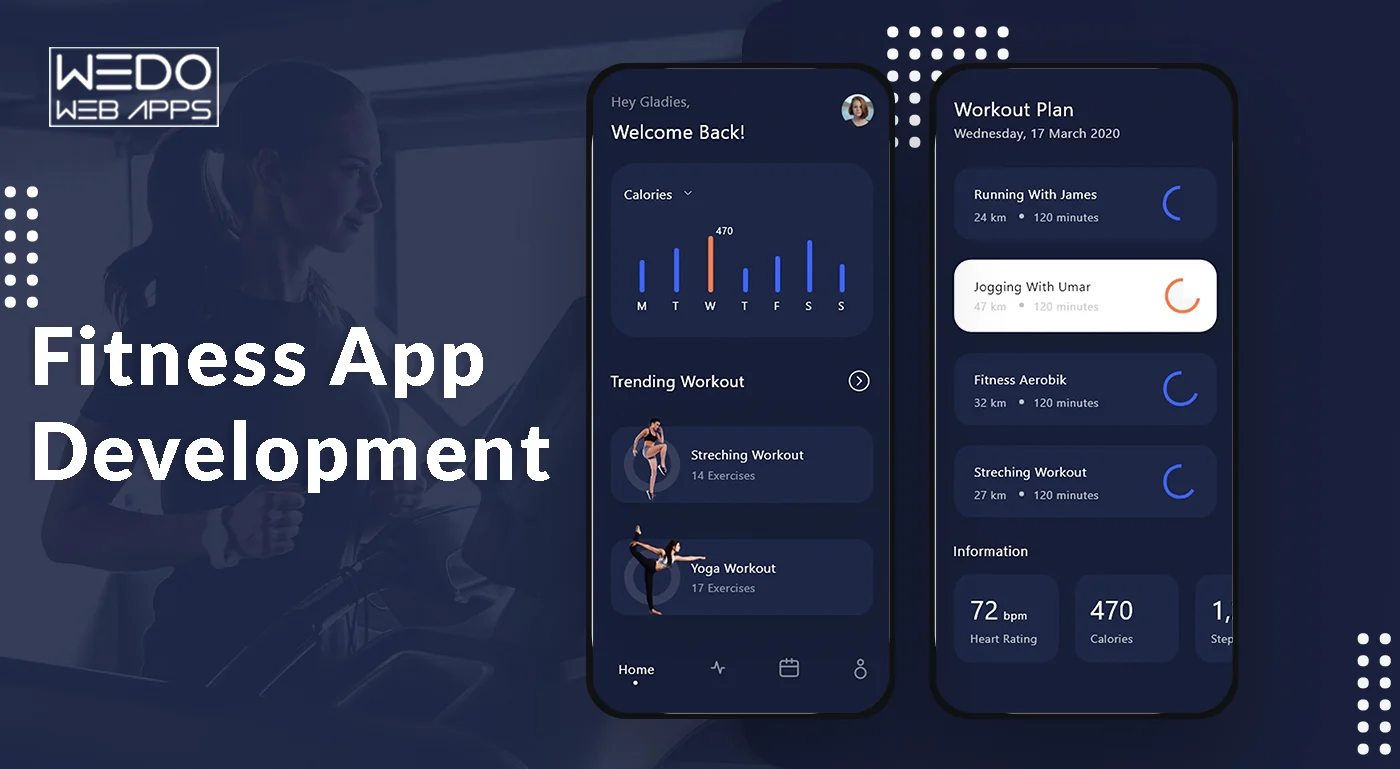
How Mobile Apps are Leading a Digital Revolution in the Fitness Industry

For a long while now, millennial health lovers have been engrossed with fitness app technologies to guarantee their general prosperity. As a result, we are providing android app development services at the best level.

Because of such exceptional prominence, building android app development services in fitness apps is advancing significantly. Inferable from the remarkable development in advances, fitness applications and devices are getting progressed quickly. Nowadays, fitness app development services or devices have become a melange of new plans and tech developments that give these apparatuses a beautiful makeover and make them work better. 

fitness app development

Passing by studying fitness app development companies, the correct innovations significantly affect how these gadgets work. Assuming you are hoping to fabricate premium well-being and the best fitness app developers, get to know some cutting-edge innovations that will help you do what needs to be done effectively.

Fitness app industry perspectives

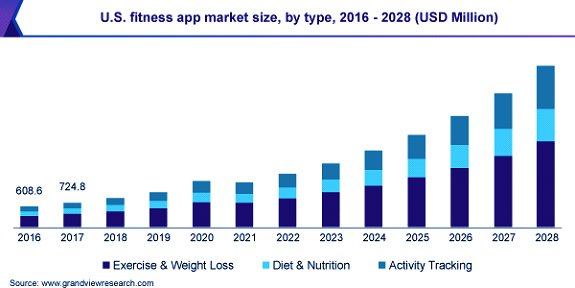
As per market research, in 2019, the global market for fitness applications with a net worth of US$ 14.7 billion is forecasted till 2026 and is expected to grow at 23% CAGR over the forecast period.

Fitness app industry perspectives

  • As per the Statista report, the revenue from fitness applications is USD 16,857 million in 2019.
  • The revenue is expected to show an annual growth rate (CAGR 2019-2023) of 5.0%, resulting in a market volume of USD 20,499 million by 2023.

fitness applications

Let’s dive deep into tools that are used for fitness app development:

Tools Used in Fitness Application Development

Among the main wellness applications, advancement instruments are popularity, FitBit, wellbeing chart, Strava, Lumo, Withings, Shine, FoodSpex, Google wellness Programming interface, Oddball, Jawbone UP, Garmin, and BMI adding machine merit a conspicuous notice. 

We should take a gander at some important data about the apparatuses utilized in wellness application advancement. 

Fitbit 

Fitbit

Utilizing this instrument, the wellness application designers can speak with FitBit information in their applications. 

Wellbeing Diagram 

Utilizing this device, the clients can store their wellness and related health and fitness data on the cloud. The significance of the Wellbeing Chart is central with regards to assisting the clients with associating their related health and fitness information with different clients. Discover the importance of color in app design and see how it can impact your fitness app development and overall digital strategy.

Lumo 

The Programming interface empowers wellness application designers to get to their related health and fitness data from Lumo Lift and Lumo Back. 

Strava 

Strava is the sacred goal wellness application for competitors and fervent wellness devotees. This application is basically known for rousing clients to keep a sound way of life. Learn about multilingual app features and how they can enhance your fitness app development to reach a broader audience.

Withings 

This instrument is around the world known for astounding interfacing plans and tech advancements in wellness applications and gadgets. It furnishes marvelous highlights without bargaining for quality. You can get to this Programming interface instrument by enlisting yourself as a Withings designer. 

Google fitness Programming Interface 

The open biological system is overflowing with many conveniences, which can permit the clients to mechanize their wellness information stockpiling. 

Sparkle 

It is considered the absolute first open-source wellness information joining device. It can offer the clients a solid grasp of their related health and fitness advanced data. 

Nonconformist 

Nonconformists can allow designers to fuse various highlights like movement following, rest following, and so forth in a wellness application or gadget. For example, by saving their rest signs on a Google Accounting page, the clients can likewise get a week-by-week outline of their proactive tasks. 

Jawbone UP 

This open-source stage can offer the engineers APIs and SDKs to improve diverse wellness following applications additionally. 

Garmin 

It offers the necessary instruments to become an engineer in building applications for various wearable gadgets. 

Read also: Healthcare Android App Development: Top features, frameworks, and ideas in 2021

BMI number cruncher 

The BMI mini-computer helps the clients measure their BMI or Weight List. 

FoodSpex 

This device is an unquestionable requirement for those searching for point-by-point data about the sustenance upsides of various food items. The data given by this instrument primarily rotates around standardized tags, fat, wholesome substance, calories, and so forth 

Hardware Used in Building Fitness Tracking Device

Movement following wellness gadgets has overwhelmed the world because of their exceptional highlights. The vast majority of these gadgets, for the most part, rely on sensors, which communicate well-being information to portable applications. 

The most utilized equipment for building a medical care application or gadget incorporate an ECG sensor, encompassing light sensors, skin reaction sensors, bio-impedance sensors, chest tie, barometric altimeter, accelerometer, compass, and whirligig. 

Compass, Accelerometer, and Gyrator 

Pretty much every cell phone and wearable wellness gadget includes movement trackers or compasses, accelerometers, and whirligigs. For example, a gyrator alludes to a device that utilizes the earth’s gravity to choose an article’s direction in space. 

Compass steps in to decide the cardinal heading. An accelerometer is pointed toward estimating speed increase dependent on a movement’s start, finishing, and general power. 

The need for movement trackers becomes an integral factor in estimating the exercises like running, strolling, cycling, swimming, and the preferences. 

With the information accumulated, wellness applications and smartwatches can figure out rhythm, speed, distance voyaged, and the total calories consumed. The most energizing thing is that the smartwatches or wristbands can follow a client’s rest design, timing, and so on with the assistance of accelerometers. 

Compasses, accelerometers, and gyrators can be three particular bits of equipment. They could likewise be consolidated in a solitary joint movement sensor. Take InvenSense, for example, which gives different incorporated equipment arrangements. 

In a journey to acquire a scramble of progress in their cell phone, Apple has as of late fused a joint movement following co-processor into it. 

The iPhone XS claims an M12 chip, which solidifies the compass, accelerometer, and gyrator. This separated, the most recent watch arrangement four brought by Apple has much further developed accelerometer and spinner, which can gauge around 32 g-powers. 

Barometric Altimeters 

A barometric altimeter is viewed as a superior option in contrast to GPS for following height and rise. An altimeter can follow height by estimating climatic pressing factors and assembling applicable information on the rise while climbing steps or being on a track. 

Since the arrival of both iPhone 6 just and 6 Or more, iPhones have had inherent altimeters and indicators. The movement rise and altimeter application for iOS proffers scope, elevation, and longitude. 

Best of all, all these are displayed on top of a totally adaptable foundation. Furthermore, this wellness application likewise has an alternate route to an inbuilt electric lamp and a few other sharing choices. 

Global positioning system or GPS 

For individuals who love running, climbing, or cycling to remain fit, it’s imperative to have a wellness tracker implanted with a GPS beneficiary. 

Global positioning system or GPS

Probably the most famous wellness applications like RunKeeper, Strava, Runtastic, and so on have likewise accepted exceptionally progressed GPS advancements. 

GPS or Worldwide Situating Framework utilizes 30-a few satellites for empowering the clients to follow their courses, know their positions, and keep a tab on their speed. 

There are various wellness wristbands and smartwatches that don’t possess local GPS sensors. On the other hand, some world popular wellness gadgets like Sony SmartWatch 4, Apple Watch Arrangement 4, Mobvoi TicWatch E2, Fitbit Ionic, and so forth additionally have inbuilt GPS usefulness. 

ECG Sensors 

The majority of advanced wellness movement trackers depend on optical sensors to quantify the clients’ pulse. With the Drove sensors, the optical pulse screens can quantify changes in the clients’ blood immersion. 

These pulse screens go light through the client’s skin in various body parts like fingers, wrist, biceps, ears, temple, and so on to follow his/her changing blood immersion. Utilizing a PPG (photoplethysmogram), these pulse screens can assist the clients with deciding their cardiovascular cycles and pulses. 

Pulse screens could be both implicit and independent. For example, the polar OH1 alludes to an independent optical armband. The separate pulse screens could be utilized to harmonize with a wellness tracker. 

For instance, practically every wellness gadget from Polar and Garmin upholds a chest tie. There are more costly smartwatches and wellness trackers that contain inbuilt optical pulse screens. 

The watch arrangement presented by Apple has electrical just as optical sensors for estimating the clients’ pulses. Other than observing a client’s pulse, it likewise informs him/her on the off chance that it discovers anything genuine or hazardous. 

Not just this, utilizing the ECP application, the watch arrangement four by Apple can create an ECG report which is like that delivered by an electrocardiogram. The Apple watch (from arrangement 4) concocts a computerized crown that is capacitated to quantify the heart motivations from a client’s fingertips. 

Skin Reaction Sensors 

There are numerous clients who are quick to realize the amount they sweat while working out. Likewise, there are some wellness fans who are intrigued to keep a tab on their changing internal heat level during their workout meetings. Again, the galvanic skin reaction and temperature sensors can do what needs to be done easily. 

The Huawei Watch 2 4G and F7 Constant GPS can help clients assemble essential data in such matters. In addition, galvanic skin reaction is equipped for observing and estimating the changing feelings of anxiety of the clients while they work out. 

Likewise, it can help them accumulate more precise information identified with their changing pulses during exercise. 

Bioimpedance Sensors 

Bioimpedance is fit for estimating the body tissues’ protection from the measures of electric flows. In addition, this component permits a wellness gadget to catch diverse physiological signs that incorporate breath rate, pulse, galvanic skin reaction, and preferences. 

Bioimpedance needs only a bit of limit with respect to acing these arrangements. First-rate wellness movement trackers like UP4 wristbands and Jawbone UP3 likewise use Bioimpedance. 

Encompassing Light Sensors 

The encompassing light sensors can help in recognizing and estimating the measure of light in a climate. Moreover, their view of brilliance can coordinate with that of the client’s eyes. 

These sensors can conform to the splendor of a gadget’s dislodge naturally, limiting a client’s eye strain. Many very good quality cell phones utilize surrounding light sensors to secure the clients’ eyes. Some wearable wellness gadgets are additionally found to use encompassing light sensors. 

Last word

Our android app development services are filled to the edge with various cutting-edge innovations. On account of these top-level innovations, armies of action following applications have appeared. We have vast experience in this field and will be able to design a solution that will successfully serve your end users and meet your business objectives. Contact us today and let us build a competitive fitness app for you!

How to go for Mobile Application Development

In recent times, the demand for mobile application development has increased at a higher pace. Many business organizations are looking for developers to make an application for enhancing the performance of their business. In the same way, there is a significant increase in the number of mobile development services providers. In our present article on How to go for Mobile Application Development, we will brief out some of the essential points to be kept in mind while availing the mobile application development.

Mobile Application Development Platforms

There are a total of 3 different platforms about which you have to keep in mind for branding and launching your application. These platforms are:

iOS Application Platform: iOS Platform is mainly for the Apple users. It has a dedicated user base, and you need to look after their needs and requirements from the application.

Android Application Platform: Android is a platform with a maximum number of users. You will get hold of a large market by launching your application on this platform.

Cross Application Platform: It is a platform for building any mobile application quickly. You can make the application on any topic, in any language with the help of this platform.

While exploring Go mobile application development, stay updated with the latest advancements like the new JavaScript engine Hermes to boost your app’s performance.

Considerations while availing Mobile Development Services

Here are some essential things to keep in mind during Mobile App Development.

  1. Quick Results: In Mobile App development, it is necessary to give faster results to the consumer. So the developer needs to focus on incremental software development and rapid prototyping. In this way, he can facilitate quicker results to the client with the mobile application.
  2. Clarity: It is essential to update the client about the minute details of the project. The developer has to show the doneness of the project to the client, record his feedback, and work on the changes as suggested by the client. It is possible only if the clarity is maintained between both of them.
  3. Quality: The mobile application quality is also an essential feature to consider while mobile development services. There shouldn’t be any bugs while the application is running. Moreover, it is necessary to properly test the app before launching it in the market before consumers.
  4. Business Value: Proper business value must be given to the client by the service provider. Before the launch of the application in the market, there are lots of things to consider. First of all, it is necessary to develop the essential features of the app. Later on, the basics can be done.
  5. Guarantee: Mobile Application Development is not a one-time procedure. There is also the occurrence of many kinds of defects, as well as bugs post to the release of the application in the market. So, a guarantee period must be given to the client to get full relief from operating the application within that period.

In the present article on How to go for Mobile Application Development, we’d explain you out on some of the critical considerations to be kept while getting mobile development services.

Delve into the world of Go mobile application development, and don’t miss out on our expert WordPress development services to enhance your online presence.